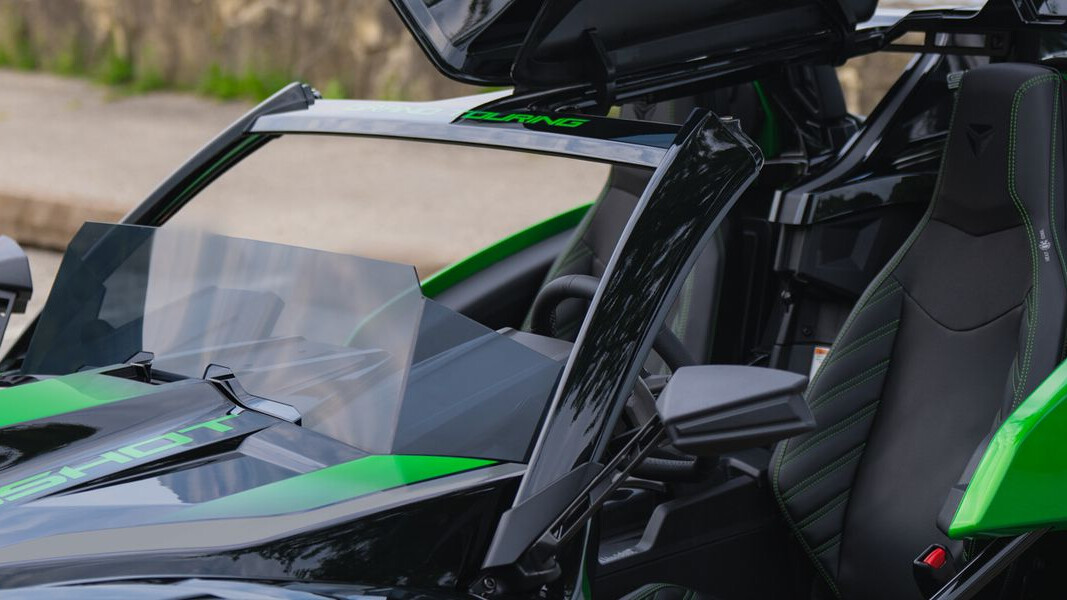
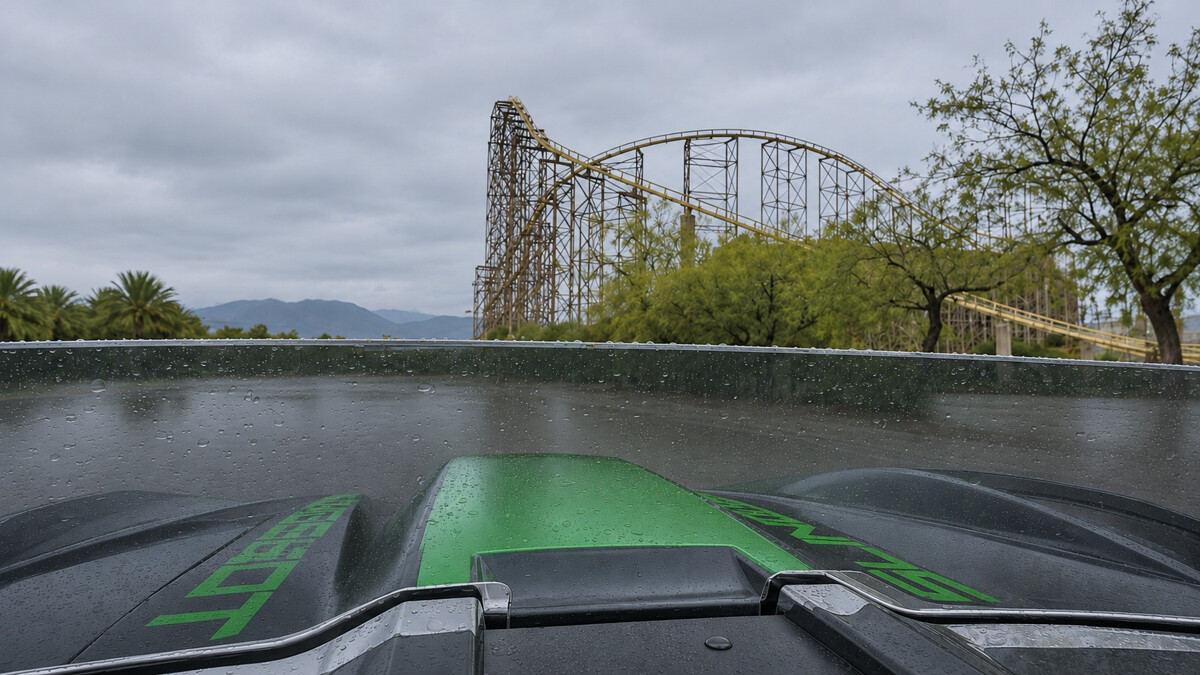
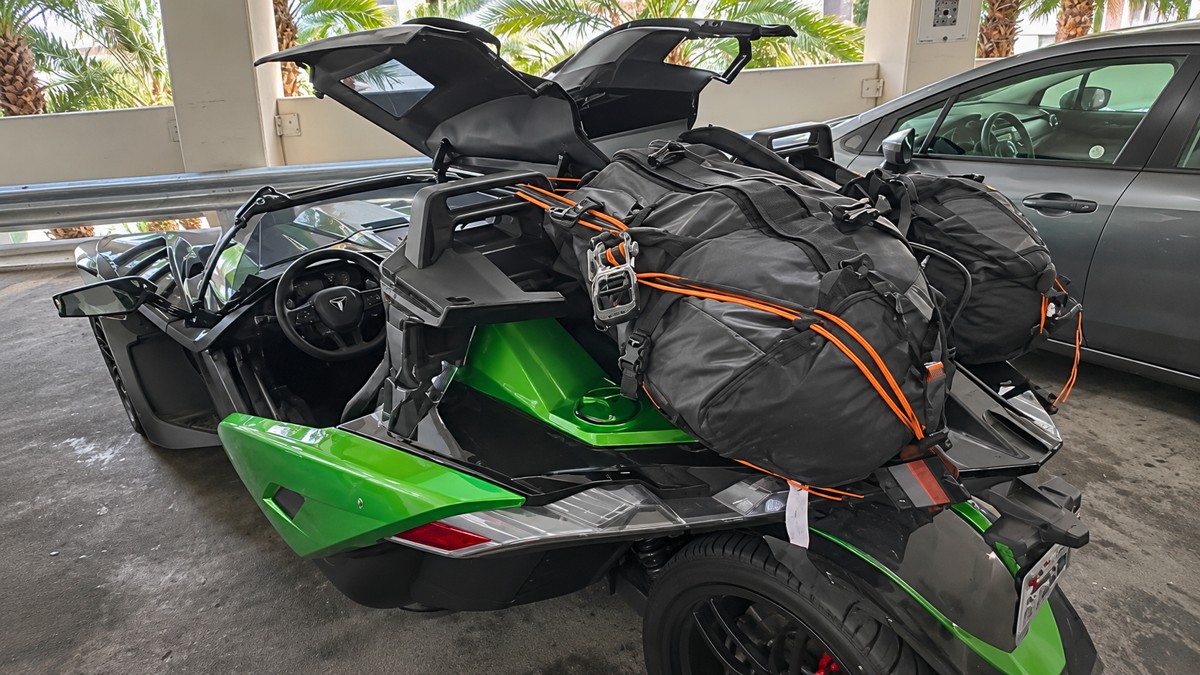
Driving a 2026 Polaris Slingshot Grand Touring from Torrance, California, to Las Vegas and back sounded like an excellent adventure. I had camping equipment, two automotive events to cover, and a three-wheeled machine that looked ready to invade a science-fiction convention. What could possibly go wrong? The plan was to camp for a couple of nights before covering the Concours at Wynn Las Vegas and the 2026 SEMA Show. I wanted to see whether this unlikely road-trip companion could handle a little camping duty. Mother Nature apparently read my itinerary and chuckled. There’s an expression: “Man plans, God laughs.” By the time I reached Nevada, somebody upstairs was probably wheezing. Grand Touring, limited enclosure The Grand Touring builds on the Slingshot R with a color-matched Slingshade roof, heated and cooled seats, Rockford Fosgate audio and a 7-inch RIDE COMMAND+ display. Its Viper Black and Green Venom paint gives it the subtlety of a radioactive grasshopper. Pricing starts at $41,999 with a manual transmission or $44,149 with AutoDrive, before destination, setup and other fees. My tester had AutoDrive, a five-speed automated manual, along with a small, heavily tinted wind deflector. The roof’s hinged panels lift upward for access, rather like T-tops that haven’t completely committed to leaving. Remember those details. They become important when the sky starts throwing things. A snowmobile for the highway The Polaris-built ProStar 2.0-liter four-cylinder produces 204 horsepower and about 150 pound-feet of torque. Polaris lists the AutoDrive model at 1,703 pounds, with a claimed 4.9-second sprint to 60 mph and a governed 125-mph top speed. Front Brembo four-piston calipers, ABS and a substantial 305/30R20 rear tire round out the performance hardware. That’s plenty of engine for something this light. On a winding road, the low seating position, responsive chassis and exposed cockpit make relatively ordinary speeds feel eventful. The Slingshot has a wonderful ability to turn driving into an activity again. AutoDrive is less wonderful. You can feel it interrupt power while changing gears, and my tester shifted more smoothly after warming up. The engine and drivetrain also produced enough mechanical racket to suggest somebody had left a handful of bolts in the machinery. I much prefer the available manual. Polaris built its reputation on snowmobiles, and “snowmobile for the highway” feels appropriate here. The configuration works a treat for some performance driving, unless there’s a pothole… or rain. The desert becomes a pressure washer Leaving Los Angeles, I encountered rain, high winds, and hail. Passing trucks and oversized SUVs added more water, presumably because the clouds weren’tthorough enough. Some seemed to deliberately aim at me, using highway puddles as liquid grenades. The little wind deflector helped intercept debris, but it wasn’t a full windshield and had no wiper. With open sides and such a low seating position, I was intimately involved in the weather. The roof presented another problem. At roughly 6-foot-1, I couldn’t comfortably fit beneath it wearing my full-face helmet without cocking my head sideways. That’s a fit issue I’d urge taller buyers to check before purchasing. Polaris recommends a DOT-approved full-face helmet and fastened seatbelts, and the roof needs to accommodate that combination. Highway travel also made me acutely aware of how low I sat beside surrounding traffic. Add gusting wind, spray and a busy freeway, and the experience became considerably more demanding than canyon carving. Despite getting drenched, I watched the cockpit drain, and the Slingshot appeared no worse for the soaking. The same could not be said for its occupant. Still, the seats (in this configuration) are heated and cooled. It helped. Camping canceled, complimentary shower included The campsite closed, and access became a problem. My camping adventure turned into a last-minute hotel reservation. Near the Excalibur, I encountered standing water that appeared roughly six inches deep. I went through it. That was poor judgment, and I wouldn’t repeat it. The alternative was nearly two feet deep… and this thing isn’t built for floating. The front fenders demonstrated an unexpected talent: directing water toward me with remarkable accuracy. I had spent hours being washed from above. Apparently, the Slingshot wanted to finish the job from below. Strapping camping gear into the passenger seat and filling the storage compartments behind the seats was workable, but hardly elegant. With only 5.4 inches of ground clearance, this machine wasn’t about to become my preferred trailhead shuttle, either. When I had to make room for a passenger, I strapped luggage onto the back. It worked, but it was sketchy. I do not recommend doing this until Polaris builds tie-down points or a cargo tray. The valet deserved hazard pay Arriving at a nicer hotel produced one of the trip’s finest moments. The valet examined the controls, the dirty cockpit, and the camping equipment occupying his workspace. His expression suggested he was reconsidering his career decision. The Rockford Fosgate stereo was loud enough to overwhelm some rattles, although precision wasn’t its strongest quality. By then, I was simply grateful for anything that wasn’t another weather report. Final Thoughts: Would I do it again? A Mazda Miata makes the practical argument difficult for the Slingshot. It offers doors, a proper windshield, wipers, a trunk and genuine weather protection for less money than this Grand Touring. Yet the Slingshot delivers something different. Its exposure reminded me of my motorcycle-riding days: the air, the immediacy and the feeling that you’re participating in the trip rather than watching it through glass. In agreeable weather, it’s an absolute hoot. My Vegas run exposed the limits of the Grand Touring name, but it also produced an experience I won’t forget. Would I recommend this trip in a storm? Absolutely not. Would I consider another adventure, perhaps across the country? Possibly. I never claimed to be that bright.

 Liked by Liam Campbell, Nicole Roy








 Liked by Liam Campbell, Nicole Roy