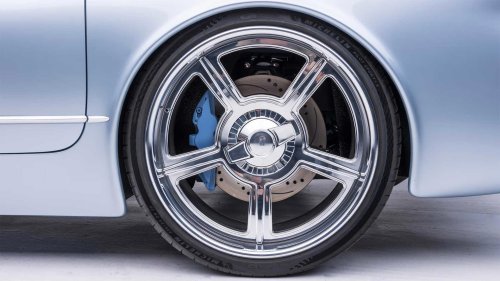
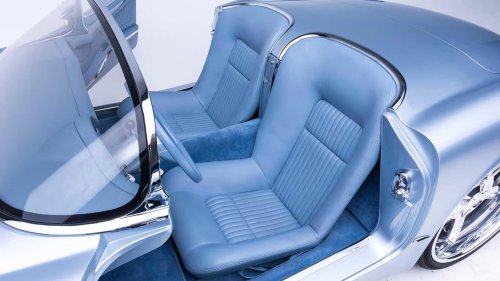
Utah-based Kindig-it Design – founded in 1999 – has spent more than two decades building a reputation for flawless hot rods and show-stopping restorations. The shop became a household name through 11 seasons of Bitchin’ Rides, where designer and owner Dave Kindig turned dream projects into rolling works of art.Kindig-it Design But Kindig's dream has always been to launch his own car, and in 2023 that lifelong ambition was finally realized when his company officially obtained a manufacturer’s license. Its debut product is the CF1, a modern tribute to the first-generation Chevrolet Corvette, blending the C1's classic styling cues with contemporary performance and engineering. Kindig first presented the CF1 as a concept at the 2021 SEMA Show in Roadster form, before expanding the lineup with the all-weather CF1 Cabriolet and, just last year, the CF1 Fastback coupe. The Vision Behind The CF1 Kindig-it Design The idea of owning a classic car sounds great – until you actually live with one. Patchy reliability, outdated performance, and seriously compromised safety quickly turn the dream into a headache. This reality has driven the rise of restomods, where classic cars are upgraded with modern mechanicals. But there’s also a niche trend in reverse: starting off with something modern and making it resemble a classic car. That's exactly what Kindig envisioned and accomplished with the CF1.Calling the CF1 a restomod, however, would be inaccurate, as it isn’t based on any existing vehicle. Instead, it’s built entirely from the ground up, riding on a custom chassis and wearing a body made wholly from carbon fiber. While its design clearly draws inspiration from the C1 Corvette, not a single panel is shared with the sports car first unveiled in 1953 at GM’s Motorama at New York’s Waldorf-Astoria hotel.Kindig-it Design As gorgeous as that original Corvette is, it isn’t without flaws. Chief among them: limited space for taller drivers. Kindig addressed this by stretching the cabin and doors by around four and a half inches, along with ergonomic tweaks such as lower-mounted seats and deeper footwells. According to the company, drivers up to six foot four can sit comfortably, all while retaining the original C1’s wheelbase. The CF1 is wider and lower than the C1, though.The interior of the CF1 offers the most faithful nod to the original C1 Corvette, with styling pulled straight from the 1950s. Classic cues are preserved throughout, from the dash layout to the steering wheel, yet modern conveniences are seamlessly integrated. Air conditioning, digital gauges, and a discreetly hidden Kicker audio system are all present, without disrupting the old-school aesthetic. Modern Engineering Under A Classically Styled Shell Kindig-it DesignKindig didn't go the easy route and use an existing chassis for the CF1. Instead, the company uses a version of the popular Roadster Shop Spec 7 Chassis with specifications suited to the CF1. Roadster Shop's Spec series of chassis are among the most popular for builders and restorers of classic General Motors products, and the Spec 7 version incorporates a number of key components from the C7 Corvette, providing a perfect link with the Corvette linage for the CF1.Among the key features found on the chassis are front and rear independent suspension from the C7 Corvette, along with aluminum control arms, Fox coilovers, and Wilwood brakes.There's also a power-assisted rack-and-pinon steering system and instead of the C7 Corvette's rear transaxle transmission, the Spec 7 Chassis features mounting for the transmission in the middle and a differential at the rear.Kindig-it Design Buyers have a range of options when it comes to the powertrain, but the standard setup is Lingenfelter's Eliminator Spec S 427 V8 engine. This is an all-aluminum, CNC-machined, and sleeved LS3 block with forged and balanced rotating assemblies and ported LS3 heads, topped by a gorgeous Borla 8-Stack injection system.The engine is paired with a four-speed automatic transmission, specifically GM's 4L80E design, which Kindig said was chosen for its strength, reliability, and smooth shifting under high torque. A Tremec six-speed manual is available for buyers who want to row their own gears.The Lingenfelter powerplant is good for approximately 650 hp and 618 lb-ft of torque, and measured at the wheels you're still looking at 554 hp and 507 lb-ft, according to Kindig. The company hasn't published any additional performance figures, but with the curb weight coming in at just over 3,000 lbs, no one will be complaining about a lack of speed. Keeping The Front-Engined Spirit Alive Kindig-it Design With the arrival of the C8 Corvette earlier this decade, Chevrolet made a bold move by shifting the Corvette to a mid-engine layout, a decision driven by the desire to improve performance, handling, and weight distribution.While this change turned the Corvette into a true supercar competitor, it also marked the end of an era: for the first time in the nameplate's seven-decade history, the engine was no longer in front of the driver. In fact, GM had considered a mid-engine Corvette as early as the C7, but the company’s precarious financial situation following the 2009 bankruptcy – when the C7 was being developed – delayed such a radical departure.Kindig-it Design The C8’s mid-engine layout was a natural evolution for performance – but it left fans who loved the feel and character of a front-engined Corvette longing for alternatives. Cars like the Kindig CF1 are helping to keep that front-engined spirit alive, offering enthusiasts a modern interpretation of the original Corvette formula.By combining the classic styling cues of the C1 with modern mechanicals, the CF1 allows drivers to enjoy the aesthetics, ergonomics, and visceral experience of a front-engined Corvette with performance that rivals modern sports cars and even some supercars.Kindig-it Design Looking forward, the next major evolution of the Corvette may be a fully electric powertrain, at which point the engine’s placement will no longer define the car’s character. For fans who prioritize a front-mounted V8 and the unique driving experience it delivers, the options will increasingly be limited to used Corvettes, restomods, or custom builds like the CF1. These projects ensure that the front-engined Corvette legacy remains for enthusiasts who crave that classic layout and the unmistakable feel that comes with it. A Unique Ride For The Right Buyer Kindig-it Design Production of the Kindig CF1 is extremely limited, making each example a rare and highly coveted piece of automotive art. Since its debut as a concept at the 2021 SEMA Show, Kindig-it Design has completed just over two dozen CF1s, with every car individually tailored to its owner’s preferences.As you may have guessed, pricing doesn't come cheap – expect to pay around $450,000 just to start, with costs rising quickly depending on specifications and personalization. If your budget is big enough, Kindig will build it for you, as exemplified by a one-off car known as the TwelveAir. Rolled out at the 2024 SEMA Show, the car features the CF1 Fastback body, but instead of carbon fiber it is made from aluminum – all of it hand-formed. The car also packed a unique V12 engine displacing 9.2 liters and derived from GM's LS family of small-block V8s.Whatever the cars cost, for the right buyer, it's a small price to pay for the exclusivity, performance, craftsmanship, and attention to detail that make each CF1 truly stand apart on the road.Sources: Kindig-it Design


























 +60 others