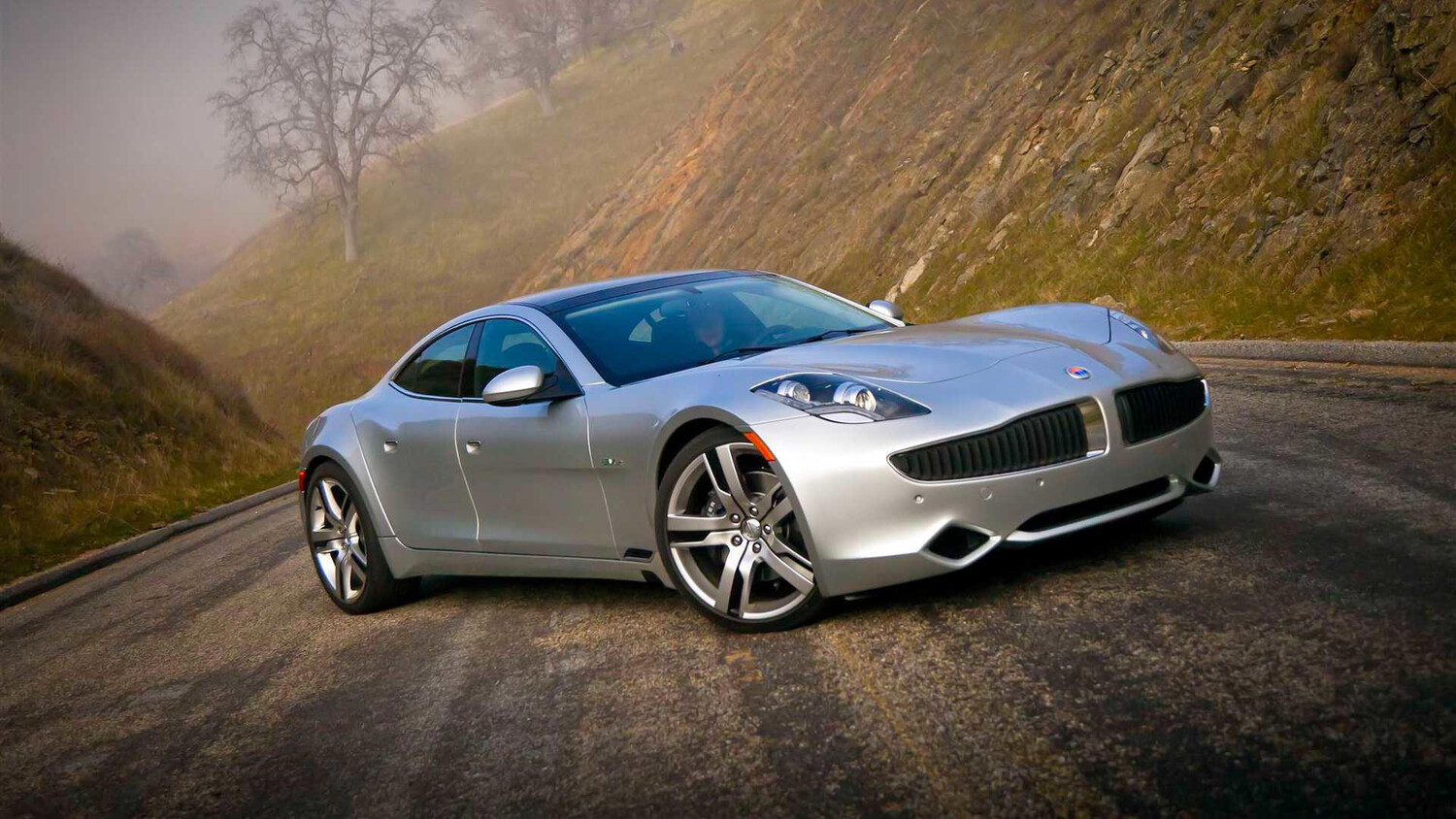
Henrik Fisker probably had no idea how fitting the name Karma would be when he launched the plug-in hybrid sedan in 2011 under his eponymous startup. In Hinduism, karma is intrinsically linked to reincarnation, the karma accumulated in one life affecting the conditions of the next life. Fisker’s venture wound up failing in 2014, but after Wanxiang Group, a Chinese automotive parts conglomerate, bought the assets, the car was reborn as the Karma Revero. The Revero has been built since 2016 and has undergone several updates, but the tiny California-based company has struggled to gain a foothold.
Now Karma Automotive is seeking to reinvent itself, and it will start by giving the plug-in hybrid sedan yet another reincarnation. Marques McCammon—previously of DaimlerChrysler, Roush, Saleen, and engineering firm Ricardo—joined as president of the company in 2023, and the 2027 Gyesera is the first product launched under his guidance. While it retains similarities to the sedans that preceded it, a lightly updated powertrain and a fresh design language aim to set the brand up for a brighter future. Driving a pre-production version of the Gyesera in and around Las Vegas, we discovered a car that feels special and provides enticing powertrain flexibility but that is still bound by some of the same flaws as its predecessors.
The Gyesera was initially revealed in 2024 as a fully electric vehicle, but Karma Automotive pivoted when it determined that the luxury market wasn’t moving toward EVs fast enough. Instead of the originally proposed 590-hp battery-electric setup, the Gyesera now launches with a fifth generation of the Karma’s plug-in hybrid powertrain. A turbocharged 1.5-liter three-cylinder engine—borrowed from the BMW i8—lives under the hood, but it isn’t connected to the wheels. Instead, it acts as a generator to charge the 28-kWh battery, which then feeds electricity to a pair of motors on the rear axle.
The Gyesera produces 566 horsepower—30 hp more than the Revero—and 594 pound-feet of torque, an increase of 44. Karma says the Gyesera accelerates from zero to 60 mph in 3.7 seconds, down from 4.5 seconds in the Revero, and can hit a 150-mph top speed, up from the Revero’s 125-mph V-max. The nickel-manganese-cobalt battery is also capable of providing a claimed 80 miles of electric-only driving, with a total range on gasoline of 360 miles. The battery can support DC fast-charging via a CCS port at up to 50 kilowatts or AC charging at 6.6 kilowatts.
As you approach the Gyesera, it makes a strong first impression. There remains more than a whiff of the original Fisker Karma in its appearance, with the Gyesera using an evolution of the aluminum spaceframe chassis found in previous Karmas. Design-wise, this is no bad thing. The proportions look exotic, with a hood that seems to go on forever and a roofline that tapers over the muscular rear haunches. The curvaceous body is fashioned from a mix of aluminum and carbon fiber, the latter comprising the hood, rear decklid, fenders, rocker panels, and optionally, the roof.
While the shape is familiar, the design has been sharpened. Up front, a crisp line runs underneath piercing headlights, replacing the black grille trim that made the Revero look like an athlete wearing a mouthguard. The lower air intake is framed by a carbon-fiber trim piece, while a swooping indent, which Karma calls the Comet Line, arcs across the hood, giving the car a powerful look and serving as a hot air outlet for the engine bay. A strip of exposed, unpainted carbon fiber at the top of the hood is a reminder of the Gyesera’s high-end construction.
The forged aluminum wheels are the fruit of a partnership with HRE, with two different 21-inch designs available along with a 22-inch option. The smooth sides are broken up by a carbon-fiber trim piece carved into the front fender, and at the rear, slim taillights sit above a subtle diffuser. The Gyesera’s visual drama is even more apparent in person, and even amid the fancy cars in Vegas, the Gyesera turned heads on the Strip.
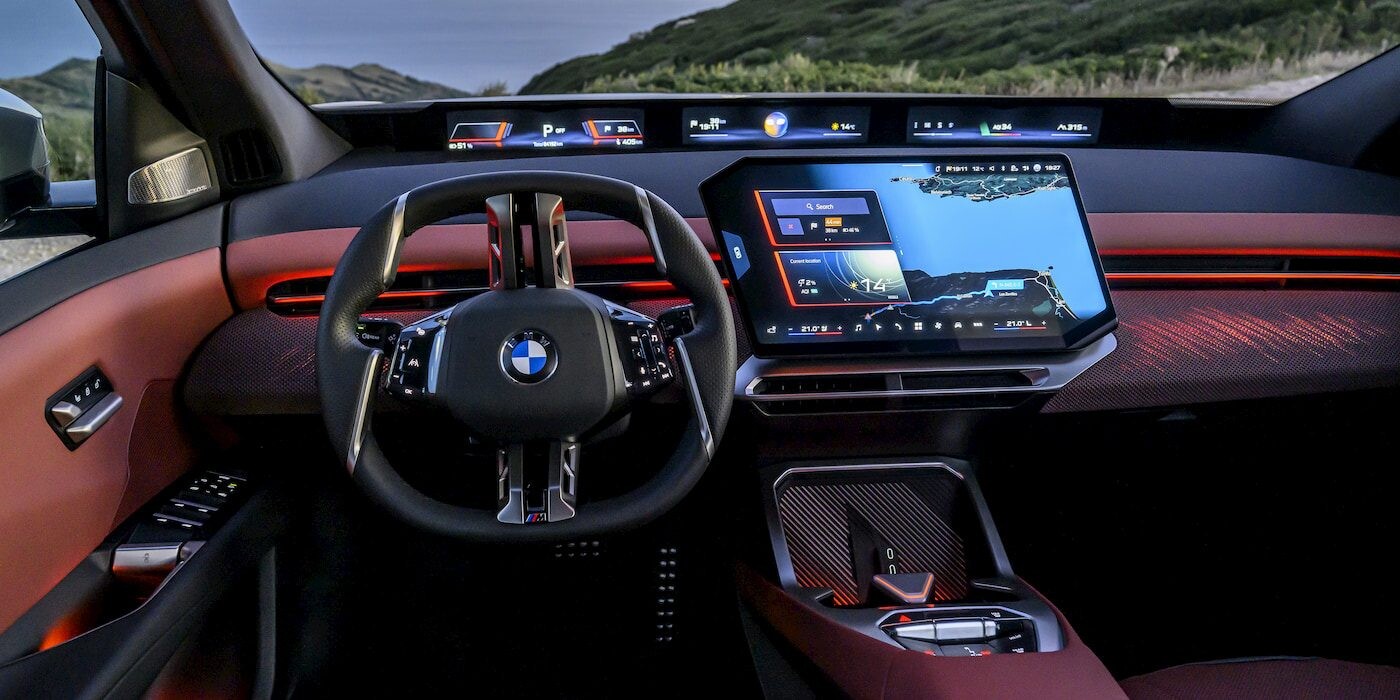
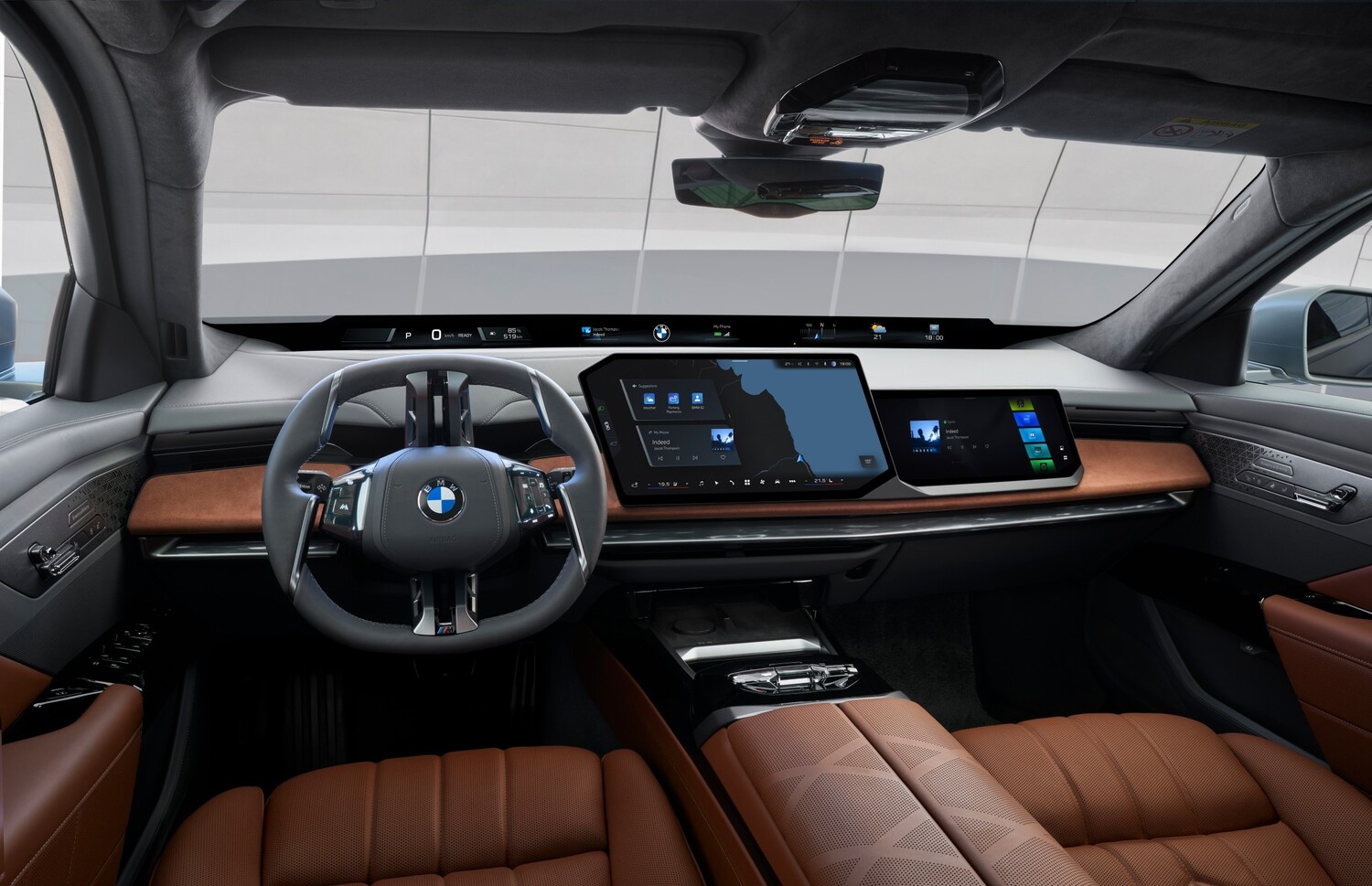
Inside, Karma revised the dashboard, ditching the Revero’s four circular air vents for rectangular vents hidden within a black trim piece that spans the dash. The 10.1-inch screen has been repositioned and is paired with a 12.3-inch digital gauge cluster. Some things remain unchanged from the Revero, such as the pyramid-like push-button gear selector and the steering wheel, which still has an echo of the original Fisker Karma’s design.
The highlight, though, is the cabin’s luxurious materials. The seats and dashboard feature sumptuous Bridge of Weir leather, while the center console, door armrests, and parts of the steering wheel are covered in soft Alcantara microsuede. The metallic trim feels solid and cool, but the glossy black plastic covering the center console is a low point.
Most functions are handled digitally, but we didn’t find it as infuriating as other screen-focused setups, in part because the screen is within easy reach of the driver. We still believe real buttons and dials feel more upscale, but the screen, which also supports wireless phone mirroring, wasn’t too fussy. To keep your phone topped up, there’s a wireless charger and USB-C ports hidden inside the armrest.
The battery is housed in what would traditionally be a transmission tunnel, allowing for a low seating position. The seats, however, are quite narrow, even for someone with an average build, and the unadjustable headrest is a bit too low. While we appreciated their copious bolstering in the corners, a wider, comfier seat would be more befitting a grand tourer.
The center console extends into the rear of the cabin, where there are two more bucket seats. While Karma claims the Gyesera has more legroom than the Revero, it hasn’t helped much. The rear seat is almost unusable for adults, with this 5-foot-11-inch writer barely able to squeeze in behind his own seating position, with his knees scrunched up and his head brushing the roof. The trunk is also quite tight, with a high floor and a fairly narrow opening.
The Gyesera is satisfying to drive for the most part. Every control has pleasing heft to it. The steering is decently communicative, and its weight builds naturally as you turn the wheel. The accelerator isn’t touchy, with the swell of power growing progressively as you press the pedal. The Gyesera weighs just over 5000 pounds and has a lengthy wheelbase, but it shrinks in the corners and feels nimble.
Although the Gyesera may not be able to match the heady power figures of other high-end electric-driven cars, it still packs plenty of verve. Launch it off the line, and the rear tires chirp before the torque-vectoring system finds traction and shoots you forward. Get too excited with the throttle coming out of a corner, and the rear end tries to break loose. It’s not terribly hard to overwhelm the Goodyear Eagle F1 tires, which measure 255/35R-22 up front and 285/35R-22 at the rear, giving the Gyesera a bit of a playful edge.
Braking is handled by Brembo 14-inch rotors, with six-piston calipers up front and four-piston calipers at the rear. The brakes are strong, although the car occasionally felt a bit skittish under heavy deceleration, and while the blending of regenerative braking and the friction brakes is decent, the pedal doesn’t give much feedback. The three levels of regenerative braking are adjusted by the right-side steering-wheel-mounted paddle. The weakest setting is very light, while the strongest setting is close to one-pedal driving but won’t bring the car to a complete stop.
The left paddle selects the drive mode: Stealth, Sustain, or Sport. In Stealth, the engine stays off and the Gyesera glides along on electric power. Sustain fires up the engine, running in its most efficient mode to maintain the battery charge level. The engine hums away in the background most of the time but occasionally gets intrusively loud.
In Sport mode, the engine works as hard as possible to replenish the battery. Sport also opens up the exhaust, but this is actually one of the Gyesera’s biggest flaws. The three-cylinder sounds, frankly, terrible, with a buzzy note and a flatulent thwack when you let off the throttle at high rpm. The engine is also constantly kicking on and off, making its rasp even more noticeable, since every time you lift, the cacophony completely falls away. The exhaust also exits right underneath the driver’s-side door, exacerbating the din. It’s a sound that’s more befitting a hot hatch than a luxury GT. The recently revealed one-off Karma Eximius 1 trades the three-cylinder for a 6.2-liter V-8, and we think a roaring V-8 would be far more fitting in the Gyesera.
The ride quality, however, helps restore the Gyesera’s upscale positioning. The car rides on Öhlins coil-over dampers and features unequal-length control arms at the front and rear. Despite not having adaptive dampers or air springs, the ride is smooth and comfortable, without feeling floaty, and the Gyesera still keeps body roll in check. It’s the ideal blend of comfort and agility, a ride that won’t punish you on rough surfaces but still provides plenty of confidence in the corners.
The Gyesera is, ultimately, a niche product, although that’s at least partially intentional. The first 50 units are set to reach dealerships before the end of this year, and the Gyesera will remain a low-production, handcrafted model. Prices start at $139,995, although the one we drove was optioned up to $158,995. That’s not cheap, and the powertrain isn’t nearly as rousing as those in high-performance sedans from Mercedes-AMG, Porsche, and BMW. But the Gyesera counters with a head-turning design, high-end materials, a well-balanced ride, and sporty handling, while also offering the feeling of instant electric torque and the ability to travel up to 80 miles without using gas. This incarnation of the slinky plug-in hybrid sedan is much improved and shows promise for the latest rebirth of Karma Automotive.
➡️ Skip the lot. Let Car and Driver help you find your next car.
Specifications
Specifications
2027 Karma Gyesera
Vehicle Type: front-engine, front-generator and rear-motors, rear-wheel-drive, 4-passenger, 4-door sedan
PRICE
Base: Gyesera, $139,995; Series One, $185,000
POWERTRAIN
turbocharged and intercooled DOHC 12-valve 1.5-liter inline-3 + 2 AC motors, (combined output: 566 hp, 594 lb-ft; 28-kWh lithium-ion battery pack; peak charge rate, AC/DC 6.6/50 kW)
Transmissions: direct-drive
DIMENSIONS
Wheelbase: 124.4 in
Length: 199.4 in
Width: 78.3 in
Height: 52.4 in
Trunk Volume: 7 ft3
Curb Weight (C/D est): 5100 lb
PERFORMANCE (C/D EST)
60 mph: 3.7 sec
100 mph: 12.5 sec
1/4-Mile: 12.8 sec
Top Speed: 150 mph
EPA FUEL ECONOMY (C/D EST)
Combined/City/Highway: 25/26/24 mpg
Combined Gasoline + Electricity: 70 MPGe
EV Range: 80 mi
Caleb Miller began blogging about cars at 13 years old, and he realized his dream of writing for a car magazine after graduating from Carnegie Mellon University and joining the Car and Driver team. He loves quirky and obscure autos, aiming to one day own something bizarre like a Nissan S-Cargo, and is an avid motorsports fan.