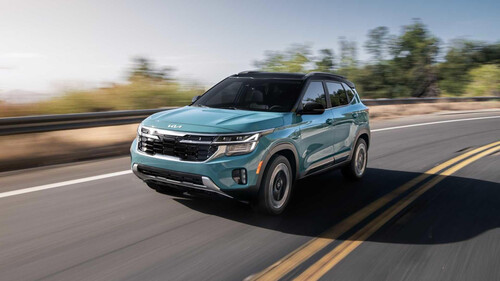
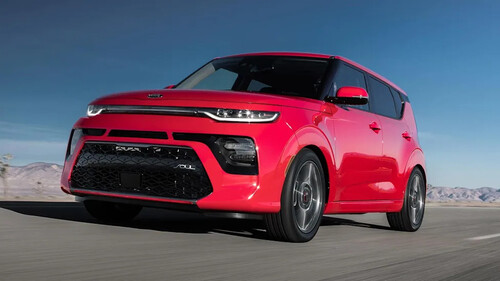
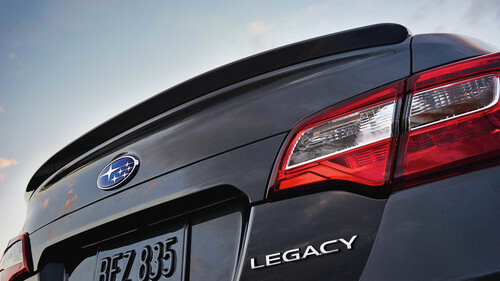
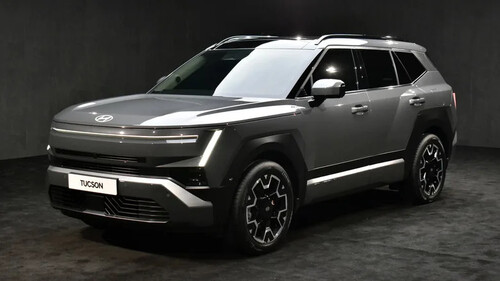
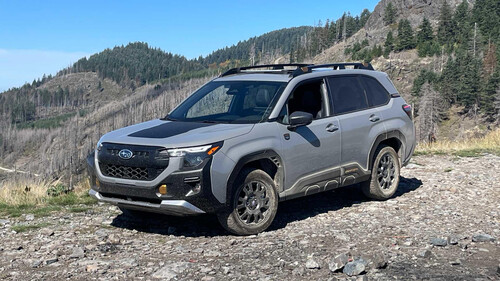
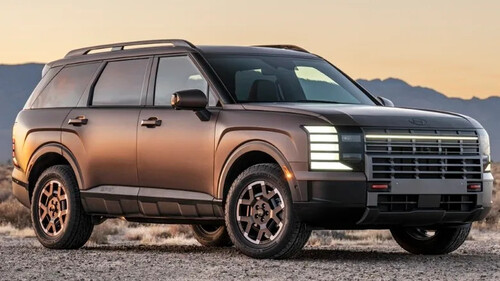
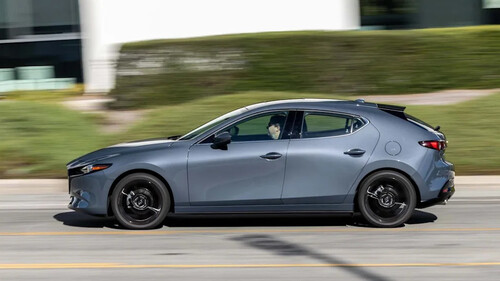
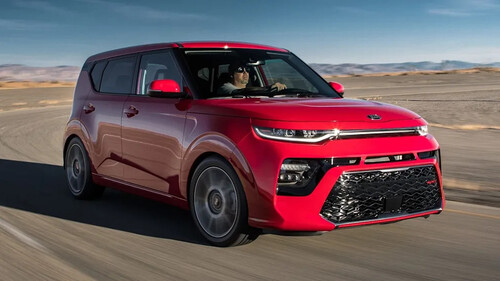
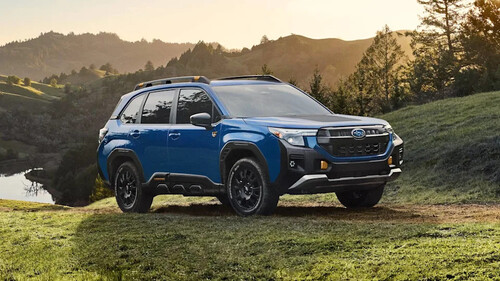
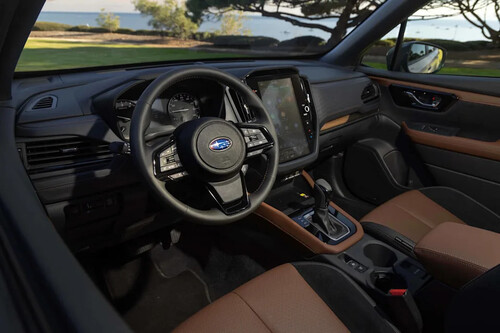
I Drove the 2026 Subaru Outback Touring in Downtown Portland. Here Are the Pros and Cons.AutoblogKristen BrownMon, September 28, 2026 at 12:30 AM UTCAdd us on GoogleAutoblog and Yahoo may earn commission from links in this article.If you haven't seen Kyle Huckabee's video called "Exploring Portland until I don't see a Subaru," it's hysterical. Using Google Maps, he explores Portland, trying to find at least one street that didn't have a Subaru parked on it. Unsurprisingly, he wasn't able to find one. His viewers weren't surprised (and neither was I), but watching the struggle was entertaining. For years, Portland, Oregon, was (and still is) known as a haven for Subaru Owners. At one point, data suggested it had the highest concentration of Subarus per capita. Now, the state of Vermont holds that crown—with 11.3% of new car sales being a Subaru (therefore, one in every 8 new cars sold).Kristen BrownSo, when I had the opportunity to test a forest green 2026 Subaru Outback Touring in the Pacific Northwest (landing in Portland and driving into Washington), I felt like I was among family. It fit right in with the snowbirds in their mint-condition 2003 Outback LL Bean, and the younger folks in their Forester and Crosstrek hybrids or Solterras. In fact, it felt tailor-made for the City of Weird. Here are the pros and cons I experienced piloting a new Outback Touring.Related: Road Ethos Launches: The New Automotive Lifestyle Site You Should ReadWhat comes with the Touring trim?Kristen BrownThe Touring (and, of course, Touring XT) is the cream-of-the-crop. It's the Subaru trim that doesn't feel as Subaru-y, because it has genuine leather, a noticeably quieter and smoother ride, and more technology than the other trims. If you're like me and enjoy a well-put-together list, here's what makes the Touring trims worth the splurge:AdvertisementAdvertisementWindshield Head-Up Display (HUD): Projects speed, navigation prompts, and EyeSight safety alerts directly onto the windshield ahead of the driver.Smart Digital Rearview Mirror: Flips from a standard mirror to a live camera feed mounted in the rear liftgate glass. It's essential when tall rear passengers or roof-high cargo block your rear window view.DriverFocus Distraction Mitigation System: Uses a dashboard infrared camera with facial recognition to detect drowsy or distracted driving and automatically recall seat/mirror presets for up to five registered drivers.Highway Hands-Free Assist: Touring models equipped with the expanded EyeSight suite gain semi-autonomous, hands-free highway driving assistance on mapped access-controlled highways.Driver's Seat Power Cushion/Thigh Extension: The Touring's 12-way driver's seat includes a bottom cushion that extends outward to support longer legs and reduce fatigue on highway trips.Acoustic Laminated Front-Side Glass: Touring adds sound-insulating laminated glass to the front side windows (in addition to the windshield) to deaden wind and road noise at 70+ mph.Java Brown Nappa Leather Interior: If you opt for Nappa leather on the Wilderness, you can only get Slate Black with copper stitching. The signature Java Brown interior is reserved strictly for the Touring.Power-Folding Mirrors with Auto-Tilt: Touring's satin-chrome mirrors fold in automatically when you lock the car and tilt down toward the curbs when you shift into reverse.Integrated Retractable Roof Crossbars: The Touring features Subaru's signature swing-out crossbars built directly into the rails that stow lengthwise when not in use to cut drag and wind noise.The leather, increased sound dampening, and the emergency stop assist with safe lane selection make it worth the $45,395 price, without a doubt. If you get the XT, which comes with the 2.4-liter turbocharged engine over the base 2.5-liter naturally aspirated engine, you're looking at $47,995—which is still quite the bargain, all things considered.What came most in handy while driving in Portland and Vancouver?I landed in Portland around 12 pm, right before traffic hit. Still, having Subaru's adaptive cruise control (one of my favorite systems, next to Toyota's) while crossing over the Columbia River Gorge into Washington was incredibly helpful. It kept me a safe distance away from the car in front of me—I always set it to the maximum distance—and reacted immediately when a car cut in front of me. Something that happened multiple times, despite leaving plenty of room between myself and the car in front. Subaru and Toyota's systems are some of the best at reacting to these scenarios, and it made it so much easier to relax, knowing that the Subaru had my back. And front.Kristen BrownOf course, the new generation of EyeSight was very much appreciated, too. Subaru's new system uses three cameras in addition to millimeter-wave radar mounted behind the rear-view mirror, and the way it works is pretty cool: the cameras are used primarily to help the car keep centered in its lane, assess the distance between it and the car in front (as well as see cars that merge into its lane), pre-collision braking, and pedestrian/cyclist detection. The radar system, then, is used for the more advanced systems, like the Touring's highway hands-free assist and advanced lane-changing feature. It, in combination with GPS data and 3D maps, helps the car navigate with a lot more precision. Like I said—this is only on the Touring and Touring XT models.Kristen BrownDowntown, having the advanced tri-camera setup worked wonders to bring peace of mind, especially since Portland's inhabitants aren't known to heed most traffic or moving laws. Especially the cyclists who tend to make up their own lanes and rely on a driver's reflexes to whizz through the city's crowded, narrow streets. The Touring comes with Subaru's DriverFocus technology as standard equipment, and while it makes the Touring's emergency stop assist with safe-lane detection possible (which is a cool feature in its own right that I'll talk about in a bit), it did get kind of annoying to have the car yell at me to keep my eyes on the road when I did so much as check a mirror, peer at the screen for navigation directions, or reach for my drink to take a sip. Though I feel like you'd get used to that after a while.Related: 2026 Subaru Outback Touring vs. Wilderness: Which $45K Mid-Tier is the Smarter Buy?While I didn't see snow, I was glad to have the company's legendary AWD systemI'll never forget the time my husband had to travel into Portland from Bend a few years back for Subaru's technician training. He went in late September or early October, and it randomly started snowing. He'd never been happier that he was in his own Subaru fitted with all-weather tires, because he was able to drive around just fine. The others in front or rear-wheel drive cars and all-season tires, though? They weren't so lucky. He called me to tell me about how many people were sliding around the streets, how many accidents he'd driven by, and how long it took him to get to the mountain pass between Portland and Bend.Kristen BrownI knew that snow of that caliber wasn't likely, but that's the thing about PNW weather: it's not known to be predictable. So, while the company's AWD system may be overkill for those of us who live in the city and very rarely venture to the mountains, when you need it—like those in that Portland scenario—you're so, so glad you have it. As we all know by now, AWD can also come in handy in conditions that don't involve snow or ice. It's why I own one even though I'm in the San Francisco Bay Area now.Then there's the traditional Subie visibilityOne of my favorite "features" in any Subaru, new or old, is the outward visibility. Subaru does an amazing job of making their cars—even the sporty ones—easy to see out of. So, while you have all the fancy EyeSight tech, you don't need it because you can see everything. I was so glad to see that Subaru maintained that for the redesigned Outback, because most people feel a lot more secure driving a car that's easy to see out of.Kristen BrownAdvertisementAdvertisementI didn't have my kids with me for this trip, but they loved the Wilderness model I tested before because they could see so well out of it. My kids thankfully don't suffer from carsickness (maybe because they grew up in my Forester, but I digress), but if your kids were prone to carsickness, they would be so happy in the back of an Outback. I've had several of my friends say that my husband's WRX was the only car they've ever been in where they didn't feel carsick, if that says anything.Related: Subaru Outback Vs. Toyota RAV4 at 250,000 Miles: Closer Than You ThinkMileage isn't that bad for a mechanical AWD carIf it isn't an EV or the BRZ, every Subaru has a mechanical AWD system. It's why the hybrids don't get as good of mileage as their competitors. My own Subaru only gets 20+ MPG when I'm on the highway; otherwise I average about 17 to 18 MPG. But, then again, my Forester doesn't have a CVT. Subaru's new CVT allowed me to get an average of 26 MPG combined, doing both highway stints and city driving. It's not anything groundbreaking, but for a truly AWD Outback, it's definitely impressive.Kristen BrownWith the average cost per gallon for Regular being $5.12 in Portland, that kind of mileage is still very usable for families (and otherwise). I wouldn't be shocked if I were able to get 28-30 MPG on the highway.The price, even for the top-tier trim, is incredibly accessibleAs I mentioned earlier, there are two trims of the Touring model: the naturally aspirated Touring, which starts at $45,395, and the turbocharged Touring XT, with a base price of $47,995. I know that seems like a lot for the typical Subaru Outback buyer, and it might be a tougher sell when you look at what the Outback Touring competes with. The first is the Mazda CX-50—and I'd argue it's the Touring's closest competitor, since it comes with standard AWD, a gorgeous leather interior, upscale exterior updates, and, dare I say, a wagon-inspired shape. The CX-50 is remarkably less expensive, even if you go with the turbocharged version. The naturally aspirated 2.5 S Premium starts at $34,900, while the 2.5 Turbo Premium Plus starts at $42,900.Kristen BrownHowever, you get a lot less. Visibility isn't nearly as good, cargo space is less, the ride isn't as plush, and the interior has a stark lack of modern technology. The multimedia screen isn't even a touchscreen unless you're using Android Auto or Apple CarPlay. In 2026. You also don't get nearly as fancy safety and convenience features like hands-free highway driving, either.AdvertisementAdvertisementHere are other cars it competes with, and the main differences between it and the Outback:Toyota Crown Signia: Yes, I know—it's a hybrid, which sets it apart a bit further from the Outback—but it's pricey. There are only two trims, the XLE and the Limited, ranging from $44,690–$49,090; you're automatically going to be paying more than you would for the Outback, even if you didn't go with the optional Technology Package or any of the premium color options. You do get 39/37 MPG, and it's the only other option you have that looks like a wagon.Volvo V60 Cross Country: This one's a bit more expensive with a starting price of over $53,000, but it speaks the same mantra as the old Outback. It's an actual wagon with all-wheel drive; it comes with a turbocharged 2.0-liter four-cylinder engine with a mild hybrid assist for 247 HP, a luxurious and spacious interior, and it earns about the same mileage as the Outback, too. The main difference here is the price. But if you're shopping for a Touring XT, the price of $53,000 isn't that far off. Plus, Volvo's ADAS suite is absolutely comparable to Subaru's.Kia Sportage: I threw the Kia Sportage in here because, like the Outback, there are many different ways to configure it, there's a lot of storage space at your disposal, all-wheel drive is part of the equation, it's very tech-forward, and there's so much bang for your buck. It's not wagon-esque, but for the gas-only and hybrid price, it does aim its sights directly at potential Outback buyers.Hyundai Santa Fe: This one looks like it could compete with the Outback because of its longer body, all-wheel drive, outdoorsy marketing scheme, family-friendliness, and price. The Santa Fe's biggest advantage is the third row (though dinky) and the hybrid option for customers. Like the Sportage, its price range is eerily close to the Outback's, so first-time Subie buyers could be easily lured into Hyundai territory with this one.Subaru Forester Hybrid: Yes, I listed another Subaru model as a possible predator. And that's because Subaru's been so, so slow to release a hybrid version of the Outback. Families who want to save MPGs around town or in traffic, cargo space, and a mechanical AWD system may be drawn in by the Forester's similar sizing and hybrid capabilities while maintaining Subaru's AWD system. Plus, even as the Touring Hybrid, it's less expensive.Honda CR-V: The Honda CR-V is a tried and true SUV, and while it competes more with the Forester, the fact that there's a hybrid model available does make the Outback look a bit pricey in comparison. You still get AWD, cargo space, excellent visibility, relative simplicity, and competitive pricing compared to the Outback. Hondas are safe, but even the top-tier trim lacks critical safety features like emergency stop assist we see in the Touring.What I'm getting at here is, there's nothing that directly competes with Outback buyers, save for one more expensive European wagon, and a few other run-of-the-mill SUVs. There's not much that matches the Touring's safety features, quiet ride (thanks to the increased sound dampening), AWD capabilities, luxurious interior, and advanced safety features. The price, even for the turbocharged model, feels like a real bargain in comparison.Related: Subaru Outback Vs. Toyota Crown Signia: One Winner For 2026Final thoughts: 10/10, would drive through Portland againAside from blending in while driving a new Outback, Subaru's EyeSight system, pedestrian and cyclist detection, decent mileage, all-wheel drive capabilities, excellent visibility, and poised, quiet ride made it a perfect fit for the PNW lifestyle. No wonder Subarus are so popular in the Northwest. There wasn't a single gripe I had with it, aside from the fact that I didn't have one in my driveway.AdvertisementAdvertisementThis story was originally published by Autoblog on Sep 28, 2026, where it first appeared in the Features section. Add Autoblog as a Preferred Source by clicking here.