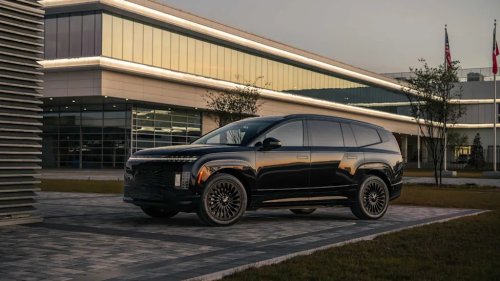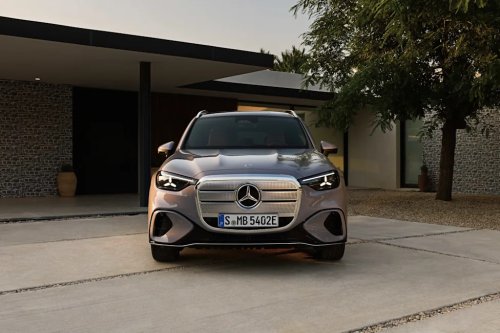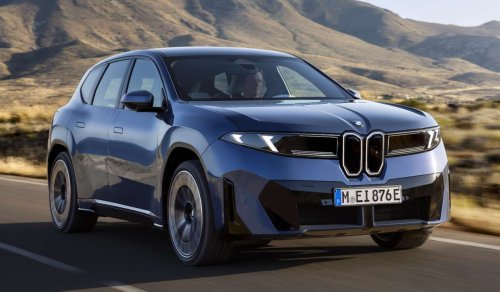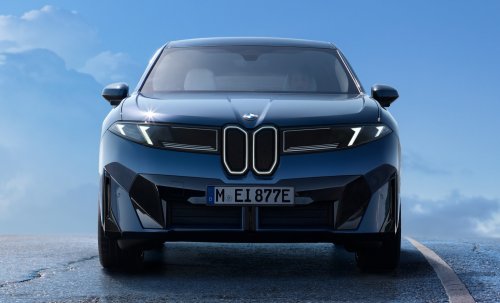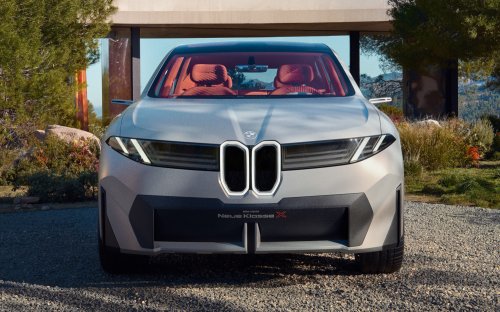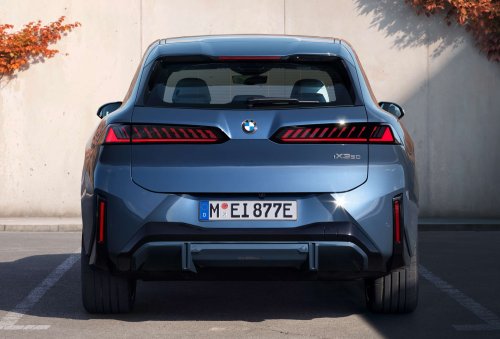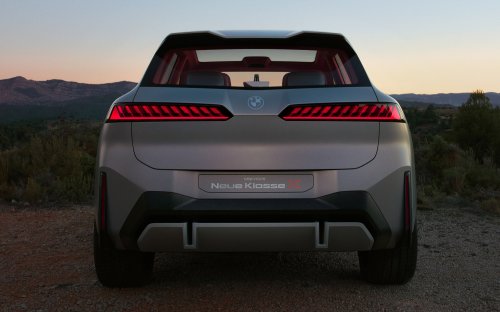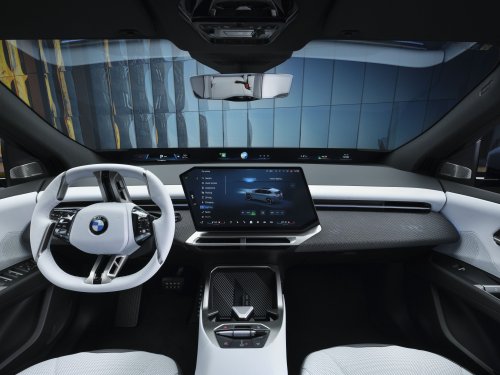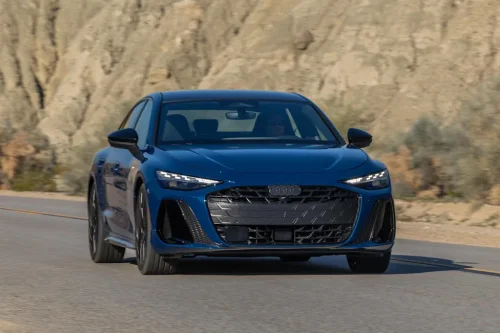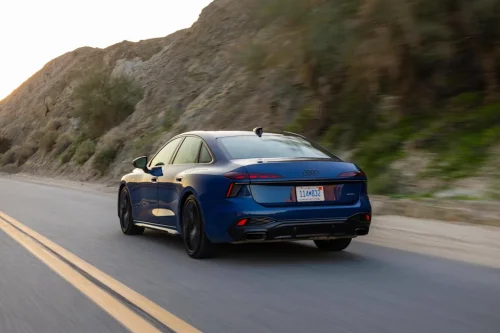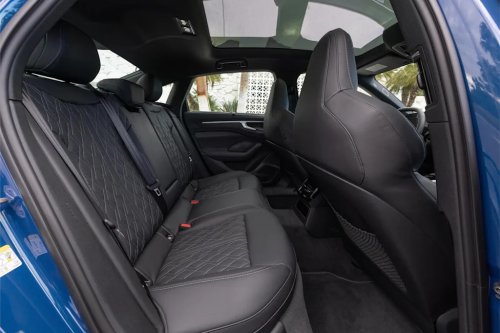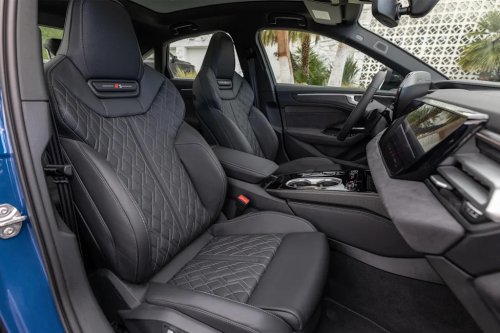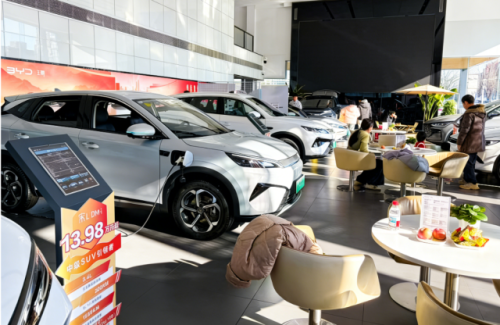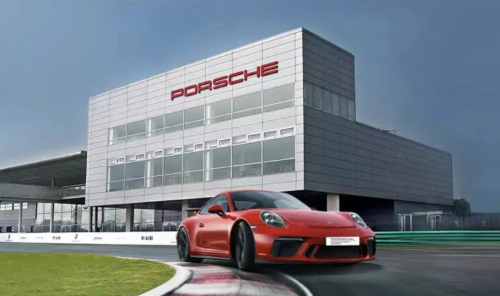
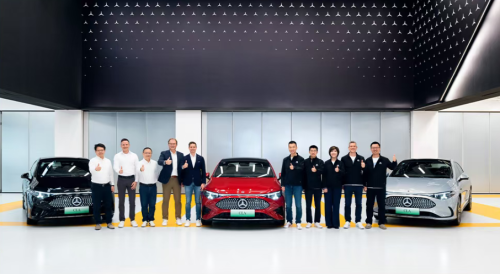
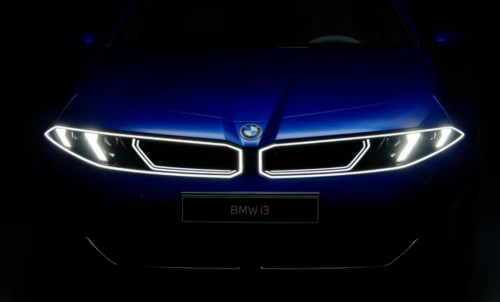
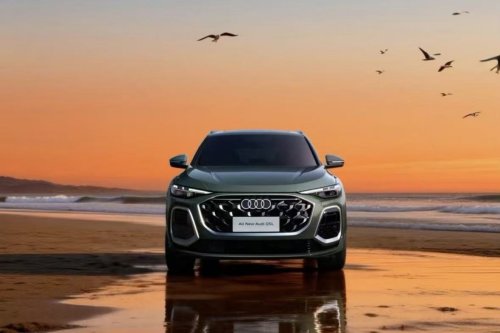
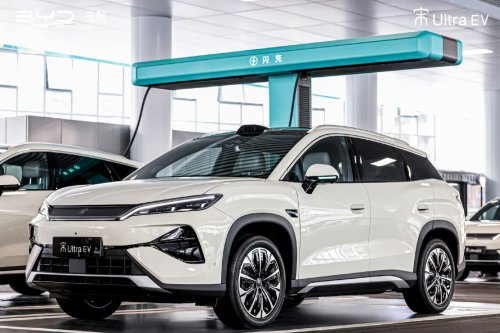



















Gasgoo Munich- As China's luxury car market enters 2026, brands are pursuing divergent strategies.On one side, Porsche is shrinking its dealer network and Mercedes-Benz is dialing back its aggressive electric push to reinforce a "dual-track strategy." On the other, BMW has globally unveiled its new-generation i3, while Audi is launching intelligent-driving models developed in partnership with Huawei—and gaining recognition.Some are slowing down; others are accelerating. Yet beneath this apparent contradiction lies a single question: In the era of smart EVs, who gets to define "true luxury"?Mercedes-Benz and Porsche Pivot to PragmatismSales data from 2025 signaled challenges for both Mercedes-Benz and Porsche.Porsche's official delivery figures show its China volume fell to 41,900 units in 2025—a 26% drop from 56,900 in 2024. This marks the fourth consecutive year of decline for the brand in China. From a peak of 95,600 units in 2021 to fewer than 42,000 today, Porsche's sales in the country have declined by more than half over five years. Mercedes-Benz was not unaffected either, with sales falling 19% year-on-year to 552,000 units in 2025.Image source: Porsche ChinaFacing this reality, Porsche launched a strategic adjustment it calls "quality over quantity." In January 2026, Porsche China CEO Alexander Pollich told a media briefing that the company had already cut its dealer count to 114 in 2025, down from 150, with a target of shrinking further to 80 by 2026. That means within two years, Porsche's sales network in China will be reduced by nearly half.Alexander Pollich acknowledged in an interview that as a niche luxury brand, Porsche cannot change the macro environment. Its only path is to strengthen its core and stick to the strategy of "quality over quantity." He emphasized that Porsche won't compromise on sales or market share, but rather maintain a supply-demand balance to protect brand and product value. "Chasing short-term sales is harmful to long-term success," he argued.Financial reports may reveal the deeper reasons behind this strategic choice. In 2025, Porsche's operating revenue fell to 36.27 billion euros from 40.08 billion euros, while sales profit dropped to 413 million euros from 5.64 billion euros. The group's return on sales fell sharply from 14.1% to 1.1%. The profit decline was driven largely by about 3.9 billion euros in special charges, covering product strategy adjustments, corporate restructuring, and battery-related costs. With profits falling so dramatically, Porsche's decision to consolidate and safeguard brand value appears rational and pragmatic.Porsche's "reduction" doesn't mean abandoning China. Alexander Pollich revealed that the Porsche Shanghai R&D Center has assembled a 300-strong engineering team with independent decision-making power to push for localized adaptation of new models at "China speed." Meanwhile, Porsche is evaluating several Chinese intelligent-driving suppliers and hasn't ruled out adopting local solutions. This combination of shrinking channels while deepening R&D is the core logic behind Porsche's "strategic withdrawal to advance."If Porsche's pullback is a "withdrawal to advance" at the channel level, Mercedes-Benz's strategic adjustment represents a "rational correction" at the target level.Image source: Mercedes-BenzIn early 2026, Mercedes-Benz outlined its product roadmap: by the end of the year, it will launch more than 15 new or refreshed models in China—its most extensive product campaign ever. Reports indicate that six of these will be pure electric, with internal combustion engine models making up the majority. Compared with the bold 2021 pledge to go "all-electric by 2030" and the aggressive target of EVs comprising 50% of sales by 2025, this plan marks a significant shift.Oliver Thöne, a Mercedes-Benz Group board member responsible for Greater China, explained the shift during his first appearance at the global earnings call. He stated that China remains a core market for Mercedes' global strategy. Faced with intense competition and economic volatility, the company will pursue "fine-tuned strategic adjustments"—focusing on long-term investment and deep localization rather than short-term sales competition.Notably, Mercedes' "adjustment" doesn't mean abandoning intelligence. On the contrary, its strategy of "equal intelligence for ICE and EV" is rolling out comprehensively. "Starting in 2026, we will be the first brand to achieve 'equal intelligence' across all market segments," Oliver Thöne declared. That means ICE vehicles will also get the latest tech, including the MB.OS operating system, L2+ driver assistance, and AI cockpits.Image source: Mercedes-BenzOn the technical front, Mercedes has taken concrete action. In February 2026, it signed an MoU with Momenta to deepen cooperation on intelligent driving. The system is already fitted in the new all-electric CLA and will be installed in nine new models across all segments by year-end. Meanwhile, the Doubao AI model integrated into Mercedes' in-car digital system has achieved a 97% interaction activity rate in pilot vehicles. These moves show Mercedes is using intelligent tech to uniformly elevate the value of its entire lineup—regardless of whether it burns fuel or runs on batteries.With technology routes still unsettled, retaining ICE options is not only a rational response to market reality but also a responsible way to give consumers more choice.Zhang Xiang, secretary-general of the International Intelligent Transport Technology Association, endorsed this model of "division of labor" between automakers and tech suppliers in an interview with Gasgoo. "This model is well-established. Automakers build cars; intelligent driving is the supplier's responsibility. Automakers can't do everything," he said. He added that in the long run, automakers developing their own driving tech might just be a temporary phase. "Once the technology matures, automakers will likely separate it. Their main job is building cars."BMW and Audi Shift Gears and AccelerateIn contrast to the "adjustment" seen at Mercedes and Porsche, BMW and Audi are launching a "competitive response" in 2026. These two German luxury brands have chosen to "accelerate their efforts" to meet China's wave of intelligent technology head-on.Image source: BMW ChinaOn March 18, 2026, the new-generation BMW i3 made its global debut. As the first sedan on BMW's Neue Klasse platform, this car arguably embodies the brand's "decisive" determination.Technically, the new i3 is a strong contender: an 800V high-voltage architecture, sixth-generation eDrive system, and a WLTP range of 900 kilometers. It supports up to 400 kW ultra-fast charging, adding 400 km of range in just 10 minutes. This means BMW has matched—or even exceeded—mainstream Chinese EV startups on the core metrics of range and charging speed.BMW Group Chairman Oliver Zipse has called the Neue Klasse "the most forward-looking strategic project in our history." The "newness" of this generation is essentially a clear departure from BMW's past "converted-ICE" platforms. As the new i3 debuted, BMW confirmed that the current i4 will end production by the end of 2026, drawing a line under that transitional product.For its largest single market, China, BMW will launch a long-wheelbase version of the new iX3 in 2026. Developed jointly with local teams specifically for China, the car is described as "the BMW model with the most Chinese characteristics."Alongside its product campaign, BMW made key organizational changes. In January 2026, the company announced that Sean Green, who had served as President and CEO of BMW Group Region Greater China for over 12 years, would be succeeded by Christian Ach on April 1. Christian Ach previously oversaw BMW's operations in Germany, where he achieved dual growth in sales and profit and increased EV penetration to 20%.The message behind this appointment is clear: BMW wants to bring its European electrification experience to China while leveraging local R&D to restore consumer interest in the brand.Audi's growth strategy, however, differs from BMW's.Image source: AudiIn January 2026, FAW-Audi announced at its "10 Million User Gala & New Product Launch Night" that the all-new Q5L had officially gone on sale. By March, the entire lineup will offer Huawei's Qiankun intelligent driving as an option, marking the comprehensive implementation of the Audi-Huawei partnership.The partnership began six years ago with joint innovation. By deeply integrating Huawei's Qiankun tech with Audi's mechanical tuning on both the new PPE electric platform and the PPC combustion platform, the collaboration achieves precise control by the driving system while retaining Audi's signature luxury driving dynamics.Zhang Xiang views the Audi-Huawei partnership as the right path for foreign brands to close the intelligence gap. "China leads the world in intelligent driving. Huawei and Momenta are top-tier suppliers representing the global cutting edge. Partnering with Huawei can significantly boost Audi's product competitiveness," he said.He added that such cooperation could add brand value. "Huawei is a widely recognized brand in China. Leveraging that brand for marketing helps Audi gain attention and visibility, which aids in closing the gap with Chinese startups' pace on intelligence."On one hand, Audi aims to maintain its customer base with the PPC intelligent ICE platform, using Huawei's tech to achieve a competitive edge through intelligent ICEs. On the other, it hopes to capture high-end EV market share with the PPE platform, matching startups with 800V architectures and long-range configurations.In 2026, Audi plans to launch eight new models in China, covering ICE, plug-in hybrid, and pure electric powertrains. The goal of this "most extensive" product campaign is singular: reclaim lost market share with "China speed."Organizationally, Audi also made a key leadership change. In February 2026, Audi appointed Daniel Weissland as general manager of FAW-Audi Sales Co. The move reflects Audi's rethinking of its China strategy—the new leader needs global vision and experience in electrification and intelligent transformation to adapt to the market's rapid shifts.Converging Paths: Fighting to Redefine "True Luxury"Examining the strategies of all four brands reveals a common logic: While foreign luxury brands' strategies in China diverged significantly in 2026, all paths lead to the same destination—fighting for the right to define "true luxury" in the smart EV era.Consider the data: In 2025, Mercedes sold 552,000 units in China (-19%), BMW 626,000 (-12.5%), Audi 617,000 (-5.6%), and Porsche 41,900 (-26%). In sharp contrast, local premium brands are rising fast. Cui Dongshu, secretary-general of the CPCA, noted that while the market share for models priced above 400,000 yuan slipped from 6.3% to 5.2% in 2025, brands like Li Auto, NIO, and AITO have carved out a powerful share in the 300,000-plus yuan segment.Even more telling is the structural shift in the premium market. Data shows that in December 2025, sales of the Zunjie S800 reached 4,223 units—surpassing the combined total of the Porsche Panamera (1,593 units), BMW 7 Series (1,429 units), and Mercedes-Maybach S-Class (1,118 units). The signal is clear: the criteria for high-net-worth individuals in China are shifting from "brand prestige" to "technological experience."Whether it's Mercedes, Porsche, BMW, or Audi, their new moves in China are all essentially responding to the same proposition: Luxury is no longer about brand prestige—it is about the democratization of technology.Zhang Xiang compared the strengths and weaknesses of foreign luxury brands against Chinese startups. "In terms of profitability, Mercedes, BMW, and Audi earn significantly more than Chinese startups, many of which are loss-making on paper. Unlike startups, international brands have ICE models alongside EVs, offering a richer range. Intelligent driving is indeed a weak point for them, but partnering with Chinese suppliers can help bridge that gap."Image source: @BYD AutoToday, intelligence is the core competency. The "luxury halo" that traditional brands once relied on as a moat is being leveled. Replacing it is "tech luxury": advanced driver assistance, seamless cockpits, 800V architectures, and ultra-fast charging. These technologies are becoming the weapons Chinese brands use to redefine the standard of luxury.On the product front, 2026 is a critical window for the German triumvirate to introduce numerous models to the market. BMW plans to launch about 20 new cars in China, including Neue Klasse models with sixth-generation eDrive tech and new electronic architectures. Mercedes will roll out over 15 new or refreshed models, covering mainstream and high-end segments. Audi also views 2026 as a "big product year," pushing forward its localized model strategy.Facing the upheaval in China, foreign luxury brands are taking different paths but arriving at the same destination. Whether it's Porsche's channel reduction, Mercedes' target adjustment, or BMW's platform shift, these seemingly disparate decisions are essentially realistic choices based on each brand's positioning, financial health, and tech reserves. Regardless of the path, the shared goal is singular: survive in China—and survive for the long haul.Conclusion:The battle for the right to define luxury is far from over. But one thing is clear: in China, the world's most fiercely competitive auto market, no one can rest on their laurels. Luxury is being redefined, and the power to define it belongs to the brands that truly understand Chinese consumers.As Ola Källenius, chairman of the Mercedes-Benz Group Board of Management, told German newspaper Handelsblatt: "In China, more than 100 automakers are competing fiercely for the narrow territory of the premium market. In recent years, buying sentiment in this market has remained persistently weak, creating unprecedented competitive pressure."He calls this intense competition "Darwinian"—only those brands that can adapt to environmental changes will survive the process of natural selection.