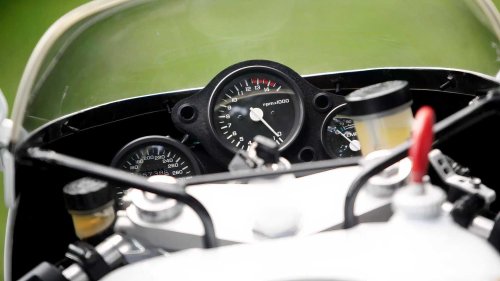
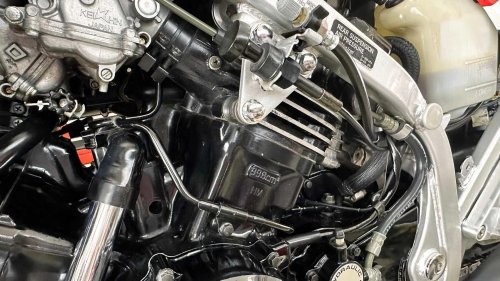
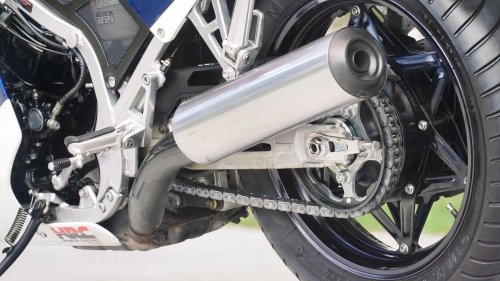
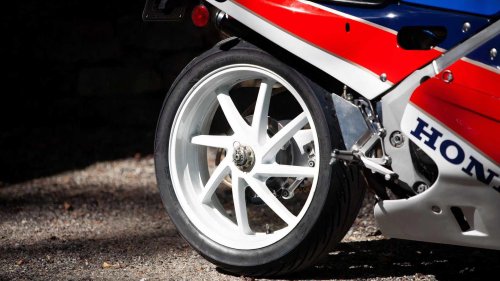
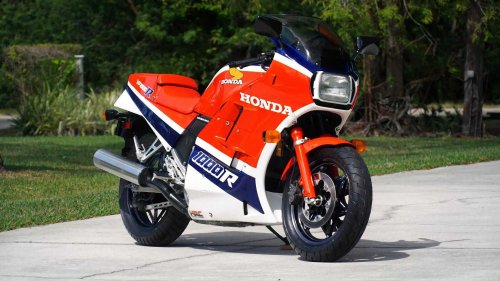
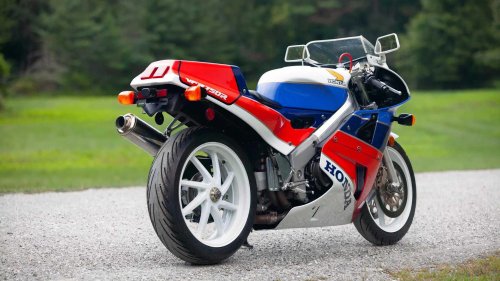
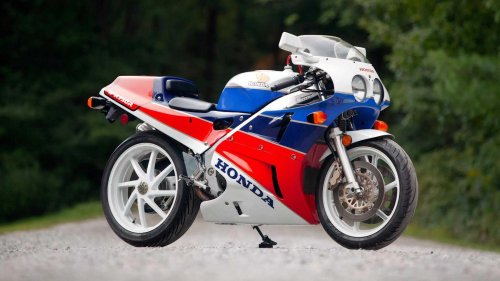
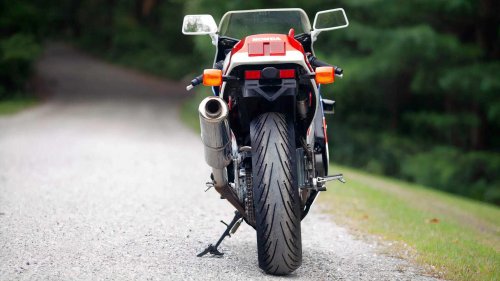
While this is certainly no rule or law, it definitely feels like while some motorcycles make sense on paper, there are others that make sense only after you’ve heard them clear their throat, watched the tach swing past numbers that feel rude for the era, and realized the engineers may have been working with slide rules, caffeine, and a grudge against Italy.In the 1980s, the exotic sportbike formula usually came from Europe. And it featured drama, scarcity, a soundtrack that made nearby traffic feel underdressed, and ownership demands that could routinely test a rider’s patience. Then, Honda, the company your sensible uncle trusted with his Accord, decided it could build something with that same mechanical theater using a V4, race hardware, and the kind of reliability reputation that didn’t require a prayer mat in the garage. Italian Soul Usually Came With Italian Problems Bring A TrailerGreat Italian sportbikes always had a way of making rational thought look very uncool. They were the bikes riders bought with their hearts first, their wallets second, and their calendars third, because maintenance could become its own side quest. That was part of the pull, really. An exotic bike had to feel a little unreasonable, it had to look like it belonged in a pit lane rather than a parking lot. It had to make noise that sounded engineered by people who considered subtlety a full-blown insult.That emotional charge is what made the best European machines feel different from mainstream Japanese sportbikes. A fast inline-four could be brutally effective, but it often delivered its speed with polished efficiency. The exotic stuff delivered presence. You arrived with a heat haze, a slightly worrying idle, and the sense that the bike had opinions about your life choices. Where's The Drama? Bring A TrailerHonda understood that pull better than its sensible image suggested. By the early '80s, Japanese manufacturers were already building fast, reliable motorcycles that could embarrass older European machinery on a stopwatch. The only thing missing was drama. Honda’s strangest answer was to stop chasing only straight-line horsepower and start building bikes that felt mechanically special before they even moved. Honda Had A Stranger Answer Than Another Inline-Four Bring A TrailerThe easy path in the '80s was the inline-four. It made power, packaged cleanly, revved hard, and gave Japanese manufacturers a recipe they could improve almost every year. Honda, being Honda, looked at a sensible solution and apparently decided it needed more gears, more cylinders in stranger places, and more ways to make engineers feel important at dinner.The company’s V4 program was ambitious, and sometimes too ambitious for its own good. Early liquid-cooled V4s arrived with genuine technical promise, but they also carried the weight of rushed development and early reliability concerns in some models. Cam-chain and top-end issues hurt the family’s reputation, which is the sort of thing that makes buyers nervous even when the brochures look brilliant. Nothing kills showroom confidence quite like a performance engine that develops trust issues. Not Without Its Trade-Offs Bring A TrailerYet the idea itself was too interesting to abandon. Honda saw the V4 as a racing platform, not just a showroom filler. The layout had endurance-racing logic, a compact feel, and a sound that sat somewhere between precision machinery and expensive trouble. More importantly, it gave Honda a way to make a Japanese sportbike feel different.The secret sauce was the gear-driven cam system. Instead of using chains to drive the cams, Honda used a train of gears for more precise valve timing., which is key because racing engines live and die by repeatability, especially at high rpm. The trade-offs were noise, cost, and weight, because apparently the universe insists on collecting payment whenever engineers have fun. The VF1000R Walked So The RC30 Could Run Bring A TrailerThe first major strike was the 1984 Honda VF1000R, a motorcycle that looked like it had been smuggled out of an endurance paddock with lights added during a lunch break. It used a 998cc liquid-cooled V4, gear-driven cams, a full fairing, high-spec chassis hardware, and a visual attitude that made most showroom bikes look like they’d dressed for casual Friday. It was also big, heavy, expensive, and not exactly shy about asking the rider to work for it.Output was brilliant for the time: the VF1000R made 130 horsepower and weighed 520 pounds (dry), with a U.S. price of $5,698. Those numbers explain both sides of the bike. The engine had serious muscle, with strong low-end and a steady climb toward the top of the tach, but the bike’s size and mass followed it everywhere. On fast roads, that made it feel planted and serious. On tighter roads, it could feel like a racebike that had eaten another racebike.The VF1000R also carried genuine exotic hardware. It used nine gears to drive its four cams, and its race connection traced back to Honda’s FWS1000 endurance racer. Titanium connecting rods added to the sense that Honda wasn’t merely decorating a streetbike with racing stickers. This was a serious effort to translate competition ideas into something a customer could buy, insure, and occasionally ride to work if their wrists had done something terrible in a past life.Then came the 1988 Honda VFR750R RC30, and suddenly the rough sketch became the finished sculpture. The RC30 took the V4 idea and sharpened it into a homologation weapon built for World Superbike and endurance racing. It was smaller, lighter, rarer, and more focused than the VF1000R. It was a 416-pound, 112-horsepower, roughly $11,000 machine, which made it staggeringly expensive for the time and also one of the most serious Japanese production motorcycles ever built. Gear Whine Made Them Feel Nothing Like Normal Fours Bring A TrailerThe RC30’s magic came from the way all its expensive little decisions worked together. Its 748cc 90-degree V4 used gear-driven cams, titanium connecting rods, redesigned cylinder heads, and a 12,500 rpm redline. The engine was all about polish, response, and that addictive sense that every internal part had been weighed, argued over, and installed by someone who cared too much.It also had a 360-degree crank, which gave the exhaust a flatter, harder character than many riders expected. The sound wasn’t the operatic shriek of an Italian four-cylinder fantasy. It was stranger than that, a droning, rasping V4 note with a mechanical undertone that made the bike feel busy even when it sounded composed. Think of it as Honda’s version of expensive noise: less hand-waving romance, more watchmaker with a superbike budget. Honda's Version Of Expensive Noise Bring A TrailerThe chassis brought the same attitude. The RC30 used an aluminum beam frame, fully adjustable suspension, magnesium wheels, big brakes, and a single-sided Pro-Arm rear end developed with endurance racing in mind. That single-sided swingarm wasn’t there only to look trick, though it absolutely did. It helped with quick rear-wheel changes, which mattered when the bike’s purpose had more to do with pit lanes than coffee runs. Honda Reliability Still Doesn't Mean Cheap Prices Bring A TrailerThe RC30 has aged into the kind of collectible that makes 'used Honda' sound like the setup for a joke. A 1990 example sold for $30,000 in 2023, while another auction house lists several RC30 sales in the $30,000-$50,000 range, with low-mileage bikes climbing much higher. One '88 RC30 with just 62 miles sold for $62,167, and a 1990 bike with 3 miles carried a $90,950 asking price. That’s a long way from cheap, even if it’s still calmer than full Italian-exotic roulette.While it's true that the RC30 won’t automatically punish you for wanting exotic-bike flavor, it also isn’t some casual old Honda you buy with loose change and park next to the lawn mower. Parts matter, condition matters, and the wrong missing bits can turn into a scavenger hunt with a superbike-shaped receipt. The difference is that beneath all the collector anxiety, there’s still a Honda V4 with race-bred hardware and a reputation that doesn’t require quite as much spiritual preparation before every ride.Sources: TopSpeed, Cycle World, Canadian Biker Magazine, Iconic Motorbike Auctions.