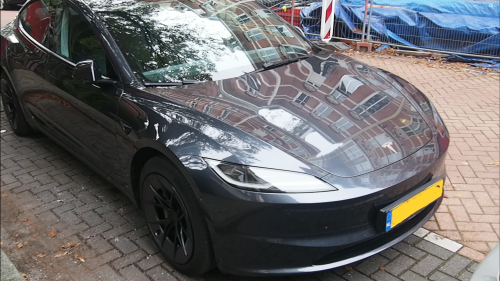
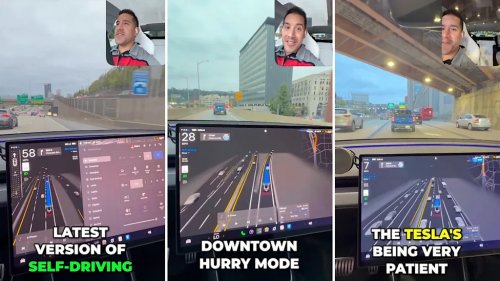
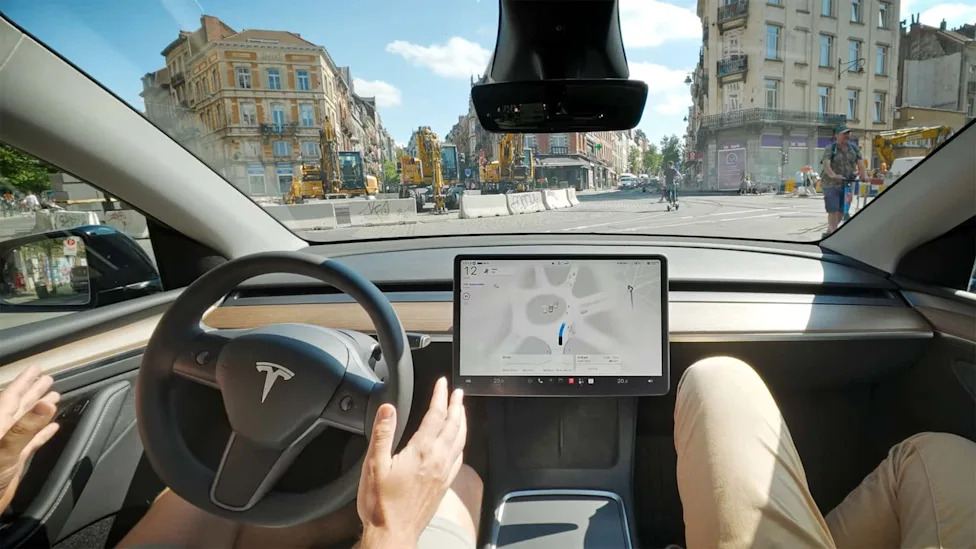
FSD in BrusselsThe driver stays off the controls through tricky Brussels traffic, even during a maneuver the occupants describe as illegal.Tesla FSD handled narrow Brussels streets, police and tricky junctions with mostly impressive confidence.Almost driving into a staff-only area at the airport forced the driver to take over after the car previously drove into the wrong lane through an intersection.FSD is expanding across Europe, but speed-limit concerns persist, and drivers must remain ready to take over.Driving through Brussels gave Tesla's Full Self-Driving plenty to think about. Between its narrow streets, tram tracks, and an intersection that even confused the occupants about who had priority, this drive offered a revealing look at how the FSD Supervised handles European roads and traffic. Both are quite different from the U.S., where the system got most of its training data from.The video posted by robot*irl compresses a roughly two-hour journey through Brussels and onward to Charleroi Airport into 17 minutes. Its occupants seem pretty enthusiastic about FSD, and the video shows why: it mostly works really well.AdvertisementAdvertisementEarly on, they praised its response to a reversing vehicle: it recognized that the car was stopped backing out and the Tesla continued without harsh braking. Later, it moved aside to allow police approaching from behind to pass, although the maneuver left it partially blocking a pedestrian crossing.Then there was that difficult junction with roadworks and tram tracks that left the occupants wondering whether it was even a true roundabout, and who had the right of way. They'd also placed a navigation waypoint in the middle of it, which made the Tesla go around twice before finding its way out.There was a less convincing moment at another junction, where the Tesla chose the wrong lane, then continued through anyway. One occupant called the maneuver illegal—which it was—although they noted that at least the car hadn't held anyone up or cut anyone off. The driver didn't intervene, though, even if the car didn't obey traffic rules and road markings in that particular instance.After leaving Brussels, the Tesla handled an unprotected and somewhat dangerous left turn across fast-moving traffic fine on its own, but things went wrong as it approached the airport drop-off area. It missed the lane they needed, prompting the driver to try the turn signal before manually stopping the car to keep it from entering a staff-only area. The driver had to take over to finish the trip.AdvertisementAdvertisementThe drive comes as FSD's European rollout gathers pace. The Netherlands approved the system in April, initially for use there. It subsequently reached Belgium, Denmark, Lithuania and Estonia. Despite its name, which has drawn scrutiny for being misleading, FSD remains an advanced driver-assistance suite that requires continuous human supervision, not a true eyes-off Level 3 system.Wider rollout and acceptance in Europe remain contentious. Swedish regulators expressed concerns about FSD exceeding speed limits. Drivers can set the speed offset as high as 50%, while FSD still adjusts the car's speed to suit the conditions. This edited drive illustrates how useful and advanced FSD has become, but it also shows that it's still far from foolproof and why regulators in some European countries are still wary of legalizing its use.More On Tesla FSDToyota's Tesla-FSD Like System Arrives In 2028, But With Key DifferencesCan Tesla FSD Take You Up The Steepest Dirt Road In America All By Itself?Tesla's FSD Lite Seems To Have A Hard Time Seeing Trees And LogsCritics Slam Tesla's Gamification Of FSD As Driver Hits 25,000-Mile Streak










 +32 others