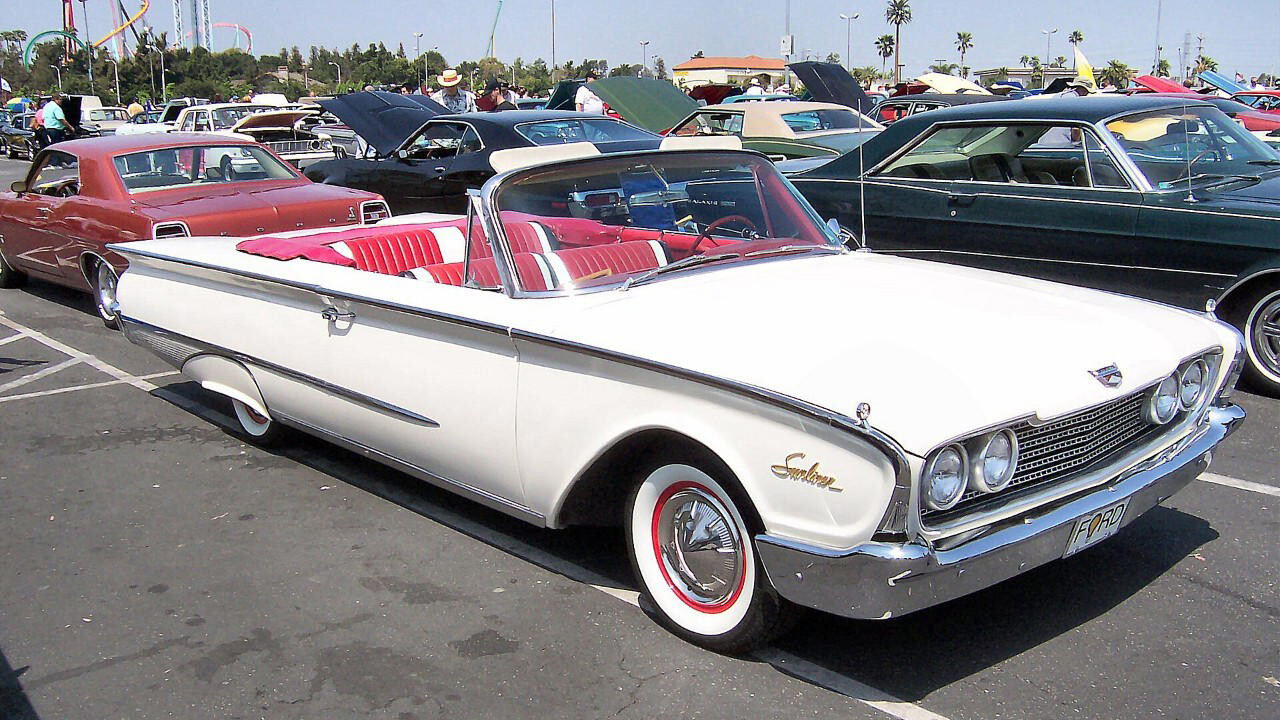
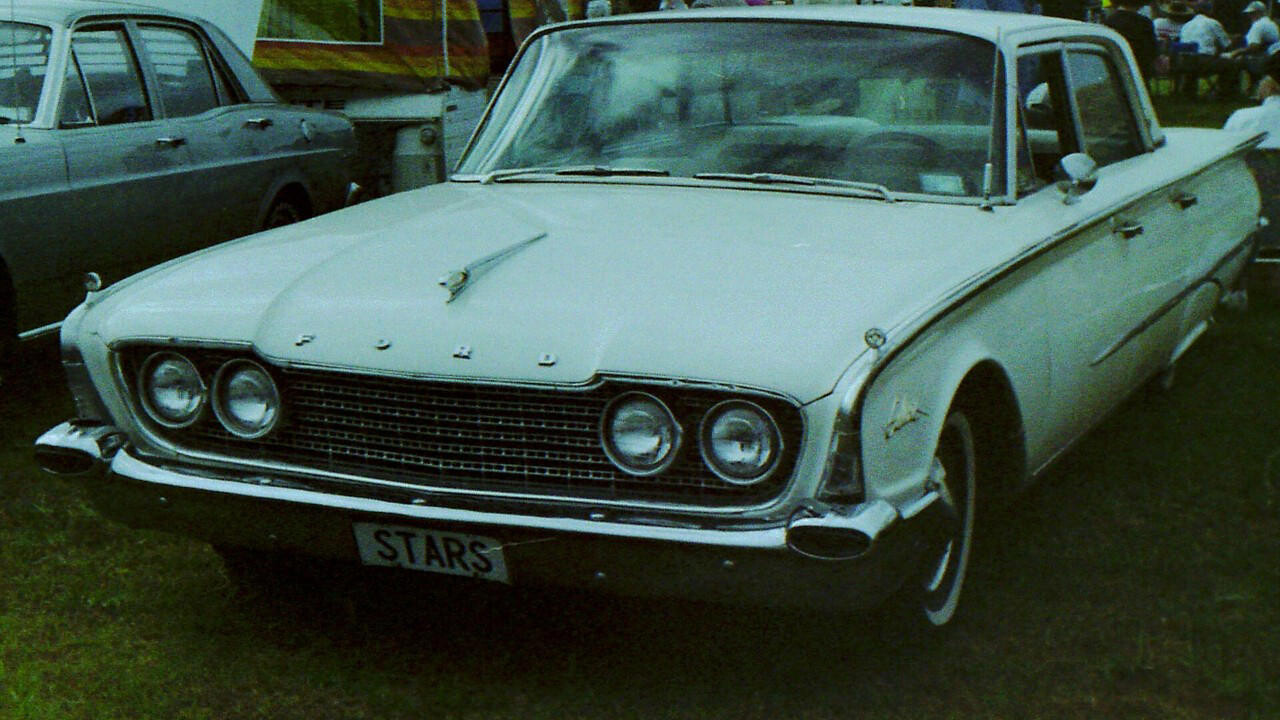
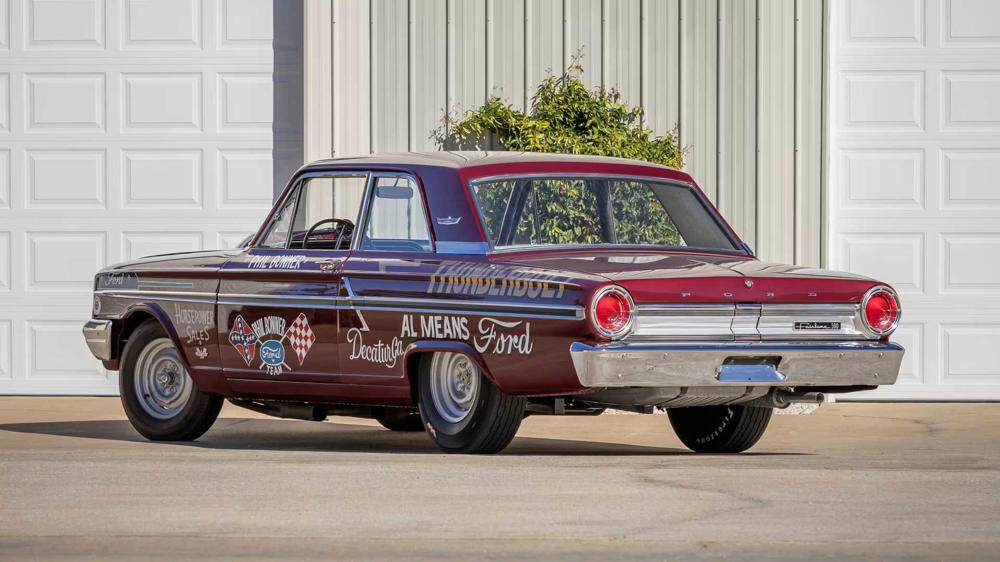
In 1963, Ford swept the top five finishing positions at the Daytona 500, proving that its full-size Galaxie was a force to be reckoned with. Since this was a time when NASCAR homologation meant more than just being able to buy a similar-looking car at the dealership the next day, serious Ford power was waiting on showroom floors. Ford Built A Family Car To Win Races Looking back, it’s easy to view the Mustang as inevitable, but before it became Ford’s performance darling, the Galaxie was out there doing work on the racetrack. Facing NASCAR's 7.0-liter displacement ceiling, Ford replaced its 406-cubic-inch FE V8 with a new 427 that pushed right up against the limit. There was also the evolving science of air resistance. Today the Galaxie’s boxy roofline could be diagnosed as aerodynamically problematic by a nearsighted fifth-grader from across a parking lot. In ‘63, Ford’s engineers were just getting around to solving it with a midyear revision to the roofline that introduced the comparatively sleek Sports Hardtop. Getting back to those homologation rules, these needed to be production-based racing machines, and so Ford couldn’t just build a handful for the big oval and call it a day. The new hardware had to land in Ford’s consumer lineup, which is how a full-size Ford that could comfortably fit the whole family ended up available with an engine that could hold up in a NASCAR race. The 427 Galaxie Came In Two Flavors The new 427 represented the top performance option for the Galaxie, but there were two ways a buyer could go. Both engines included cross-bolted main bearing caps, heavy-duty steel connecting rods, solid valve lifters, and an 11.5:1 compression ratio, all serious hardware in their own right, especially if the task at hand involved groceries and not swapping paint with Richard Petty. The two motors diverged into a choice between the well-known R-code and the lesser-known Q-code. The R used dual four-barrel Holley carburetors for 425 hp and 480 lb-ft of torque. The Q-code had a single four-barrel and made 410 hp, so despite the distinctions and all that extra intake hardware, just 15 hp separated the two. The Less Powerful Q-Code Proved Rarer Despite the modest difference, few buyers opted for the less powerful engine. Perhaps almost-top-of-the-line wasn't what buyers were after when ordering a car like this. According to Hemmings, Ford built just 1,038 Q-code examples, compared to conflicting estimates of 3,140 to 3,857 for the R-code. So while the R-code was slightly more powerful, the Q-code is significantly rarer. Because both options were available in regular Galaxie passenger cars, these don't exist today purely in stripped-down race cars. You can find them in very ordinary Fords, which indeed makes them not particularly ordinary at all. Why The R-Code Got All The Attention It’s not hard to understand why the R-code made the bigger mark with enthusiasts. In a time when horsepower was a dominant selling point and success on the track translated into moving units at dealerships, the dual-quad 427 was the engine to have. And besides, if you wanted to buy the car you saw in Sunday’s NASCAR race, the R-code was the closest thing on the showroom floor. The Q-code didn’t have the same bragging rights, and was a little less exciting on paper. The 15 missing hp might not have done it any favors, but not being able to point to the dual four-barrel Holley carbs under the hood that the R had might have accounted for even more of the difference. Sometimes, given enough time and just the right amount of sentimentality, the more interesting variant isn't necessarily the most powerful. So there’s something appealing about having not just a big, unassuming Ford with a fiery V8 under the hood, but one first ordered by someone who for whatever reason opted for just a touch of restraint. Sources: Ford, Hemmings

 Liked by Chloé Gagnon, Chloé Lewis


 Liked by Chloé Gagnon, Chloé Lewis