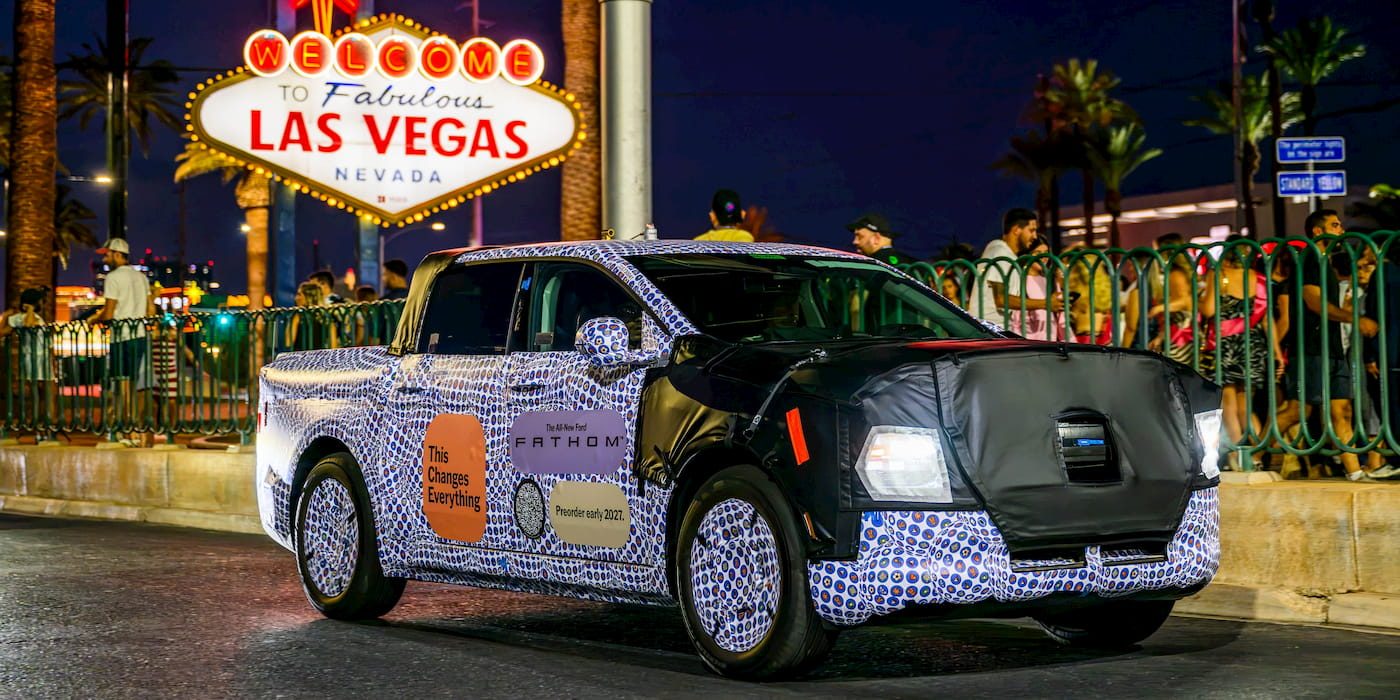
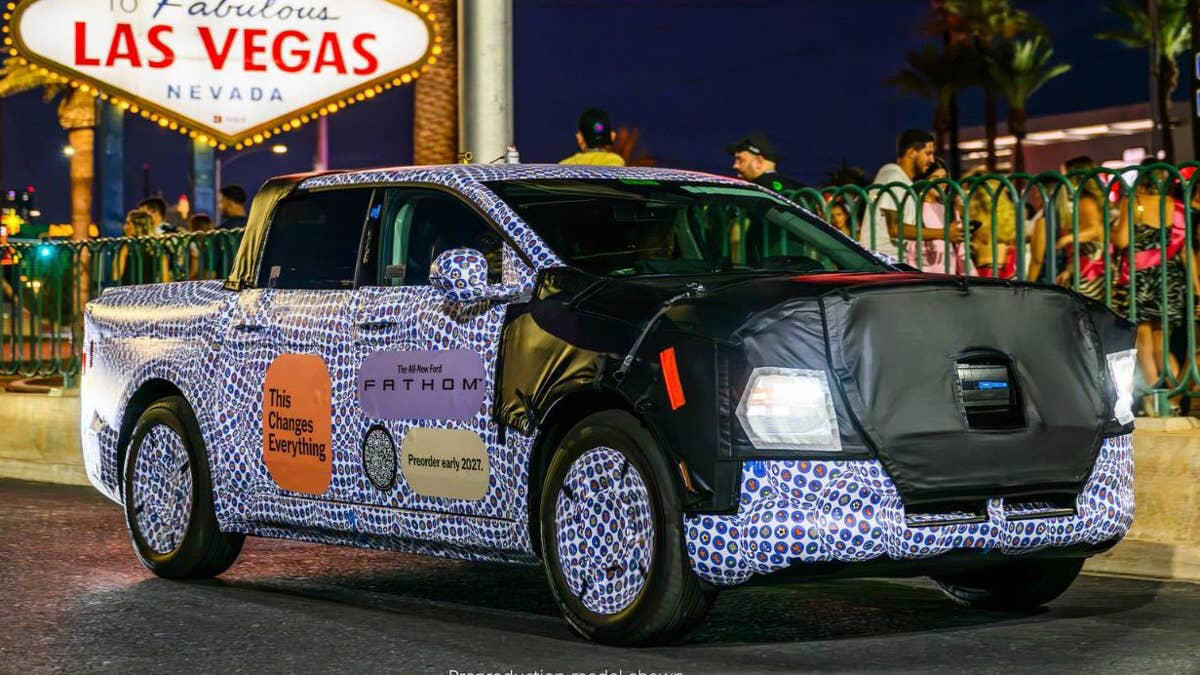
Ford has provided an update on the current status of its LFP battery production. According to the company, the first LFP cells are now rolling off the production line at the BlueOval Battery Park in Marshall, Michigan, marking the end of the pilot phase. The technology is licensed from the Chinese battery giant CATL. The new prismatic cells will first be used in the Fathom, Ford’s first battery-electric vehicle built on an entirely new platform architecture. In the next step, Ford also plans to start battery pack assembly in Marshall before the market launch of the Ford Fathom in 2027.
Charles Poon, Ford’s Vice President of Hardware Engineering, describes the first deliveries of LFP cells to Louisville as the product of ‘years of work’. Ford is now supplying battery cells from its own, self-operated plant. This allows the company to build expertise “to support more affordable electric vehicles (EVs) and Ford Energy’s battery energy storage business in Kentucky”. To broaden its portfolio, Ford expanded its business to include the production of stationary battery storage systems about a year ago, as previously reported.
The new LFP cell is a core element of the Universal Electric Vehicle Platform, designed to make future Ford EVs more affordable. For the platform’s debut EV, the Fathom, the corresponding LFP battery will be integrated into the vehicle structure. The four-door electric pickup is set to launch in 2027 and has already been priced: for the Standard-Range version, Ford announced a base price of US$28,350 last summer, as reported. Including the mandatory US destination charge of 1,595 dollars, the minimum price will be $29,945 before taxes and registration fees. This means Ford remains just under the $30,000-mark, even with the destination charge – a target the manufacturer set during the unveiling of its new electric vehicle platform last year.
With the Universal EV Platform, Ford is pursuing a strategy to achieve desired ranges more through efficiency rather than through ever-larger batteries. This includes reducing weight. In this context, the manufacturer has announced its intention to use significantly smaller batteries compared to comparable electric vehicles. However, the exact size of the Fathom’s battery remains unknown. Ford has also not yet disclosed specific details about the EPA range or maximum charging power. What is known, however, is that the new platform will require around 20 per cent fewer components and 25 per cent fewer connecting elements compared to a conventionally developed vehicle. Additionally, a new zonal electronic architecture consolidates numerous functions into a few central modules.
The Fathom is scheduled to start production at the Louisville plant in 2027 and is intended for both the US market and export markets. Ford has not yet specified which countries outside the US it plans to supply. A market launch in Germany or other European countries has not been confirmed at this time.
Back to the new cell production in Michigan: to build its own LFP batteries, Ford acquired a licence from CATL. This approach gives the automaker more control than a joint venture structure would. The plant in Michigan is also fully owned by Ford. However, CATL is providing significant support: employees from the Chinese battery giant assisted with the production ramp-up in Marshall through training and manufacturing expertise, as CBT News reported this summer. In other words: on paper, it is a US-owned factory, but it wouldn’t be possible without the Chinese.
As early as 2023, Ford announced that the ‘BlueOval Battery Park’ plant in Michigan would begin producing LFP cells in 2026, as previously reported. Ford appears to be on schedule. At the time, the manufacturer stated its intention to employ 2,500 workers and aim for an annual capacity of 35 GWh. Later, Ford scaled back its ambitions. Since the end of 2023, these figures have been reduced to 20 GWh and 1,700 jobs.
Regardless, the use of LFP batteries represents a departure from Ford’s original NCM-based battery strategy. While NCM cells offer higher energy density, better performance in low temperatures, and generally more power for the same energy content, LFP cells are significantly cheaper, use more readily available materials, and are more robust, resulting in a longer service life.
Against the backdrop of Ford’s new strategy: in December 2025, the US automaker also dissolved its battery joint venture, BlueOval SK, with the South Korean battery manufacturer SK On. Both parties retain ownership rights to the three existing plants in Kentucky and Tennessee. A key factor is that SK On currently focuses on NMC cell chemistries. However, Ford is aiming for further diversification towards LFP, as well as towards lithium-manganese-rich (LMR) batteries.
fromtheroad.ford.com