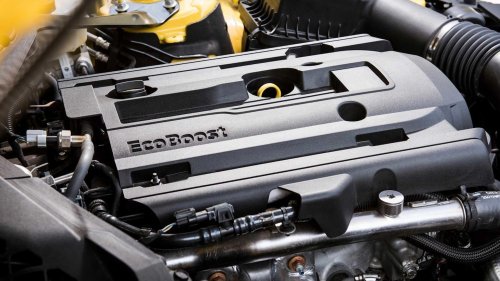
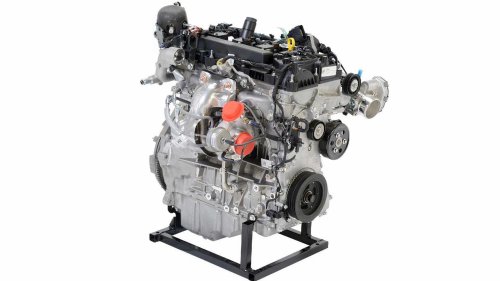
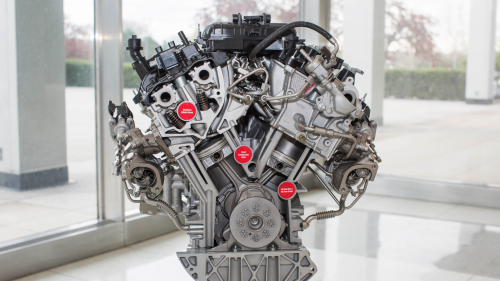
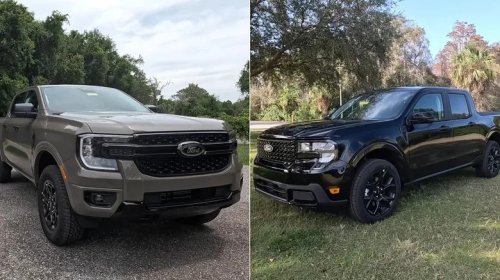
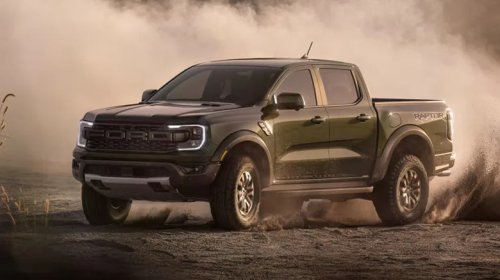
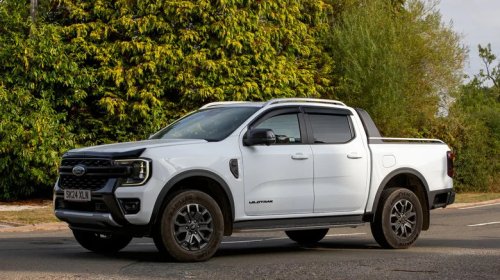
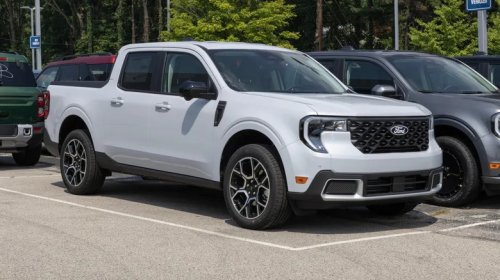
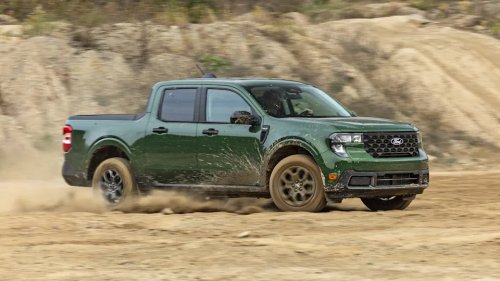
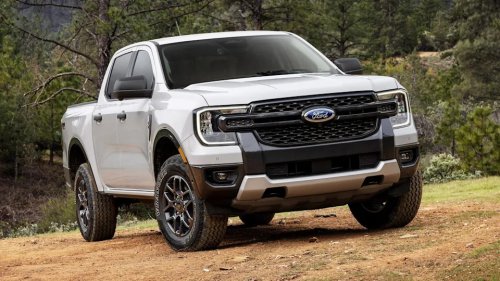
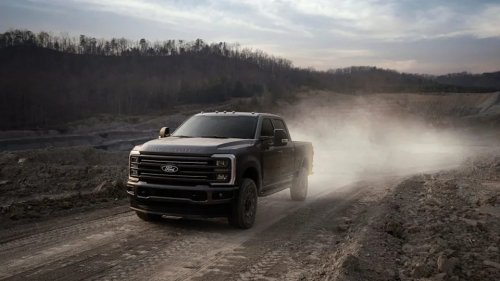
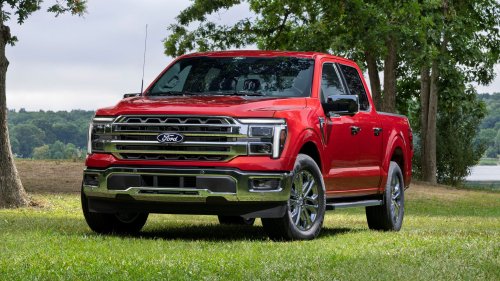
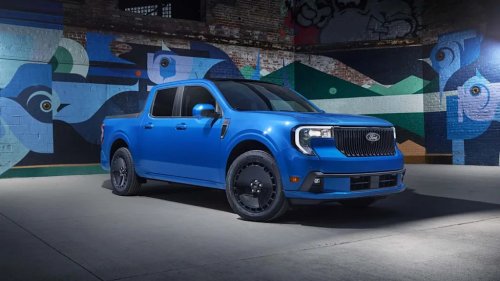
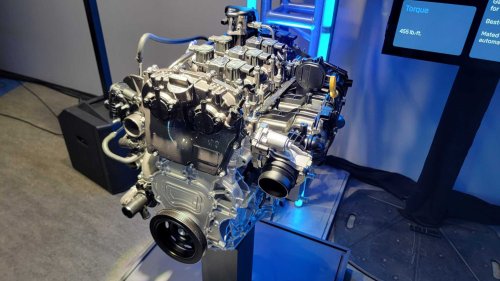
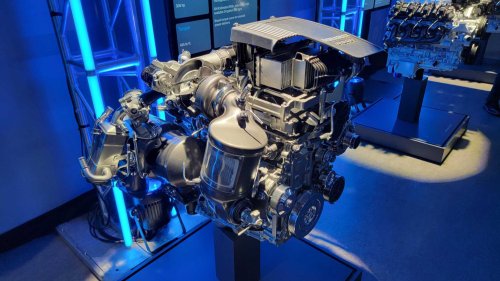
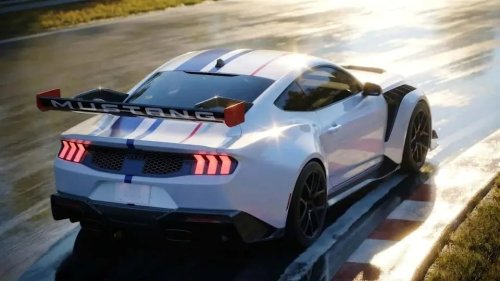
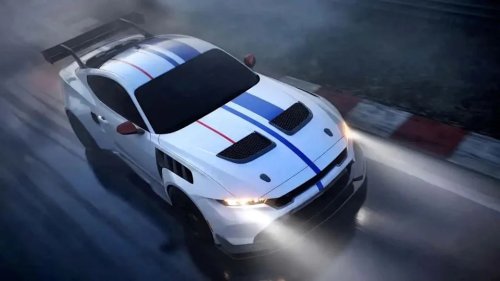
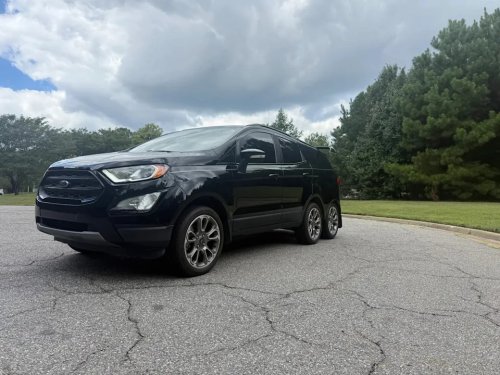
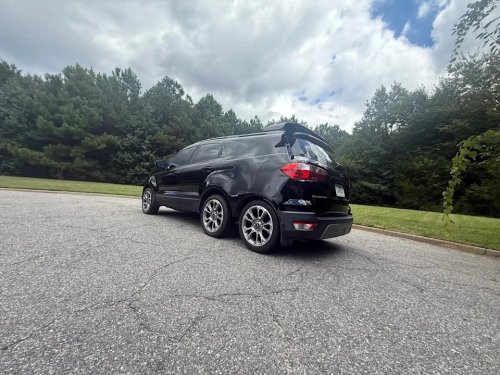
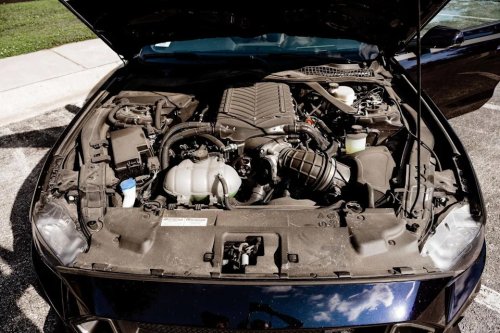
Quick LinksCan You Have Both?There's An EcoBoost For EveryoneA Closer Look: Ford 2.0-Liter EcoBoostTaking The Good With The BadIs the EcoBoost a good engine?Which engine is better: 2.7-liter or 3.5-liter?Which engine is better, the 5.0-liter V8 or the 3.5-liter V6?We have all heard the term EcoBoost at some point or another - even if you don’t own a Ford. At least one version of the famed Ford EcoBoost engine has been offered in numerous models across the Ford and Lincoln model lineups since 2008, including the wildly popular F150 pick-up trucks. But what exactly makes the EcoBoost such a popular engine option, and which cars currently have this under the hood?It all began with the need for manufacturers to produce more fuel-efficient engines without sacrificing that one thing that we as consumers demand: horsepower. That was the goal Ford had in mind when designing the EcoBoost family of engines. While it was originally dubbed the TwinForce and introduced in the Lincoln MKR concept vehicle in 2007. In its most potent layout, a Ford 3.5-liter EcoBoost twin-turbo V6 that produces 800-horsepower was available in the 2023 Ford GT Mk IV. Those are some serious numbers, even for a V8. So it stands to reason that the EcoBoost engine, in some form or other, has earned itself a place between the fenders of the majority of Ford's product line.This article covers a brief history of the Ford EcoBoost engine and its wide use across the Ford model line up for 2025. All specs are sourced from Ford and are correct at the time of writing. Ford EcoBoost History: The Need For Efficiency And Power Can You Have Both? Ford Focus RSThe EcoBoost engine family was designed for both power and efficiency in a climate where emissions and Corporate Average Fuel Economy standards are increasingly challenging to meet. The old saying that there is no replacement for displacement no longer holds true, thanks to the addition of forced induction by way of turbochargers and the advancement of direct injection fuel systems. In the case of the former, the turbo makes use of exhaust gas to create a compressed air charge; the exhaust spins a wheel that is connected to a compressor within the turbocharger housing, and this dense air charge is forced into the combustion chamber, creating an oxygen-rich environment.Ford Direct injection, on the other hand, is a system in which fuel is injected directly into the combustion chamber under very high pressure. This helps the fuel atomization process. When met with the dense air charge from the turbo and ignited, massive power is the result, with less fuel being used. These two systems help get high levels of performance from the EcoBoosts three-, four- and six-cylinder engines, while also returning impressive fuel economy. Typically, one is sacrificed for the other. In the automotive world, this is having your cake and eating it too. The Ford EcoBoost engines also incorporate an all-aluminum construction to help lower the curb weight and dissipate excess heat, all in the name of performance and economy.Horsepower and Torque ratings shown reflect a range of different tunes, different drivetrains, and different vehicles that share a common engine. Fuel economy ratings reflect the 'best' ratings reported by Ford for the respective engine size. All engines listed below are available for the 2025 model year. Ford EcoBoost Applications: What Models Use It? There's An EcoBoost For Everyone 2022 Ford Bronco front, three-quarterLuckily, the EcoBoost engine family is not only relegated to the F-150 or the Expedition, but its power and efficiency are utilized in most vehicles offered by Ford and the entirety of vehicles offered by Lincoln today. However, Ford has discontinued some versions of the EcoBoost engine and some select models to stay aligned with the higher market demand for trucks and SUV's. For 2025, the EcoBoost engine family is currently comprised of six different engines of various sizes and cylinder configurations.Within this group of engines there is a wide range of horsepower, torque, and efficiency ratings depending on tune and application. These EcoBoost engines are shared across fourteen different models, including four from Lincoln. It's fair to say that each engine easily punches above its weight class. A Closer Look: Ford 2.0-Liter EcoBoost The 2.0-liter EcoBoost is an inline four-cylinder engine that both Ford and Lincoln rely on as a solid power plant for a combined five models. It is the upgraded fitment for higher trim levels for some models like the Ford Bronco Sport BadLands and the Ford Escape ST Line Select, ST Line Elite and the Ford Escape Platinum. The beloved and compact Ford Maverick makes the 2.0-liter EcoBoost optional in all trim levels, but standard in the Maverick Lobo and the Maverick Tremor.Lincoln reserves the 2.0-liter EcoBoost for two of its four vehicles available for the 2025 model year. It's also standard in all three trims of the luxuriously appointed Nautilus compact SUV, the Premier, Reserve, and the Black Label, all of which are all-wheel drive. Lastly, the Lincoln Corsair uses the 2.0-liter EcoBoost as standard in the Premier and Reserve trims. So, why such prolific use?The 2.0-liter EcoBoost was originally commissioned in 2010 as a derivative of the normally aspirated 2.0-liter Duratec four-cylinder that was standard in many Ford sedans and compact SUV's prior to 2010. This new 2.0-liter mill was not unlike other EcoBoost engines that we see today: dual overhead camshafts, direct injection fuel system, and a turbo - all in, a handsome, lightweight, and compact package that is easily adaptable to many different chassis across the Ford and Lincoln product lines. Yes, it's a small engine, but the fact that it delivers up to 250 horsepower and 280 pound-feet of torque, certainly answers the question as to why it's so widely used. In the fifteen years this engine has been propelling vehicles, it has seen some minor changes to keep current in a very competitive horsepower race. Not too far back in history, these were the performance numbers that were expected from an eight-cylinder engine, so to see half the amount of cylinders delivering this kind of power is quite astonishing.Via: Ford In 2015, it saw a bump in compression from 9.2:1 to 10.0:1. This was great for low-end torque, especially for all-wheel drive and four-wheel drive models. The 2.0-liter also saw an upgraded turbo and improvements to both its fuel and oiling systems, which made vast improvements for light towing as well as engine longevity. Is The Ford EcoBoost A Good Engine: The Verdict Taking The Good With The Bad Ford Modern day engines are a far cry from the simple internal combustion power plants that they used to be. They are met with stricter emissions standards, they are asked to move larger, heavier vehicles, and do so with a quiet and powerful demeanor. We also expect them to use less and less fuel. The present-day internal combustion engine is evolved: Tighter tolerances, more intricate timing components, and a complex system of sensors keep the engine operating at peak performance and efficiency. The EcoBoost is no stranger to these demands, but throughout its tenure it has been met with some challenges of its own. FAQs Is the EcoBoost a good engine? The Ford EcoBoost Engine family is hard to beat in many ways, but it does depend on what you're looking for: if its lots of horsepower and loads of torque for towing, the EcoBoost is a great option. The 3.5-liter V6 EcoBoost from the F-150 lineup, for example, makes 400 horsepower and 500 lb. ft. of torque. Which engine is better: 2.7-liter or 3.5-liter? The 2.7-liter is a great option when you use your vehicle as a commuter but still want a capable truck or SUV for work and fun. With 325 horsepower, it has plenty of power for everyday chores, general utility or getting lost on a trail at your favorite ORV park. However, for heavy lifting and towing the 3.5-liter would be the better choice. Which motor is better, the 5.0-liter V8 or the 3.5-liter V6? The V8, like the V6, has an overhead camshaft design, so it's still as complex as the EcoBoost engine in many regards. But the V8 is normally aspirated and relies on good old-fashioned cubic inches to make its power. So, if you're looking for that grunt of 410 lb. ft. of torque and the unmistakable sound of a throaty American V8, the 5.0 liter would be the way to go. However, the 3.5-liter V6 makes more torque and is also more fuel efficient. So if you tow often, or use the truck for work, the 3.5-liter EcoBoost V6 may be the better choice.