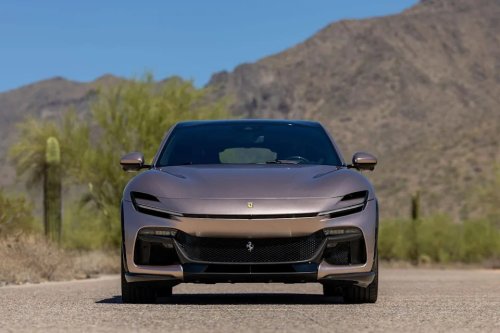
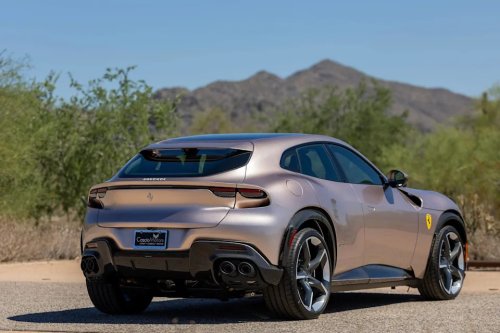
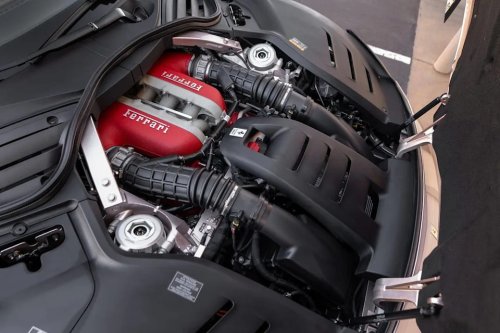
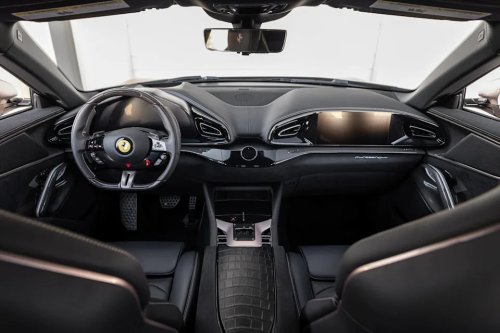
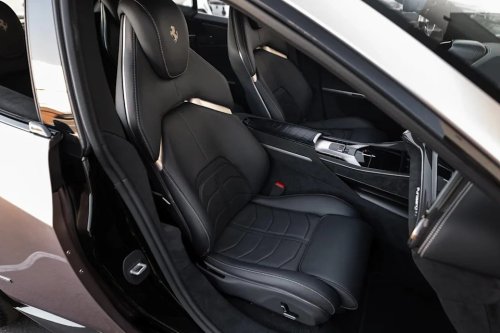
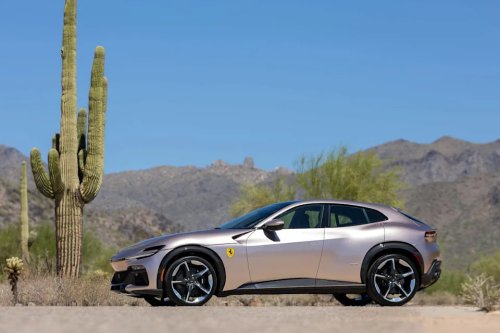
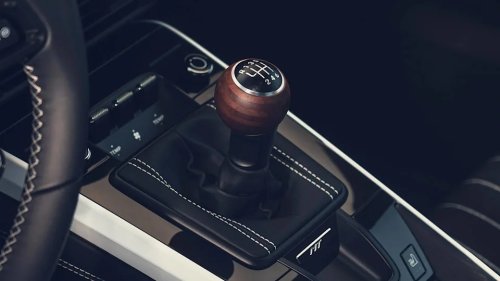
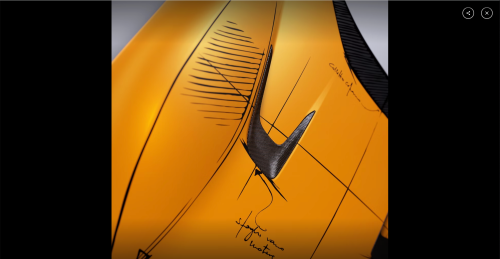
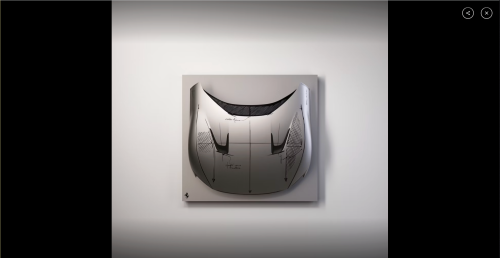
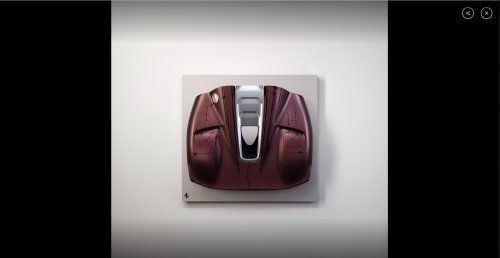
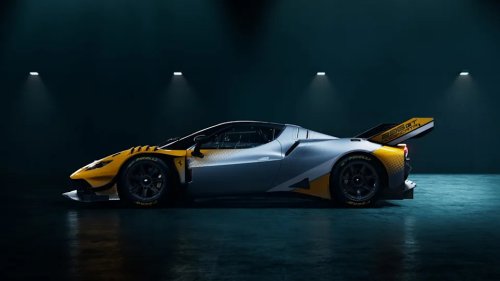
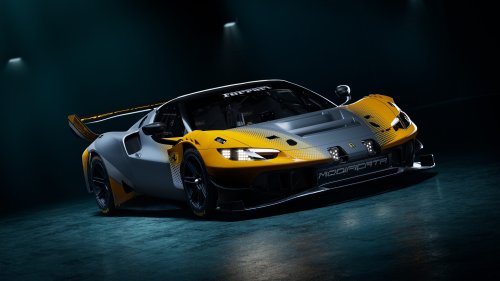
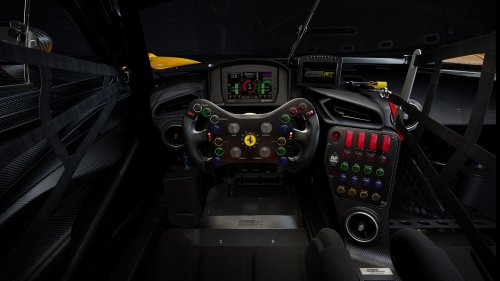
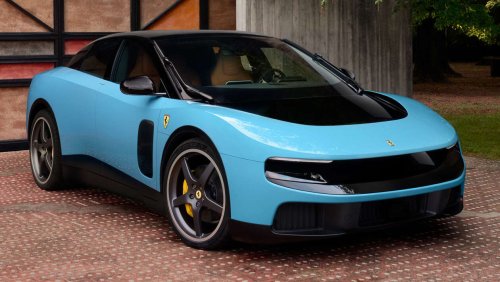
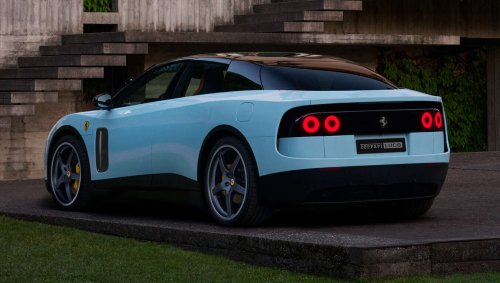
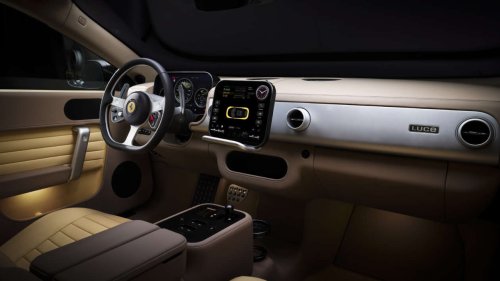
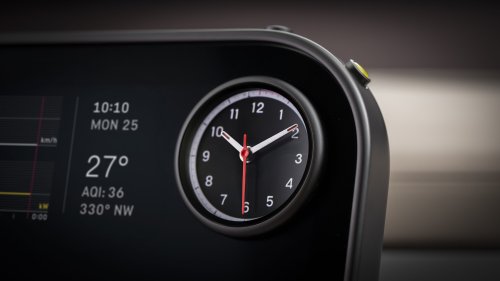
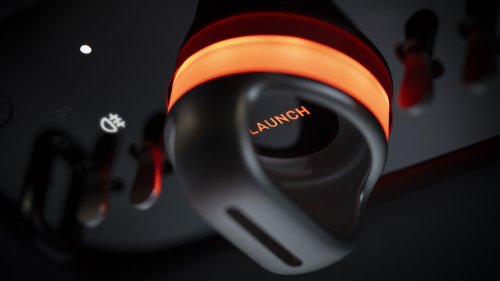
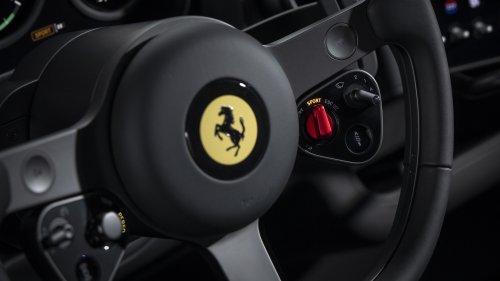
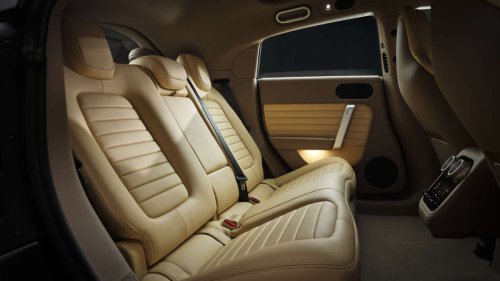
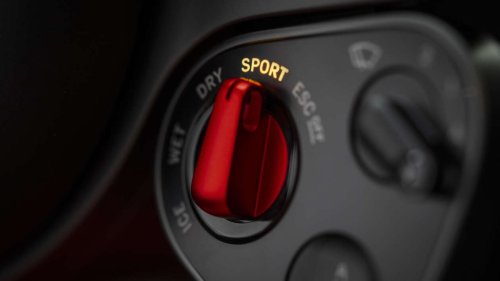
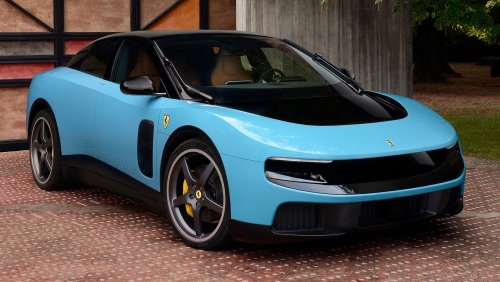
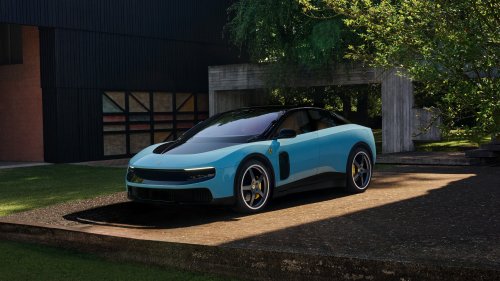
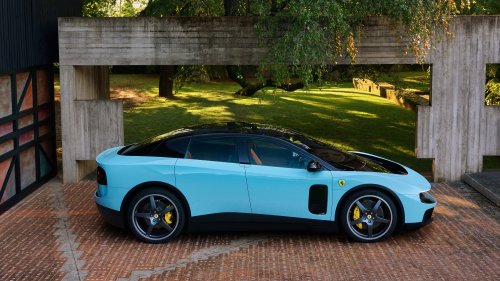
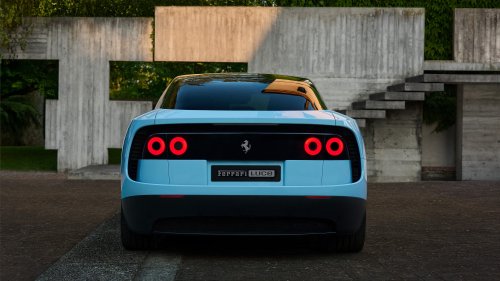
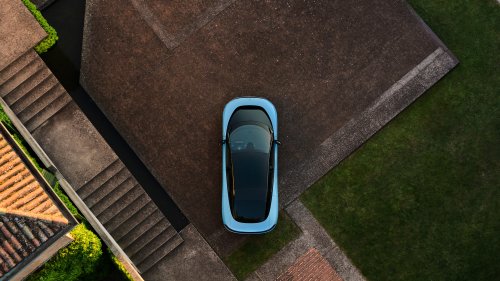
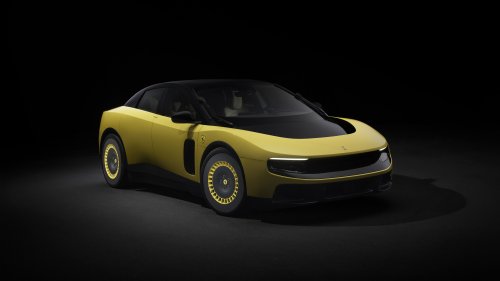
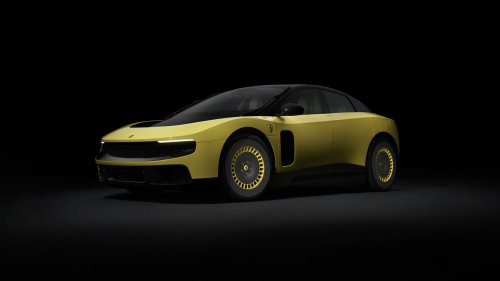
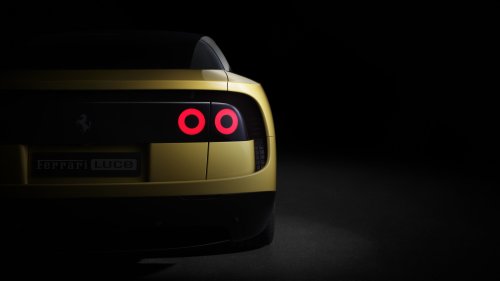
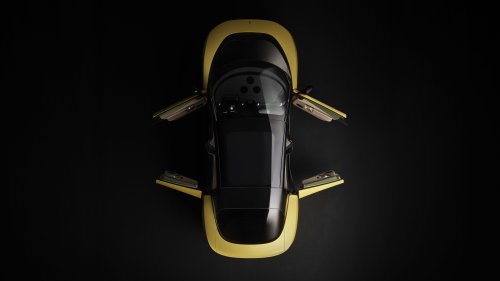
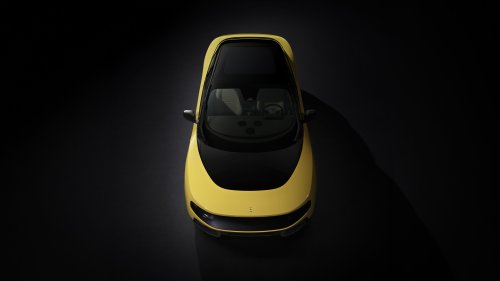
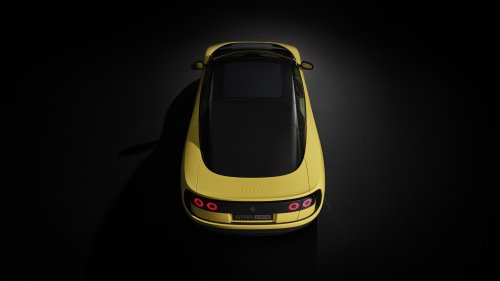
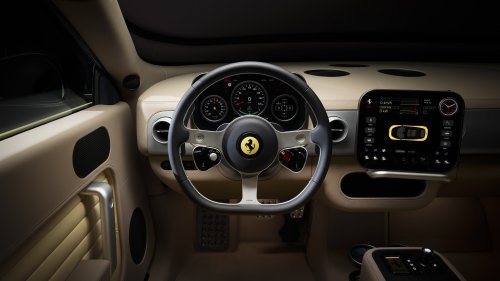
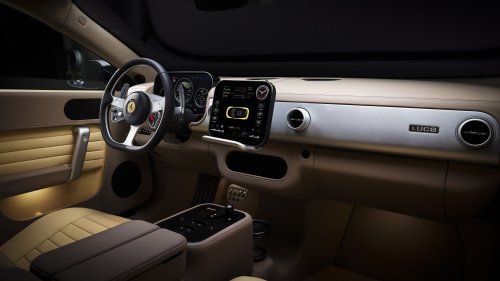
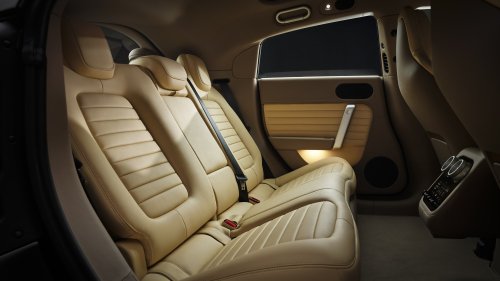
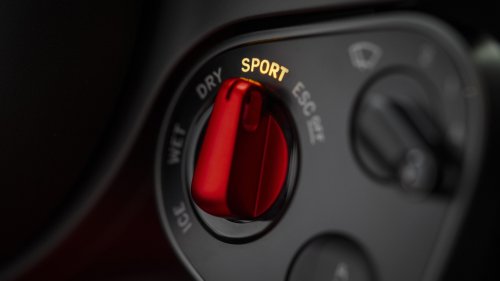
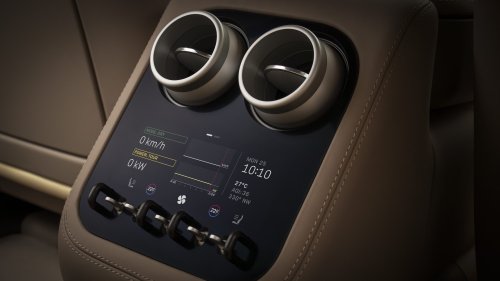
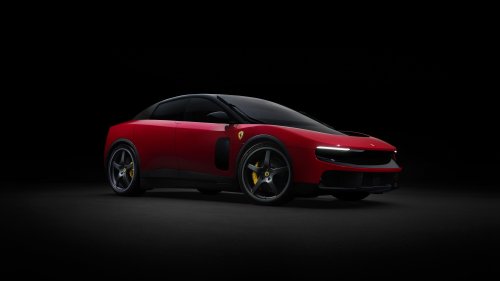
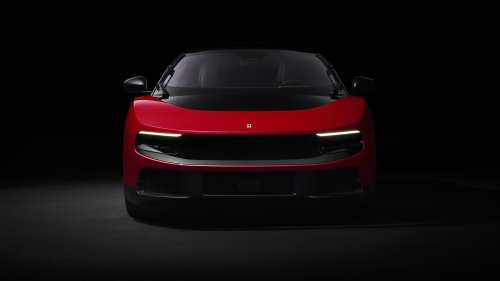
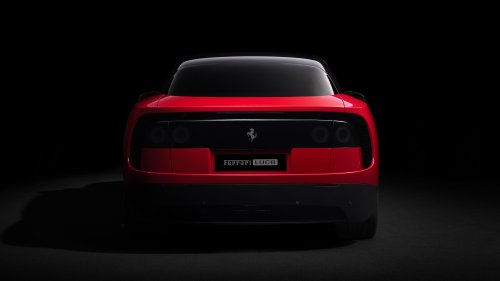
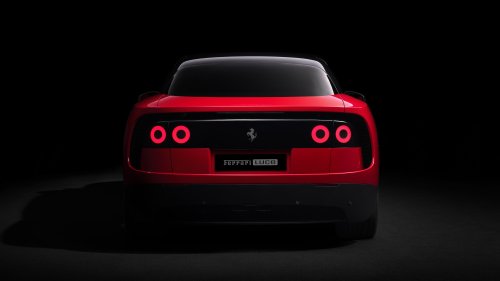
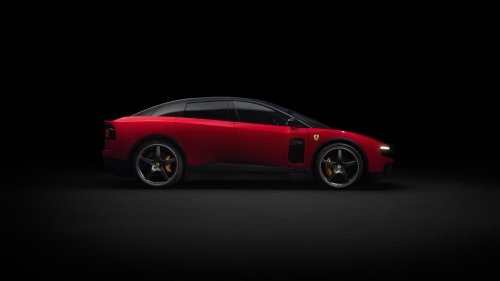
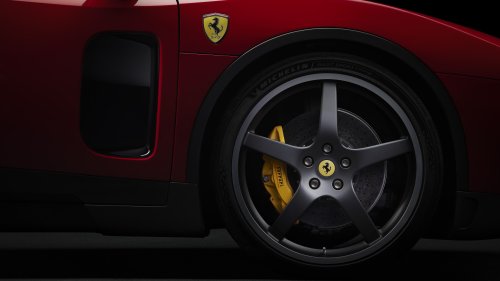
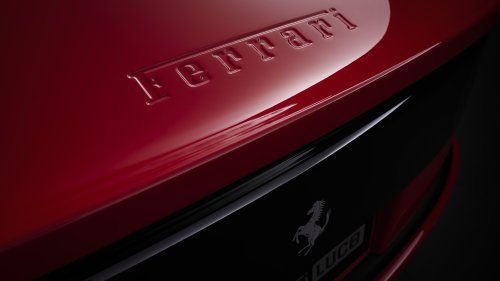
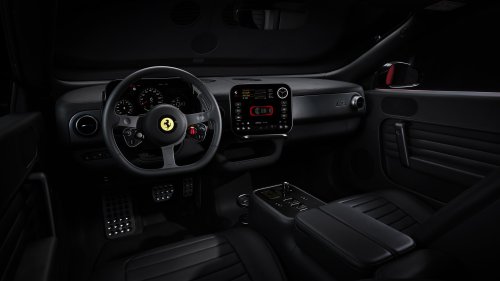
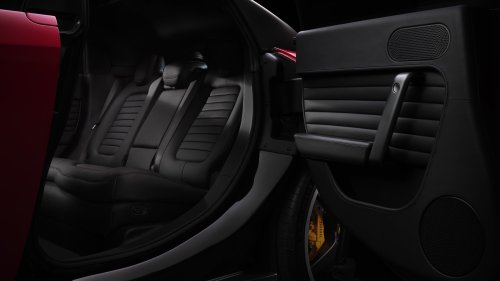
You’re looking at what is almost certainly the most controversial car Maranello has ever made – the all-electric, Jony Ive-designed Ferrari Luce. Defined as not just a Ferrari EV but an entirely new car to wear the Prancing Horse badge, it has already polarised opinions all over the internet – and not just because it is yet another über-powerful electric SUV. One look at the design and it’s not hard to see why. Created in collaboration with LoveFrom – the design house formed by the famed ex-Apple designer, together with industrial design legend Marc Newson – the Luce is a strikingly minimalist car that dispenses with the myriad lines and scoops defining Ferrari’s styling direction for the past decade or so. There are hints of the brand’s fan-favourite models from the ’90s, specifically the F355 with the wide “grille”, slim headlights (no pop-ups, unfortunately), strong shoulders and blacked-out rear panel housing the hidden-until-lit taillights – the latter marking a welcome return to four round lamps. One might wonder if the design would work better draped over the low proportions of a sports car, rather than a tall SUV. That “grille”, by the way, is really an inlet for a wing (a similar setup is found at the rear), hiding a dramatic black glasshouse stretching from the front to the back. Below it sit Ferrari’s first active grille shutters, while the front doors feature curious black “hatches” (they look better with the optional silver horse on them). Such is the focus on aerodynamics that even the orientation of the wipers have been switched to line up vertically along the A-pillars, in order not to disrupt the airflow from the nose to the roof. The result is the lowest drag coefficient of any Ferrari, although the company declined to provide a specific figure in its press release. Break out the measuring tape and you’ll find that the Luce measures 5,026 mm long, 1,999 mm wide and 1,544 mm tall, with a wheelbase of 2,961 mm. The car’s large size necessitated the fitment of the largest wheels ever on a Ferrari, measuring 23 inches in diameter at the front and an astonishing 24 inches at the rear. The standard aerodynamic wheels have been inspired by jet turbines and reduce drag by five per cent, helping to deliver the most range (more on that later). The optional forged wheels feature a classic (and very simple) five-spoke design. While the exterior will continue to divide opinion for quite some time, the interior is a relative triumph, the pure shock from its February reveal having subsided somewhat. Tactility is the name of the game here, with precision-engineered physical controls and throttle valve-inspired air vents taking precedence over the displays and touch interface. Relieved of the need to fit a transaxle, the Luce is also the first Ferrari to feature a full five-seat cabin, accessible through the Purosangue-style suicide doors. In front of the driver sits a gorgeous three-spoke flat-bottomed steering wheel, inspired by Ferraris of yore and machined, Apple-style, from a single piece of recycled aluminium. As is typical for the brand, the light and wiper controls – all made from metal and glass – are on the steering wheel, as are the usual Manettino knobs for the drive and powertrain modes. Then there are the displays, the 12.9-inch unit behind the steering wheel combining digital power, speed, battery and vehicular data instrumentation with a mechanical needle, aluminium bezels and glass lenses. Meanwhile, the 12-inch OLED touchscreen sits on a central control panel that can be swung to face either the driver or passenger, augmented by a Multigraph clock/compass/stopwatch and air-con and seat heating/ventilation toggles. Another 6.3-inch display provides added controls for the rear occupants. Another highlight is the centre console that houses twin cupholders, storage cubbies under the split-opening armrest and a dock for the smartphone-style Corning Gorilla Glass-shrouded key. When the latter is inserted, the yellow on its e-ink Ferrari insignia (the industry’s first use of the display tech, the company claims) fades and switches over to the stubby gear selector, which is a nice touch. This also wakes the powertrain, which consists of four motors derived from the F80 hypercar. The front axle makes 285 PS (210 kW) and 280 Nm of torque, while the rear churns out 843 PS (620 kW) and 710 Nm, resulting in a total system output of 1,050 PS (772 kW) and 990 Nm. Pull on the overhead tab to engage launch control and the Luce is able rocket from zero to 100 km/h in just 2.5 seconds and hit 200 km/h in 6.8 seconds, on its way to a top speed of 310 km/h. A total of three modes are available – Range keeps the powertrain in rear-wheel-drive mode and caps power to 425 PS (320 kW) and the top speed to 260 km/h. Turn the dial to Tour and you get permanent all-wheel drive and 625 PS (460 kW), while the full Performance mode unleashes a near-full 986 PS (725 kW). Launch control frees up even more power, reaching a peak of 1,040 PS (765 kW). Juicing these motors is a 122 kWh battery, developed by Korea’s SK on and built in Maranello, delivering an estimated WLTP range of 530 km with the aforementioned turbine wheels. With an 800-volt architecture, the Luce is able to support up to 350 kW of DC fast charging, enabling a 70 kWh fill in 20 minutes. Even at a 400-volt charger, the car can pull up to 150 kW; it will also accept up to 22 kW from an AC wallbox charger. But Ferrari contends that the Luce is more than just a numbers car. Built on a structure that uses an extensive amount of recycled aluminium, it rides on double wishbone suspension all around and features Ferrari’s first elastically-mounted rear subframe to reduce NVH. The active dampers, which can drop the front by 10 mm to reduce drag, are derived from the ones in the Purosangue and F80, albeit lighter and with a new ball screw for better vertical impact absorption. With the batteries integrated into the floor, Ferrari claims a centre of gravity 95 mm lower than that of the Purosangue, with the increased agility allowing the company to include a 13% quicker steering ratio. You also get the latest alphabet soup of chassis control systems, including Side Slip Control (SSC) X, third-generation Active Suspension Control (ASC) and Virtual Short Wheelbase rear-wheel steering, Ferrari Dynamic Enhancer+ (FDE+) cornering braking, and ABS Evo with extended regenerative braking. The latter is able to provide up to 0.5 g in deceleration, allowing Ferrari to reduce the size of the standard carbon ceramic brakes to cut unsprung mass by three kilograms. Individual motors for each wheel also provide real torque vectoring that Ferrari calls (deep breath) the Ferrari Lateral Optimisation Wheeltorque (FLOW), alongside a virtual limited-slip differential function for the rear axle. The Luce also features an adapted version of the F1-Trac traction control called eTrac, which precisely cuts power on the slipping wheel without disturbing any of the others. In addition, the Luce debuts what Ferrari calls Torque Shift Engagement, which functions as a form of simulated gear shifting, also utilising steering wheel paddles. The company is distancing itself from similar systems pioneered by Hyundai’s electric N models in that it does not simulate a conventional gearbox; rather, it provides five acceleration and deceleration levels that allow the driver to control the car’s cornering attitude in and out of a bend. Last but not least is the sound, and to that end Ferrari has decided to amplify the best noises from the electric motors, gears and rotating components rather than simulating a combustion engine. A precise accelerometer on the rear axle picks up the vibrations, which is then filtered and equalised to reduce the less pleasant-sounding attributes, before being played through the 21-speaker, 3,000-watt in-house sound system. External speakers also allow the Luce to be heard on the outside. So there you have it, the Ferrari Luce – a car that is bound to excite progressives and enrage purists in equal measure. It also comes at a time when Xiaomi introduced its own performance electric SUV in the shape of the YU7 GT, itself seemingly inspired by the Purosangue. What do you think about the car, and which camp do you fall into? Let us know in the comments. default Looking to sell your car? Sell it with Carro. Use the promo code 'PAULTAN' when you checkout for 10% discount!


















 +21 others