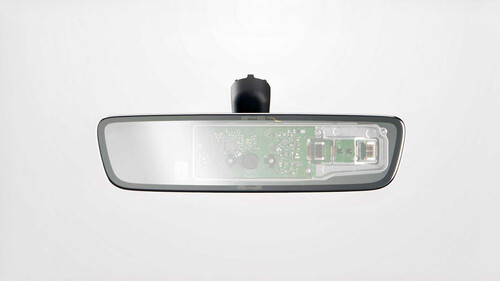
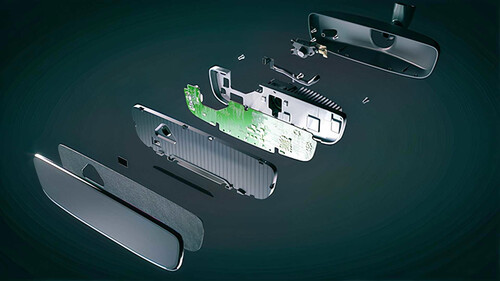
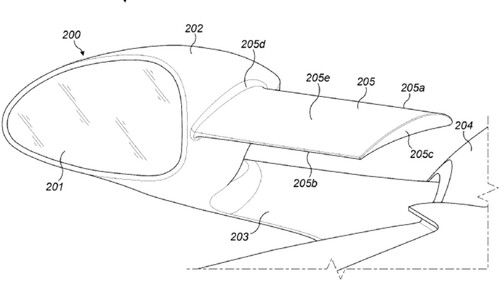
Feds Just Legalized A Car With No Pedals, Mirrors Or WipersThe federal government just told a company it can charge money for rides in a car that has no steering wheel, no brake pedal, no mirrors, no windshield wipers, and no sun visors. If that sounds like a big deal, it is — but not for the reason most of the coverage is landing on. The interesting part isn't that Zoox won. It's what NHTSA had to admit about its own authority to get there.What actually got exemptedOn July 30, NHTSA announced five automated-vehicle policy moves directed by Transportation Secretary Sean Duffy, and the following day published Temporary Exemption No. 2026-01 in the Federal Register. It runs from July 31, 2026 to July 31, 2028.Read the actual grant and you'll notice it isn't a blanket pass on eight safety standards. It's a scalpel job on specific paragraphs, and the list reads like a museum tour of rules written for people:AdvertisementAdvertisementFMVSS 103 (S4.1) — must have a windshield defroster. FMVSS 104 (S4.1, S4.2.1) — must have power wipers and washers meeting SAE J903a and J942. Zoox has none of it, because its sensors are mounted outside and it doesn't look through glass. It does run a sensor cleaning system that Zoox says it validated using the FMVSS 103/104 test procedures with the pass threshold moved to 100% surface clearance instead of a percentage.FMVSS 108 (S9.1.1, S9.4) — the turn signal unit must be cancelable by a manual control, and the high/low beam switch must be operable "by a simple movement of the driver's hand or foot." That second one is a fossil from the era of floor-mounted dimmer switches. Zoox built autonomous beam switching instead.Related ArticlesNew York City Fixed Its Illegal Car-Crushing Program. It Left One Loophole Big Enough For A Mercedes-Benz.BYD Patented A Car That Won't Start If Something's Alive Underneath It. That's Not Even The Real StoryFMVSS 111 (S5.1, S5.2.1, S5.5) — inside mirror, driver's-side outside mirror, backup camera display with defined field of view, response time, and linger time.AdvertisementAdvertisementFMVSS 135 (S5.3.1) — service brakes must be actuated by a foot control. Important nuance most people will miss: only the control got exempted. Zoox asserts the vehicle still meets the actual stopping-performance and warning requirements in S5.1, S5.2, S5.4, S5.5, S5.6, and S7. The pedal is gone; the stopping distance isn't.FMVSS 201 (S5.4) — energy-absorbing sun visors at front outboard seats. NHTSA's reasoning here is a genuine gem: it dug up a 1982 grant noting that visors quietly double as padding in the windshield header. Because Zoox seats face inward, carriage-style, that header area sits behind the passengers' heads and head restraints. No occupant benefit, so no visor.FMVSS 205 — the requirement that windshields use AS1 glazing. Zoox calls the glass at either end "service bays" and marks it AS4. NHTSA conditioned the exemption on that glazing meeting AS4 requirements plus AS1 tests 9, 12, and 26. Go look at the bottom corner of your own windshield: that AS1 etching means it passed the strictest optical and penetration criteria. AS4 is what's typically acceptable behind the driver.FMVSS 208 (S4.5.1) — the airbag warning label must be on the sun visor. No visor, no label location, so Zoox moved it next to each seat and rewrote it to point at the Rider Manual instead of an owner's manual.The 2,500 number isn't a policy choiceEvery account of this says NHTSA "limited" Zoox to 2,500 vehicles a year. That framing is backwards. NHTSA granted the exemption under 49 U.S.C. 30113(b)(3)(B)(iv) — the equivalent-overall-safety basis — and subsection (d) of that same statute caps exemptions granted on that basis at 2,500 vehicles per 12-month period. Congress set that number. The agency couldn't have gone higher if it wanted to.AdvertisementAdvertisementThe real cap is tighter. The grant limits how many vehicles Zoox may manufacture and introduce into commerce; the number that may operate simultaneously is governed separately by an Operational Authorization, which NHTSA can rewrite at will.That Operational Authorization is the actual regulatory innovation here, and nobody's talking about it. Historically a Part 555 exemption came with static conditions locked in for the life of the vehicles. NHTSA decided that doesn't work for software that changes weekly, so it built a living permit — a document it can modify, expand, or tighten without notice-and-comment rulemaking, tailored to specific operating areas. Multiple authorizations can run concurrently for different cities. It's faster oversight and less public visibility at the same time.The sentence that matters mostBuried in the analysis section, NHTSA states plainly that "there are no performance requirements for an ADS that is replacing a human driver" performing the dynamic driving task, and that it lacks authority to demand a higher safety performance level when deciding whether to grant an exemption.Sit with that. There is no federal standard for how well a robot drives. FMVSS governs equipment and crashworthiness. Self-certification covers the rest. When Advocates for Highway and Auto Safety argued the record lacked evidence on how the pod detects and responds to pedestrians in the rear field of view, NHTSA's answer was essentially that FMVSS 111 requires a display, not a response — and it can't invent a driving-competence requirement in an exemption proceeding.AdvertisementAdvertisementNHTSA also states it made no findings about whether the vehicle complies with the other FMVSS. That remains Zoox's job to certify.The conditions are stricter than the headline suggestsThis wasn't a rubber stamp. The grant carries terms with real teeth:Zoox must keep operational control of every exempted vehicle for its entire service life. It cannot sell, transfer title or possession, or license any of them. There will never be a used Zoox pod on Marketplace, and the liability chain never leaves one corporate entity — a meaningful difference from a normal car, where responsibility follows whoever's in the seat.All personnel performing safety-critical tasks must be located in the continental United States. NHTSA justified it two ways: latency and jitter degrading control, and keeping remote staff "reachable and legally accountable to U.S. law enforcement." That's an onshoring mandate written into a vehicle exemption, and it's a first.AdvertisementAdvertisementZoox must publish maps of its operating areas on its website and update them within 14 days of any substantive change. If you want to know where these things run before you drive there, that's now a public document.An annual report must list every VIN built under the exemption, whether each is still operating, and the geographic locations of all remote assistance centers.The stuff riders should actually knowThe pod is classified as a passenger car: 6,614-pound GVWR, 75 mph top speed, four seats maximum, longitudinally symmetrical so front and rear are identical. Sensors include lidar, radar, cameras, long-wave infrared cameras, and microphones. Zoox says the system is SAE Level 4.Riders under eight aren't permitted right now. NHTSA acknowledged the belts may not fit all children over eight either, and Zoox's Rider Manual puts booster responsibility on the accompanying adult.AdvertisementAdvertisementEgress got real scrutiny from the transportation unions, and the answers are worth knowing before you're in one. There's an interior lever on either side that lets you push the door open manually. If airbags deploy, the passenger-facing side of the horseshoe airbag carries instructions for finding the emergency door handle. Outside, first responders get an exterior door button, and if that's dead, the airbag exterior shows them where to break glass.Related ArticlesKia Just Spent $649 Million To Build an EV It Has No Intention of Selling YouStolen American Cars Disappear by the Thousands Every Year. Kenya's Steering Wheel Law Is Why None of Them Show Up ThereAAA pushed on the missing side mirrors — passengers stepping out into a cyclist. NHTSA agreed mirrors provide that ancillary benefit but found Zoox's substitutes adequate: only the curb-side door opens, hazard flashers activate when stopping outside a parking lane, doors pop out and slide along the body so you can look both ways before stepping out, and an audio prompt reminds you to check traffic. If you drive in Las Vegas or San Francisco, expect these things to stop in the travel lane with four-ways on. That's designed behavior, not a malfunction.The endgame is rulemaking, not exemptionsThe exemption is scaffolding. NHTSA has already published proposed updates modernizing FMVSS 103/104 and FMVSS 135 for driverless vehicles, with 101, 108, 111, 126, and 201/208 flagged next. The agency says outright that once that work is done, individual exemptions may become unnecessary. Zoox itself told NHTSA it expects to be fully compliant by the end of the two-year window on the strength of those rule changes.AdvertisementAdvertisementAlongside the Zoox grant, NHTSA is funding a three-year, $5 million consortium with SAE Industry Technologies Consortia called A2SCEND to build the first national AV performance standards, published an interim final rule making vehicles built before an exemption eligible for one, and opened a docket on updating its AV guidance for the first time since 2017. Administrator Jonathan Morrison framed the package as "taking a balanced approach to AV regulation." Robomart has an application pending for a low-speed delivery vehicle under FMVSS 500.For the record on precedent: this is the first passenger-carrying ADS vehicle exempted under the general exemption authority. The only prior ADS grant went to Nuro in 2020 for an occupantless delivery pod. Zoox filed in August 2025 and got its answer in a shade under a year, which by Part 555 standards is a sprint.Anyone waiting to see whether Tesla can put a pedal-free Cybercab into paid service now knows the exact door number and what walking through it costs.Join our Newsletter, follow our Instagram page, and connect with us on Facebook.