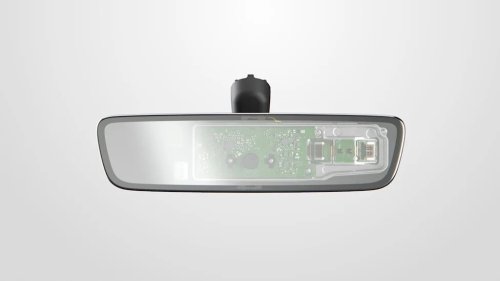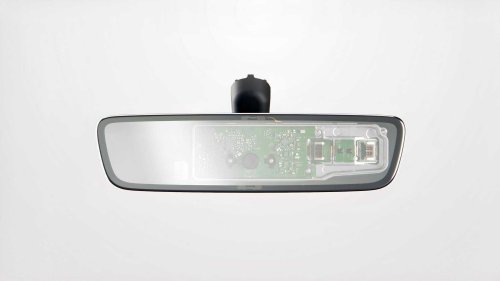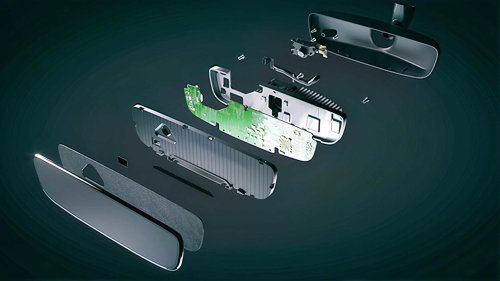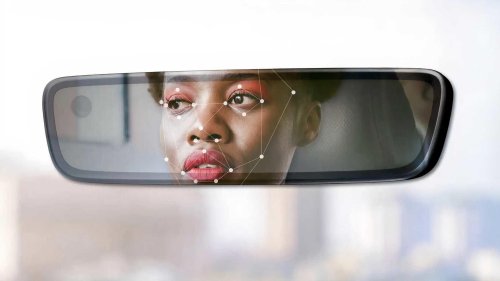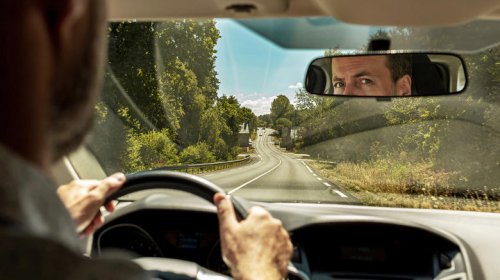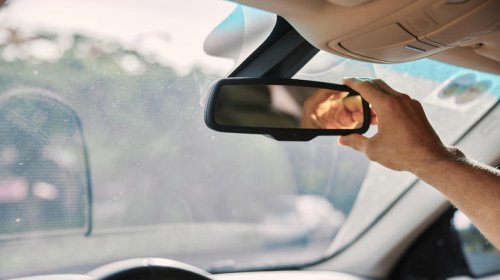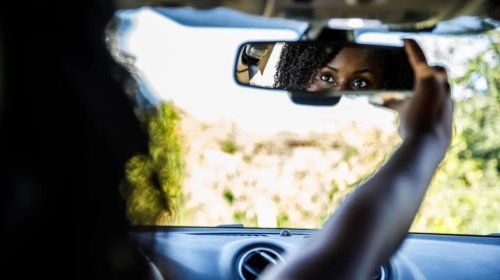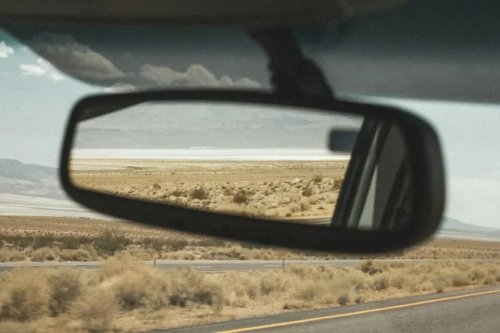
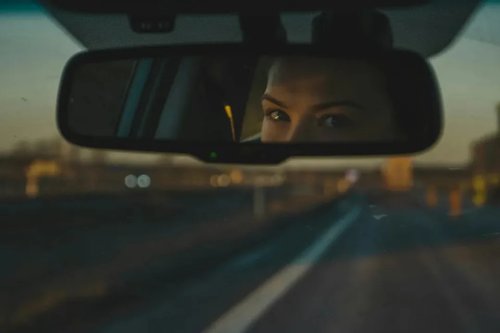
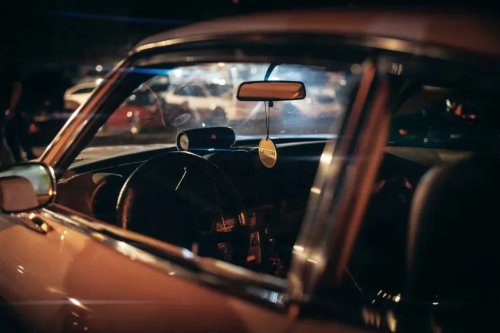
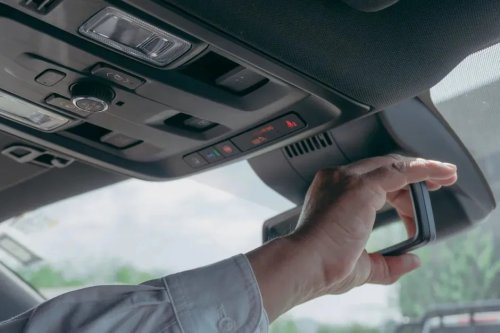
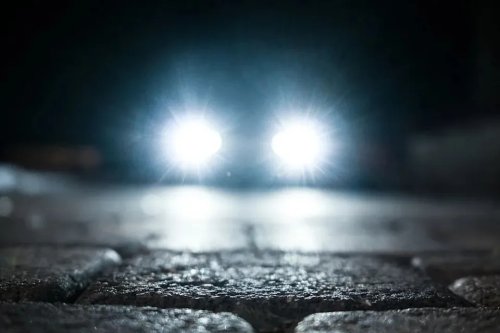
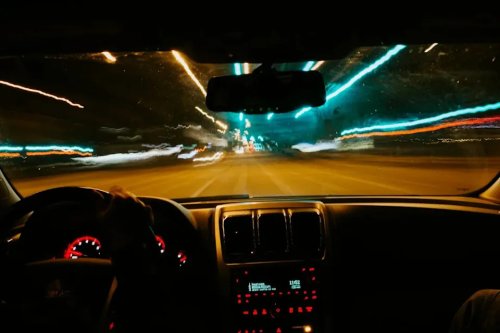





















There's a small plastic tab sitting right below your rearview mirror. It's been there since you bought your car, and chances are you've never touched it. Most drivers haven't. It doesn't beep, it doesn't light up, and it definitely doesn't come with a tutorial. Yet this tiny lever can make a real difference on nighttime roads, especially when the vehicle behind you has its high beams blazing.This is one of those overlooked features that hides in plain sight. It goes by several names: the day/night tab, the dimmer switch, the flip lever. Often called the "dimmer switch," "day/night tab," or "flip lever," this small tab is a standard feature found in almost every car since the 1950s. Understanding what it does and when to use it is worth a few minutes of your time.What the Tab Actually DoesWhat the Tab Actually Does (Image Credits: Unsplash)Thanks to the rearview mirror tab, you can switch the mirror between its daytime and nighttime modes of operation. It sounds simple, and it is, but the physics behind it are a bit more interesting than you'd expect. The tab doesn't change any bulbs or flip any circuits.All that tab does is slightly lean the angle of the mirror back so that it doesn't reflect directly into your eyes. Instead, the reflection bounces above your head instead of down to your eyes. That single small adjustment is enough to take a blinding glare and reduce it to a manageable glow.The Wedge-Shaped Glass Behind It AllThe Wedge-Shaped Glass Behind It All (Image Credits: Unsplash)The mirror is not flat; it's a thin wedge, thicker at the bottom. This design is key to how it works. It creates two reflective surfaces: the front of the glass and the silvered back. The wedge shape is what allows the mirror to have two modes.A prismatic rearview mirror, sometimes called a "day/night mirror," can be tilted to reduce the brightness and glare of lights, mostly for high-beam headlights of vehicles behind which would otherwise be reflected directly into the driver's eyes at night. This type of mirror is made of a piece of glass that is wedge-shaped in cross-section, with its front and rear surfaces not parallel. It's a clever design that requires no electricity and no sensors.Day Mode vs. Night Mode: What ChangesDay Mode vs. Night Mode: What Changes (Image Credits: Pexels)In the normal position, the silvered back of the mirror reflects light to your eyes. This gives you a bright, clear reflection, which is perfect for daytime driving. You get the full intensity of the light from behind you.Flipping the tab tilts the mirror just a few degrees. This angle causes the strong reflection from the back to bounce up and over your head. Your view is now a faint reflection from the front of the glass. The front of the glass only reflects about 4% of the light. This drastically reduces the glare from headlights behind you, making night driving much safer.A Feature That's Been Around for DecadesA Feature That's Been Around for Decades (Image Credits: Pexels)"Manual tilt" day/night mirrors first began appearing in the 1930s and became standard equipment on most passenger cars and trucks by the early 1970s. That means this feature has been quietly sitting in cars for well over half a century, largely ignored by the majority of drivers who never read the section about it in the owner's manual.Ford notes that some vehicles have a Manual Dimming Mirror, so the driver is able to "pull the tab below the mirror towards themselves to reduce the effect of bright light from behind." The instruction is that straightforward. Pull it toward you when it gets dark. Push it back in daylight.The Real-World Problem It SolvesThe Real-World Problem It Solves (Image Credits: Unsplash)One of the biggest difficulties drivers face after dark is the glare from headlights behind them. Bright lights reflecting in the rearview mirror can strain the eyes, distract attention, and create momentary blind spots. This is especially true on highways, where trailing vehicles are often close and running full beams.Glare from headlights can obstruct your vision, making it difficult to see the road and other vehicles clearly. The day setting offers clarity, while switching to the night mode significantly reduces glare. This adjustment is easy yet essential, ensuring that you're not squinting or straining your eyes as you navigate the roads after dark.What the Research Actually Says About Glare and CrashesWhat the Research Actually Says About Glare and Crashes (Image Credits: Unsplash)Glare is implicated in a small fraction of nighttime crashes, a new study from the Insurance Institute for Highway Safety shows. The IIHS study of roughly 6 million nighttime crashes found that headlight glare was cited as a factor in only one or two out of every 1,000 nighttime crashes from 2015 to 2023. That's a reassuringly small number, though it doesn't mean glare is harmless.Nighttime visibility is critical to highway safety. About half of traffic deaths occur either in the dark or at dawn or dusk. Glare being a minor direct cause of crashes doesn't erase the broader danger of driving at night with impaired visibility.The European Glare Study You've Probably Never Heard OfThe European Glare Study You've Probably Never Heard Of (Image Credits: Pexels)A European study of night-time driving revealed that motorists adopt some not-so-obvious and potentially unsafe strategies for tackling headlight dazzle from their interior or exterior rearview mirrors. The findings were a little uncomfortable to read.Common practices among surveyed drivers include squinting, reported by nearly half of respondents, or blocking the glare with their hand, cited by roughly one in five. A small number would block the glare with whatever they were holding at the time. All of this when a simple tab flip would do the job far more safely.How Auto-Dimming Mirrors Replaced the TabHow Auto-Dimming Mirrors Replaced the Tab (Image Credits: Pexels)Models that do automatic dimming have become increasingly dominant, but there are still some models that require this manual adjustment. The shift has been gradual, with budget trims and older vehicles still relying on the manual tab.Auto-dimming mirror sensors recognize when bright lights are shining on the mirror. The sensors then send out an electric signal that travels through an electrochromic gel placed between the mirror's two layers of glass. When the gel receives the signal, it undergoes a reaction that makes it change its color. The gel transitions from being transparent to being slightly dark, giving the rearview mirror a darker appearance and making it harder for light to bounce off of it.How to Know Which Type You HaveHow to Know Which Type You Have (Image Credits: Pexels)A tab is for manual dimming, while a button is for turning the auto-dimming function on or off. If you see a small lever or plastic tab at the bottom of your mirror, you have a manual system and the tab is yours to use whenever needed.To test whether your mirror is auto-dimming, park safely with the engine on or in accessory mode. Cover the front sensor (facing you) with tape or your finger. Shine a bright flashlight at the rear sensor on the back of the mirror. The mirror should darken within 5 to 10 seconds and clear once the light is removed. No darkening means you have a manual mirror, and the tab is your main tool.The Improving Landscape of Headlight TechnologyThe Improving Landscape of Headlight Technology (Image Credits: Unsplash)When the IIHS released its first headlight ratings in 2016, one out of more than 80 headlight systems evaluated received a good rating, compared with more than half of the headlights tested on model year 2025 vehicles. That's a significant improvement in a relatively short span of time.In IIHS testing, roughly one in five of the headlights available on 2017 models produced excessive glare. For 2025 models, this percentage dropped to just 3%. Still, the tab remains relevant for anyone driving an older vehicle, or anyone who simply finds themselves squinting at traffic behind them on a dark road.Final ThoughtsFinal Thoughts (Image Credits: Pexels)Understanding and using this simple mirror function can make a real difference during evening or early-morning trips. It requires no special equipment, no extra cost, and only a quick adjustment or automatic activation.The tab is one of those small design solutions that solved a real problem decades ago and has quietly endured ever since. Cars have gotten smarter and mirrors have gone automatic, but the underlying idea hasn't changed at all. Many drivers overlook the significance of that little tab on their rearview mirror, but knowing how to use both its day and night settings can greatly enhance your safety on the road. Next time you're driving after dark and a set of headlights lights up your mirror, you'll know exactly what to reach for.AI Disclaimer: This article was created with the assistance of AI tools and reviewed by a human editor.The post The Little Tab Under Your Rearview Mirror Most Drivers Never Use appeared first on The Garden Magazine.