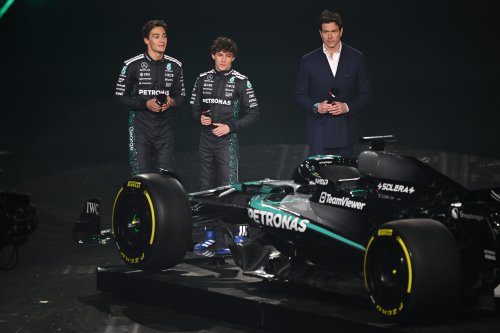
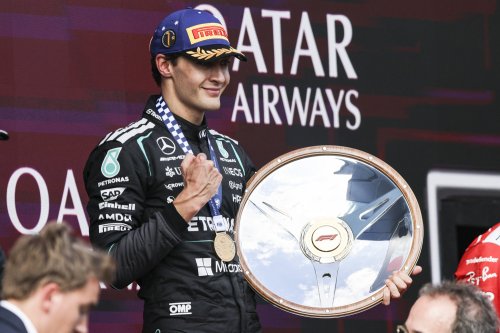
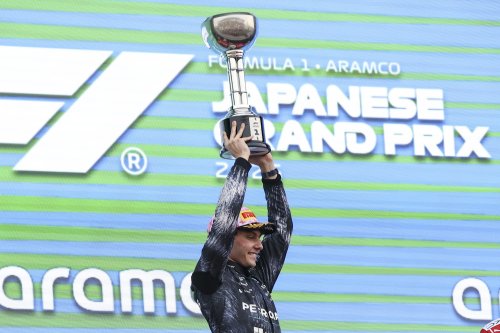
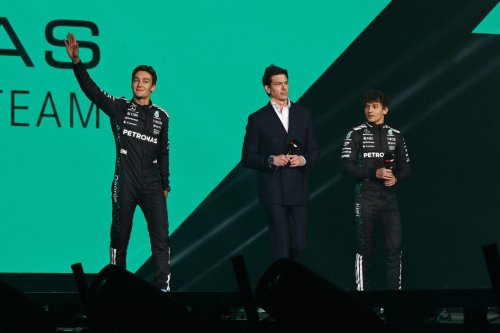
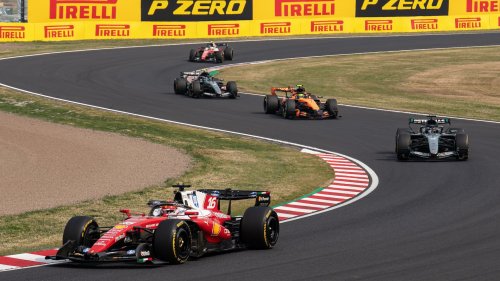
F1’s Stable 2026 Driver Lineups Put More Pressure on the Cars, Not the MarketThe Driver Market Is Not the Main Distraction This TimeFormula 1’s 2026 season has plenty of uncertainty.Most of it is not coming from the driver market.The grid features 22 drivers across 11 teams, including Cadillac as the new entrant. Several major lineups are already defined, from Mercedes’ George Russell and Kimi Antonelli to Ferrari’s Lewis Hamilton and Charles Leclerc, McLaren’s Lando Norris and Oscar Piastri, and Red Bull’s Max Verstappen and Isack Hadjar. Formula 1’s own driver-lineup overview also notes Arvid Lindblad as the only rookie on the grid in 2026.That stability changes the pressure.Teams cannot hide as easily behind transition, uncertainty or driver-market noise. The spotlight moves back to the machinery.Stable Lineups Make Weakness Easier to DiagnoseA settled driver pairing helps a team understand its car.When drivers are new, every performance question can become complicated. Is the car weak? Is the driver adapting? Is the team still learning communication patterns? Is the setup direction unclear? Stable lineups reduce those excuses.That is especially important in a new technical era.The 2026 regulations have created enormous variation in power-unit performance, chassis philosophy and operational execution. Teams with known drivers should be able to diagnose problems faster. If they cannot, the weakness may sit deeper in the car.That is why stable lineups can become uncomfortable.They remove convenient explanations.Cadillac Has a Different ProblemCadillac is the obvious exception.As a new team, it faces the kind of operational challenge the rest of the grid already understands: building race-weekend rhythm, developing systems, integrating drivers and learning how its car behaves under live conditions. Even with experienced names, a new team needs time.That makes Cadillac’s 2026 season a different kind of test.The team has to prove it can become operationally credible before it can be judged by the same standard as established front-running teams. For Cadillac, stability is about building a foundation. For the rest of the field, stability is about removing excuses.Mercedes and Ferrari Have No Place to HideThe pressure is sharpest at the front.Mercedes has a strong Russell-Antonelli pairing, but it must turn pace into reliable race execution. Ferrari has Hamilton and Leclerc, one of the most powerful driver combinations on the grid, but it must deliver reliability and repeatability if Barcelona is to become more than a breakthrough weekend.Neither team can claim the drivers are the limiting factor.That makes the car the central question. If Mercedes loses races from pole, the issue is strategy, tire life, reliability or race pace. If Ferrari has one car winning and the other retiring, the issue is operational completeness.The drivers are good enough. The teams have to be good enough around them.McLaren’s Continuity Should Be an AdvantageMcLaren’s Norris-Piastri pairing gives the team one of the cleanest continuity stories on the grid.That should be an advantage. Both drivers know the team, both are fast, and both provide a strong development reference. If McLaren struggles to convert Friday pace into Sunday control, the question is less about the lineup and more about the car’s operating window.That is the value of stability.It clarifies what needs fixing. It does not guarantee the fix will come quickly.Red Bull’s Lineup Adds a Different Kind of PressureRed Bull’s Verstappen-Hadjar pairing creates an asymmetrical challenge.Verstappen provides the elite benchmark. Hadjar gives Red Bull a second seat with development pressure and opportunity. That means Red Bull’s car will be judged heavily against Verstappen’s results, but the team also needs the second car to contribute enough strategically.In a tight 2026 field, one-car pressure is not enough.If Red Bull wants to fight Mercedes, Ferrari and McLaren consistently, it needs more than Verstappen extracting maximum results. It needs a package and operational structure that supports both sides of the garage.The Cars Are Now the Main StoryThe 2026 grid stability makes the season cleaner analytically.Performance gaps can be traced more directly to engines, chassis, cooling, aerodynamics, tire use and reliability. That is good for the sport because the new technical rules deserve scrutiny. It is uncomfortable for teams because there are fewer distractions.The driver market will always matter in Formula 1.But in 2026, the bigger questions are technical. Who built the best power unit? Who packaged it most efficiently? Who understood active aero and simplified floors fastest? Who can develop without losing reliability?Those are the questions that will decide the season.Stable Seats Put the Pressure Where It BelongsF1’s settled 2026 lineups give the championship a clearer competitive shape.The drivers are known. The teams are known. Cadillac is the new variable, but the established order has fewer excuses than usual. That means the burden falls on the cars and the organizations behind them.In a new technical era, that is exactly where it should be.The driver market can wait. The machines now have to explain the results.This article was created by an external editorial team for the Misha Charoudin brand. It was not personally written by Misha Charoudin.



















 +66 others