Efforts by the Chinese electric vehicle (EV) industry to reduce consumer anxiety about driving ranges have pitted battery swapping technology against ultra-fast charging capabilities, even though both save time for drivers.
“Carmakers and consumers now have two options as they choose which kind of EVs to buy,” said Davis Zhang, a senior executive at Suzhou Hazardtex, a supplier of specialised batteries, in an interview last week. “Each of the technologies has its own advantages and disadvantages, but they will coexist over a long period of time.”
The battery swap model allows EV owners to exchange a spent pack for a fully charged one in just 100 seconds. And fast-charging technology gives a vehicle 400km of driving range in five minutes.
Shanghai-based carmaker Nio has made its name as the pioneer of swappable batteries and it operates more than 3,000 swap stations across mainland China. It also entered partnerships with a number of carmakers including Geely Auto, the nation’s second-largest passenger vehicle manufacturer, and Contemporary Amperex Technology (CATL), the world’s largest EV battery producer, to promote its technology.
CATL plans to build 1,000 stations to support battery swapping in China this year. At the end of 2024, Robin Zeng Yuqun, the company’s founder and chairman, said CATL had secured subscription orders for 107,500 of its Choco-SEB swappable batteries from more than 30 companies.
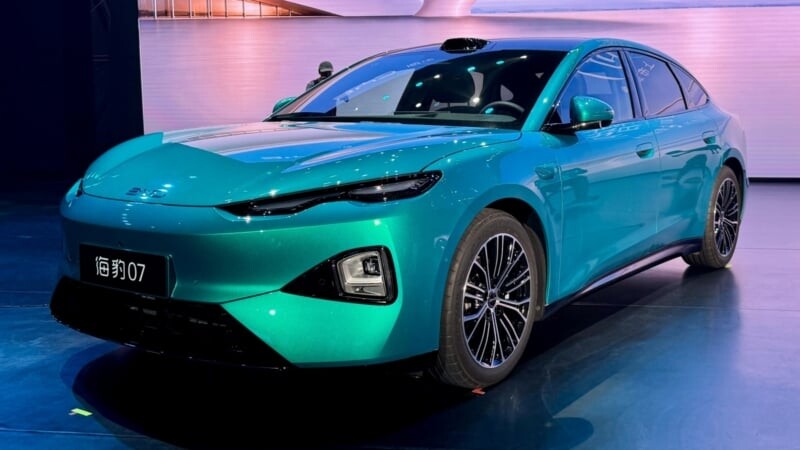
Nio and CATL showed off their latest product offerings at the Auto Shanghai trade show, which ends on Friday. But they are grappling with BYD to attract visitors at the show. The world’s largest EV builder – also a battery maker – had on display its Han L and Tang L vehicles that are supported by its Super e-Platform, which offers peak charging power of 1,000 kilowatts (kW) or 1 megawatt (MW). The Shenzhen-based company started deliveries of the two models last month.
Battery swapping has the potential to save a car buyer as much as 40 per cent of the cost of owning a new EV – amounting to 40,000 to 50,000 yuan (US$6,876) – because they can rent batteries from the carmakers or other firms.
But it requires an industry-wide consensus because a unified standard for batteries has to be agreed. And a lot of fresh capital is needed for building more stations nationwide.
Flash charging does not require additional capital expenditures by carmakers, but it needs sufficient power supplies during peak hours. The technology could also shorten a battery’s lifespan.
“Both methods developed quickly over the past two to three years as Chinese companies revved up production of EVs to cater to local consumer demand,” said Phate Zhang, founder of Shanghai-based EV data provider CnEVPost. “At present, the coexistence is propelling more consumers to opt for electric cars while snubbing petrol vehicles. It may not be a zero-sum game in the future because both technologies have their own advantages.”
William Li Bin, co-founder and CEO of Nio, said the duelling technologies could make for a win-win scenario.
“I would think they are complementary to each other,” he said on the sidelines of the auto show. “Ultra-fast charging does not clash with battery swapping. Nio, for example, is also working hard in fine-tuning our charging technology.”
EV sales in China accounted for more than 60 per cent of total deliveries, according to the China Passenger Car Association.
In 2024, 10.9 million EVs – including pure electric and plug-in hybrid cars – were handed over to mainland customers, up 41 per cent from a year earlier, accounting for about half of the total number of cars sold in the country.