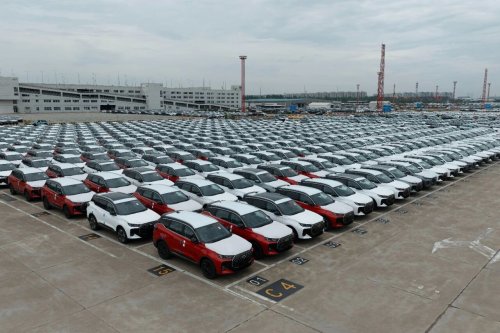
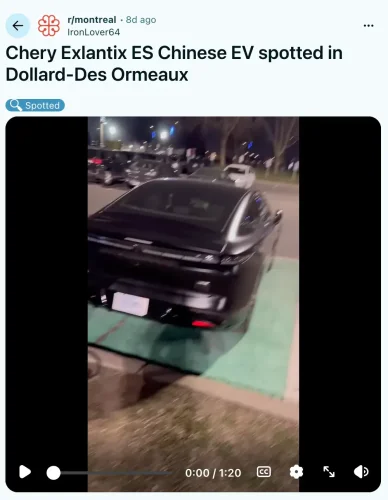
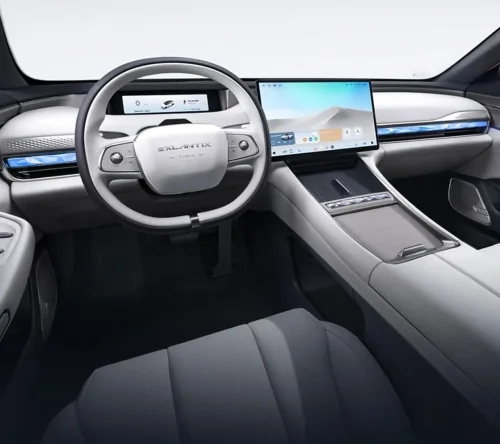
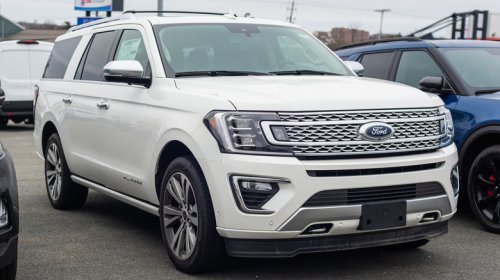
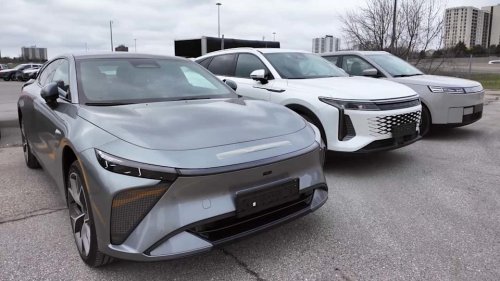
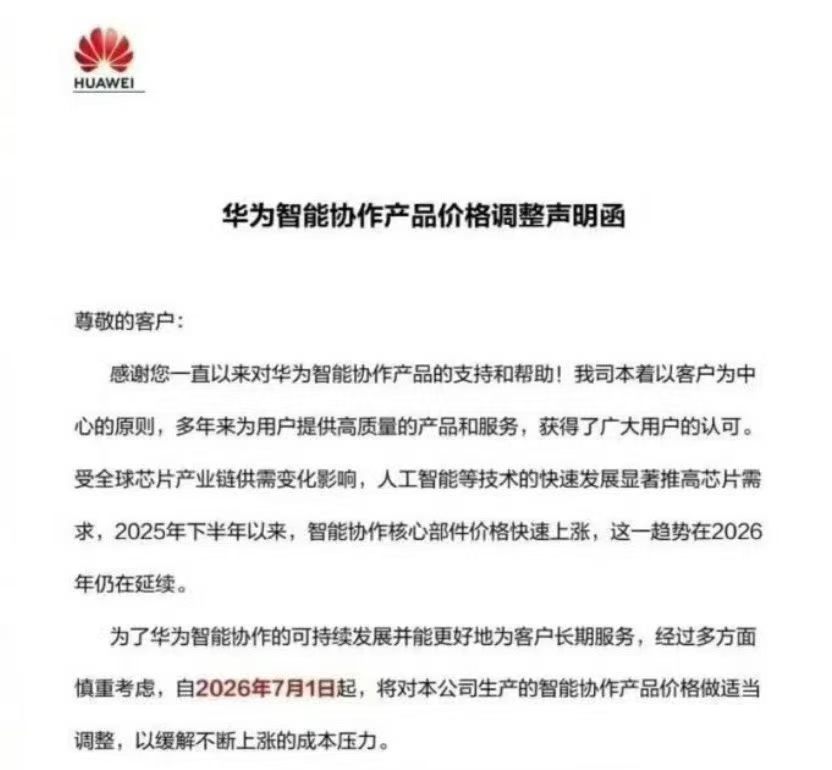
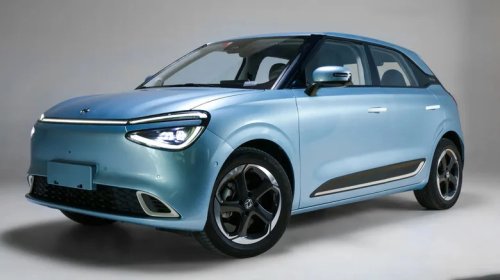
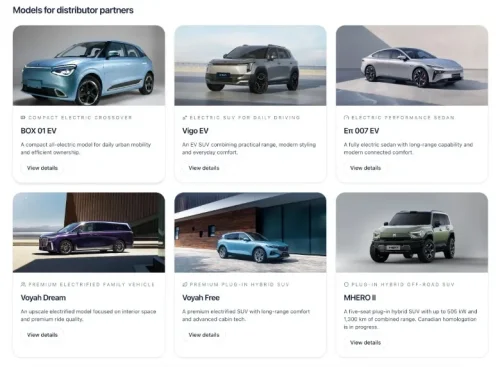
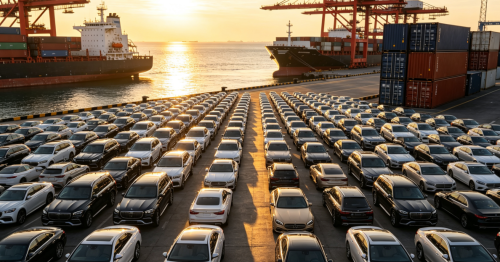
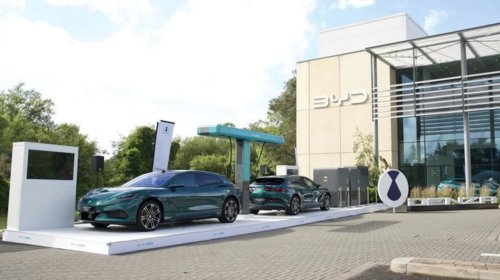
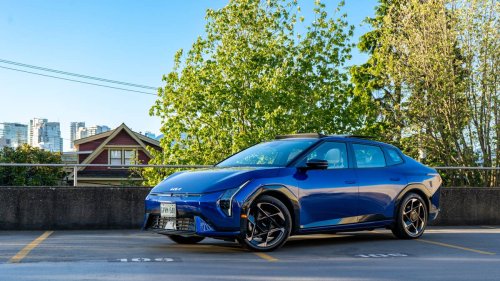
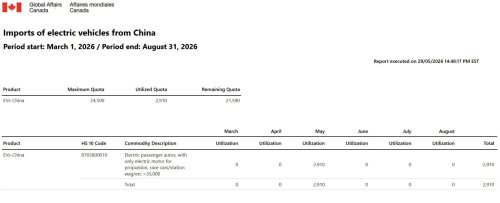
OEM TrendLucid Group Inc. is working with restructuring advisors to reverse its fortunes, a move that sent the electric-vehicle maker's stock to a record decline on July 15, according to people familiar with the matter. Consulting firm AlixPartners has been retained to review every aspect of Lucid's operations. The automaker aims to streamline its business, slash costs, and ensure the smooth launch of a new mid-size vehicle. Lucid confirmed the partnership in a statement, dismissing rumors in industry publications about a potential bankruptcy filing as "completely untrue." "The company has ample liquidity to fund operations well into next year," Lucid said Tuesday, emphasizing its focus on improving execution and operations. "AlixPartners is simply assisting us in this regard—nothing more—and has not recommended bankruptcy to management or the board."Dongfeng Motor Group has become the latest Chinese automaker preparing to enter the Canadian market, leveraging a low-tariff import quota for electric vehicles finalized earlier this year by Prime Minister Mark Carney. The company hosted an event in Montreal this week to showcase several of its EV models. Dongfeng is currently navigating local regulatory certification processes as it gears up to start selling to Canadian consumers.Great Wall Motor recently released its performance forecast for the first half of 2026. Net profit attributable to shareholders is projected to land between 2.35 billion yuan and 2.60 billion yuan—a drop of 58.97% to 62.92% from a year earlier. The company attributed the decline primarily to deferred recovery of overseas tax subsidies and currency exchange rate fluctuations.Changan Automobile plans to mass-produce its self-developed driver-assistance system, "Tianshu Navigation," in the third quarter. Built on end-to-end technology and multi-modal large models, the system will come standard across the entire Changan Qiyuan Q06 lineup.Supply Chain NewsThe State Administration for Market Regulation published a notice on July 15 regarding Tianjin Motor Die Co.'s proposed acquisition of equity in Dongshi Automotive Technology Group. The public comment period runs from July 15, 2026, to July 24, 2026.German automotive supplier and chip giant Bosch has kicked off sample production at its first semiconductor plant in the U.S. The company also finalized a $225 million subsidy agreement with the U.S. Department of Commerce aimed at boosting domestic manufacturing capacity for silicon carbide chips.Black Sesame Technologies has completed its acquisition of Eeasy Tech, a strategic move designed to bolster its edge AI footprint and expand its coverage of full-scenario inference computing. With the deal closed, Black Sesame's matrix for edge AI inference computing is now fully formed, unlocking greater product synergy.Horse Powertrain, the joint venture between Renault and Geely, has officially launched its D20 methanol range-extender powertrain. Designed primarily for range-extended electric vehicles (REEVs), the system can also serve as an external generator for pure EVs, charging the battery while driving to extend range.Industrial EconomyData from the China Passenger Car Association (CPCA) on July 15 showed retail passenger vehicle sales reached 443,000 units in the first 12 days of July—a 15% drop from the same period last year and a 1% decline from June. Year-to-date retail sales totaled 9.144 million units, down 20%. Wholesale deliveries for the July 1-12 period fell 26% year-on-year to 379,000 units, and slipped 17% from the previous month. Cumulative wholesale volumes for the year stood at 12.926 million units, a 6% decrease.Zhiyou WuJie announced on July 15 that it has secured tens of millions of yuan in an Angel+ funding round led by Addor Capital and Shenzhen Capital Group. Following a nearly 20 million yuan Angel round from Pine Venture Capital in February, the company has now raised close to 100 million yuan in total funding.The Aftermarket Branch of the China Association of Automobile Manufacturers (CAAM) issued a clarification to address market misinterpretations of data from its "2025 China Auto Aftermarket Annual Development Report." Media reports had cited figures suggesting the average age of new energy vehicles (NEVs) is just 1.8 years and that consumers replace their EVs every three to five years. The statement clarified that "average age of in-use vehicles," "replacement cycle," and "average service life" are distinct statistical concepts. The 1.8-year figure cited refers to the average time since sale for the existing stock of NEVs as of the end of 2025, whereas the average age of in-use internal combustion engine vehicles is about 8.2 years. The branch apologized for the ambiguity in the report's data labeling and urged accurate citation of statistical definitions to prevent public misunderstanding.Embodied AI startup RoboParty recently closed back-to-back Angel++ and Pre-A funding rounds, raising nearly 500 million yuan in total. Existing shareholders including Shunwei Capital, Matrix Partners China, Xiaomi Strategic Investment, and Sensetime Guoxiang participated in the Angel++ round, while CATL exclusively led the Pre-A round. Lightsource Capital served as the incubator and exclusive financial advisor.Policy UpdatesA new group standard, the "China Auto Industry Vehicle Cost Calculation Rules," was officially released recently. Led by the China Association of Automobile Manufacturers (CAAM) and developed with 18 major domestic automakers, it marks the industry's first unified framework for calculating vehicle costs. The standard resolves long-standing inconsistencies in accounting practices and benchmarking, serving as a critical step to curb disorderly price competition and drive high-quality development. It also represents a broader industry consensus on establishing self-regulatory rules.Exports of Chinese-made electric vehicles to Canada remained steady through mid-July, yet at the current pace, the country is unlikely to exhaust the 49,000-unit import quota agreed upon earlier this year. The first shipments arrived in May, followed by several thousand more in June and July. Data from Global Affairs Canada shows that 6,531 Chinese-made EVs had cleared customs by July 14. That volume represents just 25% of the quota allocated for the first half of the 2026 quota cycle. Canadian regulations allow for the release of up to 24,500 Chinese EVs by the end of August, with another 24,500 slots available between September 2026 and February 2027. Any unused quota from the first half will roll over to the second half.




















 +70 others