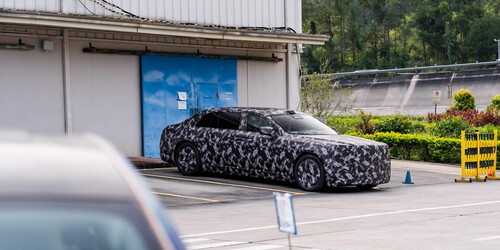
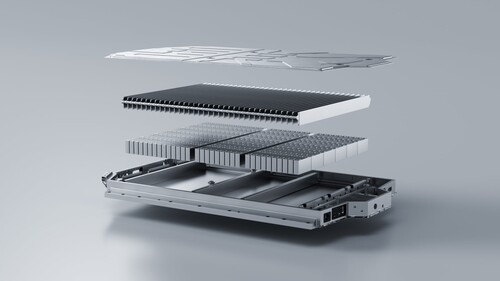
Prototype traction battery pack on a pilot assembly line. Credit: Bestmag Understand China EV’s Market Real-time notifications when critical EV data is released All important data in one place 2,000,000+ data points Become a member China is moving to formalise how solid-state batteries for electric vehicles are defined and tested, alongside new tax treatment and activity at domestic battery pilot lines. Developments between August 21 and September 1 highlight the distinction between batteries marketed as solid-state and cells that meet an all-solid-state classification. The IEC standard and the 0.5% rule On August 21, the International Electrotechnical Commission (IEC) approved a China-led proposal for an international standard covering solid-state traction batteries for electric road vehicles, according to reporting by Chinese state outlet Hunan Today. Titled Secondary lithium-ion cells for the propulsion of electric road vehicles – Application guide, test items, and conditions for solid-state batteries, the proposal is intended to establish common testing and application parameters. The initiative follows China’s domestic standardisation work on automotive solid-state batteries. A national public-comment draft released in December 2025 established a 0.5% mass-loss threshold for the all-solid-state classification, a development we previously reported. The proposed international methodology also uses a 0.5% threshold. China, France, Japan, and South Korea are participating in the working group. The drafting cycle is expected to take 24 to 36 months, so the approval starts an international standards process rather than representing a completed standard. Under the proposed methodology, a cell is dried in a 120°C vacuum chamber for six hours. Cells losing more than 0.5% of their mass through volatile organic evaporation would not meet the defined all-solid-state classification. The distinction matters because some batteries marketed as solid-state use semi-solid designs containing both solid and liquid electrolyte. Examples include the WeLion battery used by Nio and the QingTao-supplied battery used in the IM L6. Battery categoryStandards / classification referenceConsumption-tax treatmentLithium-ion battery productsSubject to applicable product rules2% from Sept. 1, 2026; 4% from Sept. 1, 2027Solid-state batteries0.5% threshold in proposed methodologyExempt through Dec. 31, 2028, subject to applicable national-standard requirementsSodium-ion batteries / fuel cellsSeparate categories under tax policyExempt through Dec. 31, 2028 The table separates the proposed all-solid-state classification threshold from the tax policy. It does not determine the tax status of individual vehicle battery products. Compiled by CarNewsChina. Battery tax changes China introduced new battery consumption-tax rules on September 1, outlined in notices published by the Ministry of Finance and the State Taxation Administration. Lithium-ion battery products are subject to a 2% consumption tax from September 1, 2026, with the rate scheduled to rise to 4% from September 1, 2027. Solid-state batteries, sodium-ion batteries, and fuel cells are exempt through December 31, 2028, according to the joint policy directive. The available evidence does not establish how individual semi-solid products will be treated without determining their applicable regulatory classification. Pilot lines and larger cells Sunwoda Electronic Co., Ltd. said its dedicated solid-state sample production line reached connectivity in August, according to the company’s recent operational disclosures tracked by Shanghai Metals Market. The facility has an annual design capacity of 0.2 GWh. Sunwoda has cited a 400 Wh/kg target for its first-generation polymer-based solid-state chemistry, with vehicle trials targeted for late 2026 and 2027. The 400 Wh/kg figure remains a development target, not a verified production result. EVE Energy separately confirmed the roll-off of a 60 Ah prototype from its Longquan solid-state battery series, following its earlier disclosure of the EV-targeted cell. The company previously stated that the EV-oriented cell could operate under stack pressure of 5 MPa or below. The reported 20 Ah, 40 Ah, and 60 Ah cells show that suppliers are developing solid-state cells at capacities relevant to automotive applications, although cell capacity alone does not establish production readiness. Cell-level abuse testing has produced additional data. Gaoneng Digital reported that a 20 Ah solid-state cell recorded no thermal runaway or open flame during a 60-minute observation after being punctured by a 4.0 mm steel needle at 100% state of charge. Greater Bay Technology reported that a 40 Ah cell completed nail-penetration testing under GB 38031-2025 at 100% state of charge while maintaining continuous 12V output. Nail penetration is a controlled mechanical-abuse test intended to simulate an internal short circuit. The reported results apply to the tested cells and conditions and do not establish pack-level safety or vehicle crash performance. Sulfide battery costs and engineering Sulfide solid-state batteries also face a significant material-cost gap. Industry benchmark data from Shanghai Metals Market assessed Li₆PS₅Cl (LPSC), an argyrodite-type inorganic sulfide solid electrolyte, at 4,300 yuan (605 USD) per kilogram in August. Liquid electrolyte pricing in China was around 30 to 50 yuan per kilogram in the supplied market data. That makes LPSC more than 80 times the high end of the cited liquid-electrolyte range on a per-kilogram basis. Cost is not the only engineering issue. Solid-state cells must maintain reliable contact between solid components at their interfaces. Unlike a liquid electrolyte, which can wet electrode surfaces, solid materials can develop contact gaps as electrodes expand and contract during operation. This makes sustained mechanical pressure an important part of some solid-state cell designs; EVE, for example, has specified operation of its 60 Ah EV cell at stack pressures of up to 5 MPa. Japan provides another reference point for the industry’s development timeline. Toyota and Idemitsu Kosan are targeting commercialisation of all-solid-state batteries for battery-electric vehicles in 2027–28, followed by preparations for full-scale mass production. Broader commercial timelines remain longer than the current pilot activity, with Chinese industry reporting placing wider automotive deployment around 2030 or later. For now, the developments mark progress at the standards, policy, and sample-production levels rather than evidence of imminent large-scale all-solid-state EV manufacturing. Most important news in your inbox. Recaps · scheduled All you need, in one email. Instant alerts · real-time Ping me when an article goes live. 0 of 27 topics selected Bundle into one email per day — instead of one email per article No spam · Unsubscribe with one click · Change settings anytime