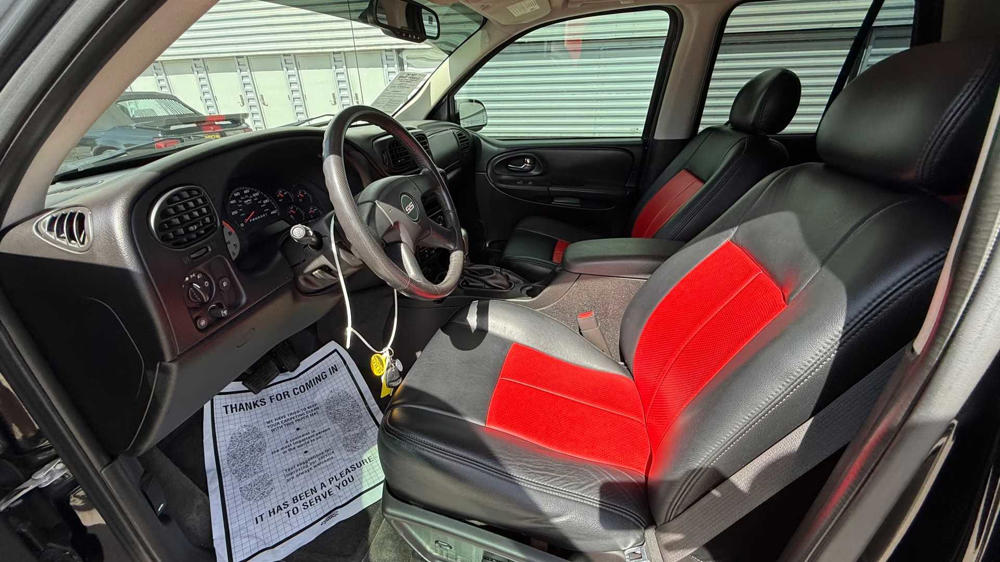
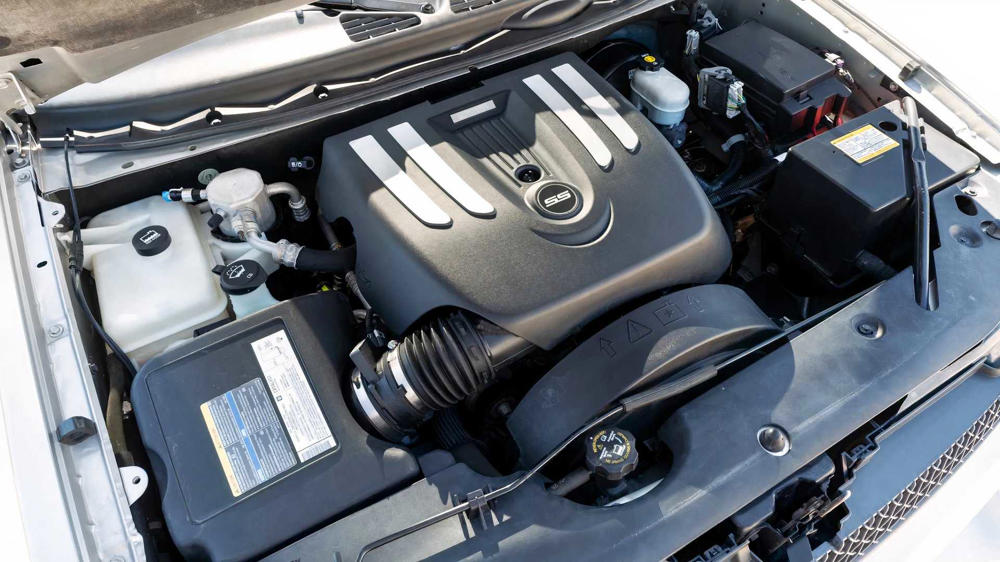
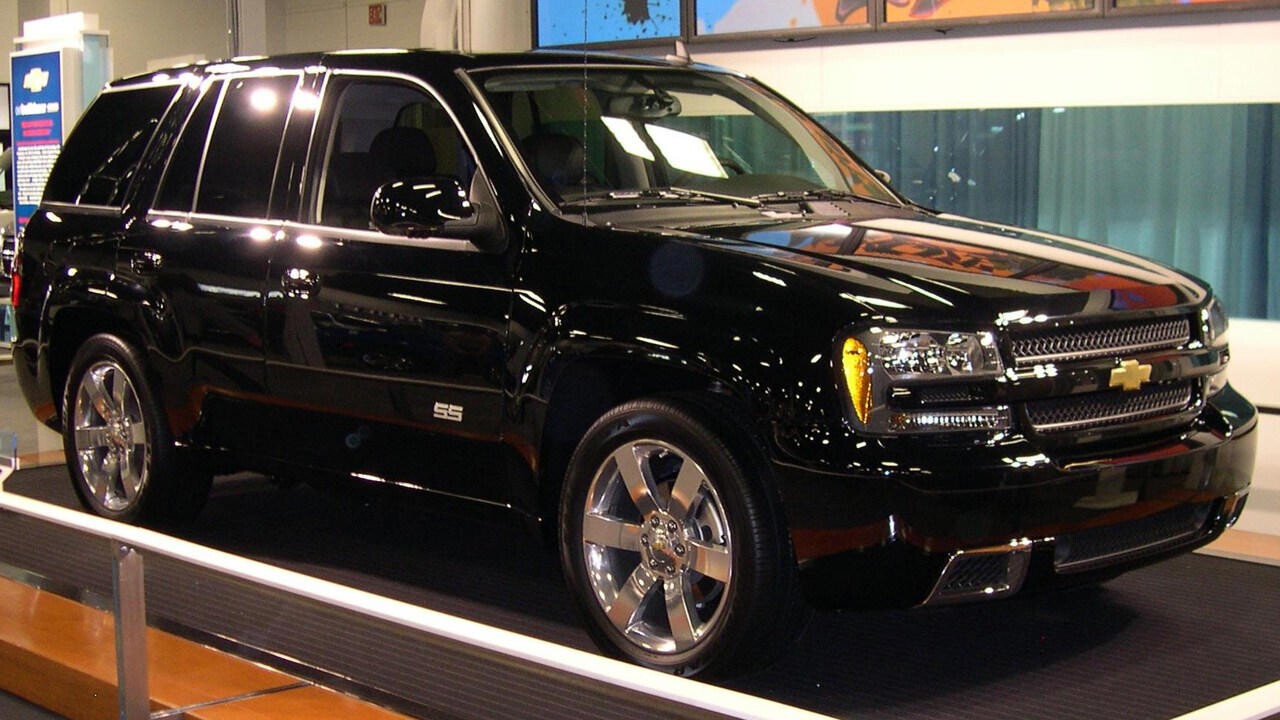
For most of the 2000s, Chevrolet sold the TrailBlazer to people who cared about cargo space, towing capacity, and whether the soccer gear would fit. It was a midsize SUV built on a truck frame, and it sold in enormous numbers because it never tried to be exciting. Then Chevrolet did something strange. It took that family hauler, dropped it an inch closer to the road, and found room under the hood for the small-block V8 from America's sports car. Nobody expected a school-run SUV to get that engine. Fewer still bought one. Chevrolet's TrailBlazer Was Built For School Runs, Not Drag Strips The TrailBlazer arrived for 2002 as Chevrolet's midsize SUV, built body-on-frame like a pickup rather than as a car-based crossover. That construction made it tough and gave it real towing ability. By 2007, the standard engine was a 4.2-liter inline-six making 291 hp, with a 5.3-liter V8 rated at 302 hp as the upgrade, according to General Motors' own model-year release. Buyers loved it. Chevrolet built more than 1.6 million TrailBlazers over the model's run, and almost all of them did exactly what a family SUV should: hauled kids, groceries, and campers without complaint. Nothing about the shape, the badge, or the dealership pitch hinted that one version would end up with a performance car's engine. The Super Sport Badge Returned In The Mid-2000s The mid-2000s brought a revival of Chevrolet's Super Sport badge across the lineup, from compact sedans to full-size coupes. The work landed with GM's High-Performance Vehicle Operations group, led by veteran engineer and racer John Heinricy, with Tom Wallace serving as vehicle line executive. That team had the engineering talent and the corporate parts bin to try something unusual. The family SUV made the list for a simple reason. It was a truck underneath, with a long engine bay and a frame strong enough to take serious torque, so the group's biggest V8 could fit without a full redesign. Turning a TrailBlazer into an SS meant swapping the engine, retuning the chassis, and keeping everything a family buyer needed. Chevrolet unveiled the result at the New York auto show as a 2006 model. The 2006 Chevrolet TrailBlazer SS Ran The Corvette's LS2 The TrailBlazer SS used the 6.0-liter LS2 V8 from the C6 Corvette, rated at 395 hp and 400 lb-ft of torque. It drove the rear wheels or all four through a heavy-duty 4L70E four-speed automatic, and the numbers were startling for a family SUV. Period testers recorded 5.8 seconds to 60 mph in an all-wheel-drive model, with a 14.3-second quarter mile at 97 mph, while other testers clocked 5.5 seconds. GM's own claim of 5.7 seconds sits between the two. Flat out, the SS ran into a governor at 130 mph. The Corvette's version of the LS2 made 400 hp, so the SUV gave up just 5 hp to the sports car. That gap came from the compromises needed to fit a sports car engine into a truck, and every one of them had a purpose. How Chevy Fit The LS2 Under A Truck Hood The LS2 needed a taller, truck-style intake manifold to fit the TrailBlazer's engine bay, and a more restrictive exhaust to suit an SUV. A mechanical, belt-driven fan helped it keep cool while towing, and that fan sapped a little more power. A cold-air induction system fed the engine through a functional slot on the passenger side of the front fascia. All-wheel-drive models used a Torsen transfer case that sent 67% of the torque to the rear wheels by default, and up to 44% to the front when the rear lost grip. Rear-wheel-drive models skipped the transfer case entirely, saving weight and complexity. The Chassis Upgrades That Made The TrailBlazer SS Work Chevrolet lowered the SS by about an inch, fitted springs up to 25% stiffer, and added a front stabilizer bar about 10% thicker than other TrailBlazers. Bilstein monotube shocks controlled the extra weight transfer, and the steering ratio sharpened from 20.3:1 to 16.0:1. An Eaton limited-slip differential and 4.10 gears sat in the rear axle, with polished 20-inch wheels on 255/50 tires. Bigger 12.8-inch front rotors used pads from the Corvette Z51, and the same test that clocked 5.8 seconds also stopped the SS from 60 mph in 119 feet. The SS still did the family jobs, too. Chevrolet's 2007 release rated it to tow 6,700 lbs with two-wheel drive and 6,500 lbs with all-wheel drive. How Rare And Affordable The TrailBlazer SS Is Today The SS was never common. GM Heritage Center archivist Christo Datini put production at 25,571 across 2006 to 2009, including 10,215 rear-wheel-drive cars and 15,356 with all-wheel drive. The SS made up less than 2% of all TrailBlazers. The final year is the rarest by far, with just 217 rear-wheel-drive and 391 all-wheel-drive SS models built for 2009. New, the SS cost $31,255 with two-wheel drive and $33,505 with all-wheel drive, well under the price of the Corvette it borrowed its engine from. Today, condition decides everything. A rear-wheel-drive 2006 SS with just 6,000 miles sold for $38,250 in February 2022, more than it cost new. Everyday mileage brings that down fast. A 2007 SS with 103,083 miles sold for $17,050 in May 2024, an all-wheel-drive 2007 with 138,307 miles brought $14,300 at auction in September 2023, and a 2006 rear-wheel-drive SS with 98,000 miles went for just $8,000 in June 2024. That spread is where the opportunity sits. Most survivors have done the family duty they were built for, and the low-mileage rear-wheel-drive cars are the ones collectors chase. For the price of a used crossover, a tired SS still delivers Corvette power, a limited-slip rear end, and a tow rating of more than 3 tons. Sources: MotorWeek, SlashGear, LSX Magazine, Classic.com, Mecum.

 Liked by Amélie Johnson, Connor Scott

























 Liked by Amélie Johnson, Connor Scott