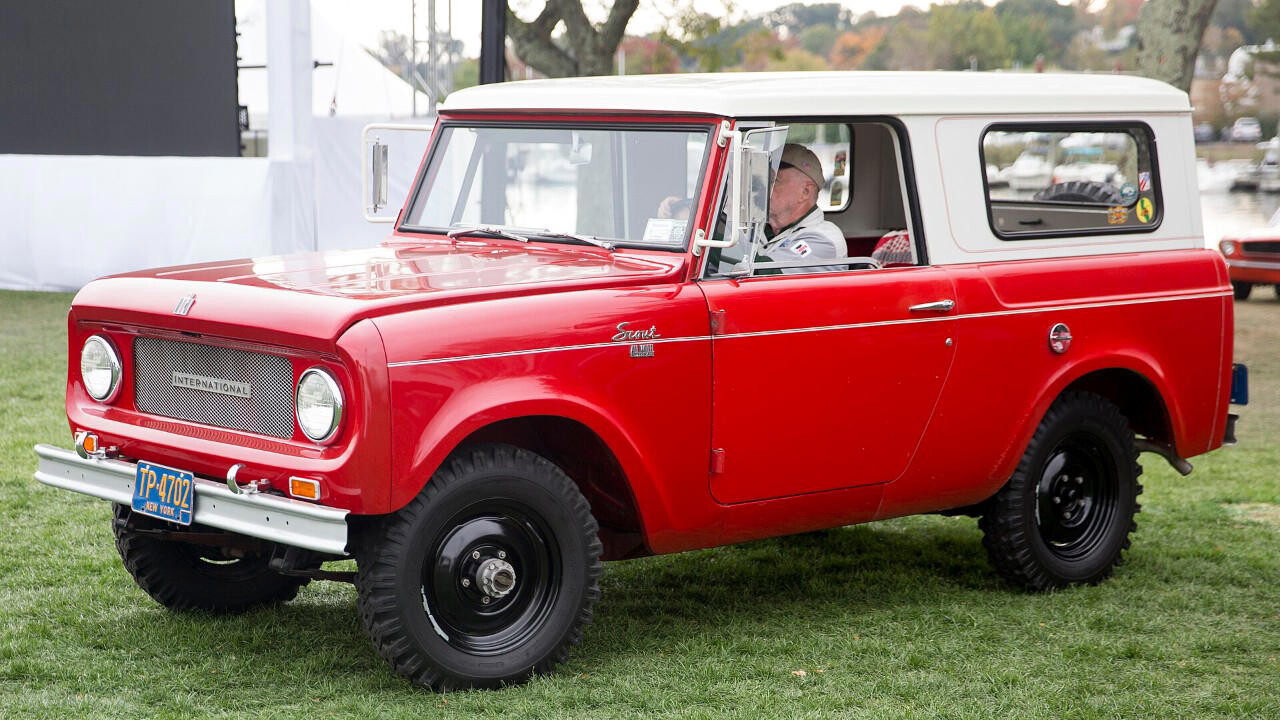
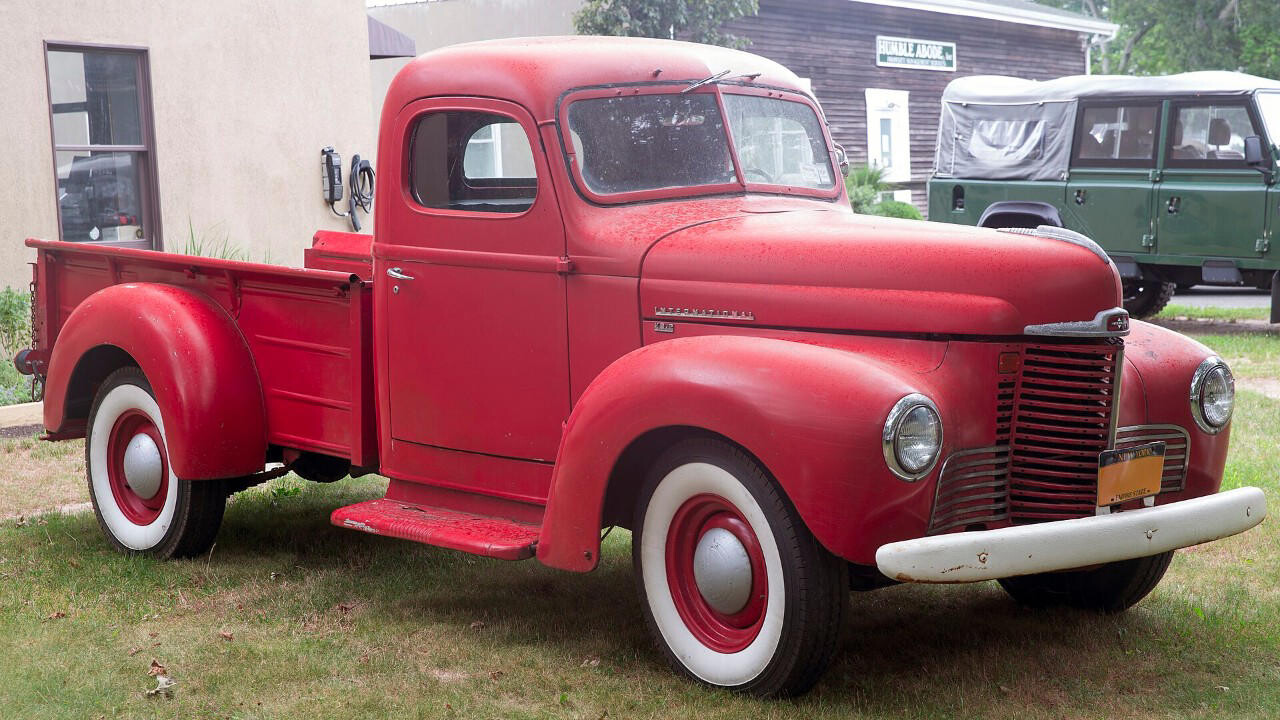
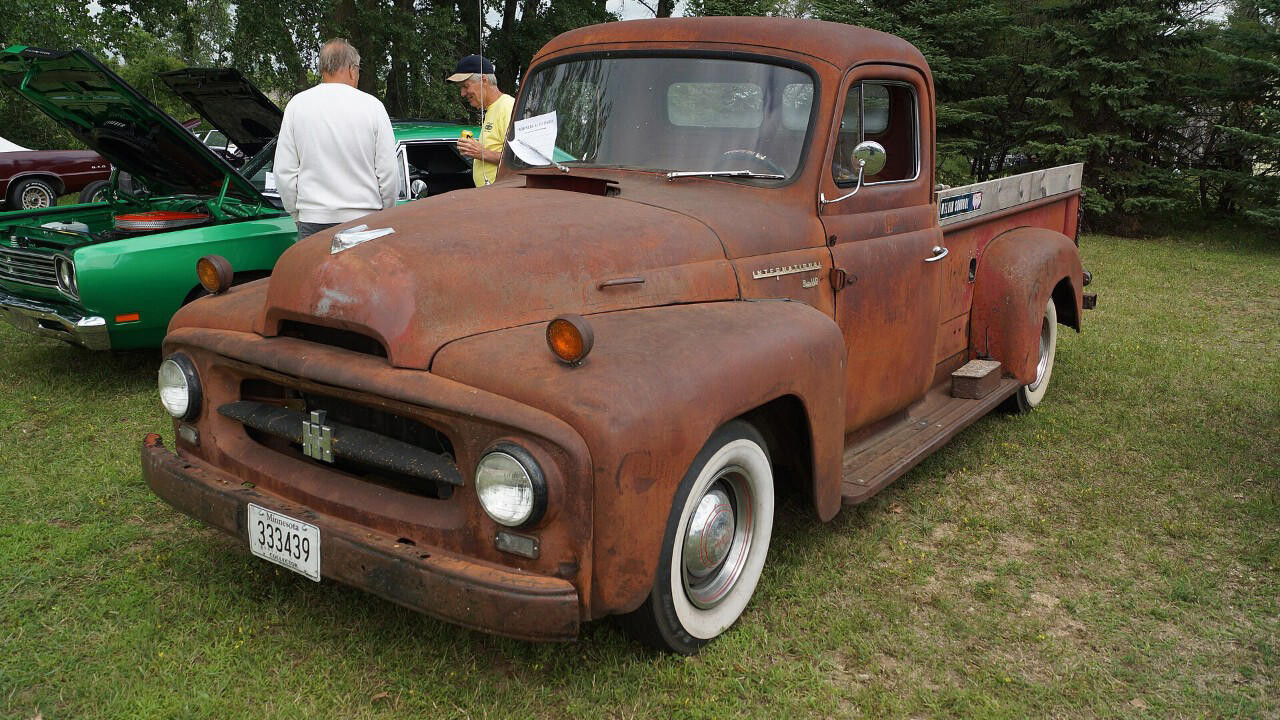
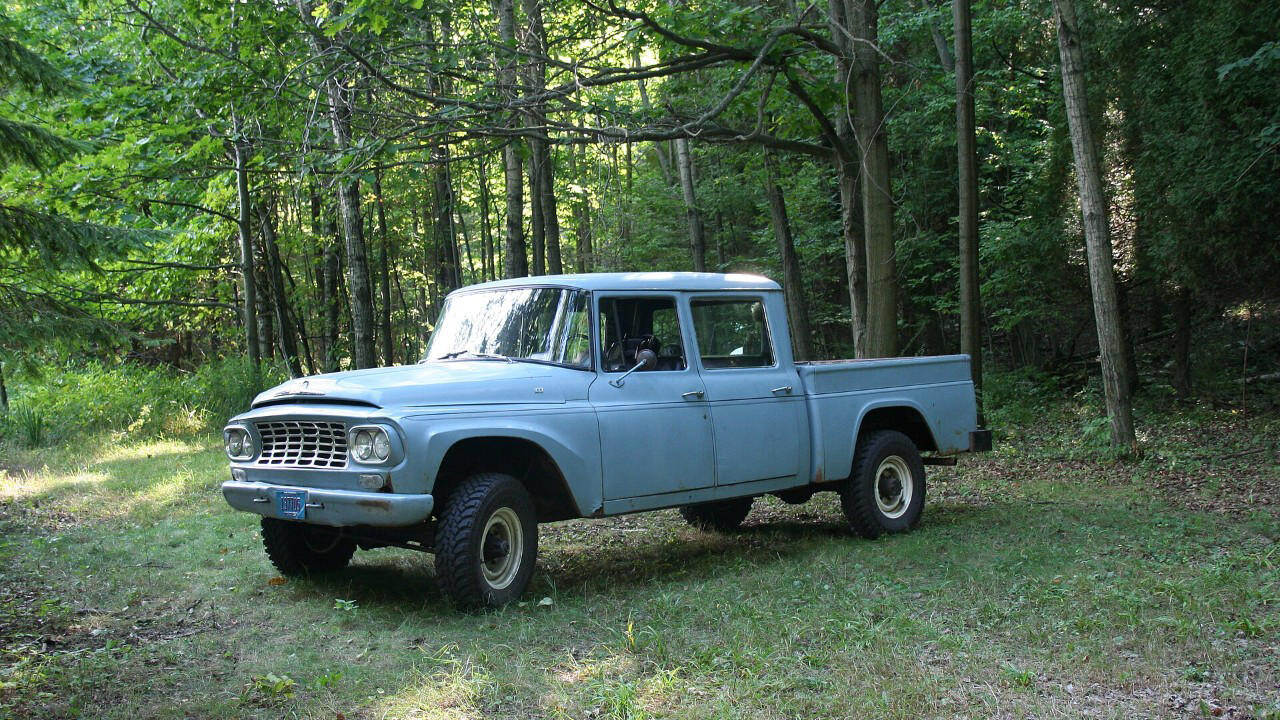
International Harvester built farm machinery first, and that mindset shaped every truck it sold. The company’s light trucks ranged from bakery vans to the International Travelall wagon, and its Scout alone passed half a million units before the line closed. Yet IH built its last Scout in 1980, so its trucks now live on only with owners who refuse to let go. That loyalty makes sense to us. These trucks were simple, overbuilt and a little odd, which is exactly why they have so much character today. Parts can take some hunting, but the reward is a truck nobody else at the show brought. So here are our picks, seven International Harvester trucks we would refuse to give up. The choices are our opinion. Meanwhile, the dates, engines and figures come from the references linked along the way. 1. 1964 International Harvester Scout 80 The Scout 80 was International’s answer to a question nobody at Willys wanted asked: what if a small 4×4 had more room? The project began in late 1958, and the first Scout reached buyers in November 1960. At that point, the Jeep CJ had the small utility market almost to itself. According to Mac’s Motor City Garage, IH sat its Scout on a 100-inch wheelbase, against 81 inches for the Jeep CJ-5. The track was nearly five inches wider, too. Power came from the 152-cubic-inch Comanche four, which was essentially half of International’s 304 V8. It made 93 horsepower and shared about 80 percent of its parts with that V8. By 1964, the formula was settled. The windshield folded flat, and the vacuum wipers sat on top of the glass rather than below it. Buyers could run it as a roadster, a pickup or a fully enclosed wagon. Our take: the Scout 80 is the purest Scout of all. It feels like a farm implement that learned to drive on the highway, and we mean that as a compliment. If you find one with a solid tub, hang on to it, because rust is the enemy of every steel Scout body. 2. 1965 International Scout 800 The Scout 800 arrived for 1965 and took the rough edges off the original without losing its purpose. As Hagerty’s Scout profile notes, the 800 dropped the folding windshield. In its place, buyers got carpeting, which was unusual for a utility rig, and the option of a four-speed transmission. The 800 also grew its engine list over time. A turbocharged 152 four made 111 horsepower, a rare trick for a mid-1960s truck. Later, IH added a 196-cubic-inch four, a 232 six and, from March 1967, a 266 V8. As a result, the 800 could finally keep up with highway traffic. Then came the Sportop in early 1966. It wore a sloped fiberglass roof, which was also offered as a convertible, along with a Continental-style spare on the back. That model showed IH understood the Scout could be fun as well as useful. In our view, the 1965 Scout 800 is the sweet spot for a weekend driver. It keeps the boxy charm of the 80 but adds enough comfort to make a long trip reasonable. Before you buy, check the floors and rocker panels carefully, since the steel body hides rot well. 3. 1975 International Travelall Custom 150 Long before “SUV” meant anything, International sold the Travelall, a truck-based wagon built from 1953 to 1975. It ran against the Chevrolet Suburban for its entire life. However, it beat Chevy to one big idea: IH added a rear passenger door in 1958 and a fourth door in 1961. Chevrolet didn’t give the Suburban four doors until 1973. By 1975, the half-ton model wore the 150 badge. Buyers could choose two- or four-wheel drive, up to three rows of seats, and V8s that IH offered at 304, 345 and 392 cubic inches across the generation. After the switch to net ratings, the 1975 engines made between 141 and 172 horsepower. Unfortunately, the timing could not have been worse. The 1973 oil crisis hit a wagon that returned roughly 10 to 12 mpg. IH ended its entire Light Line in May 1975, which made this the final year. Even so, a 1971 owner survey found that 92.4 percent of Travelall owners would buy another. Our take: the International Travelall is the classic family hauler for people who find a Suburban too common. A 1975 is the last of the breed. If you want one, look for a 4×4 with a V8, and budget for brakes. 4. 1958 International Metro Van The Metro Van carried milk, bread and packages through American neighborhoods for decades. Its body came from the Metropolitan Body Company of Bridgeport, Connecticut, which pioneered cab-over delivery bodies in the late 1930s. In fact, International liked the arrangement so much that it bought the company outright in January 1948. The look is what wins people over. As Barn Finds explains, designer Raymond Loewy rounded the corners and gave the Metro a bullnose front. He added narrow rear barn doors with rounded windows and a kidney-shaped grille. The 1958 van wears that soft, friendly shape, which lasted until a squarer redesign in 1964. Beyond deliveries, Metros served as ambulances, bookmobiles, mobile offices and radio vans. Later, many found second lives as campers and food trucks. Values have climbed with that fame, too. A recreated 1951 Metro Snap-On tools display van sold for more than $192,000 at Barrett-Jackson in 2022. In our view, a Metro Van is the most charming truck International ever sold. It’s slow and it isn’t comfortable, but it makes everyone smile. If you shop for one, inspect the floor and body mounts closely, and expect to source parts through specialists. 5. 1949 International KB-2 The KB series was International’s postwar refresh of its K-line trucks, which had arrived in mid-1940. The KB followed in 1947 and ran through 1949. It kept the K’s best features, including headlamps set into the fenders and an alligator-style hood that opened from the front. The quickest way to spot a KB is the grille. On the KB-1 through KB-5, International added chrome “wings” on either side of the grille, a bit of postwar sparkle on a working truck. Buyers responded, too. Between 1947 and 1949, IH sold 122,000 KB-1 and KB-2 trucks. The 1949 model was also the end of an era. For 1950, International launched the all-new L series. Old Cars Weekly calls IH the last major maker to bring out an all-new postwar pickup. That makes the KB-2 the last of International’s prewar-styled light trucks. Our take: the KB-2 is a rolling piece of 1940s farm country, and it looks best in red. It has a warmth that later, squarer trucks lost. If you find one, check the fenders and the bed floor. International used wood cargo floors until the 1950 L series brought metal. 6. 1954 International R-110 The R series arrived for 1953 as an update of the L series and shared its cab. Even so, it changed the face of the brand. The R introduced the IH “tractor” emblem on International road vehicles, set into a simpler body-color grille with two wide horizontal slots. Under the hood of the R-110 sat the Silver Diamond 220, an overhead-valve six rated at 100 horsepower. A three-speed manual was standard. However, buyers could add overdrive, power steering or a three-speed automatic based on GM’s Hydramatic. That was a surprisingly modern option list for a working pickup in 1954. The R-110 was also the best seller of the range in 1954 and 1955. For 1954, International also added a cheaper R-100, priced $60 below the R-110. Then, for 1955, the S series replaced the light R trucks, so the R-110 had a short run. In our view, the R-110 is one of the most underrated pickups of the 1950s. It’s honest and handsome, and it’s far less common at shows than a Ford or Chevy of the same year. Our buyer tip: ask whether the Silver Diamond six is original, since the engine is half the charm. 7. 1961 International C-120 4x4 The C series launched for 1961 and ran through 1968. It replaced the B series with a new chassis, and the new cab sat four inches lower than before. That lower stance gave International pickups a longer, sleeker look than the tall trucks they replaced. The 1961 trucks are the easy ones to spot. They wore twin headlights side by side and a concave egg-crate grille, a front end that lasted only through 1962. From 1963, each side got a single headlight. Also in 1961, International launched the Travelette crew cab, the first American-made four-door, four-wheel-drive production pickup. The C-120 4×4 is the four-wheel-drive version of the light pickup, and it was built to work. It sold on the same promise as the Scout: International trucks took abuse. Our take: a 1961 C-120 4×4 is the one we’d keep for real chores. It has the early twin-headlight face and the lower 1961 cab, and it was made to pull a trailer. If you find one, check the front axle and transfer case, since parts for the 4×4 hardware take patience. That patience pays off, because C-series production ended for good in 1968.

 Liked by Ava Macdonald, Caleb Scott
 Liked by Ava Macdonald, Caleb Scott