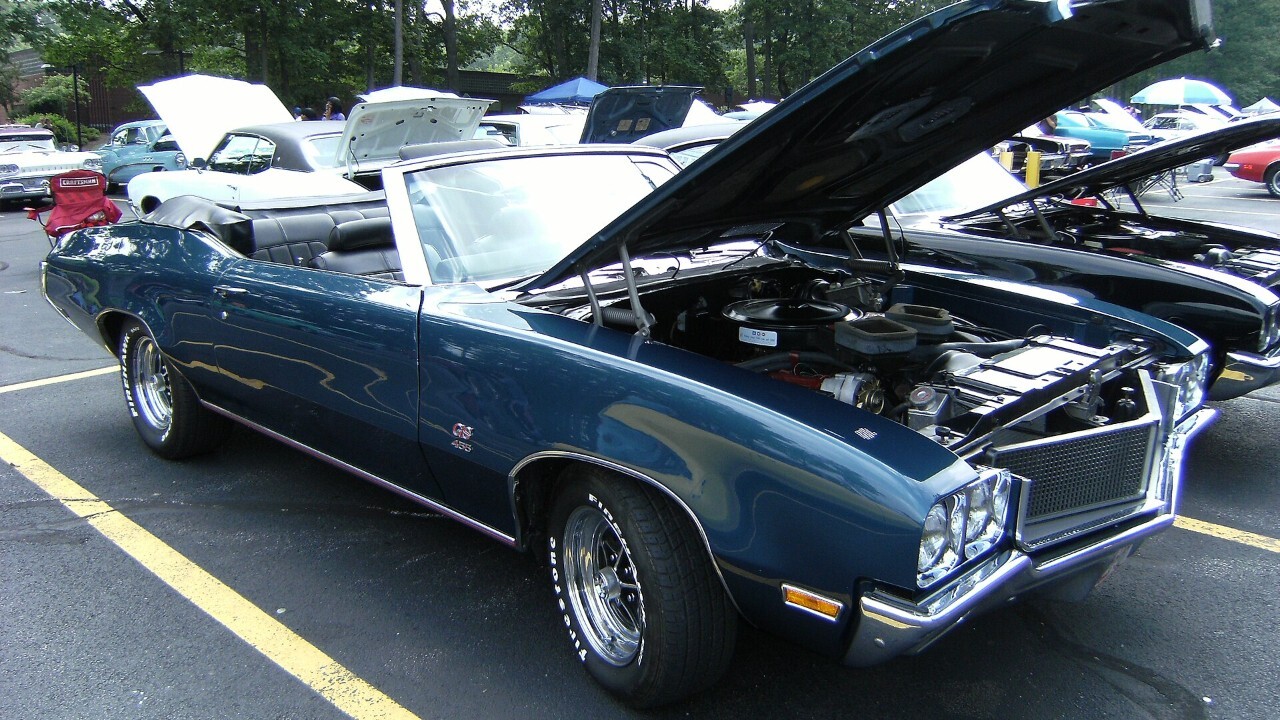
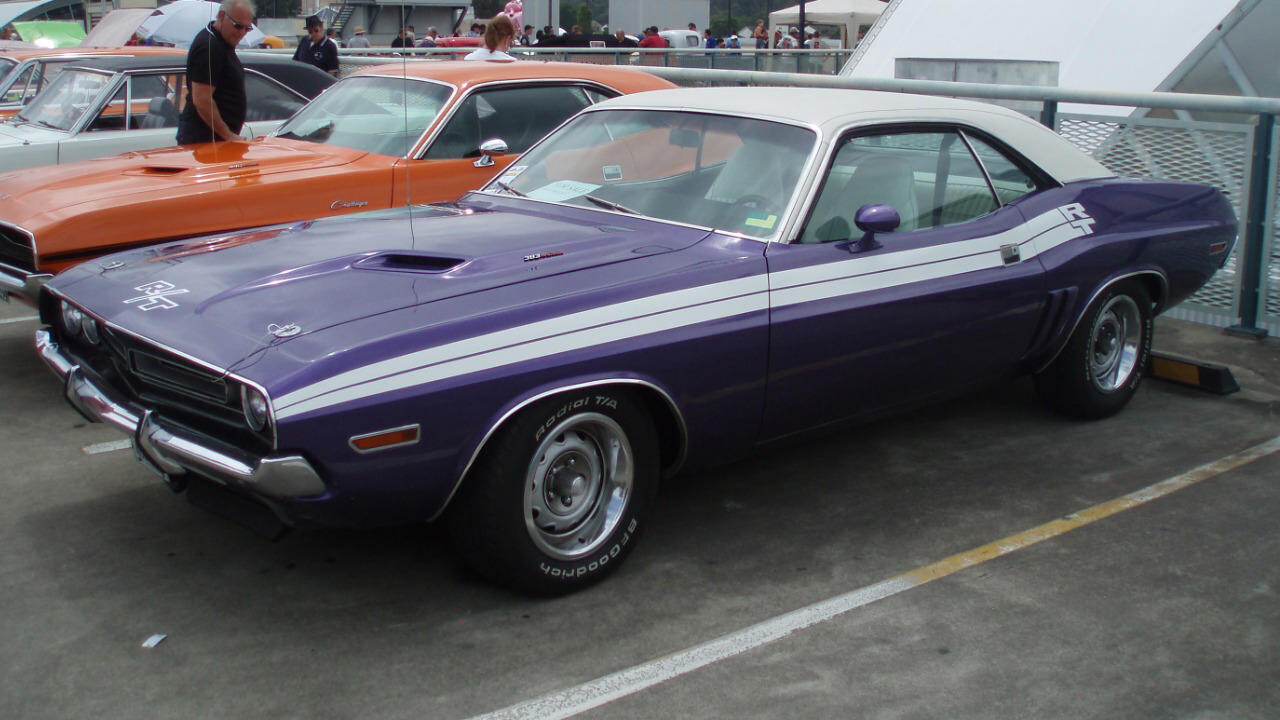
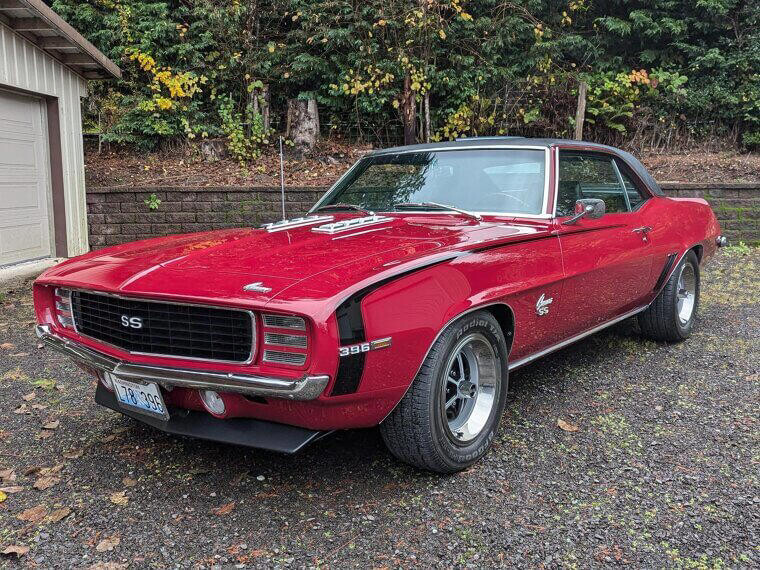
Ford built only 1,613 Torino GT convertibles for 1971, and then it dropped the body style for good. That same story then played out across Detroit in the early 1970s. Big-block power, open roofs and cheap gas had a short window together, and the convertible muscle car closed it first. That’s why these cars matter so much today. A muscle car hardtop gives you the noise and the shove. By comparison, a convertible adds the wind, the sky and the full sound of a big V8 at full throttle, with no roof in the way. These are our picks, seven muscle car convertibles that we think defined open-air enjoyment. The choices are our opinion. Meanwhile, the engines, prices and production counts come from period data and the references linked in the list. 1. 1970 Oldsmobile 442 convertible The 4-4-2 name began in 1964 as shorthand for a four-barrel carburetor, a four-speed manual and dual exhausts. By 1970, it meant something much bigger. That year, Oldsmobile made its 455-cubic-inch V8 standard in the 4-4-2, rated at 365 horsepower and a massive 500 lb-ft of torque. Buyers who wanted even more could also order the W-30 package, rated at 370 horsepower. The 4-4-2 was a model in its own right from 1968 through 1971, rather than an option on the Cutlass. Then, in 1970, it earned a public stage when a 4-4-2 paced the Indianapolis 500. That torque figure is the key to the convertible. With 500 lb-ft on tap, you don’t need to rev the engine to feel it. Instead, a gentle squeeze of the pedal sends the car forward on a wave of low-end pull, which is perfect for a top-down cruise. Our take: the 1970 442 convertible may be the best all-round open muscle car GM built, and a match for any Torino GT convertible. It’s fast, comfortable and handsome from every angle. If you shop for one, verify the engine code and paperwork carefully, because a 4-4-2 badge is easy to add to a lesser Cutlass. 2. 1971 Ford Torino GT convertible Ford redesigned the Torino for 1970 with a lower, wider body shaped by Coke-bottle styling. For 1971, the look carried over with only a revised grille and trim. That made the 1971 GT convertible the last of its kind, because the 1972 redesign dropped the convertible altogether. The Torino GT itself ran from 1968 through 1971. For 1972, Ford renamed it the Gran Torino Sport. In 1971, a 302 V8 with a two-barrel carburetor was standard on GT models. Meanwhile, the big 429 Cobra Jet stayed on the books at 370 horsepower, mainly tied to the Cobra model. Still, production tells the rest of the story. Ford built only 1,613 Torino GT convertibles for 1971. By comparison, the Torino line as a whole, the intermediate twin of the Mercury Montego, came in many body styles. So the convertible is a rare variant of a familiar car. In our view, the Torino GT convertible is the most underrated car on this list. It has a long, low profile that looks great with the top down. If you want one, check the floors and rear quarters for rust, and confirm the drivetrain matches the build data. 3. 1970 Dodge Challenger R/T convertible The Challenger arrived for 1970 as Dodge’s entry in the pony car fight. It rode on Chrysler’s E platform and shared major components with the Plymouth Barracuda. Dodge offered almost every engine in its catalog, including the 426 Hemi, and it sold 76,925 Challengers in that first year. However, convertibles were a small slice of that number. RM Sotheby’s describes one R/T as one of 1,070 R/T convertibles built for 1970. That car carried the 383 Magnum V8, rated at 335 horsepower with a four-barrel carburetor. In February 2021, it sold for $79,200. The R/T convertible is also a shape that photographs well from any angle. With the top down, the long hood and short deck look even more dramatic than on the hardtop. Our take: the 1970 R/T convertible is the open Mopar we’d want for a summer of shows and back roads. The 383 is the smart choice, since it delivers most of the fun for far less money than a Hemi or 440. Before you buy, get the fender tag and broadcast sheet decoded by a Mopar expert. 4. 1967 Chevrolet Chevelle SS 396 convertible Chevrolet made the SS 396 its own Chevelle series from 1966 through 1968, before it became an option package for 1969. In 1967, buyers could still order it as a sport coupe or a convertible. The convertible is the one that turns a weekend drive into a parade. Meanwhile, the 1967 car got meaningful upgrades. Front disc brakes were available across the Chevelle line, with a new dual master cylinder and a warning light. Chevrolet also offered the Turbo Hydra-Matic with a manual-shift selection. Engine choices peaked with a 350-horsepower 396. Late in the year, a 375-horsepower version arrived, and Chevrolet sold just 612 of them. Those disc brakes matter more than they sound. A big-block convertible is heavy, so better stopping power made the 1967 car easier to drive hard. For a top-down car you plan to enjoy, that upgrade is worth seeking out. In our view, the 1967 SS 396 convertible is the Chevelle at its cleanest. The styling is crisp, and the 396 has plenty of punch. If you’re shopping, ask for documentation on any 375-horsepower claim, since that rare option is easy to fake. 5. Buick GS 455 convertible Buick’s GS 455 brought a gentleman’s look to a brutal drivetrain. In 1970, its 455 V8 made a claimed 510 lb-ft of torque at just 2,800 rpm, according to Street Muscle. That was enough to move a heavy convertible with real authority. The top choice was the Stage 1 package, which cost $199 in 1970. Buick built 2,465 GS 455 Stage 1 cars that year. Street Muscle puts Stage 1 convertibles at about 232. Buick also charged $229 for a power top, which came with extra chassis bracing. A Positive Traction limited-slip rear was standard on Stage 1 cars, and functional twin hood scoops fed the engine. As a result, values reflect that rarity. Street Muscle reports a concours-quality Stage 1 convertible sold for $236,500 at auction. Even a non-Stage 1 GS 455 convertible gives you most of the experience for far less. Our take: the GS 455 convertible is the sleeper of open muscle cars. It looks like a refined Buick, yet it pulls like a freight train. If you want one, confirm Stage 1 claims through Buick documentation, because the badge alone proves nothing. 6. 1969 Chevrolet Camaro SS 396 convertible The 1969 Camaro is the one many fans picture first, and its styling lasted for only that single year. Chevrolet gave it all-new sheet metal except the hood, trunk lid and roof. The grille gained sharper V-shapes and deeply set headlights, while new door skins and quarter panels made the car look lower and wider. It really was wider, too. The 1969 Camaro measured 74.0 inches across, up from 72.5 inches. The SS 396 package added big-block power through the L35 and L78 versions of the 396 V8. As a result, the small Camaro body carried a seriously large engine. The convertible also has a strong pace-car history. Earlier, a 1967 Camaro RS/SS convertible with a 396 paced the Indianapolis 500, and Chevrolet sold 100 replicas. That link between the open Camaro and the big-block 396 started early. In our view, the 1969 SS 396 convertible is the best-looking Camaro ever built, and it’s even better with the top down. Prices are high, though, and SS badges are easy to copy. So, if you want one, have the trim tag and drivetrain verified before any money changes hands. 7. 1966 Ford Fairlane GT convertible Ford gave the Fairlane a new body for 1966, and the GT version brought big-block power to it. The engine was the S-code 390 FE V8, rated at 335 gross horsepower with a Holley four-barrel. According to a period Car Life test retold by Curbside Classic, that matched the Pontiac GTO’s rating, with 427 lb-ft of torque against the GTO’s 431. Car Life tested the automatic GTA version and ran 0 to 60 mph in 8.6 seconds. That automatic was the Sport Shift, a C6 Cruise-O-Matic that let the driver pick gears through the shifter. A 1966 GTA carried a sticker of $3,499 with power steering, power brakes, a radio and styled wheels. The magazine also praised the new body as tight and solid, even if the car weighed more than it should. In a convertible, that solid shell is a real advantage. Our take: the 1966 Fairlane GT convertible is the most relaxed car on this list, and that’s part of its charm. It’s a muscle car you can cruise all day. If you want one, confirm the S-code in the VIN, since Ford’s early Fairlane records are incomplete.

 Liked by Liam Clark, Noah Macdonald
 Liked by Liam Clark, Noah Macdonald