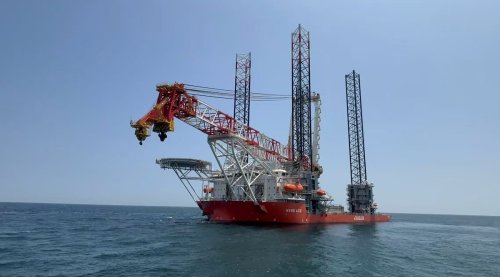
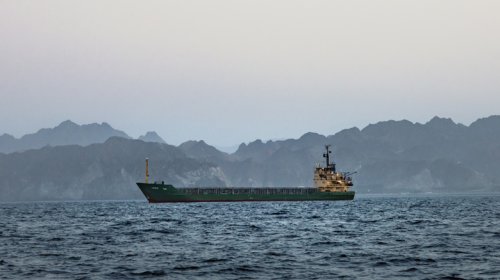
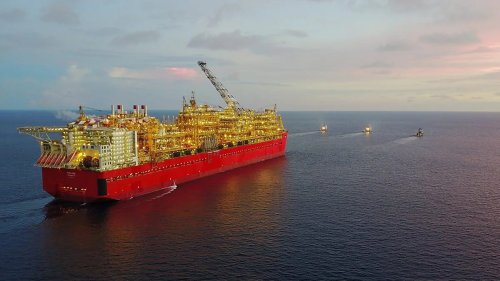
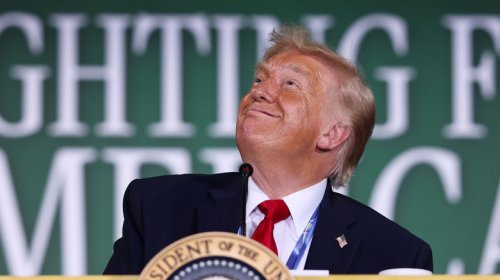
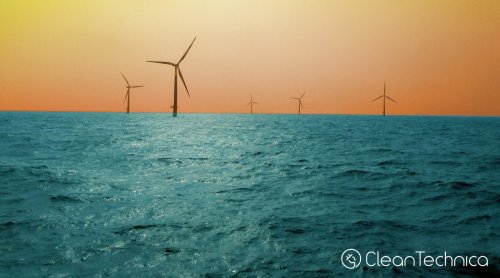
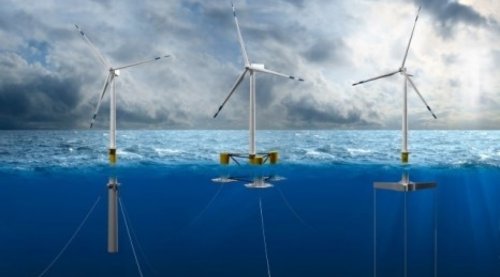
If US President Donald Trump really wants to annex Canada, he’ll have a big problem on his hands. The Canadian province of Nova Scotia is laying plans to begin exploiting its copious offshore wind resources, and if it’s one thing Trump can’t stand, it’s wind turbines, especially offshore turbines. Clearly, Trump is deathly afraid of the things. They haunt his dreams, day and night, with their looming towers and whispering blades. How else to explain why Trump can’t stand to see another wind turbine rise up from the ground on his watch, offshore or on… Canada And The US Offshore Wind Connection Trump’s fear of wind turbines has taken on the nature of a religious crusade. Last year he tried, and failed, to stop construction on US offshore wind projects that were already in motion along the Atlantic Coast. He also ordered the Defense of Defense to “review” — meaning, to delay — onshore wind farms in the pipeline. The courts have agreed that Trump’s actions against offshore wind projects are unlawful, and the onshore reviews are also unlawful. However, as of this writing the onshore projects are still on hold while the Defense Department invents more hoops for developers to jump through. Meanwhile, this year Trump also doubled down on his war against offshore wind, offering taxpayer-funded payoffs (some say bribes) to get offshore leaseholders to walk away from their plans. With this in mind, what are energy-hungry coastal states to do? The thirst for reliable, localized power generation is particularly acute among Northeastern states. Massachusetts, for one, has already begun eyeballing an offshore wind partnership with Canada, leveraging the “Wind West” project in Nova Scotia. Earlier this year, Massachusetts Governor Maura Healey and Nova Scotia Premier Tim Houston put their John Hancocks on a new Memorandum of Understanding, pledging to collaborate on offshore wind projects in the North Atlantic that benefit both the US and Canada. “I look forward to sharing this clean energy with Massachusetts, powering economic opportunities for the New England region, and creating thousands of jobs and billions in investment in Nova Scotia,” Houston enthused in a press statement dated February 5. More Offshore Wind From Canada The centerpiece of Nova Scotia’s offshore wind plan is Wind West. It was among 20 investment opportunities showcased by the Government of Nova Scotia at the inaugural Canada Investment Summit in Toronto last week. If all goes according to plan, Wind West will add offshore wind to Nova Scotia’s existing roster of conventional offshore energy resources. According to the Government, the province hosts annual average offshore wind speeds topping the range of 9-11 meters per second, making it among the strongest wind areas in North America. “Nova Scotia has the offshore wind potential to power about a quarter of Canada’s electricity needs,” the Government states, referring to an estimated 60+ gigawatts in offshore wind potential. The plan calls for a 5-gigawatt tranche of offshore wind turbines in Phase I alone, producing 24 terrawatt-hours of electricity per year or about twice the current peak demand in Nova Scotia. “Wind West will be Canada’s first offshore wind development and will set the scale, direction and trajectory for future growth,” the Government emphasizes, noting that it has identified offshore sites capable of hosting 62 gigawatts, with wind power supporting capacity factors of up to 60%. Capacity factor refers to the difference between actual electricity generation and the full operating capacity of a power plant. So far this year, for example, coal power plants and high efficiency combined cycle gas power plants in the US have scored capacity factors ranging from the mid-30’s to the low-60’s, depending on the month, with other forms of fossil-fueled power generation scoring far less. Offshore Wind Is Just For Starters Offshore wind is just part of the plan. Under the wing of Canada’s new new Eastern Energy Partnership, Nova Scotia and other eastern provinces are eyeballing a gold mine of regional markets for clean power with offshore wind as the centerpiece, as described in the Wind West strategic plan: Offshore wind from Nova Scotia can provide enormous quantities of clean energy, at stable prices, while diversifying supply, and boosting reliability for customers. And, in addition to Nova Scotia’s offshore wind, the Atlantic Provinces have other enormous resources to offer–in new and expanded hydro, in new nuclear, in onshore wind, geothermal, tidal and others. The Eastern Energy Partnership is aimed at establishing new transmission resources between Quebec and the Atlantic Canada provinces of New Brunswick, Newfoundland and Labrador, Nova Scotia, and Prince Edward Island, adding an east-west focus to Canada’s longstanding links with US markets to the south. All else being equal, additional energy production and electricity-sharing among Canadian provinces would also ripple into the US, whether in terms of new electricity infrastructure, new supply chain jobs, or both. The wheels are already in motion for a ramp-up in US-Canada clean power activity. Despite some hitches, the new 1.25 gigawatt Champlain Hudson Power Express transmission line officially opened for business in June, covering up to 20% of electricity demand in New York City with hydropower from Quebec. An Offshore Wind Turbine By Any Other Name… Meanwhile, back here in the US, the Department of Energy may have figured out a way to restart its wind power programs even while Trump is still in office. Instead of using “wind turbines” to describe, well, wind turbines, DOE has come up with something called “aeromechanical energy systems.” In support of the verbal gymnastics, DOE also mashed up the former offices of Solar Energy Technologies and Wind Energy Technologies into the new “Integrated Energy Systems Office,” thus avoiding the awkwardness of maintaining an office with “wind” in its title. The IESO landing page is still bare-boned, but the office does make it clear that the reference to “aeromechanical” means wind turbines and not, say, aero mechanical conveyor belts. “IESO addresses challenges to the long-term reliability and performance of wind energy systems and promotes the recycling of end-of-life wind energy components.” The leap from “addressing” to “funding” is a rather long one for wind power nowadays, so don’t hold your breath for IESO to kick in with federal funding for new wind programs, onshore or off. On the brighter side, while the nation’s copious offshore wind resources are on hold for the time being, coastal states are not taking Trump’s offshore lease buyout/payoff/bribery scheme lying down. On the Atlantic coast, a group of attorneys general representing New York, Connecticut, Maine, Massachusetts, New Jersey, Rhode Island has sued the US Department of the Interior over its billion-dolar deal with TotalEnergies. In California, Attorney General Rob Bonta and the California Energy Commission have also taken the Trump administration to court over its buyout of the Golden State Wind lease. Regardless of what the courts decide, Trump has effectively kneecapped states all across the country for the time being, choking off access to an abundant, accessible, and economical energy resource even as conventional fuel costs are flying through the roof. Who voted for this guy, anyways? Image: Nova Scotia is laying plans for a massive offshore wind project that far exceeds the Canadian province’s electricity demand, with a ripple effect on access to clean power in the US (screenshot via YouTube).