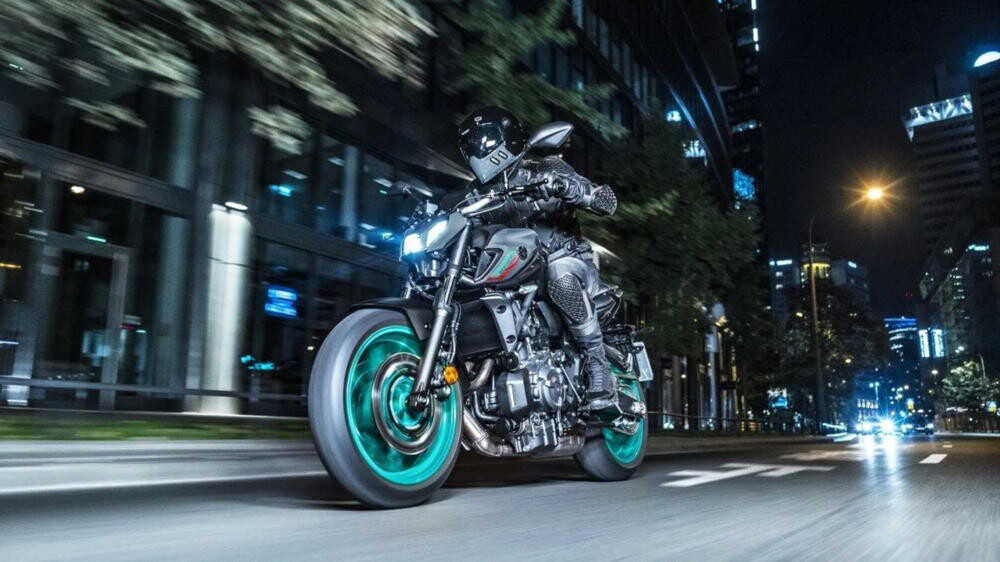
The critics of electric vehicles (even the most modern ones with four wheels) will often bark about range, charging infrastructure, and cost. All factors which can be valid complaints, but also which are becoming less valid as time goes on. With the increase in EV adoption, things like fast charging, improvements in battery efficiency, and a growing network of charging stations all assuage most of those concerns for cars. Very few manufacturers (aside from Can-Am and a handful of others) have bothered to even attempt an electric motorcycle, though, and with good reason. Motorcycles need to be small, lightweight, and inexpensive to produce and buy for their success to be possible, let alone guaranteed. But putting a heavy, expensive, electric powertrain between two wheels eliminates a lot of those benefits. Can-Am recently loaned me its new Pulse EV motorcycle for a few months. I rode it to the movies, took it through the closest twisties I could find, and even spent time commuting on the freeway to get a sense for it. At the end of the experience, I got the distinct feeling that with motorcycles, we're still pretty early in the EV life cycle. The EV lifestyle has its appeal, and there's likely a number of riders who would enjoy riding a Pulse, but ownership might not be so attractive. The cost of early adoption Travis Langness/SlashGear It's worth discussing the Pulse's price upfront as it may be a bridge too far for some riders. The starting price is currently $10,999 (not including freight or destination fees), with the top-trim Pulse '73 model costing $2,000 more. Those prices put the Pulse in competition with some seriously cool bikes: whether you're shopping for mid-size sport bikes or naked ones, many will come in under $10,000. The Yamaha MT-07, Honda CB750 Hornet, and Kawasaki Z650 cost between $1,000-$2,000 less than the Pulse, and they're all more powerful. Travis Langness/SlashGear Charging and running the Pulse is pretty cheap, though. With multiple plug-ins, even at some pretty expensive charge rates, I was only putting in a few dollars of electricity each time the Pulse needed juice. For 40 miles of range at one public charger, I paid just $1.29, and for about 50 miles of range at another, I paid barely $2.00. Even if your middleweight gas-powered bike is returning 50 miles per gallon, it's still around double the price to travel those same miles, at today's current national gas price of $4.03 per gallon. Finding a proper charging station was a bit more difficult, though (more on that later). It's got some gusto down low Travis Langness/SlashGear Now, for the riding stuff: Out of the gate, the Pulse really goes. The MT-07, CB750, and Z650 are more powerful and faster when it comes to top speed, but between zero and 30 mph, the Pulse feels much quicker. Like you'd expect from a four-wheeled EV, the Pulse doesn't have gears — just a clutchless direct drive and a silent chain. It does have a reverse function, but the bike was light enough that I never used it. Just turn it on, and go. The 8.9 kWh battery and the Rotax E-Power motor put out 47 peak horsepower and 53 pound-feet of torque. The estimated zero-to-60 mph time from Can-Am is 3.8 seconds. In practice, that's fast enough to scurry away from just about any set of traffic lights, and it'll get you in front of the traffic pack easily. Where that power runs out, though, is at higher speeds. Travis Langness/SlashGear The Pulse has a top speed of 80 mph, which I found notably low, since the single-cylinder scooter I just took to Monterey, CA, and back, topped out on the highway (allegedly, officer) somewhere in the mid-80s. But it's not just at the top of the limiter where the Pulse feels a bit underpowered. Over 60 mph, which is the sort of speed you need to even attempt to merge on California highways, the power feels like it drops off significantly, just flattening out as you accelerate towards the top speed. Meant for the crowded city streets Travis Langness/SlashGear To the Pulse's credit, it moves really well at slower speeds and between corners. The bike itself feels narrow and extremely nimble. Getting off my 900cc gas-powered bike and going for a ride on the Pulse, I was shocked at how quick the turn-in was. The narrow tires make for quick changes in direction, and the Pulse feels right at home splitting lanes between the bulky modern SUVs on the crowded roads in Los Angeles. Indeed the tank, if you can call it that, feels a bit too narrow. Travis Langness/SlashGear The main tank fairing area of the Pulse, where there's a bit of cell-phone storage and a few body panels that look like a traditional gas tank, doesn't flare out enough for sporty travel. On most motorcycles, that area is wide enough that I can brace myself for stops by relying on the squeezing force of my legs and the slightly angled-out geometry of the tank. With such a narrow space on the Pulse, it feels like my legs slid forward much easier than on a typical naked bike. Some tank grips could certainly help with this problem, but a larger tank area (with potentially a bit more storage) would be nice as well. Steady on the brakes Travis Langness/SlashGear Like four-wheeled EV's, the Pulse has regenerative brakes as well. Passive and active regen settings put a bit of energy back into the battery when you're decelerating, but the active regen is difficult to engage when you're also using the physical brakes. To use active regen, I had to twist the throttle forward, and when I'm also using my fingers to grab and squeeze the front brake lever, that's a delicate dance. It's easy for your hand to slip, lose grip, and end up reducing brake pressure. Travis Langness/SlashGear This back-and-forth dance between physical and regen brakes wasn't the sort of thing I enjoyed trying to balance every time I came to a stop, so I ended up using one or the other. It was a shift from the way I'm used to riding motorcycles, but I got used to it eventually. For the light slow downs, I could use only regen, but for more immediate stopping scenarios, I could use only physical brakes. Unfortunately, the physical brakes felt a bit underpowered. With just the one rotor and caliper for the front brake (most bikes that are around this weight have one on each side of the wheel), there wasn't much bite, even when I did a few full-fisted grabs of the front brake lever. It needs more range Travis Langness/SlashGear There are three different range estimates for the Pulse, all from Can-Am, and estimated for the various kinds of riding scenarios you'll find yourself in. With city-only miles, Can-Am estimates 100 miles on a single charge. Sustained speeds of 50 mph (highway driving) means the range drops down to just 55 miles. In between the two, the "combined" range estimate is 80 miles. My real-world range was closer to about 60 miles, though, which is a pretty short distance to go between charging stops. Travis Langness/SlashGear A sustained speed of 50 mph on the highway simply isn't realistic on any of the freeways I normally travel on. The speed limit is generally 65 or 70 mph, and if I'm going 50, I'm getting passed by very impatient truckers. And at 70 mph, the Pulse's range drops significantly: closer to 30 or 40 miles of usable range in my test. At least at that point, I need to start looking earnestly for a charger. Charging isn't as easy as it could be Travis Langness/SlashGear When you need to charge frequently because of a limited range, you need access to a lot of chargers. That's where the Pulse's J1772 charge port comes into play. Lots of the easily accessible charger locations in Los Angeles have switched over to (or been built from the beginning as) NACS or larger CCS fast chargers. These are great for fast-charging EVs, and sure, I could use an adapter for either one of those sorts of chargers, but then I'd have to carry it around on the Pulse, and it's the sort of item that's pretty bulky – not easy to do without any side cases. Travis Langness/SlashGear I found a few J1772 chargers left in my area — one at a gas station and another connected to a light post — and they were easy enough to use, topping off the Pulse in about an hour. That sort of infrequency of charger and the time I'd have to wait makes the Pulse a road-trip non-starter in my mind. Without a bit more range or a more-accessible charging setup, it's relegated to mostly city life. A bit of comfort for the road Travis Langness/SlashGear For the short city riding you can do with the Can-Am Pulse, it's pretty comfortable. The seating position is relatively upright, and I didn't feel any wrist discomfort during my test. The bike's seat is well padded, but like the tank, not very wide so it didn't feel supportive enough for my large frame — smaller riders would likely be alright with it though. Travis Langness/SlashGear The Pulse's tires, a Dunlop Sportmax 110/70 up front and a 150/60 in the rear, stick well enough for the sort of curvy riding you'll be able to make it to on the Pulse, but they don't absorb much impact. The front fork, a 41mm KYB, and the SACHS rear twin-tube coil-over with preload adjustment absorb most of the small bumps, but the Pulse will properly buck you out of the seat if you ride over anything extra large. The ride is stiff enough that I had to stand up out of the saddle to go over large road imperfections. There are some nice features Travis Langness/SlashGear For the rider who chooses to commute on the Pulse, there's tech that should make the ride pretty enjoyable. It has a very-visible 10.25-inch touchscreen that controls a number of important functions, and it can be connected to your phone for Apple CarPlay. It's easy to see, even in bright light, and the screen responded quickly to all my inputs — they've nailed the tech there. The screen is a bit too large for my liking, but the controls are all easy to use. Travis Langness/SlashGear The small glove box that sits in front of the driver is just large enough to hold the average smartphone, and maybe a wallet stacked on top of it. There's also a USB port in there to keep said smartphone charged up along the way. If you want a bit more storage, especially to carry any charging adapters, it's definitely worth looking into the Pulse's optional top case, tank bag, or saddle bags. There's no cruise control or other rider aids of the sort, but those shouldn't be missed on short journeys. 2026 Can-Am EV Pulse verdict Travis Langness/SlashGear Electric power can be a great choice for certain kinds of transportation. Commuting on boring freeways, to and from work, and riding around town for errands is a great way to take advantage of the real-world benefits of an electric motorcycle. What's more, the Can-Am Pulse is quick off the line, just like most other four-wheeled EVs. It's calming to ride something with no drivetrain noises (you get to go mostly unnoticed in traffic), and you get to hear more of the world around you without the rumble of an internal combustion engine. Plus, it's really cheap to ride the Pulse if you're doing the calculations of energy per mile. But the upfront cost of the Pulse, the limited range, and the narrow set of use cases where it makes more sense than a gas-powered motorcycle makes it a hard sell. As a general advocate for motorcycles, I'm always looking for bikes that'll make two-wheeled travel easier to recommend, but the Can-Am Pulse is harder to recommend than the standard mid-size naked bike. EV rivals like the LiveWire S2 with more range, and the Zero SR/F (which is notably much more expensive), could also be considered for riders looking for an exclusive EV experience, but those have similarly high barriers to entry.

 Liked by Chloé Gagnon, Ella Moreau
 Liked by Chloé Gagnon, Ella Moreau