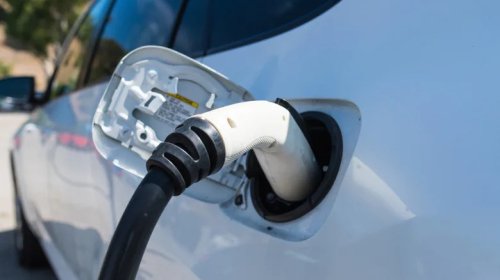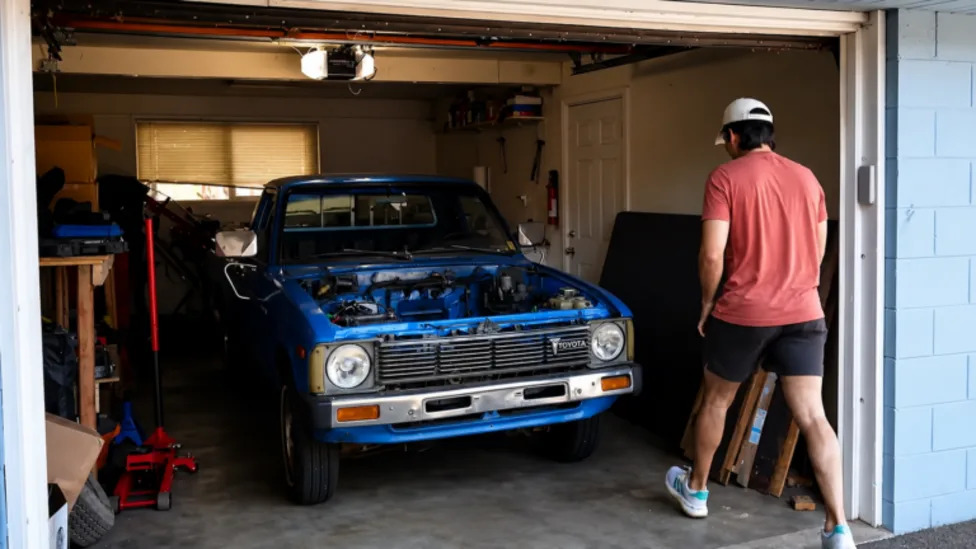



















Blown-Engined 1982 Toyota Pickup Converted Into a Manual EV Using Craigslist PartsMost EV conversion stories start with money – a fat budget, a freshly imported donor car, and a wish list of brand-new components. This one started with a dead engine and a Craigslist scroll.A builder recently documented his conversion of a 1982 Toyota pickup – a regular cab, long bed, two-wheel-drive truck with a clean title and a 22R engine that had already grenaded a rod cap – into a fully functional electric commuter. The cab and frame were solid. The bed had some rust. That was enough of a green light.The decision to go electric rather than drop in another 22R makes more sense than it might initially sound. Finding a clean-running replacement isn't particularly cheap or easy, and the truck's whole appeal is its simplicity. An EV drivetrain, built from secondhand and recycled parts, fits that philosophy surprisingly well.How the Drivetrain Actually WorksThe heart of the build is a Net Gain Warp 9 DC motor sourced off Craigslist – a 9.25-inch diameter, series wound DC motor with a double ended shaft and large style brushes.AdvertisementAdvertisementThe builder, B_Serious on Youtube, acknowledges it's not the choice he'd make in 2026 if starting fresh, adding he'd probably go with a Nissan Leaf drive unit or similar AC setup, but it was available locally at the right price. That's the whole point of the build.What makes this conversion genuinely interesting is that the five-speed manual transmission stayed in the truck. The builder pulled the clutch, drilled out the rivets, and bolted it directly to the motor's output shaft, with a fabricated aluminum adapter plate connecting the motor to the bell housing and homemade steel angle brackets handling the front mounts. The result is an electric truck that still requires shifting gears – and reverse is handled the old-fashioned way, by putting the box into the reverse gate. No complex contactor switching required.The battery pack is built from modules pulled out of a salvaged Tesla Model S – five of them wired in series, producing a 120-volt pack with just over 26 kWh of capacity and a total weight of around 250 pounds. Tesla Model S modules are a popular choice in the DIY conversion community because of their energy density, and using only a portion of a full pack means the builder could right-size the system without paying for capacity he'd never use. The pack sits in a purpose-built enclosure from EV West, welded to steel angle on the frame beneath the bed with nearly 10 inches of ground clearance.Motor control runs through a Zilla 1K controller – described in DIY EV circles as something of a collector's piece for DC setups – also found on Craigslist. The throttle input comes from a 2009 Toyota Prius accelerator pedal, fabricated to fit. Drive-by-wire in a truck that was designed before most people owned a personal computer.AdvertisementAdvertisementThe estimated range sits at 75 to 85 miles, which the builder calls more than adequate: "If you're like me and you have everything you need within a couple miles of your house, that should be plenty." Charging happens through a port installed where the fuel cap used to live.The Case for Doing It This WayThere's a valid argument that for urban and suburban commuting, a truck like this makes more sense than a new EV. The platform is proven, the parts are cheap, the body style is timeless, and the whole project leans on recycled components rather than a factory order. A new midsize pickup from any major brand will set a buyer back north of $35,000 before options. This truck cost a fraction of that, runs on electricity, and still lets the driver row their own gears.The builder opens his video with a question that probably resonates with a large portion of the truck-buying public: "Why does it look like a refrigerator? Can't it just look normal and cost $30,000 less?" It's a fair point, and the 1982 Toyota is a fairly direct answer to it. The conversion isn't perfect. No power steering, DC motor technology that's a generation behind current options, and a range ceiling that wouldn't survive a long highway day. But as a practical local commuter that keeps a 44-year-old truck on the road instead of sending it to the crusher, it's hard to argue with the logic.