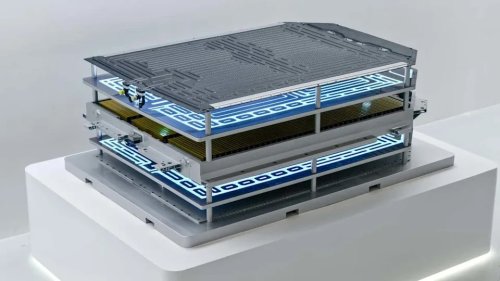
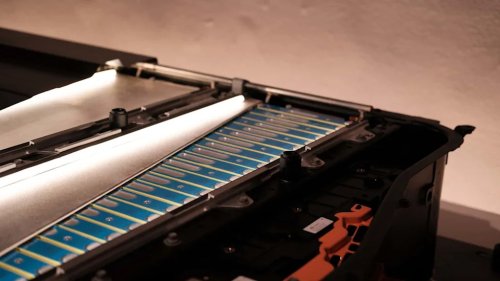
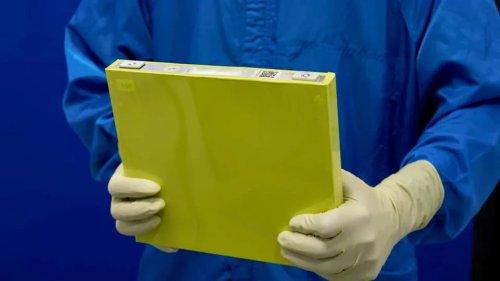
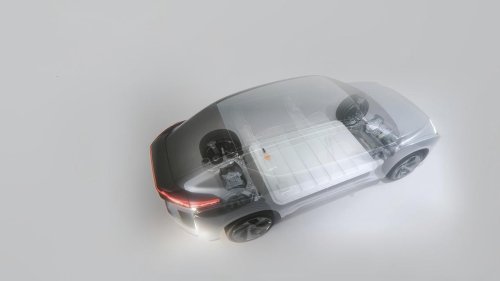
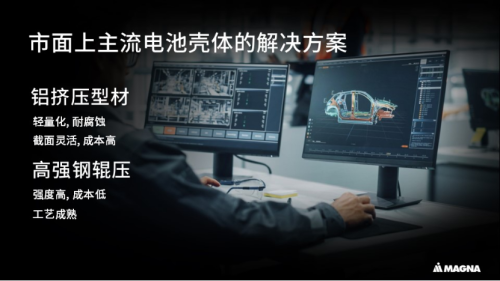
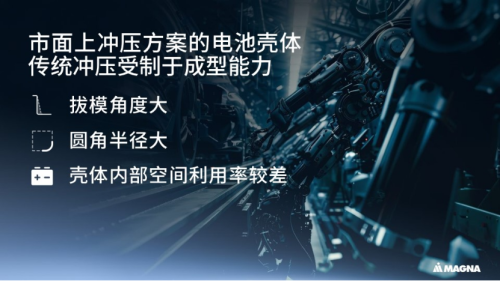
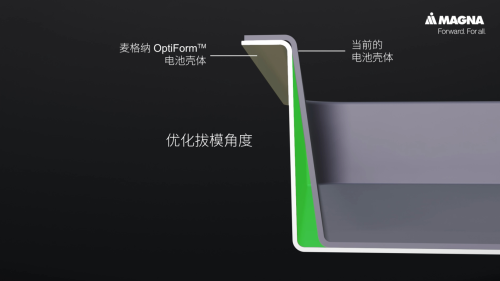
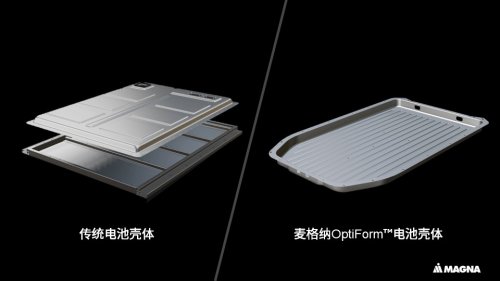
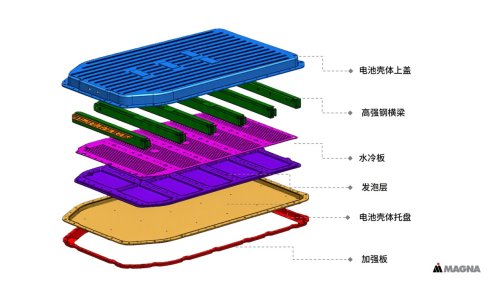
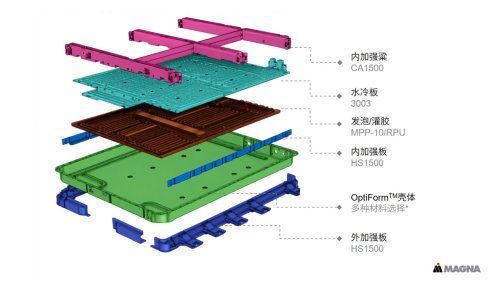
Gasgoo Munich- "Every inch of space eaten up by structure is ultimately deducted from driving range."Dong Xiaoxuan, an R&D engineer at Magna, made the remark during a recent online technical session titled "Black Tech is Here," discussing battery casing design.The casing must house and protect cells. It must keep out water and dust, and maximize interior space for range within limited dimensions. It must do all this while keeping costs in check. Balancing these competing demands is no small feat.Is there still room to optimize this shell?Image Source: Magna (same below)Current Solutions Fall Short"Put simply, the battery casing is the pack's 'skin and skeleton': it has to hold the cells, protect them in a crash, and keep out water and dust on a daily basis," Dong explained.Those are the basics. But electric vehicles demand far more.Longer range means packing more cells into the same footprint. Sealing and crash integrity are non-negotiable safety baselines. Any moisture intrusion is a hazard. The casing must shield cells during impact. Then there's cost: high expenses throttle mass production.Look at the solutions on the market today, and they mostly converge on two technological paths.One is aluminum extrusion. Welding aluminum profiles into a frame yields a lightweight, corrosion-resistant structure with flexible cross-sections to meet various performance targets. But aluminum alloy is pricey, and that high cost curtails its mass production potential.The other is high-strength steel roll forming. This involves welding rolled longitudinal and cross beams to a cooling plate. It offers high impact resistance at a lower cost than aluminum and uses mature processes. The downside? The added weight works against battery pack lightweighting."One is light but expensive; the other is cheap but heavy," Dong summarized.The two paths may look different, but they hit the same wall. Both face a shared technical bottleneck: too many parts. That leads to three major flaws—excessive weld seams, significant thermal deformation, and sealing that relies entirely on weld quality."A battery casing is typically a frame assembled from four beams. Each joint involves multiple weld seams, and every single seam is a potential point of failure," Dong noted.Plus, welding introduces heat. Heat causes parts to deform, compromising the dimensional stability of the sealing surfaces.Battery packs must be airtight, relying on every weld being perfect. If one fails, you have a leak. Factor in long-term vibration and material aging over the vehicle's life, and the more connection points there are, the higher the risk of sealing issues down the road.That's where stamping comes into view.Stamping a tray from a single steel sheet, with internal reinforcements, slashes the number of welds and reduces thermal deformation. Sealing is guaranteed by the integrated tray structure itself, not by individual weld seams. Stamping has been used in the auto industry for decades and is built for mass production.But traditional stamping has its own shortcomings.Dong points out the issue lies in formability. Drawing a flat steel sheet into a deep, large casing is a difficult process. To prevent cracking, traditional stamping requires two compromises: a large draft angle, meaning side walls must slope outward; and large corner radii, preventing sharp corners."These sound like engineering details, but the consequence is very real: the outer dimensions of the casing stay the same, but the space inside for cells shrinks. Sloped walls and rounded corners—space gets eaten by the structure," he said.For today's electric vehicles, space is range.Both aluminum and steel routes are stuck on part counts, while traditional stamping hits a wall on formability. The issue isn't the material. As Dong put it, the race for future battery casings is no longer just about "aluminum versus steel."The industry's direction is clear: achieve more functions with fewer parts, meet higher performance with simpler structures, and support mass production with mature processes.One-Piece Forming: Squeezing Out 10% More CapacityWith demand established, the competition between technological routes has become a battle of formability.Battery casings are large—often over two meters long—with deep draws and high precision requirements. Making them work in engineering requires integrating materials, design, process, and simulation. It’s not about relying on a single step.Magna's OptiForm™ one-piece battery casing was unveiled during the session. It boasts compelling specs. These include a 1.5° draft angle and a 4mm bottom corner radius. It has a 75mm projected corner radius and a 2.8-meter by 1.5-meter footprint. It features a 160mm draw depth. Material thickness ranges from 0.9 to 1.8mm. That extreme draw depth is enough to accommodate larger cell capacity needs and fit various body designs.What does a 1.5° angle mean? The walls are nearly vertical. A 4mm bottom radius means the corners are practically sharp. The space lost to sloped walls and large radii in traditional stamping has been reclaimed.Magna revealed that its OptiForm™ casing can add up to 10% in extra battery capacity.However, Xu Ziqing, Magna's senior engineering manager, pointed out that the core promise isn't just about adding specific capacity or range figures. The ultimate conversion depends on how the vehicle platform and battery system are designed.But with body dimensions fixed, that extra space offers tangible freedom. It can be used to pack more cells. Alternatively, it creates room for weight reduction or cost-cutting while keeping range targets constant.The benefits of one-piece forming go beyond space. Fewer welds mean fewer leakage paths, shifting sealing from a gamble on weld quality to a guarantee of the structure itself. Fewer parts, steps, and assembly operations drive down costs. Plus, using mature stamping processes means existing production lines can handle it—no need to build from scratch.Moreover, the near-vertical draft angle and small radii allow it to directly replace existing roll-formed and extruded solutions. It does this without changing outer dimensions, causing almost no disruption to customer production lines."These aren't just concepts on a PowerPoint." According to Dong, OptiForm™ casing prototypes are already off the line. The 2.8-meter by 1.5-meter footprint covers nearly all mainstream pure-electric battery pack sizes, supporting customers in pack validation.But the shift in mindset is even more worth pondering. OptiForm™ isn't bound to a specific material or process; it's a systemic capability."It's a holistic solution combining four things: how you choose the material, how you design the structure, how you execute the forming process, and how you optimize the simulation," Dong explained.Materials are selected based on project goals, balancing formability, strength, weight, corrosion resistance, connection methods, and cost. Structural design is evaluated alongside connection processes, coating corrosion protection, thermal management, and validation requirements. In Dong's words, it's not about locking into one material, but making systematic trade-offs based on what matters most for the project.Implementation: What Hurdles Remain?No matter how good the technology, it has to make it onto the vehicle. The one-piece casing first has to answer one question: how does it adapt to different crash architectures?As Dong mentioned, with the rise of cell-to-body concepts and highly integrated platforms, more OEMs are rethinking whether the battery pack must necessarily handle crash loads. The role of the casing is diverging, and the process must keep up.Magna has envisioned two typical implementation scenarios for OptiForm™.One is a "non-conventional crash structure." With body-battery integration, side impact forces transfer directly from the sill to the floor cross beams, so the battery pack doesn't need to bear crash loads. As Dong put it, "Crash loads are handed off to the body, and the battery casing returns to its core job: protection, sealing, and thermal management."Structurally, it consists of four parts: a one-piece cover, high-strength steel cross beams, a cooling plate, and the battery tray. Redundant crash structures are removed, leaving just one sealing surface—fewer welds and more space.This is essentially a redivision of labor. But the prerequisite is that OEMs define these parameters collaboratively early in platform development—sill structure, lower body beams, pack mounting points, load paths, and post-crash safety boundaries. Body and battery teams can no longer work in silos.The other scenario is the more mainstream conventional crash structure, where the battery pack still bears some crash loads.The one-piece tray is paired with hot-formed reinforced beams, a cooling plate, potting, and internal/external reinforcements. Materials can be hot-formed high-strength steel or mild steel, with stamped patches reinforcing the sides. Because of the high-strength steel and hot-formed tray, the bottom shield may be eliminated. "For OEMs, there's no need to overhaul existing architectures," Dong said.The coexistence of these two solutions shows that one-piece forming isn't the only choice. In Xu's view, aluminum extrusions, rolled steel, and deep drawing will likely be complementary in the future. "Customers can choose the most suitable technology route based on model positioning, lightweighting targets, and cost goals."Both architectures have solutions, but OEMs still have to run the numbers: what is the cost of switching?Xu noted that one-piece forming reduces parts, welding, sealing steps, and quality control points while speeding up the cycle time. However, the upfront investment in tooling and development is significant."OptiForm™'s cost advantage usually isn't seen in the price of a single part, but in the system cost," he believes. Such solutions are better suited for projects with certain production volumes, long platform lifecycles, or where multiple models share the same package and process routes.Xu advised that OEMs should get involved as early as the concept design or platform development phase. "The biggest risk in switching solutions isn't usually a single technical point, but the development schedule and the definition of system boundaries." If the switch happens late, the package envelope, mounting points, crash paths, thermal management, and manufacturing investments could all be affected, driving up development cycles and validation costs.The good news is that production lines don't need major overhauls; existing stamping equipment can handle this without upgrades. The challenge lies in early process analysis and tooling debugging—how to form small corners, control reverse curves, and prevent wrinkling on complex surfaces. That relies on years of experience in body parts. For OEMs, the heavy lifting in switching isn't the production line, but vehicle-level re-verification.One-piece forming won't be the only answer for battery casings, but it points the way forward: fewer parts, more space returned to the cells, and simpler manufacturing.



















![Not sold on Tesla Powerwall? There are great battery alternatives out there [update]](https://cdn.topcarnews.net/thumb/id/aHR0cHM6Ly9pMC53cC5jb20vZWxlY3Ry-ZWsuY28vd3AtY29udGVudC91cGxvYWRz-L3NpdGVzLzMvMjAyNi8wNy9ob21lLXNv-bGFyLWJhdHRlcnkucG5nP3c9MTUwMCZh-bXA7cXVhbGl0eT04MiZhbXA7c3RyaXA9-YWxsJmFtcDtzc2w9MQ/18e81f395a77dbb42269ab5e106fea41.png?t=20261008&post_id=68280)





![Battery, Watt's up, doc? Huddig hybrid loader gets a big battery boost [video]](https://cdn.topcarnews.net/thumb/id/aHR0cHM6Ly9pMC53cC5jb20vZWxlY3Ry-ZWsuY28vd3AtY29udGVudC91cGxvYWRz-L3NpdGVzLzMvMjAyNi8xMC9odWRkaWct-aHlicmlkX21haW4uanBnP3c9MTUwMCZh-bXA7cXVhbGl0eT04MiZhbXA7c3RyaXA9-YWxsJmFtcDtzc2w9MQ/ea51c544798341190a5eed718aab1ee3.jpg?t=20261008&post_id=67784)
![Battery, Watt's up, doc? Huddig hybrid loader gets a big battery boost [video]](https://cdn.topcarnews.net/thumb/id/aHR0cHM6Ly9lbGVjdHJlay5jby93cC1j-b250ZW50L3VwbG9hZHMvc2l0ZXMvMy8y-MDI2LzEwL0hlcm9iYW5uZXJfVGlnb25f-MS1jbG9zZS1jb3B5LmpwZw/d26fab6fabc13bc13692cf5d41542493.jpg?t=20261008&post_id=67784)
![Battery, Watt's up, doc? Huddig hybrid loader gets a big battery boost [video]](https://cdn.topcarnews.net/thumb/id/aHR0cHM6Ly9lbGVjdHJlay5jby93cC1j-b250ZW50L3VwbG9hZHMvc2l0ZXMvMy8y-MDI1LzAzL0RFUy0xMDM4X0VsZWN0cmVr-LUJhbm5lcnNfRVZzXzA3OTdjMi5wbmc/e850e929e3168f8c7ff73cd888e54add.png?t=20261008&post_id=67784)