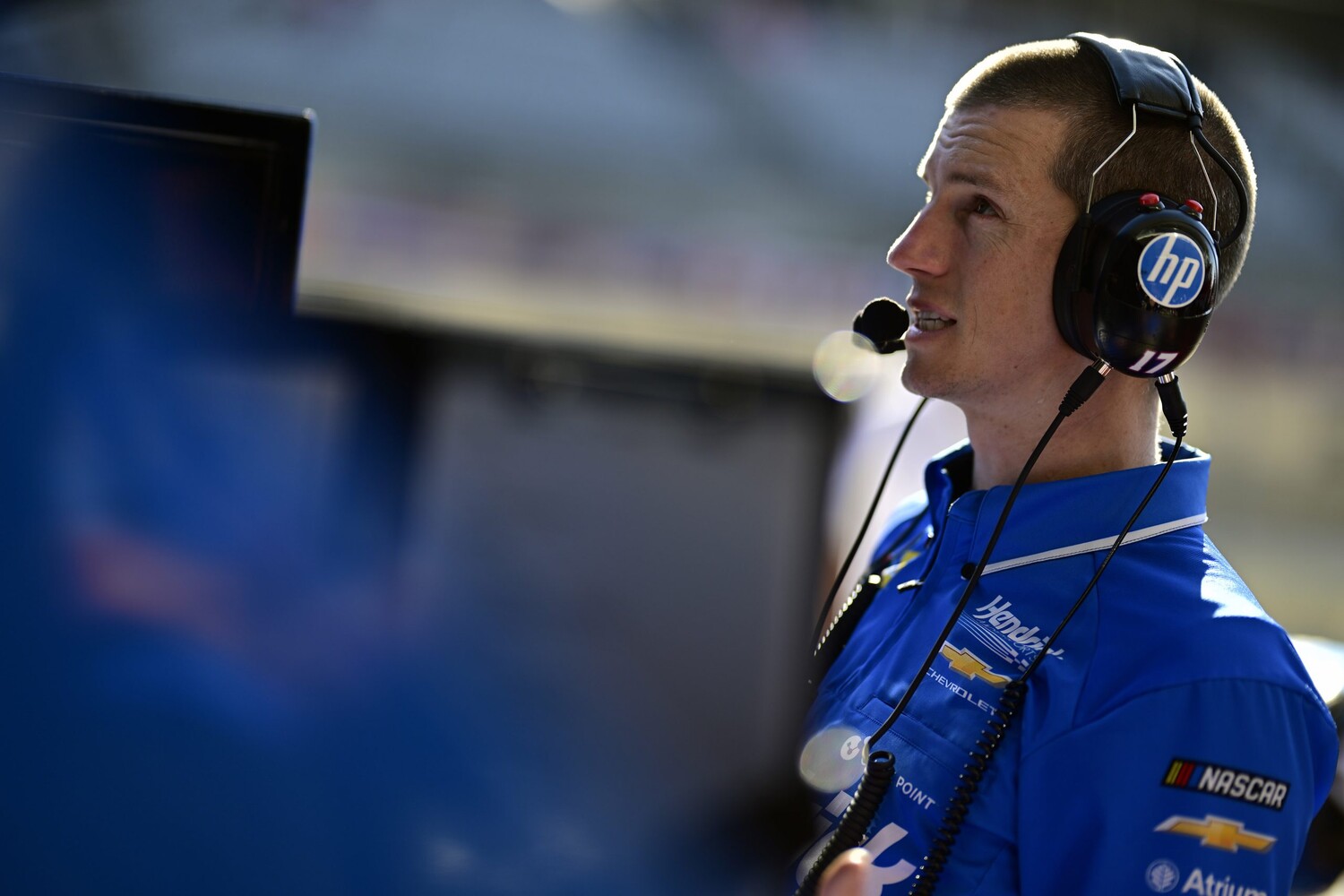
Much like Black Monday, or the day after the National Football League regular season ends and coaches discover they’re suddenly out of jobs, there is a late-autumn ritual in NASCAR as teams toy with new driver-crew chief combinations. It happens up and down the tiers of teams, from top to middle to bottom. Hendrick Motorsports, the winningest team (by far) in the sport’s history, made big moves by switching crew chief Rudy Fugle from William Byron to Alex Bowman and elevating Adam Wall to run Byron’s team. Spire Motorsports welcomed the return of Stephen Doran, who will crew chief Michael McDowell’s team after departing Trackhouse Racing and Shane van Gisbergen. Blake Harris moves from Hendrick to Trackhouse to take over SVG’s team. Crew chief styles have varied over the years. Some are very active on race day, while others are more cerebral and matter-of-fact. But the connection between driver and crew chief remains the most important in the sport, as evidenced by teams responding to lagging performance by seeking better chemistry. This begs the question: If the crew chief position is so important, why are so few in the NASCAR Hall of Fame? Two of the most dominant crew chiefs in NASCAR history were no-brainers for the hall. Dale Inman, forever linked to Richard Petty’s success with seven championships with the King (and another, for good measure, with Terry Labonte), got a Hall spot early on. And Chad Knaus, the wizard behind Jimmie Johnson’s seven championships, got the honor in 2024. Beyond Inman and Knaus, there are only three other Hall members who are most closely identified with crew chief responsibilities: Kirk Shelmerdine, who won four titles with Dale Earnhardt; Leonard Wood, the mechanical magician behind so much of the Wood Brothers success; and Ray Evernham, a revolutionary of sorts in the spinning of Jeff Gordon’s long run at the top. Hall members Waddell Wilson, Bud Moore, and Maurice Petty also are mentioned in crew chief conversation, but Wilson and Petty were better known for engine-building prowess, and Moore drew most attention as a long-time team owner. More than a few times, someone in the Hall of Fame voting room brings up the relative lack of crew chiefs/mechanics in the annual inductions, and there clearly is sentiment among some voters to lean in that direction. Typically, though, there isn’t enough of that sentiment. Drivers dominate the conversation, and the Class of 2027 will honor three—Jeff Burton, Kevin Harvick, and Larry Phillips. It is quite natural—and naturally expected—that drivers get the most attention in hall discussions. They are the faces of their teams, they get 98 percent of the headlines and their T-shirts are the top fashion on race days. As long as motorsports halls exist, they will be the primary residents. It would be a good thing, however, if the NASCAR hall tilted a bit more toward the individuals who put the cars on the track and the innovators among them who are involved daily in the search for another one-hundredth of a second of speed. Candidates? We can list a few: Harry Hyde—Cantankerous and colorful, Hyde built the foundation for what would become Hendrick Motorsports and built some of the sport’s fastest cars ever for team owner Nord Krauskopf. He also became the prototype for Robert Duvall’s crew chief in the movie Days of Thunder. Jake Elder—The crew chief for Dale Earnhardt’s first Cup Series win at Bristol Motor Speedway, Elder bounced from team to team across a long career, winning at virtually every stop before something either major or minor caused him to move to another shop. Thus his nickname Suitcase Jake. Herb Nab—Overlooked for too long, Nab was the grease-under-the-fingernails worker behind Cale Yarborough’s mid-1970s championships with Junior Johnson’s team. Junior did most of the talking while Nab got dirty. He’s credited with 92 crew-chief wins. Smokey Yunick—Yunick’s numbers are a mix of his time as a team owner, mechanic and engineer, so he might fit a bit awkwardly into this category, but his stubborn approach to the sport and his often-innovative dancing around the rules made him one of racing’s true characters. There are others. Tim Brewer. Ernie Elliott. Buddy Parrott. It’s past time to open the hall doors to more of the people who made fast cars faster. Mike Hembree has covered auto racing for numerous media outlets, including USA Today, NASCAR Scene, NBC Sports, The Greenville News and the SPEED Channel. He has been roaming garage areas and pit roads for decades (although the persistent rumor that he covered the first Indianapolis 500 is not true). Winner of numerous motorsports and other media awards, he also has covered virtually every other major sport. He lives near Gaffney, South Carolina and can be convinced to attend Bruce Springsteen concerts if you have tickets.

 Liked by Hannah Hall, Amelia Pelletier










 Liked by Hannah Hall, Amelia Pelletier