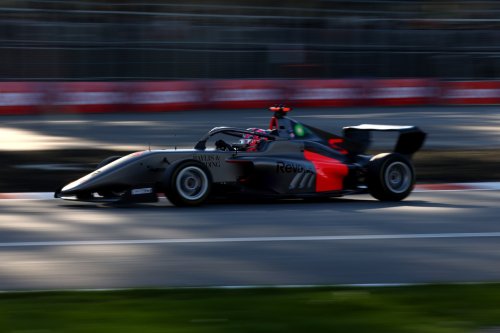
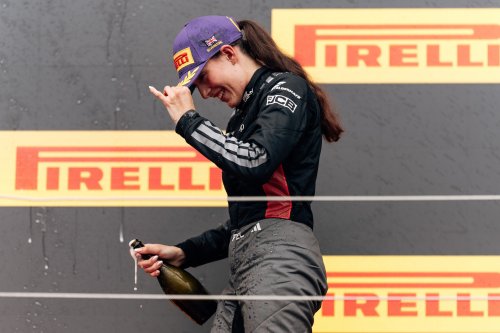
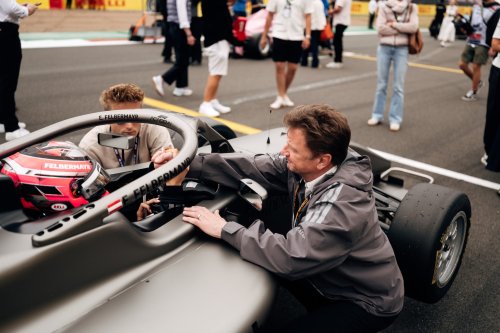
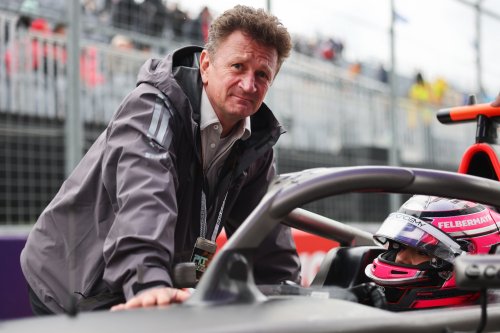
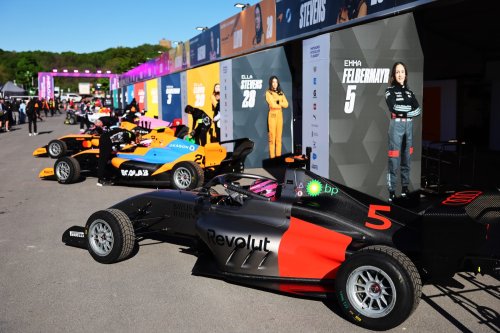
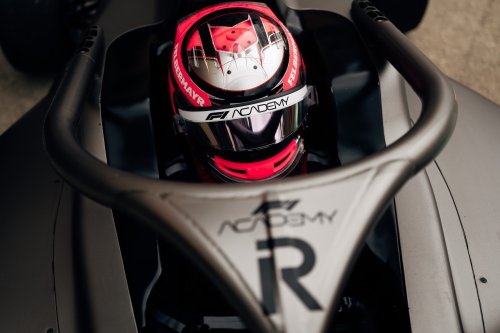
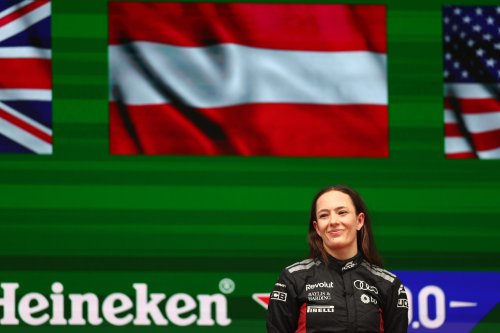
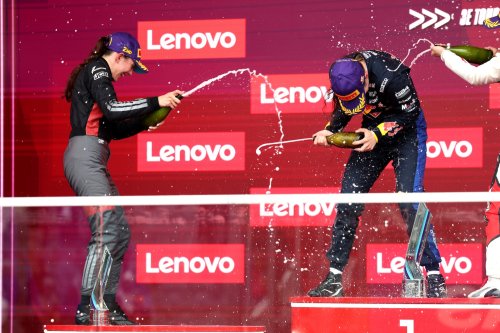
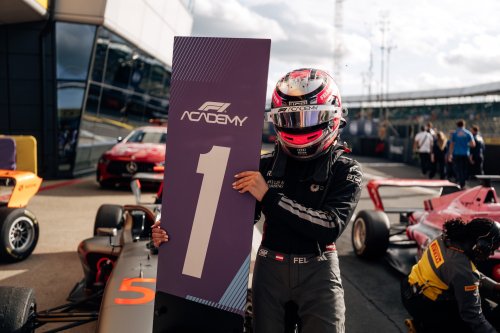













F1 Academy’s mission is to give 20 young women a global platform to prove their driving skills in top-tier motorsport, but most importantly, to provide them with a path to follow as they develop what is hopefully a successful racing career. Series sophomore Emma Felbermayr is well on her way to doing just that, and with the support of the Audi Formula 1 Team, she’s the only driver to have scored points in every race so far this year. Already in its fourth season, the championship features 14 races across six dates on some of F1’s best circuits. Felbermayr has won two of those races, trailing only Red Bull’s Alisha Palmowski, who has three wins halfway through the 2026 campaign. With two races at Zandvoort, three in Austin, and the final two rounds in Vegas still to contest, Felbermayr is well-positioned to challenge for the championship in her second and final year in the series (F1 Academy has a two-year term limit). Jordan McKean, @calloalbanese via Audi F1 The young Austrian’s success isn’t limited to just this year, either, having scored her first victory in the series in 2025 with Rodin Motorsports under the Sauber banner—before the team morphed into the Audi outfit. In addition, her strong performances on the track extend beyond race day—whether it’s a reverse grid or not—and include many solid qualifying results and massive comeback drives from the back of the grid. I caught up with the 19-year-old during the Canadian Grand Prix to discuss her F1 Academy experience so far, her karting years, and also, her future ambitions. My initial impression of Felbermayr was that she was shy and maybe a pinch not-so-well-prepared for media duties compared to her F1 counterparts, Nico Hulkenberg and Gabriel Bortoleto. “No big deal,” I thought. However, as our conversation unfolded, I realized it was less about her being shy and unprepared, and more about her simply being a down-to-earth teenager. @calloalbanese, Andy Hone via Audi F1 With the support of her family (including her father and grandfather who raced in Le Mans), Audi leadership, and the guidance of the Academy’s boss, Susie Wolff, Felbermayr explained that she’s here to capitalize on every opportunity that comes her way. A self-proclaimed “open book,” she emphasized during her chat with The Drive that when it comes to her future endeavors, she’s not in a rush to get ahead of herself—it’s all about executing in the present and letting those results influence her future. Oh, and like everyone else—including myself—she enjoys a good Netflix binge after a busy weekend at the track. Jerry Perez: It’s always easiest to start at the beginning, so let’s talk about your karting years. How did that come about, how old were you, and what was the journey to F1 Academy like? Emma Felbermayr: I started karting at seven years old. My brother got his kart when he was six years old, and after that, I wanted to try it out. Since that moment, I have never stopped. In the beginning, it was more like doing it for fun and just a hobby. I was racing national races, nothing international. After some time, when I was 12-13 years old, I really wanted to see how I compared against the best drivers in the world, so we decided to race internationally, which was a huge step up from the national level. It was tough, especially at that age, you know, because normally drivers start to race the big international races between eight and 10, and I didn’t join until 13, which is very late. I was having to learn stuff that others had already learned some years ago, so I think that was the biggest challenge during those years. In the end, I competed in one international championship, which included the world championship, the European championships, and WSK races. It was a very busy time. @calloalbanese, Andy Hone via Audi F1 What was the hardest part of jumping from karting to F1 Academy? I would say the hardest bit is the attention you get. In karting, there’s not really a lot of people looking at you, you know? And dealing with the attention and pressure is hard, and now I’m also doing the Italian Formula 4 championship, which is there too. I always want to perform well in everything I do. But there’s also all the traveling for the championship; there was so much going on at the same time. There was so much more I had to focus on and learn. How do you feel about your performance this season—how are you feeling in the car, with the team? So far, I feel like I’m utilizing everything to the maximum. Last year, I felt a bit lost, and as I said, I wasn’t prepared for anything here because I was new to it. This year, I’m feeling really confident within the team. I feel like maybe last year we had some differences or challenges, but we worked quite hard over the winter to make everything work and to prepare myself as well as possible. And so, together with the Rodin group, all sides have worked quite hard to achieve what we have achieved so far, and we will just keep going, pushing hard like this. I feel the winter preparation was just so much better than the year prior, so I’m just feeling much more prepared. I know what I’m going to expect. Last year, everything was new for me—I was new to the car—I came straight from karting into this championship, which is quite a big jump. Andy Hone, Brett Farmer via Audi F1 What is your wellness routine like? You know, how do you stay physically and mentally in shape to race at this level around the world, with all the commitments of F1 Academy? I go to the gym once a day, and depending on the day, I do cardio or something else on the schedule. I get a lot of support from Audi and my physio, as well as nutrition support, trackside electrolyte support, and guidance on everything I should take before I race. The same applies to jet lag. Last year, I didn’t think jet lag was going to be that big of a deal, and sometimes it was hard to adapt to the time zones, so I also try to get used to these time zones when I’m at home, because sometimes I only arrive one day before racing, and there’s not a lot of time to adapt to them. I also go to university, so I need to keep this in mind along with everything else. But either way, I try to make everything I do fun like that, because if you don’t have fun, it doesn’t work. What do you do to de-stress after a race weekend’s over? When I’m at home, I like to meet friends, go out for dinner, but also stay in and have a good Netflix evening, to be honest. So yeah, lying in bed and watching Netflix is probably the best thing I can have after a stressful week (laughs). James Sutton, @calloalbanese via Audi F1 Former F1 Academy champion Doriane Pin was rewarded with an F1 test by Mercedes, while Abby Pulling is now racing in GB3 and testing in Formula E. Do you think the best reward for doing well or winning in the Academy should be an F1 test? It’s great to see drivers like Doriane get these opportunities, and it shows what’s possible when you work hard and perform well. I think for me now, the focus is on continuing to develop and continue learning step by step. Doriane did some years in LMP2, which is already a way harder car than an F1 Academy car, so I think, for me personally, the jump would be a bit too big, as the amount of downforce is totally different from F4 to F1. For me, the focus is always on what I’m doing now and getting the most out of it, then not really focusing on the next part yet. Email the author at jerry@thedrive.com