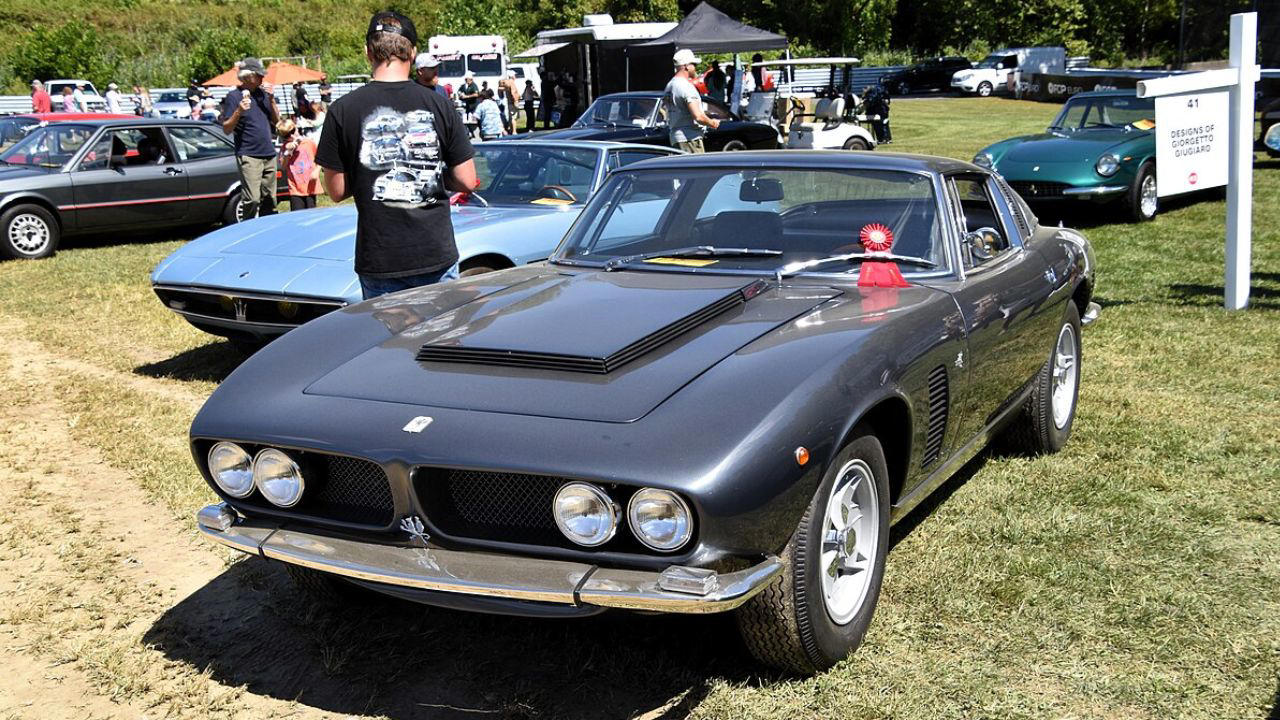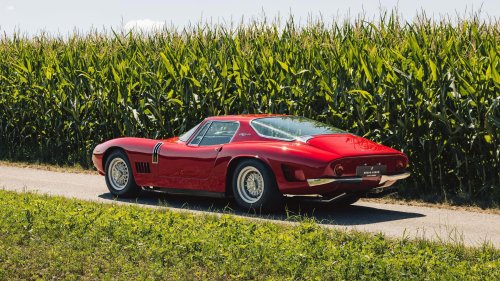
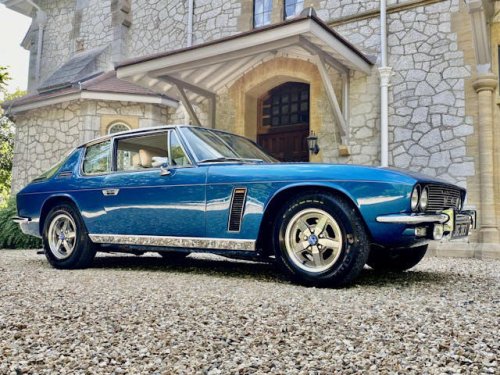
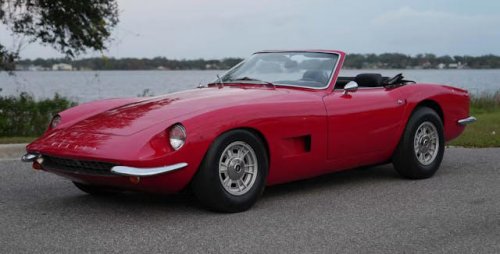
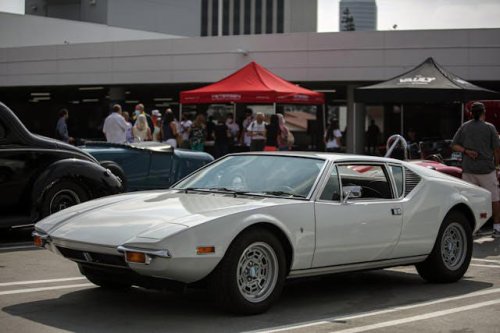
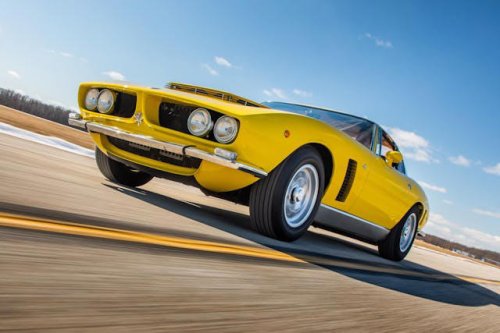
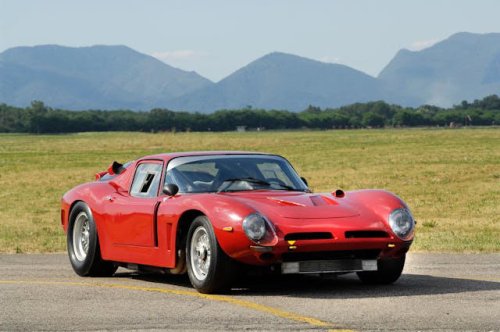



















American Beef, Italian Toppings: 5 Cars with Mixed Heritage, and What They’re Worth The combination of European styling flair and a sophisticated chassis with the brute force of a big American pushrod engine. It’s the best of Old World and New working together, and for smaller carmakers without the budget to develop a proprietary engine of their own, buying a bent-eight off the shelf from Michigan must seem like a no-brainer. The 1960s and ’70s were a golden age of sorts for this practice. British cars to get such a transplant included the AC/Shelby Cobra, the Sunbeam Tiger, and various Bristols. The Swiss embraced American V-8 power with Peter Monteverdi’s boutique luxury performance cars, and the French did, too, with Facel Vega’s Chrysler-powered coupes and sedans. Even the Italians, despite their own healthy tradition of engine-building, couldn’t resist an American eight from time to time, and some of the best Euro-American cars of this type laid Italian-penned shapes over U.S. motivation. Another benefit is that such cars are often more affordable than their all-Italian competitors. Here are our favorites, in ascending order of condition #2 (excellent) value in our price guide. 1966–76 Jensen Interceptor We start with a British car designed in Italy. Over the course of a little more than half a century, Jensen Motors played in many different corners of the car business. Jensen built bodies for other manufacturers, like Austin and Wolseley. It built commercial vehicles of its own design. It assembled early P1800s for Volvo. It also dabbled in sports cars of its own, including oddballs like the 541R and CV8 as well as the promising but trouble-prone Jensen-Healey. Jensen’s most famous car, and certainly the one with the best name, was the Interceptor. Although Jensen was very much a British company, the Interceptor was an international affair. Italy’s Carrozzeria Touring designed the shape while Vignale actually built the early bodies before Jensen took production fully in-house. For power, Jensen looked across the Atlantic to Chrysler, who supplied 383- and later 440-cid V-8s along with Torqueflite automatic transmissions. A well-appointed interior with decently sized rear seats rounded out the package. The Jensen FF (“Ferguson Formula”), among the first production cars with four-wheel drive, anti-lock brakes and traction control, was a right-hand-drive-only model based on the Interceptor. The Interceptor had obvious appeal as a GT car with its crisp Italian lines on the outside, supple English luxury on the inside, and easy-to-live-with American drivetrain underneath. Production lasted for about a decade before Jensen went bust in 1976, and sales totaled nearly 7000 examples. As collector cars, they’ve always been somewhat undervalued relative to their looks, rarity, and performance. Condition #2 (excellent) values range from $51,500 to $87,700 for the much rarer convertible model. Driver-quality coupes in #3 (good) condition currently run in the mid-$30K range. 1967–72 Intermeccanica Italia When Hungarian-born Canadian Frank Reisner and his Czech-born Canadian wife Paula visited Italy in the late 1950s, they loved it. So much so that they moved to that country’s motor city—Turin—and started selling speed parts for various European makes before building cars of their own, called Intermeccanicas. Their most well-known car was the Italia. With its long hood, scooped headlights, pert tail, and badge that looked half prancing horse (Ferrari) and half raging bull (Lamborghini), it had the visuals down pat. Early ones used a 289-cid/271-hp Ford V-8, though they soon switched to a 302 and then 351-cid Ford. Italias started at around $8000, so they were expensive, but the Reisners were able to sell about 400 coupes and convertibles before ending production in 1972. The Italia has the looks and performance of a contemporary Ferrari or Maserati combined with the soundtrack and maintenance of a Mustang. The purchase price comes somewhere in between. It’s much closer to the Mustang than it is to the Ferrari, though Italias rarely come up for sale. Condition #2 values start in the low-$90K range and run up to $147K, with convertibles commanding more money than coupes, and bigger engines commanding more than smaller ones. 1970–92 DeTomaso Pantera After Argentinian Alejandro De Tomaso moved to Italy in the mid-1950s, he tried his hand at being a race car driver and in 1959 founded his own company. His first two road cars were Ford-powered coupes—the Vallelunga and Mangusta—but the Pantera was his breakout hit. Styled by a young Tom Tjaarda at Ghia and powered by a mid-mounted 351-cid Ford “Cleveland” V-8 mated to a ZF five-speed transaxle, the Pantera sold at Lincoln-Mercury dealers, where it surely stood out on a floor full of Montegos and Colony Parks. Testing an early example in 1971, Car and Driver concluded: “As you skim over the pavement in the Pantera you can’t help feeling smug.” Ford pulled the plug on the Pantera program after 1974, but DeTomaso kept on building the car in Europe up until the early 1990s, giving it more aggressive bodywork and more performance. From the beginning, Panteras offered exotic car looks and performance at a steep discount, so it’s not uncommon to see them with oversized wheels and wings slapped on. Clean and unmodified ones are a somewhat unusual find, but they’re still way cheaper than mid-engine thoroughbreds from the ’70s like a Ferrari 512 BB or Lamborghini Countach. Condition #2 values for a Pantera range from $97K to $135K, with later European market cars generally commanding more money. 1964–74 Iso Grifo Businessman Renzo Rivolta built refrigerators and scooters before introducing the famous Isetta bubble car in 1953, though he soon sold the rights to BMW. With the proceeds of the BMW deal, he got a little bit more ambitious and set out to build a GT car. The Iso Rivolta IR 300, a Bertone-styled four-seat coupe, appeared in 1962. For everything underneath the Rivolta, Iso hired ex-Ferrari engineer Giotto Bizzarrini, who designed a pressed-steel platform chassis from scratch and dropped in a Corvette-sourced 327-cid small-block V-8. Next, Iso and Bizzarrini partnered on a two-seat version, also Bertone-bodied and Corvette-powered, called the Iso Grifo. The partnership soon split, and while Bizzarrini kept on developing the platform for racing (more on that in a moment), Iso concentrated on a more refined version called the Grifo GL. Initial versions used a 327 V-8 and ZF five-speed, and a targa version was available. There was also a “7 Litri” version with a 427, as well as the IR9 “Can Am” model with a sharper-looking nose and 454 big-block. A little over 400 Grifos of all types were built before the company stopped building cars in 1974. These are among the more expensive Italian-American hybrids, with condition #2 values ranging from $443K for the 5.3-liter (327cid in American) cars, up to $596K for a 7-liter one. 1964–67 Bizzarrini 5300GT Giotto Bizzarrini contributed his talents to Ferrari’s 250 Testa Rossa, 250 GT SWB, 250 GT California, and 250 GTO before leaving the company along with several other higher-ups in what’s often referred to as Ferrari’s “palace revolt” or “night of the long knives.” Before long, he was a hired gun, having started his own design and engineering firm called Società Autostar in Livorno 1962. He designed Lamborghini’s flagship V-12 engine, as well as the Corvette-powered IR 300 for Iso. The Grifo, outlined above, went in a more luxurious direction while Bizzarrini eyed competition, moving the Chevy engine further back in the chassis and shortening the wheelbase. A young Giorgetto Giugiaro penned a low-slung body, and Piero Drogo in Modena built it in aluminum. Early ones were still called the Grifo A3/L (Lusso) or A3/C (Corsa). Sports Car Graphic, appropriately enough, called it a “cross between a Sting Ray Corvette and a Ferrari GTO,” and Autosport called it “the most beautiful car ever tested” by the magazine. After Bizzarrini and Iso split in the summer of 1965, Bizzarrini soon dropped the “Grifo” name and started calling his cars “Bizzarrini GT Strada 5300” instead. In early 1966, he added the “GT America” to the lineup with a fiberglass body and independent rear suspension instead of the De Dion rear in the earlier cars. This model hit the States with a price tag thousands less than a Ferrari 275 GTB/4 and a little more than half as much as Lamborghini’s new Miura. Despite mixed results on track, the 5300 got good publicity, and Bizzarrini was selling cars as fast as they could make them, which wasn’t very fast, but still. Unfortunately, he got swindled by a couple of investors and in 1968 the company went under. “I am a pure technican who knows nothing about business. In the end I fell to two Al Capones. And that was the end of the story,” he later recalled. In total, there were a little more than 100 of these Corvette-powered Bizzarrinis, and even though the car is still a mutt, it’s almost valued like a thoroughbred. Current #2 values range from $860K to $940K, which isn’t quite Ferrari 275 GTB money, but it is more than a Ferrari Daytona.