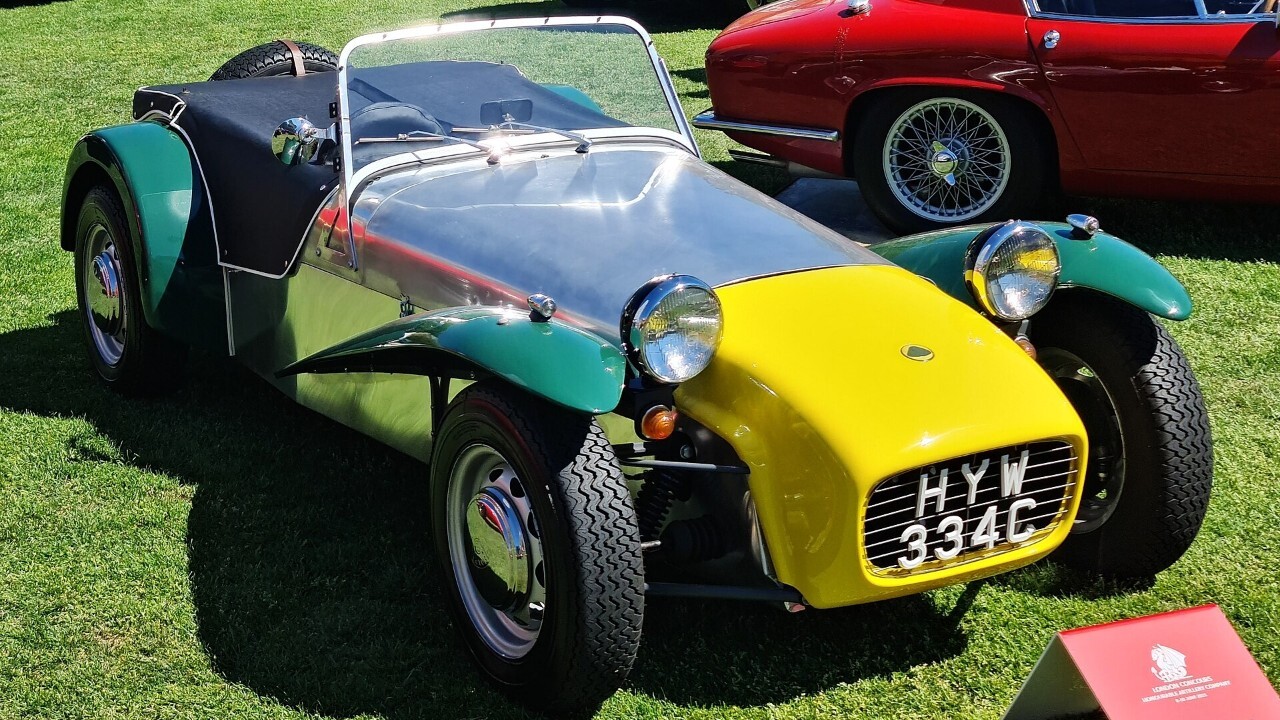
The Gilbern Invader came from a former colliery site in Wales, and Gilbern built only 603 of them before the company closed in 1973. That small number is typical of the cars on this list. Europe’s smaller makers built brilliant, odd and hand-finished sports cars in the 1950s, ’60s and ’70s, but they rarely built many. Time has thinned those numbers even further. Rust, fibreglass cracks, engine failures and plain neglect took plenty of them off the road. As a result, a clean survivor today can take months of searching, and sometimes a trip abroad. These are our picks: nine European sports cars that we think are getting harder to find every year. Production figures come from the records, while the verdicts are our own opinion. If you have ever wanted one, the advice for every car below is the same. Start looking now. 1. 1971 Gilbern Invader Gilbern began with two unlikely partners. Giles Smith was a butcher, while Bernard Friese was a German engineer who knew how to mould glass fibre. Together they set up shop in Llantwit Fardre, near Pontypridd, on the old Red Ash Colliery site. Their Gilbern Invader arrived in July 1969 as a tougher version of the earlier Genie, with a stronger chassis, bigger brakes and nicer fittings. Gilbern kept improving it. The Mk II of October 1971 added reclining front seats. Then the Mk III of September 1972 got a wider, lower body, Ford Cortina front suspension and a stronger engine tune from the Ford Capri 3000GT. In fact, the Mk III was sold only as a factory-built car, at £2,693 in 1972. So why is it scarce? Gilbern made just 603 Invaders before closing in 1973, shortly after VAT hit the kit-car trade. Many early cars were sold as kits, so build quality varies from car to car. In our view, the Gilbern Invader is the most usable Welsh sports car ever made. It offers Ford V6 power, Welsh craftsmanship and a story nobody else at the car show can match. 2. 1962 Facel Vega Facellia F2 Facel Vega made its name with big, Chrysler-powered grand tourers. Then, in October 1959, it showed a smaller car at the Paris Motor Show. The Facellia used its own 1.6-liter twin-cam four, designed by Jean Cavallier and built by Pont-à-Mousson. It was rated at 115 hp (gross) at 6,400 rpm, which was serious output for its size. Unfortunately, the engine became the car’s undoing. According to Curbside Classic’s history of the Facellia, its chromed cylinder liners needed about 5,000 km of gentle running-in, and many owners ignored that. Overheating and fragile valvetrains followed. Most of the first 350 cars broke their engines within six months. The improved F2 arrived in 1961, but the damage to the brand was done. Later, Facel switched to a Volvo B18 for the Facel III. However, the company still closed in 1964, after building roughly 1,900 Facellia, Facel III and Facel 6 cars combined. Our take: the F2 is a beautiful French coupé with a troubled past. If you find one, ask exactly what engine sits under the hood and who rebuilt it. 3. Matra 530 Few sports cars took their name from a missile. The Matra 530 did, borrowing it from the R.530 air-to-air missile made by its parent company. Matra built the car in Romorantin-Lanthenay, France, from 1967 to 1973. Inside, the running gear came by way of Ford Germany, including a 1,699 cc Ford Taunus V4 mounted behind the seats. The layout was clever for an affordable car. You got a mid-mounted engine, a fibreglass body on a steel platform, a 2+2 cabin and a removable targa roof. Meanwhile, hidden headlamps gave the nose a sleek face. Philippe Guédon designed the car, and Jacques Nochet styled the body. Performance was gentle, though. Autocar recorded 0–60 mph in 15.6 seconds and a 95 mph top speed in a 1969 test. Matra built 9,609 of them across four versions, which sounds like plenty. However, the company never built a right-hand-drive 530, so British and many export buyers never had a factory option. In our opinion, that makes a good one hard to find outside France. It is a charming oddball, and the V4’s offbeat thrum is part of the fun. 4. Alpine A108 Before the A110 made Alpine famous in rallying, there was the A108. Alpine launched it at the Paris Motor Show in autumn 1957, and production ran from 1958 to 1965. The recipe was simple: Renault Dauphine mechanicals under a light fibreglass body. Early cars used the 845 cc Gordini engine, while later versions offered 904 cc with 53 hp. The big change came in 1960. That year, Alpine added a cabriolet and a stretched 2+2 coupé, and both rode on a new “beams and backbone” chassis. In fact, Alpine kept using that layout for its sports cars until the A110 ended in 1977. So in a real sense, the A108 laid the groundwork for everything that came after it. Numbers tell the rest. Alpine built very few of the original model, and fewer than 100 of the lengthened 2+2 and cabriolet versions left the factory. Brazil also built the car under licence as the Willys Interlagos, about 822 of them. Our take: if you love the A110 but cannot afford one, the A108 is its more obscure older sibling. Good luck finding one for sale, though. 5. 1962 Lotus Elite Type 14 The Elite Type 14 broke a rule that nearly every car followed. Its entire load-bearing structure was glass-reinforced plastic, with no steel chassis underneath. Peter Kirwan-Taylor drew the original shape, and Frank Costin helped refine it. As a result, the car weighed just 503.5 kg (1,110 lb) and had a drag coefficient of 0.29, a figure many modern cars still struggle to match. Power came from a Coventry Climax FWE, an all-aluminium 1,216 cc four. It made 75 hp in standard form and 85 hp in the SE. That does not sound like much. Even so, it was enough to earn six class wins at the 24 Hours of Le Mans, along with two Index of Thermal Efficiency wins. Lotus built the Type 14 from 1957 to 1963, and counts range from 1,030 to 1,047 cars. That is a small number for a car people actually raced, and many lived hard lives. In our view, the Elite is the purest expression of Lotus’s lightweight thinking in a closed coupé. If you buy one, have the fibreglass structure inspected by a Lotus specialist before anything else. 6. Ogle SX1000 The Ogle SX1000 started with a Mini. Designer David Ogle took BMC’s front-wheel-drive layout and the 997 cc four from the Mini Cooper, then wrapped it in a sleek fibreglass coupé body. At first, customers could have their own Mini converted for £550. Later, once BMC supplied new engines, a complete Ogle car cost £1,190. Production lasted only from 1962 until late 1963, and Ogle built just 69 cars. There was also a racing version, the Lightweight GT, with a lighter body, a built-in rollbar and bucket seats. Later, in 1966, Norman Fletcher of Fletcher Marine bought the moulds, and the Fletcher GT followed in 1967. An SX1000 even appears in the Beatles film A Hard Day’s Night. That production figure is the headline here. With only 69 built, this is by far the scarcest car on our list. In our opinion, it is also one of the cleverest. It took a cheap, common car and turned it into something genuinely stylish. If one ever comes up for sale, expect plenty of company at the viewing. 7. 1956 AC Aceca The AC Aceca was a closed coupé version of the Ace roadster, and it arrived in 1954. AC built it by hand from an ash wood frame and steel tubing, with aluminium panels on a tubular ladder chassis. The rear also had a hatchback. According to Grace’s Guide to British Industrial History, it was only the second car to use one, after the 1953 Aston Martin DB2/4. Buyers had three engines to choose from over the years. First came AC’s own 1,991 cc straight-six. Then, from 1956, the Bristol six arrived, offered at 105 hp or 125 hp. Finally, a Ruddspeed-tuned Ford 2.6 joined in 1961 with up to 170 bhp. Front disc brakes arrived in 1957, which was early for the time. Production ended in 1963. By then, AC had built 151 AC-engined cars, 169 Aceca-Bristols and only 8 Aceca 2.6s. Our take: the Ace’s fame belongs to its successor, the Cobra, so the Aceca gets overlooked. However, that wood-framed body and early hatchback make it a fascinating piece of British coachbuilding. Check the timber frame carefully, because rot hides well under aluminium. 8. Lancia Fulvia Sport 1600 Zagato Lancia’s Fulvia coupé is well known. The Zagato-bodied Fulvia Sport is far less common, and Ercole Spada designed it with a long, low tail. The first Series I cars of 1965 to 1967 wore all-aluminium bodies, and Lancia made only 202 of them. Later cars switched to steel, with aluminium bonnet and doors at first. The top of the range was the Sport 1600, built from 1971 to 1972. It used the 1,584 cc V4 from the Fulvia 1.6 HF, rated at 115 hp, and it reached 118 mph. That made it the fastest production Fulvia of all. There is a fun party trick, too. The rear hatch could rise electrically by a few centimetres to help ventilate the cabin. The Sport 1600 ran for only two model years, and the record we read gives no total for it. Still, in our view it is the Fulvia to want, because it pairs the HF engine with Zagato’s bodywork. If you shop for one, confirm it is a genuine 1600 and not an earlier Sport fitted with a later engine. 9. 1965 Lotus Seven S2 The Lotus Seven Series 2 arrived in June 1960, and Lotus built 1,310 of them before production ended in August 1968. Compared with the first Seven, it was more road-oriented. It also had a simpler chassis and a fibreglass nosecone in place of the aluminium one. Lotus offered Ford Kent engines of 1,340 cc or 1,499 cc. For more pace, Cosworth tuned the Kent for the Super Seven. The 1,340 cc version made 85 bhp, while the Super Seven 1500 made 105 bhp. Many UK cars were also sold as kits, because buyers could then avoid purchase tax on assembled cars. However, the Series 2 had one real weak spot. Its Standard Companion rear axle struggled with the car’s power and cornering loads. Here is why a real S2 is hard to find. In 1973, Lotus sold the Seven rights to Caterham, which still builds the Caterham Seven today. Because so many modern Sevens look alike, an original Lotus-built car stands apart. Our advice: insist on paperwork, check the rear axle, and make sure it really left Lotus in the 1960s.

 Liked by Thomas White, Jackson Wilson



















 Liked by Thomas White, Jackson Wilson