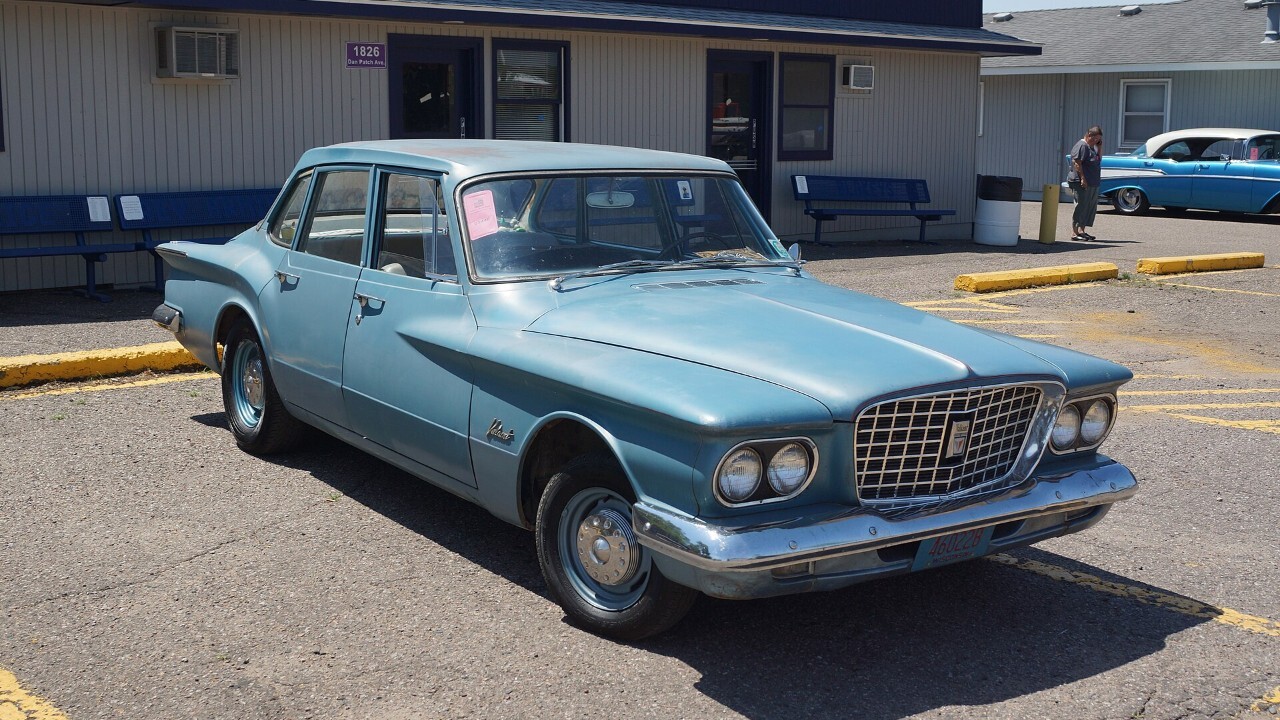
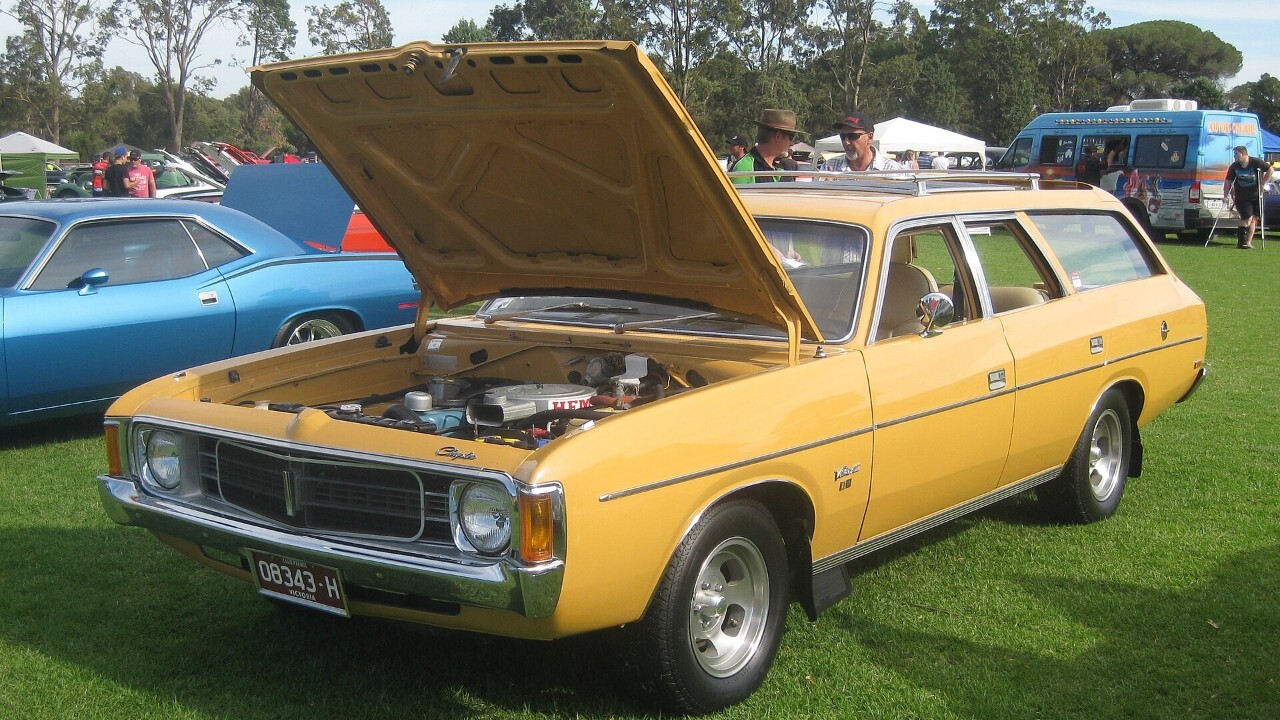
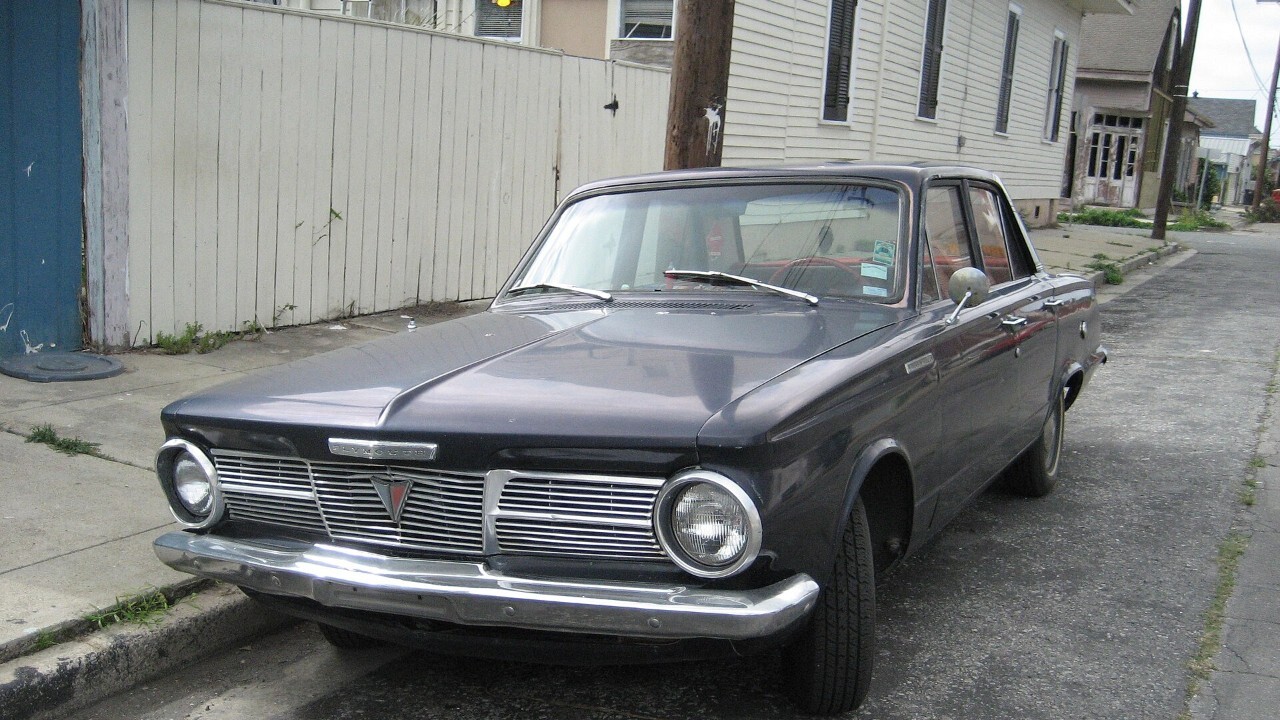
Plymouth’s Valiant began as a sensible American compact in 1960, yet the name went on to become a household word in Australia. There, Chrysler sold Valiants from 1962 to 1981, and the plush Chrysler Valiant Regal became a family favorite. Few compacts traveled that far from their roots. In America, the Valiant earned a reputation for durability and became one of Chrysler’s best sellers. Down Under, it grew into a full Australian product with its own engines, its own muscle sedan and its own awards. Yet neither audience saw it as glamorous at first. Over time, though, both came to love it. These are our picks, eight Valiants we think became icons without much fanfare, from the first Plymouth-badged cars to the last Australian wagons. Every choice is our opinion. By contrast, the engines, sales and production figures come from period data and the references linked in the list. 1. 1961 Plymouth Valiant V100 The Valiant didn’t even start out as a Plymouth. In 1960, it was sold as its own make, and every car that year was a four-door sedan. For 1961, the Valiant officially joined Plymouth, and the base V100 became the entry point to the range. According to Curbside Classic, the V100 was truly basic. For example, it had no side trim, no deck medallions and no rear armrests or ashtrays. Chrysler built 22,230 V100 two-door sedans for 1961. Meanwhile, Virgil Exner’s long-hood, short-deck styling gave even the cheapest version a distinctive look. Underneath, the Valiant broke new ground. It was Chrysler’s first true full unibody car, and its design shaped the downsized 1962 Plymouth and Dodge models. Its 170-cubic-inch slant six made 101 horsepower, more than the rival Falcon’s six. Our take: the V100 is the Valiant in its purest form. After all, it was built to be cheap, tough and practical, and that honesty is exactly why we’d call it an icon today. If you find one, check the unibody for rust, especially in the floors and rocker panels. A solid example is a charming piece of early-1960s design. 2. 1963 Plymouth Valiant Signet 200 hardtop For 1963, Plymouth gave the Valiant a complete new skin. Exner’s original body was gone. Instead, to our eyes, the car took on crisper, more conventional lines. Plymouth offered a hardtop and a convertible in V200 and Signet trims. The Signet 200 sat at the top of the range. It had first appeared in 1962 as the top-line two-door hardtop, and it carried that role into the new body. For buyers, it meant compact-car economy with a touch of style. The redesign worked, too. Plymouth sold 225,056 Valiants in 1963, a strong figure for a compact. In addition, the slant six kept building its reputation for dependability, which gave the stylish Signet a solid base. Under the hood, buyers could choose the 170-cubic-inch slant six or the larger 225, which had become optional in mid-1961. Neither turned the Signet into a hot rod. However, both delivered the kind of reliability that, in our view, kept Valiants on the road for decades. Our take: the 1963 Signet hardtop is the best-looking early Valiant, in our view. It also shows how quickly the compact grew up. If you’re shopping, look for intact Signet trim and badges, since those pieces set it apart from plainer models. 3. 1965 Chrysler Valiant AP6 Regal Safari The Valiant’s Australian story really took off in the 1960s. Chrysler Australia’s Tonsley Park plant in South Australia built its first Valiants on March 31, 1964. Then, in March 1965, the AP6 arrived with a new grille and fresh trim on the existing body. The AP6 brought a big first. In August 1965, it became the first Australian-built Valiant offered with a V8. The 273-cubic-inch engine produced 180 horsepower and pushed the car to a top speed of 109 mph. For a family car in that market, that was serious performance. Demand was strong as a result. AP6 prices ranged from $2,500 to $3,650, and buyers could wait up to four months for delivery. The Safari wagon name dated back to the AP5 of late 1963, and it suited big Australian families and long country drives. The Regal Safari pictured combines that practical wagon body with upscale Regal trim. In other words, it was the kind of car that could carry a family across the country in comfort. Our take: the AP6 Regal Safari is where the Australian Valiant started to feel like its own thing. A V8 wagon with plush trim would be a rare find today. If you spot one, you’re looking at the early days of a national favorite. 4. 1968 Chrysler Valiant VE Regal The VE Valiant gave Chrysler Australia its first big trophy. It won the Wheels magazine Car of the Year award for 1967, the first for the company. According to Cars4Starters, it took the title between the 1966 XR Falcon and the 1968 HK Monaro. The VE was a true international blend. Chrysler stylists in the USA developed it alongside the Plymouth Valiant and Dodge Dart. The front end came from the Dodge, the dimensions and side styling from the Plymouth, and the roofline and rear from Australian designers. Buyers could choose a 225-cubic-inch slant six rated at 160 horsepower or an optional 273 V8. The Regal sedan sat near the top of the range, offering more comfort and trim than the basic models. Chrysler Australia built 68,688 VE Valiants between October 1967 and March 1969. That success helped turn the Valiant into a real rival for Holden and Ford. Above all, it proved Chrysler could build a car that Australian buyers and critics both respected. Our take: the VE Regal is the award-winner that made the Valiant name stick in Australia. Its clean lines have aged well, in our view. If you’re shopping, try to find one with original Regal trim, since those details separate it from fleet-grade cars. 5. 1968 Chrysler Valiant VE Wayfarer utility Australia loves a coupe utility, and Chrysler had its own answer. The Wayfarer coupe utility was already part of the AP6 range, and it carried on through the VE generation. It mixed passenger-car comfort up front with a pickup bed out back. At first glance, the VE range included two utilities. The Valiant Wayfarer was the main model, while a Dodge utility served as a lower-priced version of the same vehicle. That gave tradespeople and farmers a choice between a nicer-trimmed ute and a cheaper workhorse. Because it shared the VE’s basic design, the Wayfarer also shared in the VE’s success. The range had just won Wheels Car of the Year for 1967. Meanwhile, buyers could pick from the same slant six and V8 engines offered in the sedans, so the ute didn’t lack power. Utes tend to live hard lives, though. We’d guess many hauled tools, feed and firewood for years before they were retired. As a result, an original Wayfarer in good condition is a far rarer sight than a VE sedan, in our view. Our take: the Wayfarer is the working-class hero of this list. It’s practical, tough and full of Australian character. If you find one with a straight, original bed, we’d snap it up. Above all, it’s the kind of Valiant that tells a real story about everyday life. 6. 1971 Chrysler Valiant VH Pacer The VH Pacer was Chrysler Australia’s muscle sedan. Its 265-cubic-inch Hemi-6 produced 218 horsepower at 4,800 rpm and 273 lb-ft of torque at 3,000 rpm. According to Valiant Pacers, it ran the quarter-mile in 15.9 seconds and reached 100 km/h in 7.6 seconds. That made the Pacer the fastest mass-produced four-door six-cylinder sedan built in Australia at its release. In fact, it held that title for about 17 years. Moreover, it arrived as part of the VH series, the first “all Australian” Valiant range. Chrysler built only 1,647 VH Pacers, and 417 of those went for export. About 12 percent had a factory four-speed, and all but 37 of those went overseas. Not everyone loved the VH at first. Shannons recalls that Wheels criticized the steering in 1971. Still, the same article praises the 265 as a top engine wherever Chrysler installed it. Our take: the VH Pacer is the Valiant that proved a six could rule the road. Its low production and strong performance make it one of the most collectible Valiants today. If you’re buying, check the documentation, because clones are common. 7. 1974 Chrysler Valiant VJ Regal The VJ became the biggest-selling Chrysler Valiant of all. Chrysler Australia sold 90,865 of them between May 1973 and 1975. That’s a remarkable figure, especially for a car that many people saw as a simple family sedan. At the same time, the VJ brought a cleaner face. It went back to single round headlamps and a new eight-segment grille. Meanwhile, Chrysler dropped the Pacer sedan and the Charger R/T from the range, shifting the focus toward comfort rather than outright performance. That made the Regal a natural fit. It offered plush trim and a smooth ride, with the Hemi-6 engines that Chrysler fitted to Australian Valiants from 1970 to 1981. For many families, a VJ Regal was the comfortable, dependable car in the driveway. Because so many were sold, VJ Valiants once seemed to be everywhere. Over time, though, tidy ones have grown harder to find. Today, a clean VJ Regal draws a surprising amount of attention at car shows, at least in our view. Our take: the VJ Regal is the people’s Valiant. It doesn’t have the Pacer’s performance or the Charger’s coupe styling, but it has something just as important: a place in thousands of family stories. If you’re shopping, the Regal trim is the one we’d seek out. 8. 1975 Chrysler Valiant VK Regal wagon The VK Valiant had a short life. It arrived in October 1975 and ended in June 1976, with 20,555 cars built. Chrysler stopped production ahead of the ADR 27A emissions rules, which took effect on July 1, 1976. That brief run makes the VK one of the less common Australian Valiants. The Regal wagon pictured here adds another layer. On the earlier VH range, for example, wagons made up only 9,102 of 67,800 cars, according to Shannons. Even so, it combined the VK’s styling with the space and comfort families needed for long trips. By then, the Charger had moved out from under the Valiant name and was sold as a Chrysler. As a result, the VK range focused squarely on sedans and wagons for families. Meanwhile, the Hemi-6 engines kept doing their job under the hood. The VK also came near the end of the line. Chrysler kept the Valiant name going in Australia until 1981, but the VK marked one of its last mainstream chapters before those final years. Our take: the VK Regal wagon is a fitting finale for this list. It’s practical and comfortable, yet quite uncommon now. If you find one, check the rear floor and tailgate for rust, since wagons often hide damage there. Chrysler built just 20,555 VK Valiants in total, and only a fraction were Regal wagons.

 Liked by Zoë Rogers, Annabelle Turner












 Liked by Zoë Rogers, Annabelle Turner