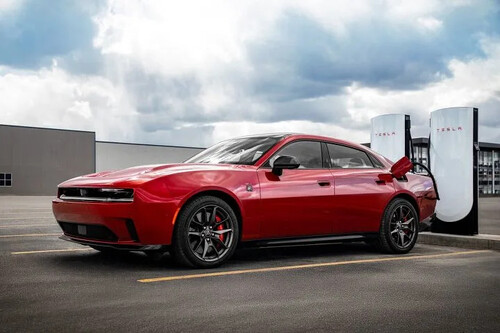
Emily Wilson · 6 months ago@emilywilson7360 percent of drivers are struggling with headlight glare Liked by+57 othersPost commentRelated PostsEasy to apply, seriously hydrophobic, and now 25 Percent off for Prime Big Deal Days.Olivia Leblanc · 10 days agoThis Top-Rated Three-Channel Dash Cam Is 42 Percent Off for Prime Big Deal DaysLiam Green · 10 days agoThe Electric Charger Daytona Sales Cratering 90 Percent This YearHannah Wilson · 11 days agoCar Repair Costs Have Surged 60 Percent Since 2019Kayla Brown · 11 days agoHarvard Study Predicts 32 Percent Of US New Car Sales In US In 2030 Will Be EVs 90 · Amélie Girard · 21 days agoEV Owner Claims We Should Never Charge Our Cars to 100 Percent Battery 53 · Oliver Leblanc · 25 days agoPorsche Licensed an 80-Percent 550 Spyder That Runs on 48 Volts — and Can’t Legally Touch a Road 69 · Gabriel Martin · 25 days agoTesla Bumps Cybertruck Prices by Up to 7 Percent 75 · Amélie Johnson · 1 months agoTrump Threatens 50 Percent Tariffs on Canadian Autos as Trade Talks Fail 50 · Sophie Hall · 1 months ago956-Mile Demon 170 Hits The Block As Hagerty Values Slide 16 Percent 90 · Connor Anderson · 1 months agoUsed Cars Under $15K Are Vanishing, Down 20 Percent In A Year 32 · Nicole Anderson · 2 months agoHyundai's AI Numbers, Decoded: What 90 Percent Faster Crash Review Really Means 38 · Evan King · 2 months agoTy Gibbs '100 percent' behind one big rule change to improve NASCAR 96 · Jackson Gagnon · 2 months agoMore Big Cats In Your Area Could Reduce Deer-Induced Car Crashes By Nearly 76 Percent 47 · Benjamin Labelle · 2 months agoSomeone Found a 1966 Plymouth Fury VIP That Is Nearly 100 Percent Original 90 · Matthew Johnson · 3 months agoTires for Less: Save up to 53 Percent on Goodyear at Amazon Prime Day 96 · Adam Gagnon · 3 months agoHurry: Save up to 50 Percent on Our Favorite Jump Starters for Prime Day 60 · Mason Tremblay · 3 months agoLucid Reduces Production and Lays Off 18 Percent of Its Workforce 18 · Oliver Smith · 3 months agoSolid-state battery: CAS electrolyte extends lifecycles with 84.2 percent retention after 350 cycles 61 · Lauren Campbell · 3 months agoBYD’s central R&D to split into five brand arms amid 20 percent sales drop, report says 41 · Noah Tremblay · 3 months ago




 +57 others