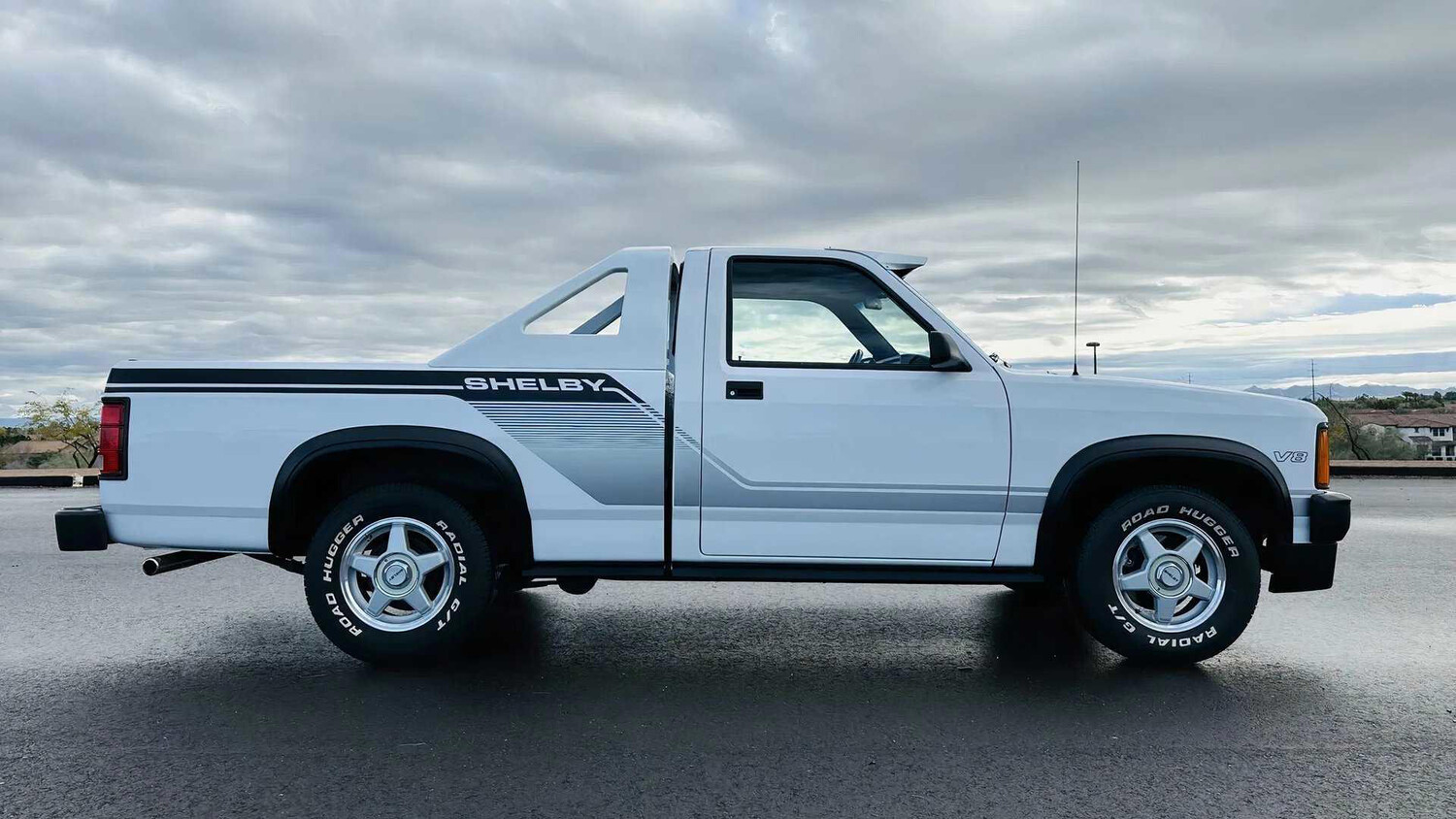
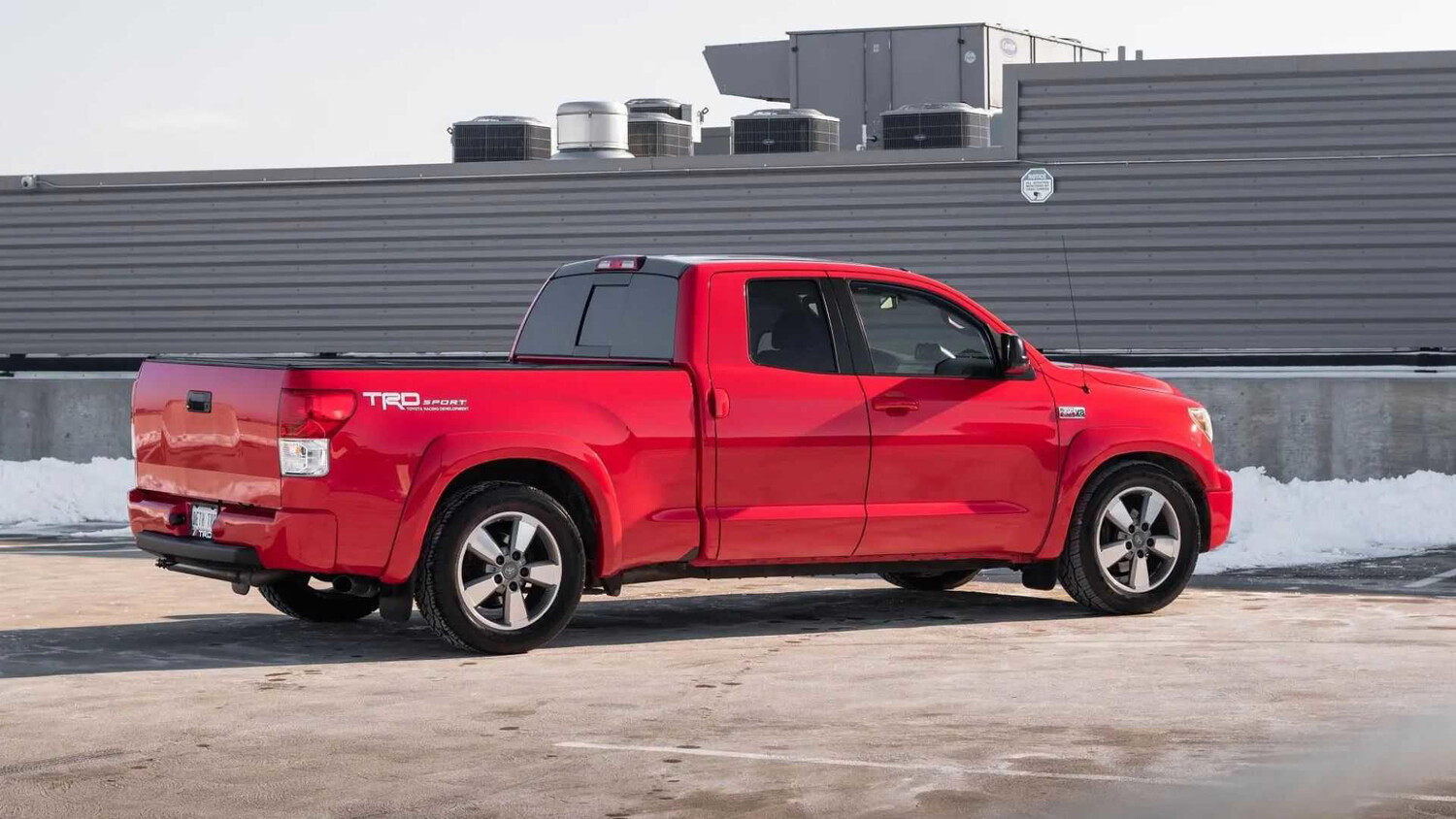
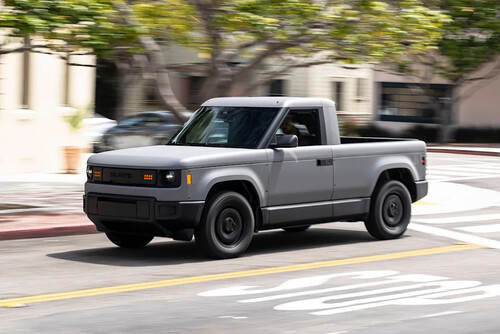
When Ford introduced the 1925 Model T Roadster with Pickup Body as the first factory-assembled pickup truck, the company aimed to create a reliable, affordable utility vehicle that would make it easier for farmers to "pick up" and drop things off in the course of their work. Fast-forward to about a century later, and Pickup Trucks have morphed into something far more sinister than Henry Ford envisioned. Modern pickup trucks not only have more capability than ever, but they're also faster than ever. In fact, some of them have transcended their primary role as workhorses and now offer the kind of speed that gives genuine sports cars a run for their money. The phrase "performance pickup truck," which used to sound like an oxymoron not too long ago, is now one of the fastest-growing segments.Many of these performance trucks utilize brute force to move their heavy bodies at sports-car-rivaling speeds, which is why some manufacturers go as far as equipping them with race-derived engines or engines with technologies sourced directly from their expensive racing programs. This has led to the rise of pickup trucks that look unassuming but possess enough power and race-bred DNA to embarrass more obvious performance cars. Strap in as we explore some of them. 1989 Shelby Dakota Power: 175 hp / 270 lb-ft MecumCarroll Shelby is most famous for his partnership with Ford that created icons like the Shelby Cobra, Ford GT40, and Mustang GT500, which is why the Shelby Dakota often flies under the radar. The Shelby Dakota is a limited-production, high-performance version of the Dodge Dakota built exclusively for the 1989 model year, and it is widely celebrated as one of the machines that kickstarted the factory "muscle truck" trend.Bring a TrailerTo create it, Shelby replaced the standard 3.9-liter V6 with a 5.2-liter V8 sourced from Dodge's full-size Ram trucks, sending 175 hp to the rear wheels via a heavy-duty four-speed automatic transmission paired with a performance-oriented 3.90:1 limited-slip differential. While the engine may not exactly have race-bred roots, the Shelby Dakota directly inherited the DNA, philosophy, and engineering talent of Carroll Shelby's championship-winning racing background. Ford SVT Lightning Gen 1 Power: 240 hp / 340 lb-ft Bring a TrailerIn the early 1990s, Chevrolet caught Ford flat-footed by releasing the C1500 454 SS, which used a massive 7.4-liter big-block V8 to become one of the first muscle trucks. At the same time, Ford's then-new Special Vehicle Team (SVT) department needed a halo model to build its name. This convergence of factors led the SVT team to develop the F-150 SVT Lightning, which was positioned as a street-performance F-150.Bring a TrailerTo create the SVT Lightning, SVT chose a standard-cab F-150 chassis and heavily re-engineered both the powertrain and the suspension to out-handle and out-accelerate the competition. While they retained the standard 5.8-liter Windsor V8, they outfitted it with specialized racing components from Ford's motorsport catalog, including GT40 engine heads, high-silicon aluminum pistons, a high-lift cam, and a tuned-length tubular intake manifold. With an output of 240 horsepower and 340 lb-ft of torque, the SVT Lightning sprinted from 0 to 60 mph in a swift 7.2 seconds. GMC Syclone Power: 280 hp / 350 lb-ft Via MecumIn the late '80s, Buick engineers stuffed the Grand National's 3.8-liter turbocharged V6 into a Chevrolet S-10 to create a promising concept truck. GM and Chevrolet reportedly said no to the idea of a Grand National-style pickup truck, but GMC was so intrigued that it decided to take up the idea, resulting in the 1991 Syclone. But since using the Grand National's turbocharged mill would be too costly, GMC decided to use a motorsport-derived engine tuned by Detroit-based McLaren Engines.MecumMcLaren Engines heavily modified the GM 4.3-liter turbo V6, adding hypereutectic pistons, a specialized intake manifold, and a massive Mitsubishi TD06-17C turbocharger paired with a Garrett water-to-air intercooler. The result was an output of 280 horsepower and 350 lb-ft of torque, but legend has it that GM notoriously underrated these numbers to avoid overshadowing their flagship sports car, the Chevy Corvette. This power was sent to all four wheels via a specialized BorgWarner all-wheel-drive transfer case, allowing the Syclone to beat a Ferrari 348ts in afamous quarter-mile test.Apart from its blacked-out look, mild factory body kit, slightly lowered stance, and subtle decals, the Syclone looked like a standard compact GMC Sonoma pickup truck. Dodge Ram SRT-10 Power: 500 hp / 525 lb-ft Via: Mecum AuctionsBy the mid-2000s, the performance truck segment was starting to take shape, with Ford and GM leading the way. Chrysler wasn't going to sit and watch as its fierce cross-town rivals dominated the new market, so it rolled up its sleeves and built the Ram SRT-10 as the definitive, absolute mic-drop moment of the 1990s and 2000s sport truck wars.Via: Mecum AuctionsDodge wanted the Ram SRT-10 to obliterate its rivals so brutally that they couldn't possibly respond, so it went with the nuclear option as far as engines were concerned, dropping a 500-horsepower supercar engine into a light regular-cab truck's frame. The engine in question is a gargantuan 8.3-liter V10 sourced from the legendary Dodge Viper, which not only provided the grunt the SRT-10 needed to humiliate its rivals but also had race-proven components like a cast-aluminum engine block, forged steel crankshaft, and high-flow cylinder heads.Unlike many of the trucks on this list, the Ram SRT-10 looked fast even when parked, featuring a massive, bulging hood with a functional hood scoop, custom 22-inch Viper-style polished aluminum wheels, and a lowered ride height that gave it a hunkered-down track stance. Toyota Tundra TRD Supercharged Power: 504 hp / 550 lb-ft Via Bring a TrailerTired of the Americans dominating the performance truck conversation, Toyota raided the TRD division's parts bin and turned the Tundra into a tire-melting menace to society in the 2000s. The TRD Supercharged, as it was called, was a factory-backed dealer-installed option that converted unassuming Tundras into absolute street brawlers.Via Bring a TrailerToyota offered three iterations of the factory-backed TRD Supercharger program across the first two generations of the Toyota Tundra as a dealer-installed option, but the third and final iteration was the absolute zenith of the program. The truck started out as a Tundra SR5 with a 5.7-liter 3UR-FE V8 under the hood. From there, TRD added an Eaton TVS1900 Roots-type twin-vortex supercharger pushing roughly 5 to 7 PSI of boost, a dual-exhaust system, and massive 16-inch cross-drilled front rotors clamped by six-piston calipers to bring the heavy truck to a halt. With an output of 504 hp and 550 lb-ft of torque, the Tundra TRD Superchargedcould sprint to60 mph in just 4.4seconds, leaving uninitiated sports car drivers wondering what just happened. 2017–2020 Roush F-150 Nitemare Power: 650 hp / 610 lb-ft RoushFor decades, Roush has made its name as one of the most successful Ford-exclusive high-performance engineering powerhouses. Roush is most famous for building highly modified Ford Mustangs, but its work on the F-150 is even more impressive. Roush started tinkering with F-150s in the 2000s, turning the 11th-generation F-150 platform into a supercharged 450-hp performance truck known as the Roush F-150 Nitemare.RoushSince then, Roush has built two more generations of the Nitemare, and all of them are race-bred monsters that borrow from the Roush brand heritage. While the latest generation is the most powerful and most advanced from an engineering perspective, we've decided to highlight the second-generation version built about a decade ago. Built on Ford's 13th-generation aluminum-bodied F-150, the 2017-2020 Nitemare paired a 5.0-liter Ford Ti-VCT V8 with a Roush TVS R2650 Supercharger to generate 650 horsepower and 610 lb-ft of torque. Capable of sub-4-second 0–60 sprints, the second-gen variant earned the Nitemare its "world's fastest" street truck status.Sources: Car and Driver, MotorTrend