Did the V-8 Make It Worse?
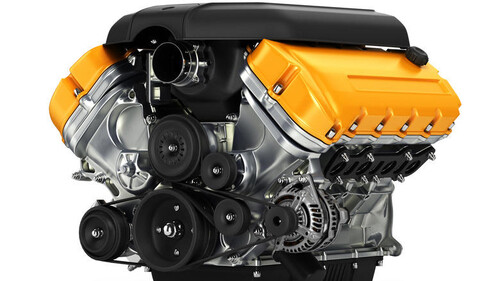
There are more than a few perspectives on whether the M3’s dalliance with V-8 power was a plus or a minus for the vehicle. On the one hand, its 414 horsepower and 295 lb-ft of torque (squeezed from 4.0 liters to start, later punched out to 4.4 liters and 444 horsepower) made it the strongest version of the car to date.
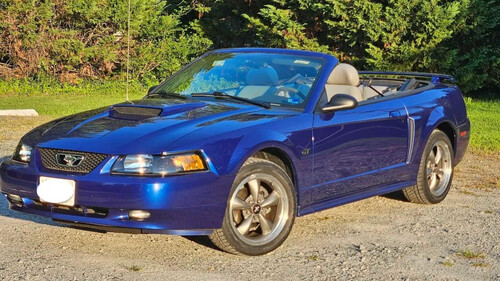
Unfortunately, it needed that extra grunt to deal with the car’s ballooning size and particularly its curb weight, which was about 200 pounds more than the E46 it replaced, and almost as heavy as a comparable Ford Mustang GT of the same vintage. Accessing that power required revving the engine to its 8,300-rpm redline, making it difficult to truly enjoy outside of a racetrack setting.
For those used to the smooth if lesser power delivery of the S54, the new V-8 engine was a peaky handful that changed the flavor of the M3 in daily driving to the degree where it felt like something else entirely, rather than a natural evolution of the same sporty formula. For track stars who didn’t need to worry about short-shifting their way through a dull commute, the V-8 was welcome.
After this M3 generation, BMW quickly shifted back to turbocharged six-cylinder power for every version of the car that followed, providing more torque, a more useful powerband, and a mea culpa that the V-8 engine in the M3 didn’t improve the breed.