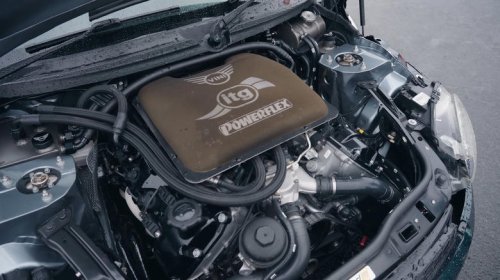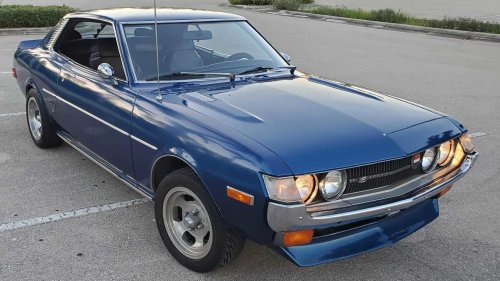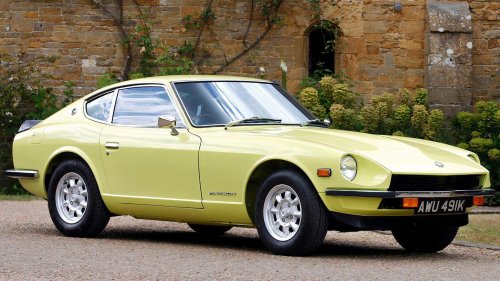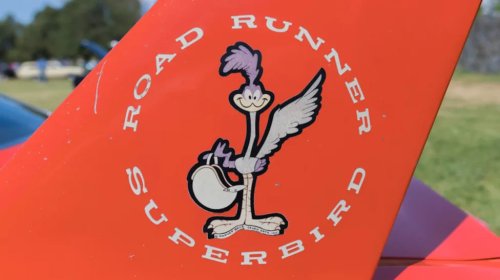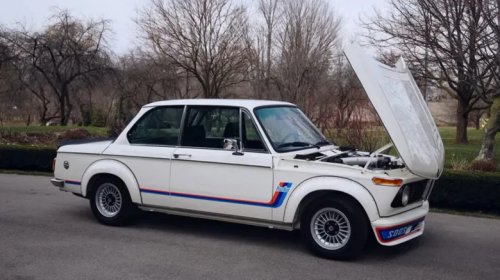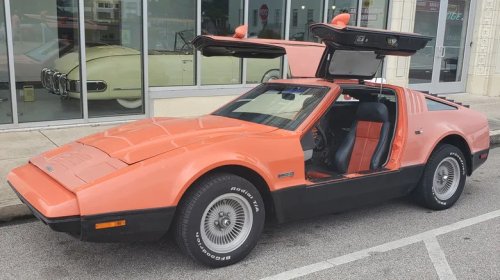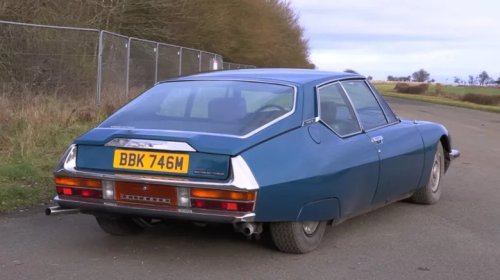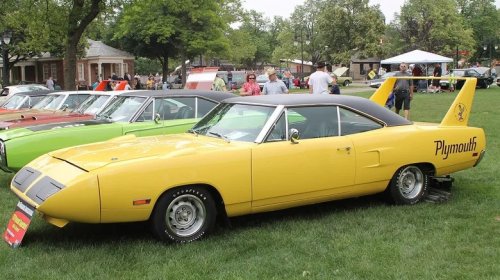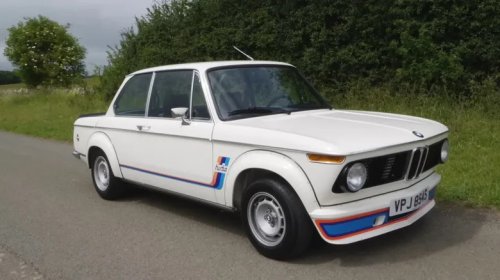
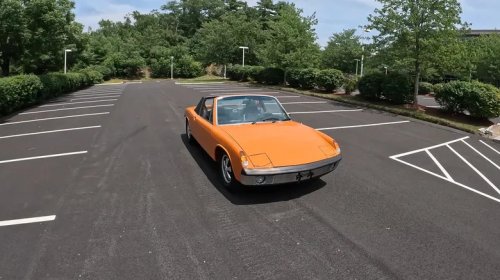
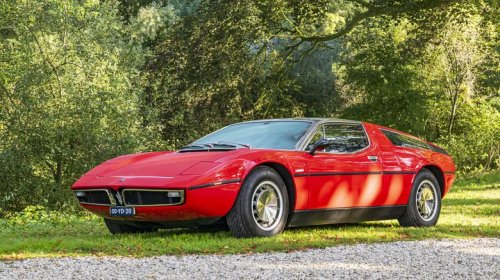
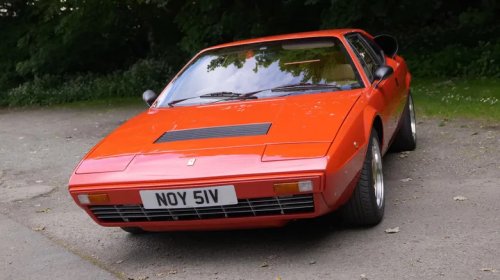
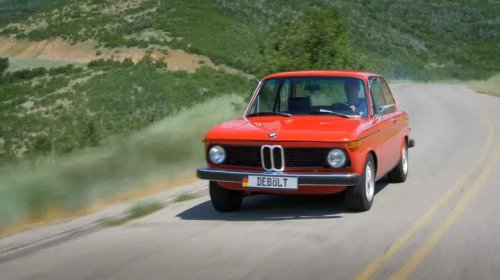
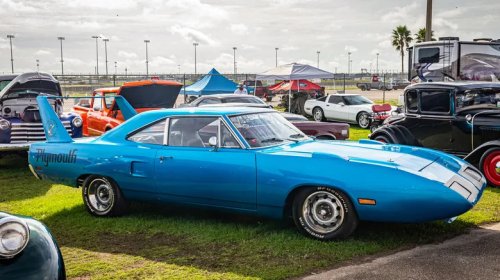


















Number 27/YouTubeThere can be no better example of the car market being mad than the collector value of cars that nobody wanted when they were new. You see, logic would suggest that a car that dealers modified en masse just to get rid of, that sat on lots gathering dust, that buyers avoided when new, would be unloved forever. Logic, however, could not possibly be more wrong. Most of the cars on this list had production numbers in the low four (and in one case, three) digits, and sell for tens or even hundreds of thousands of dollars today.In our opinion, it is the very qualities of the cars here that made them borderline unsaleable in the 1970s — terrifying turbo lag, oddball styling, a huge, impractical wing — that make these rides collector's items today. When you add in the rarity we mentioned and the vehicles' newly rehabilitated rep, you have the classic formula for auction-record-breaking prices. Also, it's worth mentioning that every single car on this list was considered a "mistake" of some kind. The cars were too weird, too pricey, too thirsty, or badly timed against the horsepower-killing gas crisis of the 1970s, when performance was not the top priority. Buyers stayed away in droves, and dealer patience probably dropped fast. But, for those who grew up in the 1970s, certain cars were always special. Here are five that only became special to collectors long after the decade ended.Porsche 914/6Tedward/YouTubeWhile it may sound counterintuitive, the (relatively) cheapest car on our list is the Porsche 914. Specifically, we're talking about the Porsche 914/6 — since the regular Porsche 914/4 is still quite affordable for most buyers. As the names suggest, the 914/6 was powered by a 2.0-liter six-cylinder engine making about 110 hp, while the base 914/4 came with a 1.7-liter four-banger motor making 80 hp. The 914 model line was launched in 1969, and the 914/6 specifically was quite overpriced. A 1970 model had a suggested retail price of $6,114, while for $6,430 buyers could upgrade their ride to the 1970 Porsche 911T — so there are no prizes for guessing which was the more popular choice.Only an estimated 3,332 units of the Porsche 914/6 were produced in total, and today, when one comes up for sale, you can expect it to go in the range of $60,000 to $80,000. Interestingly, Porsche also built a hyper-limited run of 12 factory racecars called the 914/6 R, one of which carried an estimate of $900,000 to $1.1 million but failed to sell at an RM Sotheby's Arizona auction in 2026. Note that the regular Porsche 914/4 sells for less than half the 914/6's price today, probably because the 914/4 had the smaller engine and there were more units — over 110,000 more, in fact.Maserati BoraSjoerd Van Der Wal/Getty ImagesNext up, we have the Maserati Bora, which was arguably a trailblazer, at least for the company. First of all, it was both the first mid-engined Maserati road-going car ever made and the first Maserati developed after Citroen bought the company. Note that Maserati's racing cars had been mid-engined for a while, though. And the car had all the bells and whistles that one would expect of a high-end sports car: things like fully independent suspension and air conditioning, which previous Maseratis didn't actually come with, surprisingly.There were two engines available — a 4.7-liter V8 making 310 hp and a 4.9-liter V8 making 330 hp. However, the car debuted in 1971, shortly after which anything more than an econobox saw its sales plummet due to the soaring gas prices of the era. As such — though that is certainly not the only factor — only 564 Maserati Bora units left assembly lines, of which 314 had the 4.7-liter engine and 250 had the 4.9-liter.Here, common logic actually holds up when it comes to price — the Bora, being the rarest car on our list, commands one of the highest prices of the bunch. With only 564 units produced, you'd expect the price today to be six figures minimum, and you'd be right. When one comes up for sale or auction, a Maserati Bora will fetch between $120,000 and $250,000.Ferrari (Dino) 308 GT4JayEmm on Cars/YouTubeThe Ferrari Dino 308 was never supposed to be a Ferrari. The 308 GT4 launched under the "Dino" brand, while the 308 GTB initially was made of fiberglass, with a switch to steel in 1977. The GT4 was always made of steel. The engine in this thing was a 3-liter V8 motor that made more than 230 hp, which could push certain models to a top speed of 140 mph. U.S. market versions of the 308 tended to make slightly less power than the European versions; an early American 308 GT4 would make about 240 hp from a 3-liter V8 motor. A key difference was in the styling, with the GTB/GTS coming from Pininfarina, with classic Italian curves, while the GT4 came from design house Bertone, with far blockier, wedge-ish looks.Design differences aside, the GT4 wasn't very popular, with only 2,826 units moving. In fact, it is widely believed that the 1975 models were being delivered as late as 1977, owing to the fact that buyers just didn't seem to want the things. In a last-ditch attempt to bump the sales figures, Ferrari stepped in and added its badging to the cars, which were now called the Ferrari Dino 308 GT4s — but the cars didn't exactly sell like hotcakes, even so. When one comes up for sale these days, however, you can expect the sale price to land between $60,000 and $75,000, with some models climbing even higher, depending on provenance and condition.BMW 2002 TurboEverydayDriver/YouTubeDon't let the 2002 in the name confuse you — the BMW 2002 Turbo was launched in 1973 and shipped with a 2-liter inline four-cylinder motor making 170 hp. The 2002 Turbo was also believed to be the first ever (production) European car that had turbocharging. This power was routed to the wheels via a four- or five-speed gearbox, and the powertrain as a whole managed to push the car to a top speed of around 131 mph, or 211 kmph. Unfortunately, due to the gas crisis, a temporary speed limit of 100 kmph (62 mph) was in place on the German Autobahn at the time, so owners couldn't mash the accelerator on the legendary highway for a few months.According to a report from Top Gear, the 2002 Turbo "sold in a trickle when new and was widely seen as flawed" — which is not exactly high praise. An estimated 1,672 units of the 2002 Turbo were sold, and looking at the asking price for a 1975 model — 18,720 Deutsche Marks, or $7,625 at the time — it's not exactly hard to see why. That was Porsche 914/4 money, and, back then, that Porsche was arguably more desirable than a Bimmer. Anyway, fast forward about half a century, and the tables have completely turned. Today, concours-level examples of the BMW 2002 Turbo easily fetch north of $100,000, and even the shabbier units wouldn't fall much under the $45,000 mark at worst. It's a pretty extreme comeback story for a car that didn't have much initial sales success.1970 Plymouth SuperbirdGestalt Imagery/ShutterstockPerhaps the most surprising entrant on this list is the 1970 Plymouth Superbird, which was the corporate cousin to the legendary Dodge Charger Daytona of the same era. Yes, the very same model that carried veteran driver Richard Petty to a NASCAR season so dominant that NASCAR essentially banned the Superbird the next year didn't sell that well at dealers. This was attributed to a mix of the styling putting people off and the high insurance rates for the vehicle — it was built for racing, after all. In fact, there are numerous reports that dealers around the country were removing the nose cones and the aero wings on the Superbirds and Daytonas of the day in an attempt to move them. In at least one case, a 1970 Superbird remained without a title — meaning it was unsold from new — until 1989, which is absurd.The base price for a 1970 Plymouth Superbird was around $4,298, which wasn't exactly cheap for the time. For that money, buyers got all the NASCAR looks, and power from a 440-cubic-inch V8 motor making 375 hp. The car's aerodynamic bodywork, along with the optional 390-hp 440 Six-Barrel engine, could famously push the Superbird to a top speed of 142 mph and give it a standing quarter-mile time of 13.5 seconds and a zero to 60 mph time of 5.5 seconds. Today, collectors adore the car — it can be considered a grail car for anyone into American muscle — and values almost never dip below the $200,000 mark when one comes up for sale.