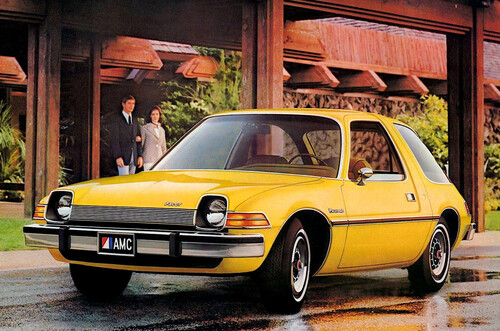
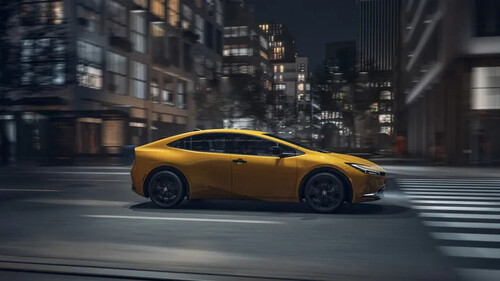
10 Cars That Should Have Failed but Didn'tryan lugo - MotorTrendThe automotive industry tends to be driven by logic. Market research, consumer trends, fuel prices, demographics, and competitive analysis are all supposed to point automakers toward success while steering them away from costly mistakes. Yet history has a habit of proving that buyers don't always follow the script.Some vehicles seem destined for failure from the moment they're announced. Maybe they're too expensive, too unconventional, too specialized, or simply too weird. More often than not, those concerns prove justified. But every once in a while, a vehicle defies expectations to leave an enduring legacy. Here are 10 cars, trucks, and SUVs that should have failed but somehow didn't.1) Nissan JukePhoto credit: NissanWhile the Juke's exterior design was polarizing when it landed in U.S. showrooms in the fall of 2010, younger buyers appreciated its visual differentiation from typical crossovers as well as its affordability and city-friendly proportions. Nissan leaned into this youthful enthusiasm by introducing a NISMO-tuned version of the Juke in 2013. Incredibly, Nissan even produced a few examples of the Juke-R a few years later. Built in collaboration with RML Motorsports, the Juke-R used the drivetrain, chassis, and 3.8-liter twin-turbocharged V-6 engine from the R35 GT-R.AdvertisementAdvertisementAlthough the Juke bowed out of the U.S. market in 2017 to make room for the Nissan Kicks, the Juke is still in production for Europe and other markets. Nissan has built more than 1.5 million of them to date.2) Toyota PriusPhoto credit: ToyotaSporting an oddball powertrain, an oddball design, and a premium price tag, the Toyota Prius didn't seem like it was destined to alter the course of automotive history when it was introduced to the U.S. market in 2000. But timing is everything, as they say, and the Prius made landfall just as environmental awareness and efficiency started becoming mainstream concerns rather than niche talking points.More important, its technology delivered genuinely impressive fuel economy in the real world, a factor that saw increasing importance among consumers whenever fuel prices spiked. At that point, the Prius' distinctive design became part of the appeal, as it essentially became a rolling virtue signal for early adopters.The second-generation Prius further solidified this role while introducing an array of improvements from stem to stern, an effort which earned the hybrid the MotorTrend Car of the Year award in 2004. The Prius nameplate has racked up more than five million sales worldwide since its debut in 1997.3) Chrysler PT CruiserPhoto credit: MotorTrend - MotorTrendThe positive reaction to the Prowler concept shown at the 1993 North American International Auto Show and the sales success of Volkswagen's New Beetle convinced Chrysler the emerging retro styling trend of the late 1990s had staying power. Keen to find a foothold with mainstream audiences hungry for nostalgic design, the automaker bowed the Chrysler Pronto Cruizer at the 1999 Geneva Motor Show. After its enthusiastic reception at the event, the company set to work on a production vehicle based on the Pronto Cruizer concept. But the eventual PT Cruiser was ultimately a far cry from the low-slung, two-door hot rod that had been shown in Switzerland.AdvertisementAdvertisementDesigned to be EPA-classified as a truck to help improve Chrysler's corporate average fuel economy (CAFE) numbers, the PT Cruiser was underpinned by a reworked version of the Neon platform. Accordingly, it was also motivated by the same 2.4-liter four-cylinder engine as that compact economy car, which sent 150 hp to the front wheels through either a five-speed manual or four-speed automatic transmission, which didn't equate to inspired performance in a vehicle saddled with an additional 700 pounds of weight. Also working against the PT Cruiser's market prospects was Chrysler's reputation for less than stellar build quality at the time, and the new hatchback did little to buck the trend.But despite these potential hurdles, the PT Cruiser was a runaway success, and the automaker went on to produce more than 1.3 million of them between 2000 and 2010. A turbocharged GT model joined the lineup in 2003, and a convertible version followed a few years later.4) Scion xBPhoto credit: ScionWhen it arrived for the 2004 model year, the Scion xB's boxy styling didn't attempt to evoke a retro vibe or a sense of rugged utilitarianism, and it wasn't sporty or luxurious. Its design, normalized in Japan where it was sold as the Toyota bB, looked to Americans like it'd been crafted by a computer program instructed to avoid stirring any emotion whatsoever. Its 108-hp 1.5-liter engine followed suit.But its squared-off design paid dividends in interior space, and a low starting price made it an appealing choice for young urbanites who wanted a basic runabout with an unconventional aesthetic. The xB also found a foothold with customizers and sport compact enthusiasts in the wake of the Fast & Furious film franchise's success. Toyota's youth-oriented brand ended up moving about 400,000 of them over two generations in the U.S. and Canada between 2004 and 2015.5) Mercedes-Benz G-ClassPhoto credit: Mercedes-BenzOriginally designed as a basic off-road vehicle for military and agricultural applications, the original G-Wagen's ladder frame, live axles, and austere cabin weren't exactly purpose-built for the valet line at Spago. It also wasn't cheap relative to its utilitarian roots, nor was it optimized for typical daily driving duties when Mercedes-Benz began offering it for sale to civilians in 1979. But it quickly earned a reputation for extreme durability and impressive off-road capability, while its unique look gave it an immediately recognizable identity.AdvertisementAdvertisementOnce Mercedes realized the G-Wagen had captured the attention of well-heeled motorists, the company began adding layers of luxury on top of its rugged mechanicals. That decision helped the G-Wagen distinguish itself from garden-variety luxury SUVs and further increased its appeal.But a major catalyst for its popularity in the United States was the passage of Small Business Jobs Act in 2010. Part of the bill included relief for folks who needed to purchase large equipment for their businesses by allowing them to write down the entire purchase price amount on their taxes in the first year, regardless of whether the equipment was bought outright or financed over time.This included provisions for roadgoing vehicles as long as they were used for business-related purposes at least half of the time and had a gross vehicle weight rating (GVWR) of between 6,000 and 14,000 pounds. While this was mainly intended for heavy-duty trucks, the Mercedes G-Class met the criteria, and the loophole has been exploited by countless opportunists looking to get a discount on an edgy luxury vehicle in the time since. More than 600,000 G-Wagens have been produced to date, all of which have been built in Graz, Austria, by contract manufacturer Magna Steyr.6) Subaru BratPhoto credit: SubaruDesigned to capitalize on the U.S. market's newfound interest in compact pickups in the mid-'70s, the Leone-based Brat served as Subaru's take on the segment.AdvertisementAdvertisementThe Subaru Brat wasn't a body-on-frame design like the Chevy LUV or Datsun 620, a circumstance that placed it in an awkward space between an economy car and a traditional truck, and its 67-hp 1.6-liter flat-four engine didn't offer the kind of grunt folks normally associated with compact pickups. But the Brat (which stood for Bi-Drive Recreational All-terrain Transporter) had some other things going for it that helped it find a receptive audience. All versions of the Brat boasted all-wheel drive, a feature normally found in full-sized trucks. It also offered a semblance of style in a segment that was otherwise devoid of it. What really set the Brat apart from the competition, though, were its bed-mounted, rearward-facing jump seats.It wasn't that this was a high-demand feature when the Brat entered the U.S. market in 1978. These jump seats were essentially a ploy to get around the Chicken Tax, a 25 percent tariff on light-duty trucks imported to the United States enacted in 1962 and still in place today. By fitting these plastic seats to the bed, it allowed Subaru to classify the Brat as a passenger car rather than a truck, reducing the tariff to 2.5 percent. That kept the Brat's price down, enhancing its appeal.The Brat wasn't a massive success for Subaru, but it was successful enough to continue being sold in America until 1987 and in other markets until 1994. The automaker is estimated to have sold more than a quarter million of them worldwide during the Brat's production run.7) Tesla Model SPhoto credit: MotorTrend - MotorTrendBefore the Tesla Model S, EVs were mostly niche cars with short range, odd packaging, and limited real-world appeal. And in 2012, the year the Model S made its debut, America's charging infrastructure was virtually nonexistent, which made EV road trips sound like a hobby for folks who enjoyed sitting around in parking lots. At the time, Tesla also seemed like a big gamble for potential buyers, as the company's only other car was a repurposed Lotus Elise with a battery pack. Further upping the ante was the Model S' positioning as a luxury sedan designed to go head to head with established players like the BMW 5 Series and Mercedes-Benz E-Class—with pricing to match.AdvertisementAdvertisementBut the Tesla Model S effectively upended the EV narrative with impressive straight-line performance, sophisticated software, refined handling, and an EPA-estimated 265 miles of range when equipped with an optional 85-kWh battery pack. This suddenly made EVs viable for both everyday use and treks out of town, and the Model S' tech-forward cabin seemed like a glimpse into the future. Tesla also didn't just build a luxury sedan—it built the infrastructure to support it with its Supercharger network. We named the Model S both the 2013 MotorTrend Car of the Year and, in 2019, the Ultimate Car of the Year.While the automaker's chances for survival were dicey for a while, Tesla has since become the most valuable car company in the world by market capitalization. Tesla officially ended production of the Model S (and the Model Y) earlier this year to shift its manufacturing capacity toward other projects. More than 400,000 examples of the Model S were built over its 14-year production run.8) Plymouth ProwlerPhoto credit: Plymouth / Chrysler CorporationIntroduced in 1997, the Plymouth Prowler offered retro-futuristic looks but not much else. Although it benefited from aluminum-intensive construction that kept its curb weight low, its performance didn't match its aesthetic. Instead of packing the fire-breathing V-8 and close-ratio manual gearbox you'd expect to find in a hot rod like this, the Prowler was instead equipped with a 214-hp 3.5-liter V-6 and a rear-mounted four-speed automatic transmission. That combination resulted in a 0–60-mph sprint of 7.2 seconds on its way to an electronically limited top speed of 118 mph.These figures improved after the Prowler took 1998 off and reemerged with a 253-hp version of the V-6 as well as a new transmission calibration for 1999, but the Prowler's performance never lived up to the promises made by its head-turning design. With just two seats and a tiny trunk, it wasn't particularly practical, either.AdvertisementAdvertisementNevertheless, the Prowler connected with enthusiasts who wanted the look of a custom street rod without actually building one, and Chrysler ended up moving nearly 12,000 of them during its five years in production. Although that's not a runaway success by traditional metrics, it's a pretty decent showing for a wild-looking, factory-produced sports car that wasn't particularly sporty.9) AMC EaglePhoto credit: AMCThe AMC Eagle is one of the best examples of a car that was at least a decade ahead of its time. Today we'd call it a crossover, but in 1980 people just called it weird.Based on the AMC Concord, the Eagle wasn't stylish or fast, but it combined a station-wagon body with four-wheel drive and an elevated ride height, effectively creating an entirely new segment no one had thought to ask for.While the four-wheel-drive system (with standard center differential) added cost, the Eagle solved a legitimate problem for buyers in snowy and rural regions who wanted passenger-car comfort combined with all-weather capability. For years, the Eagle essentially had no direct competition, and when it came to the four-wheel-drive system, AMC's experience building Jeeps gave it a significant advantage over automakers who primarily focused on passenger cars.AdvertisementAdvertisementAlthough the automaker didn't survive long enough to see the segment it pioneered come to dominate the industry, the AMC Eagle developed a loyal following during its nine-year run. Nearly 200,000 examples were produced.10) Ford PintoPhoto credit: FordConcerned about losing ground to a growing wave of imported subcompact cars, Ford president Lee Iacocca also reportedly laid down two simple targets for the automaker's new economy car: It had to weigh less than 2,000 pounds and cost less than $2,000. To hit those goals and get the car into showrooms quickly, Ford dramatically compressed the development schedule, taking the Ford Pinto from concept to production in just 25 months.This was an extraordinarily fast pace for the late 1960s, and it meant engineers had to focus on meeting cost and weight targets rather than refining the design. This accelerated schedule would become a major part of the Pinto's story because critics argued that Ford's rush to launch the vehicle contributed to mistakes and failures.These included the well-known allegation the car, when rear-ended, could burst into flames at a far higher rate than other cars of the day. Despite well-publicized lawsuits, the largest recall in history at the time, and a massive hit to its reputation, Ford produced the Pinto for roughly a decade and built more than three million of them.