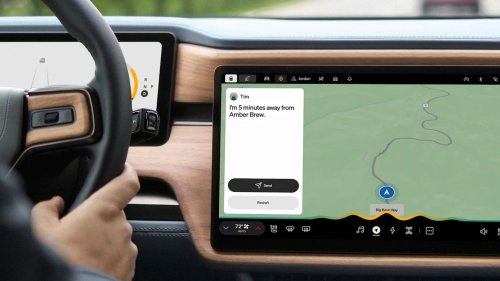
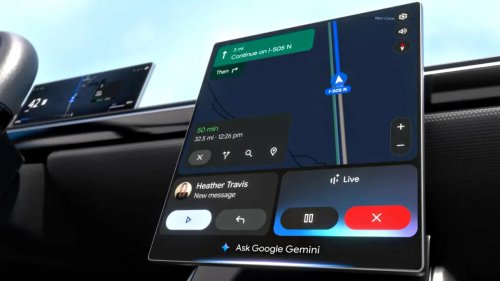
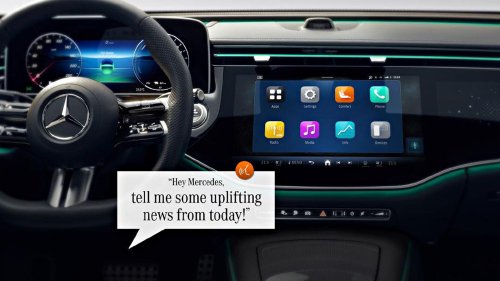
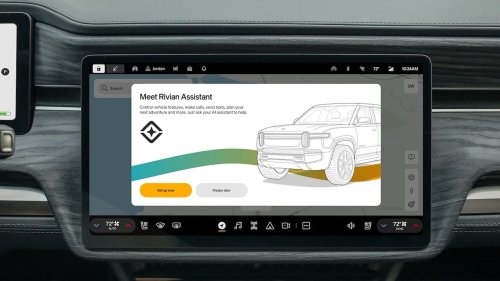
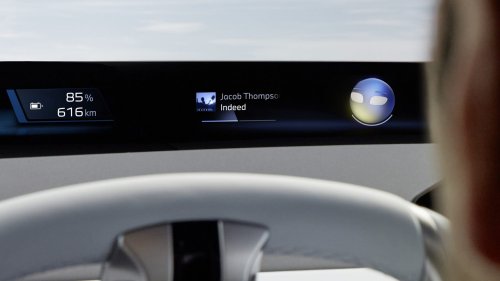
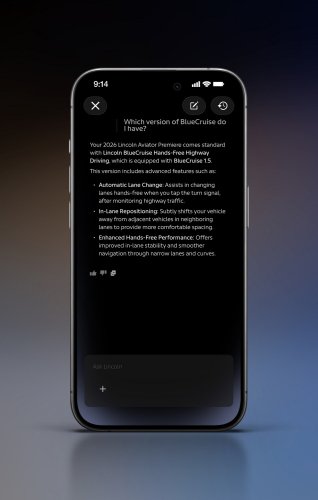
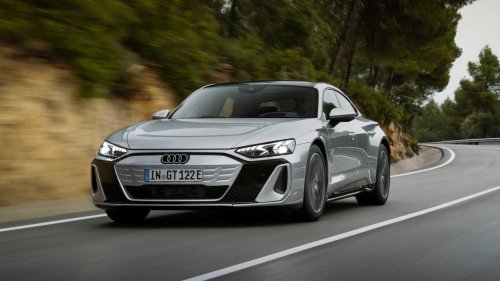
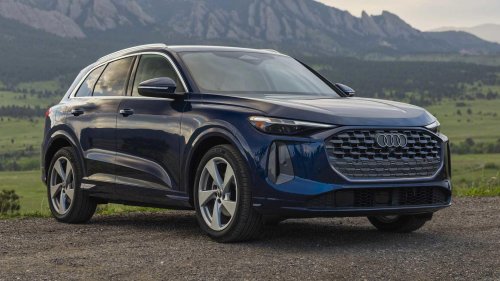
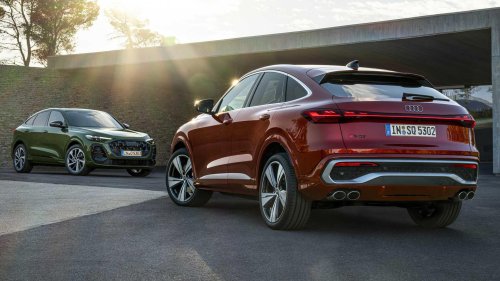
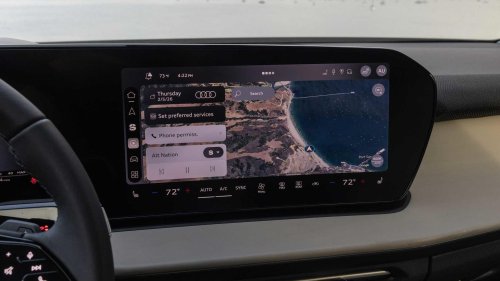
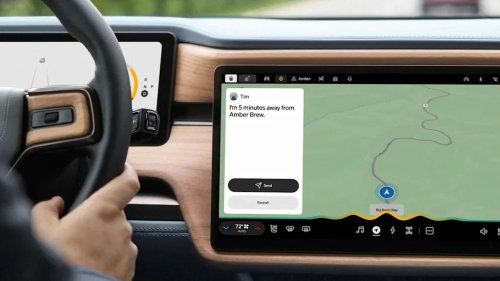
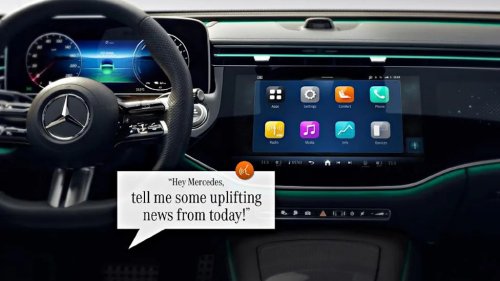
AI Car Assistants May Finally Get Usefulryan lugo - MotorTrendVoice recognition started riding shotgun in cars some three decades ago when Mercedes-Benz introduced its Linguatronic system in the 1996 S-Class with about three dozen commands to control the car's built-in cell phone. But after 30 years of talking to our cars, they still don't always respond in the way we want or need them to, and the experience continues to be largely frustrating and confusing. Now it's apparently AI to the rescue."With old-fashioned voice recognition in cars you pressed a button, you heard a beep, and it almost never worked," Andew Hart, CEO at the analyst firm SBD Automotive said. Automakers then started moving from rudimentary onboard voice recognition to cloud-based voice assistants including Amazon Alexa, Apple's Siri, Google Assistant, and others. "You ended up with the battle of the voice assistants that created a different type of complexity for customers," Hart said.The advent of AI is intended to make our cars better understand us and make our lives easier as a result. In our testing, however, we found that the first generation of AI voice assistants couldn't even give specific information about the cars in which they were embedded. Due to their poor performance, we passed on picking one for the last MotorTrend Best Tech awards program.AdvertisementAdvertisementAutomakers are learning it's not as simple as just adding popular AI chatbots to a vehicle's infotainment system. "There's a lot that needs to go right to enable the AI voice recognition in cars for, say, opening windows or changing seats settings," Hart said. "The deeper you go into the car, the more complicated that becomes because the car companies have to unlock a lot of data access." Legacy automakers have typically taken a slow and cautious approach to new tech, precisely because they're reluctant to fully open access to the data and systems of their vehicles. Then there are other hurdles including the wide array of proprietary vehicle software platforms to manage, complex safety regulations, and the uncertain return on investment, Hart added.RivianForced to Either Build It or Buy ItThe next evolution of AI voice assistants promises to make our dialogue with the cars we drive less frustrating and more successful by not only allowing for more conversational commands but also by controlling more vehicle functions, understanding context based on user routines, and serving as a link to the driver's life outside the car. "Where the car can really open up interesting utility is the core vehicle context, such as prioritizing charger speed in a navigation command in an EV even when that's not explicitly asked for," Brian Rhodes, director of the connected car and vehicle experience research team at Mobility Global said.But this will also force automakers to choose whether to build their own AI voice assistants or more likely leverage third-party solutions. "OEMs are not always capable of developing these types of experiences and pushing boundaries like tech companies," Hart said. At CES 2026, automotive voice assistant stalwart supplier Cerence bowed its xUI technology, a hybrid platform that blends embedded and cloud-based large language models (LLMs) and leverages Nvidia AI Enterprise running on Microsoft's Azure cloud platform. "Cerence is the strongest agnostic incumbent, delivering its next-gen xUI across multiple OEMs this year that allows retaining control of branding and data," Rhodes said.ManufacturerMany automakers are also increasingly turning to Google's Android Automotive Operating System (AAOS) that has recently replaced Google Assistant with the company's Gemini AI Assistant. "Android Automotive wins on scale and the ability to push Gemini out across multiple OEMs brings real impact," Rhodes said.Google Gemini RisingHart predicted that Google AAOS could eventually dominate AI voice assistance, but only if automakers allow the tech to become more embedded in cars. "If you look at what Google has announced over the last six months around AAOS, for Gemini AI Assistant to have a strong impact in the car, it needs to go deeper into the architecture," he said. "AAOS can't just stay in the infotainment layer; it needs to be able to connect to windows and seats and the instrument cluster and all these other different parts of the vehicles."AdvertisementAdvertisementBut some automakers are wary of allowing AAOS to deeply integrate into the car. "The relationships with Google for most OEMs are still a wait-and see-approach," Hart said. While OEMs are allowing it in certain models, they are also keeping their options open. "It's quite expensive, and they don't like giving away the user experience," Hart said.Mercedes BenzWhile Volkswagen and Audi have integrated ChatGPT via Cerence Chat Pro and Mercedes-Benz added ChatGPT capabilities directly to its MBUX Virtual Assistant, AAOS is already more integrated into vehicles, whereas ChatGPT parent company OpenAI is not. "OpenAI doesn't have strong sector expertise that allows ChatGPT to fit into automotive," Hart said. "It also doesn't feel like automotive is a priority for OpenAI, and enterprise is probably more attractive to them because it's easier to come up with an ROI [return on investment]."Automakers Doing Their Own AI ThingSeveral automakers have developed and are launching their own AI assistants, including BMW's Intelligent Personal Assistant, Kia's AI Assistant in Europe, and the upcoming Ford AI Assistant. Tesla integrates Grok by sister company xAI in its vehicles, allowing drivers to ask for navigation destinations, get real-time traffic updates and news, and it can answer questions and tell stories. But it can't yet control vehicle functions like adjusting climate control or choosing media, which still relies on Tesla's legacy voice command system.RivianThe recent release of Rivian Assistant via an over-the-air software update could set a new AI voice assistant standard. The maker of electric trucks and SUVs has the advantages of starting with a blank slate, its own operating system, and a smaller fleet of vehicles. "Rivian Assistant is arguably the most ambitious approach," Rhodes said, "with a system built directly into the underlying hardware, giving it wide native control over vehicle data. They also have the capability to make improvements over-the-air."AdvertisementAdvertisement"It's very different to the approach that most of the other OEMs have taken, which is putting a chatbot on top of an infotainment interface," Wassym Bensaid, Rivian's chief software officer said. Instead, Rivian Assistant is deeply integrated into the vehicle operating system to allow for controlling almost everything that can be performed using the vehicle's user interface, except for certain safety features. It will also accept multi commands. "You can say, 'Warm up the steering wheel and driver's seat, the front passenger seat, tell me my ETA, and send it to my wife,'" Bensaid said. It also integrates with Google Calendar. "If you're driving, you can say, 'What are my meetings for the day?' and 'I'm meeting Doug at 12:00 p.m. Move that meeting to 1:00 p.m. and then drive me there,' and it will do it."Rivian Assistant is also integrated with the vehicle's diagnostic system and can analyze error codes. "It would tell you if there's a defect, say, in the headlight," Bensaid said. "In the future, it will be able to not only tell you about a defect but if an issue requires service, it will ask if you want it to book a service visit. And if it has access to your calendar, it will negotiate with our backend for service and then enter it in your calendar—all while driving," he said.ManufacturerRivian can push the envelope since it has a more tech-savvy customer base, Hart said. "More established OEMs are questioning how much their customers want this in the car and whether it aligns with their brands," he said. "The bulk of their vehicles are sold to people who are maybe not on the cutting edge of technology, but new generations of customers are expecting these types of experiences, so they're torn. Whereas Rivian's biggest barrier is what they're allowed to do from a regulatory point of view."Automotive AI at China SpeedWith similar clean sheet and small fleet advantages of Rivian, many upstart Chinese automakers are also trailblazing AI voice assistant technology. "The Chinese market is much further ahead than the rest of the world with the speed at which they operate and a high bar for consumer appeal," Rhodes said.AdvertisementAdvertisementChinese automotive AI voice assistants are ahead not because they have more advanced AI models, but because, like Rivian, they're more vertically integrating them into cars, according to Hart. "As an example, if you look at a passenger-side window and say, 'Open the window,' the driver monitoring system camera combines with a voice assistant to notice where the driver is looking and opens the window," he said.Regardless of how it ultimately all shakes out, one thing's for sure—you're going to be doing a lot more talking to your car in the near future in one way or another.While Chinese vehicles are banned from the U.S., they're having an impact on consumer expectations globally, Hart added. "It's very interesting to see what they've been able to do at China speed," he said. "It gives a preview of what other car companies are going to be trying to do in the next two or three years."




















 +23 others