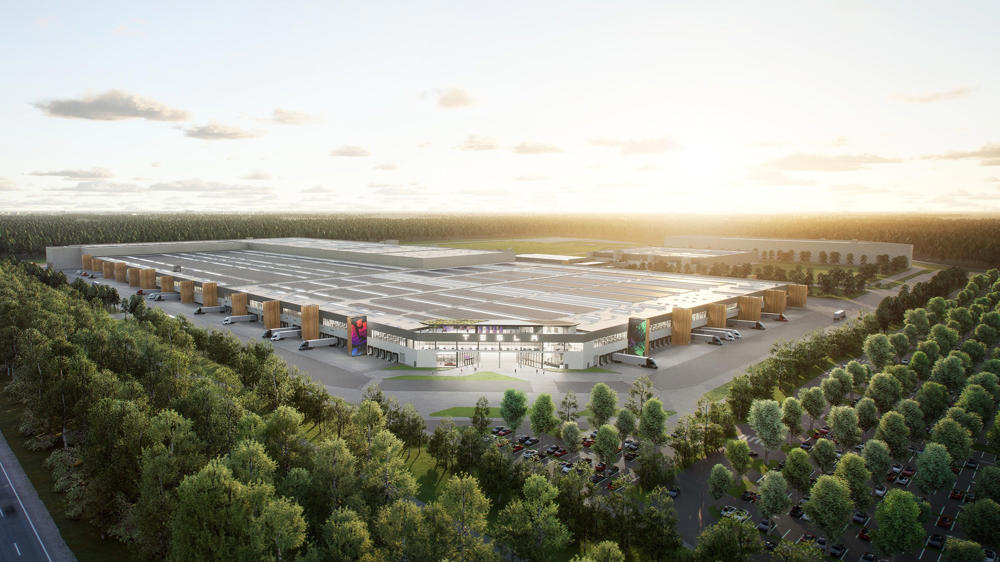
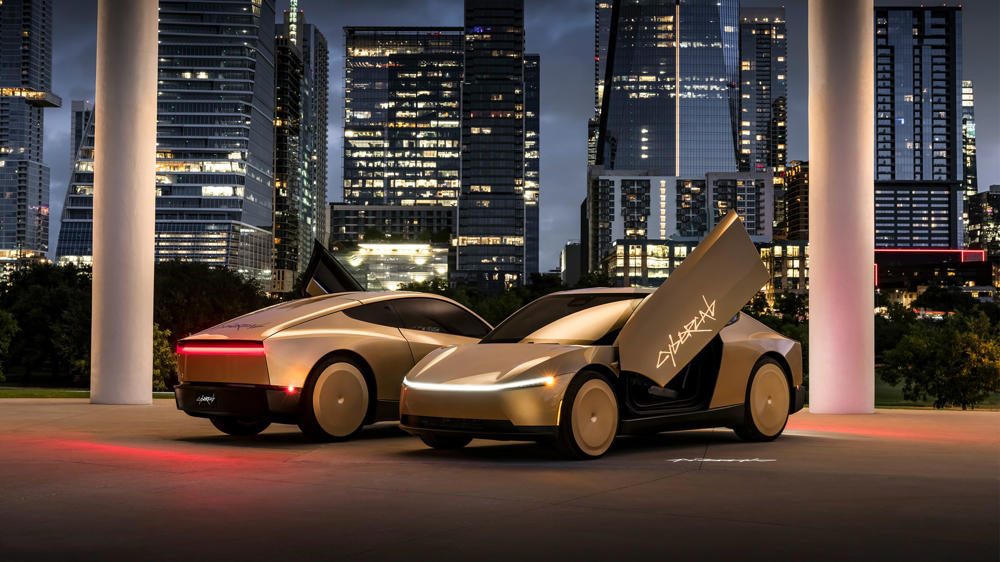
Tesla to invest €3bn (£2.6bn) expanding its German Gigafactory Elon Musk says it will help boost production of Cybercab Move bucks current trend of downsizing in German auto industry Tesla is planning a €3bn (£2.6bn) expansion of its German Gigafactory, in a move that bucks the current trend for investment cutbacks, workforce downsizing and a reduction of output at the heart of Europe’s car industry. There is a sizeable catch, however, as the new facility is intended to build the company’s Cybercab robotaxi, rather than conventional passenger cars. Regardless, Tesla’s move could prove a potential lifeline for Germany’s struggling automotive sector, as Volkswagen, BMW and Mercedes-Benz have all announced job cuts and are currently considering factory closures, as they battle with rising costs and growing competition from Chinese manufacturers. Tesla gigafactory in Berlin, Germany Tesla’s proposed expansion at its massive Brandenburg facility, on the outskirts of Berlin, could also make the site Europe’s largest car plant by production capacity, overtaking Volkswagen’s expansive Wolfsburg headquarters. The company says it wants to produce up to one million Cybercabs a year at the expanded facility, even though the fully autonomous vehicle has only just gone on sale in the US and hasn’t yet secured any reported major fleet deals. Cybercab expands to Europe Tesla plans to submit its building permit application before the end of 2026, with construction scheduled to begin in the first half of 2027. Production is expected to start in 2029. The company says the ambitious project will create more jobs for the Grunheide region, with several hundred new workers required for the initial construction and production planning phases. Tesla Cybercab, front and rear, front with door open, city backdrop at night That would add to the recent expansion of the existing factory, where Tesla ramped up Model Y production, hiring more than 2000 employees in the process. The company is also aiming to begin battery cell production at the site from the middle of 2027. But there has been no indication that the investment will lead to increased production of conventional Tesla passenger cars in Europe. Nor has the company explained whether the new facility will have any impact on existing Model Y or Model 3 production plans. After all, Tesla’s increased focus on Cybercab has already resulted in the winding down of Cybertruck production at Tesla’s Austin factory in Texas at the end of summer 2027. Musk said the move would free up capacity for the self-driving taxi in the US, while the planned European operation will give the Cybercab a significant manufacturing base outside its home market. Doom and gloom in Germany Tesla’s announcement is a striking contrast to the downtrodden mood among Germany’s biggest automotive players. Mercedes-Benz has announced a freeze on further investment at its German sites and is examining possible factory closures. Production chief Michael Schiebe told reporters that labour costs in Germany can be up to five times higher than at some Eastern European locations. The company is also under pressure to improve profitability. Its Mercedes-Benz Cars division saw adjusted profit halve to €560 million (£466m) in the third quarter of 2026, while its operating margin fell to 2.5 per cent from 4.8 per cent a year earlier. Tesla Cybercab driving in the city at night Volkswagen and BMW are also cutting jobs as the Germany’s automotive sector grapples with high production costs and increased competition from Chinese manufacturers. Volkswagen has plans to slash 120,000 jobs globally by the end of the decade, while BMW said 8000 roles in Germany will go through a voluntary redundancy program by the end of 2027. While Tesla’s big move can be viewed as a positive boost for Germany’s struggling automotive industry, some insiders are skeptical. European automotive research analyst Matthias Schmidt told Reuters that the key question is how much of Tesla’s investment will translate into sustainable, long-term employment, and how much will involve ‘automated, low-labour production’. Tesla gigafactory in Berlin, Germany But perhaps the biggest unanswered question is whether the public actually wants to sign up to Tesla’s dream of a full-autonomous future? According to a recent YouGov survey of eight countries, most respondents in the UK, Germany, France, Italy, Spain and the US were uncomfortable with the idea of travelling in a driverless car. Between 61 per cent and 65 per cent in those countries said they would feel either ‘fairly’ or ‘very uncomfortable’, suggesting that Cybcercab still has plenty of convincing to do before it truly takes off.

 Liked by Chloé Smith, Madeleine Tremblay









 Liked by Chloé Smith, Madeleine Tremblay