Chinese electric-vehicle (EV) maker Xpeng said its fourth-quarter loss narrowed from a year earlier, beating a consensus estimate, while its revenue for the period rose amid record deliveries and tech-driven cost cuts.
The Guangzhou-based carmaker on Tuesday said its loss for the quarter narrowed to 1.33 billion yuan (US$184 million) from 1.35 billion yuan a year earlier. Analysts polled by Bloomberg expected Xpeng to report a loss of 1.59 billion yuan. The company’s revenue rose 23.4 per cent to 16.1 billion yuan from a year earlier. Analysts expected revenue of 16.02 billion yuan.
Xpeng said its gross margin rose to 14.4 per cent in the fourth quarter from 6.2 per cent a year earlier, but fell from 15.3 per cent in the third quarter. The overall gross margin – a measure of efficiency in managing costs relative to revenue – remained “stable at the mid-teens level”, the firm said.
EV makers on the mainland are struggling with worries about production overcapacity amid a raging price war. These factors have forced them to figure out how to expand outside China.
The carmaker said it would aim to improve profitability and free cash flow with the launch of more new products and global expansion. It expects first-quarter revenue this year to be between 15 billion yuan and 15.7 billion yuan, which would translate to a year-on-year increase of 129.1 per cent to 139.8 per cent.
“With the launch of more competitive products and ongoing global expansion, I’m confident that Xpeng’s total sales in 2025 will more than double that of 2024,” said He Xiaopeng, chairman and CEO, during a company conference call on Tuesday. “This will significantly increase our market share in both the Chinese and global smart EV sectors.”
The firm said it plans to launch new models or updated versions – all equipped with its latest next generation AI technologies – every quarter starting this year.
Xpeng said it delivered 91,507 EVs in the fourth quarter, a 52 per cent increase from a year earlier. For the whole year, the company’s deliveries rose 34 per cent to 190,068 units. Nationwide, deliveries for all companies rose 38 per cent to 10.68 million EVs in 2024.
For the first quarter of 2025, Xpeng expects deliveries to range from 91,000 to 93,000.
Since November, Xpeng has reported monthly deliveries in excess of 30,000, buoyed by its new Mona M03 model, which is priced at about 150,000 yuan and sports an autonomous-driving system. In the car industry on the mainland, a monthly delivery of 10,000 units is seen as a key measure of success.
Xpeng’s fourth-quarter research and development expenses rose 53.4 per cent from a year earlier to 2.01 billion yuan. The increase was attributable to the development of new vehicle models as the firm expanded its portfolio to support growth, it said.
The company sells cars in more than 30 countries and regions and aims to expand to more than 60 this year. By 2033, Xpeng expects its overseas sales to account for half of the total.
He said that Xpeng sold more than 20,000 units abroad in 2024, ranking first in export volume among China’s emerging EV brands. The firm could double its overseas sales and sales centres this year, he added.
As part of its globalisation strategy, Xpeng has said it would use Hong Kong to test its artificial intelligence-powered self-driving technology, which is known as Xpeng Navigation Guided Pilot. The testing should start in the city soon, He said earlier this month.
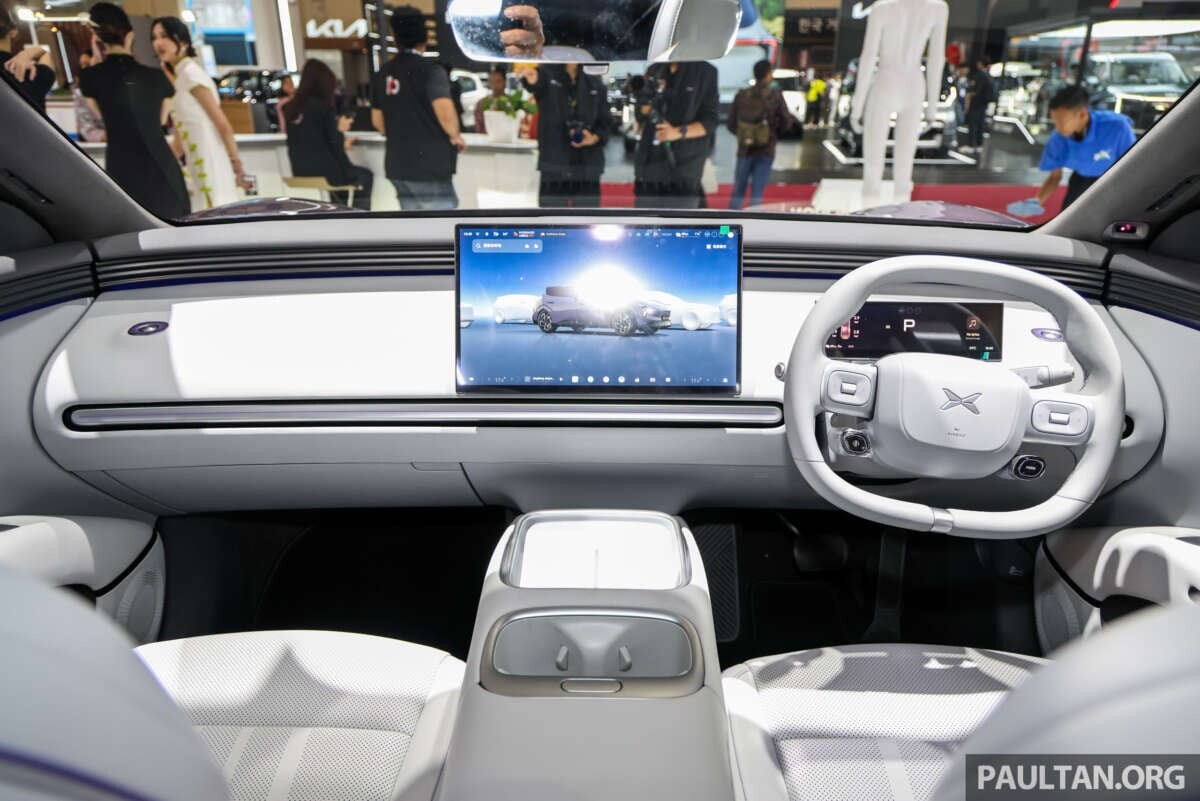
Xpeng primarily builds left-hand drive models for its customers on the mainland, but it started to assemble right-hand drive models last year to compete in markets like Hong Kong and Southeast Asia.
“When I think about the future of an AI-driven mobility ecosystem, I envision driverless vehicles cruising through cities, flying cars for inner-city travel and humanoid robots integrated into our factories and communities,” He said, referring to its three growth areas: equipping its cars with AI technologies, broadening its presence beyond China and developing humanoid robots.