Xiaomi, the Chinese smartphone maker that has made a successful charge into electric vehicles (EVs), entered the luxury segment of that market on Thursday with the official launch of the SU7 Ultra, its most premium model so far.
The company set the price of the four-door sedan, first unveiled in April, at 529,900 yuan (US$72,929), 35 per cent less than the 814,900 yuan quoted when presales began in October. The Ultra edition is equipped with Xiaomi’s Hyper-Autonomous Driving (HAD) technology, a smart driving system unveiled in November, the company said.
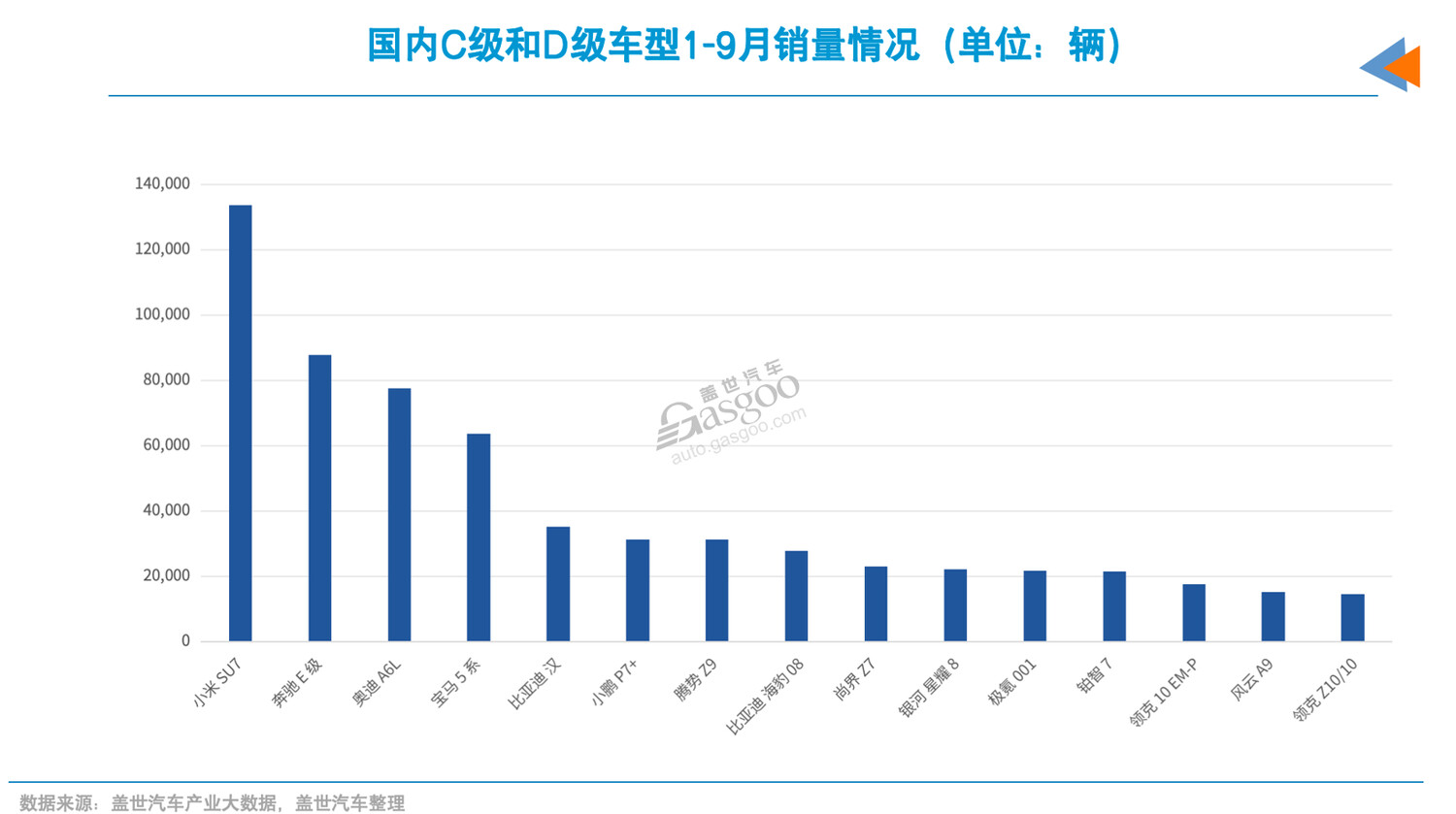
Lei Jun, founder and CEO, said at a launch event on Thursday that Xiaomi received orders for 248,000 EVs in the first nine months of 2024, and delivered 135,000 vehicles during the same time.
The company also launched a smartphone, the Xiaomi 15 Ultra, on Thursday. The phone and the SU7 were the most “high-end” products Xiaomi had produced and marked the beginning of a move to “ultra-high-end” markets, Lei said on Chinese social-media platform Sina Weibo on Monday.
“The SU7 Ultra will redefine the standards of luxury cars,” Lei said, adding that earlier this month it beat a Porsche Taycan Turbo GT to become the fastest mass-produced four-door car to lap the Shanghai International Circuit.
Xiaomi was 90 per cent certain that the SU7 Ultra would reach annual sales of 10,000 units, he said in another post on Wednesday.
The company jumped into China’s crowded EV market in March with its debut models, the SU7, SU7 Pro and SU7 Max, which was one of the most widely watched business shifts by a Chinese tech company.
Lei said Xiaomi planned to invest 30 billion yuan in research and development in 2025, making its total R&D investment from 2021 to 2025 105 billion yuan. Artificial intelligence (AI) and related business will account for a quarter of the total R&D investment, he said.
The company’s shares briefly hit a record high of HK$58.70 in Hong Kong on Thursday morning, before closing down 5.7 per cent at HK$53.10. Its market value crossed the HK$1 trillion threshold for the first time earlier this month when shares hit HK$40.10.
Xiaomi was the second-largest smartphone vendor in China in the first month of 2025, with a market share of 16.8 per cent, just behind Huawei’s 19.5 per cent, Lei said at the event.
Third-quarter revenue jumped 31 per cent year on year to 92.5 billion yuan, the company reported in November, beating market expectations. The EV business brought in 9.7 billion yuan in sales, with a gross margin of 17.1 per cent and an adjusted net loss of 1.5 billion yuan on the back of 39,790 deliveries.
Analysts maintain a positive outlook on Xiaomi, driven by its strong car sales, which have remained resilient despite rising US-China trade tensions.
The company was expected to exceed 1 trillion yuan in revenue for the first time in the fourth quarter thanks to 40 per cent year-on-year growth, analysts at China Renaissance Securities said in a report this month.
Xiaomi would deliver around 70,000 EVs in the fourth quarter, bringing in 16.3 billion yuan, analyst Liu Rui said in the report.
Another EV model, the YU7 SUV, is due for launch later this year.
“As Xiaomi enriches its automotive product line, it is expected to better cover more consumer groups and drive the growth of its automotive sales,” Sealand Securities analysts including Chen Mengzhu said in a note last week.
Founder Lei aimed to deliver more than 300,000 vehicles in 2025. Sealand projected the car business would hit 1.77 trillion yuan in revenue in 2026.