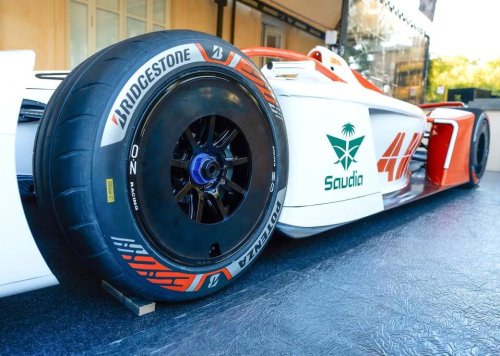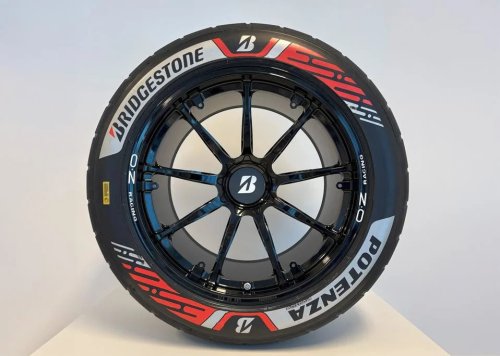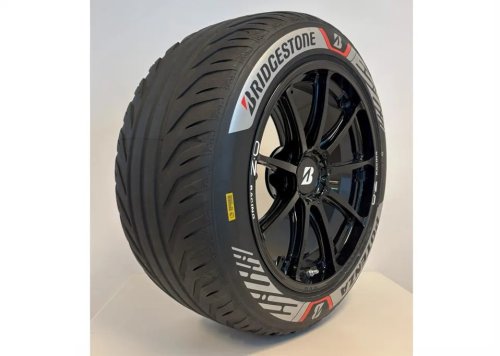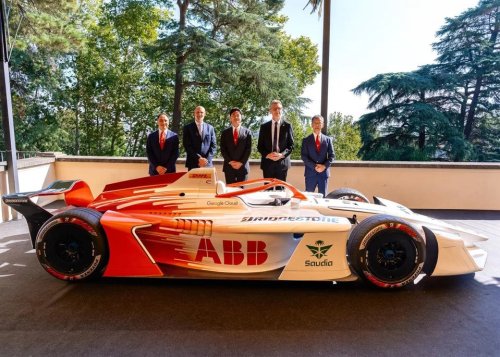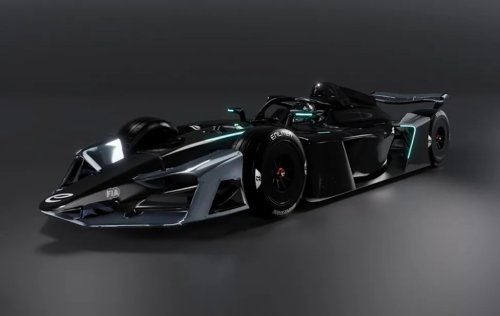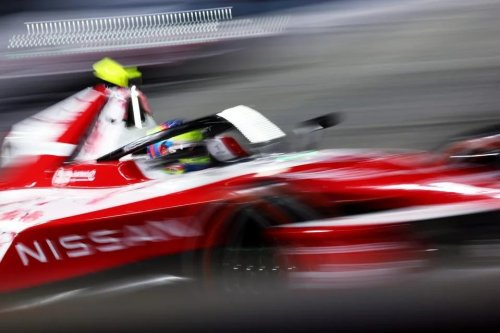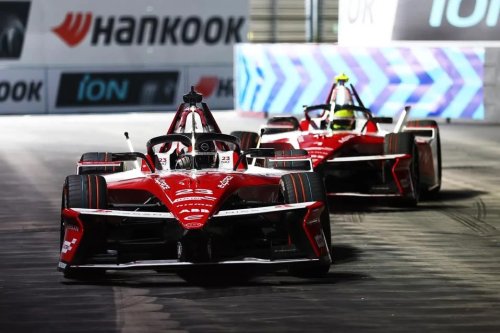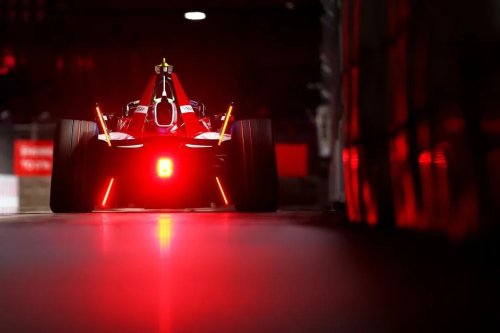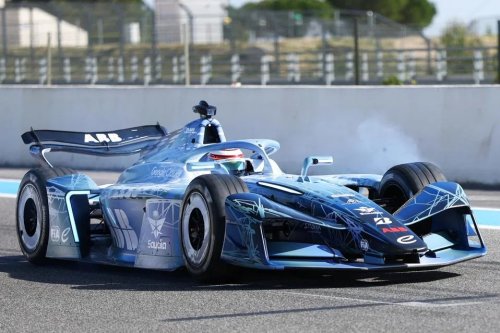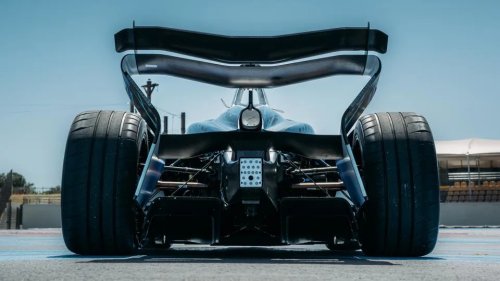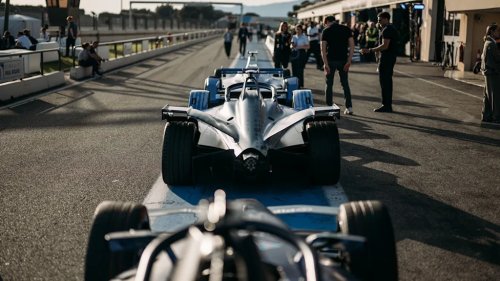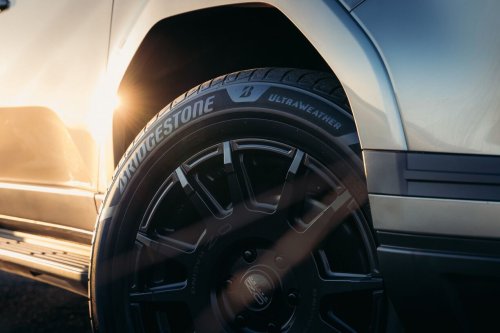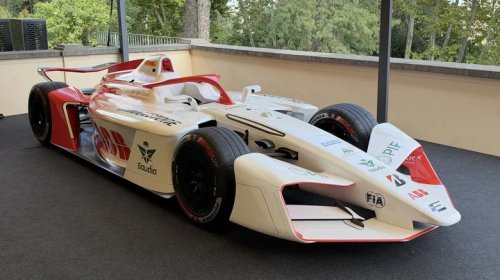
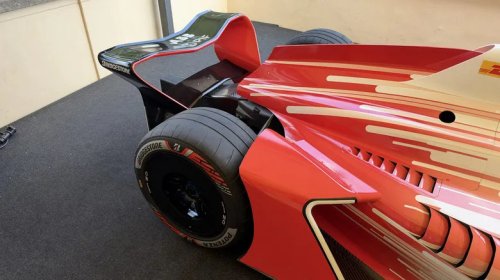
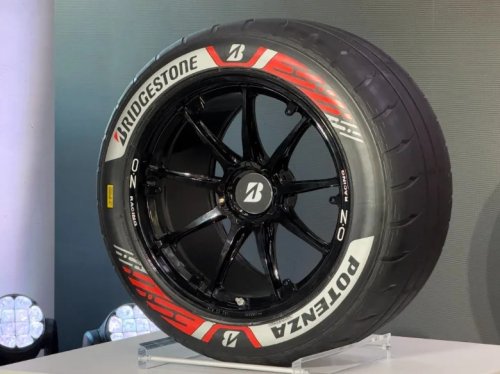
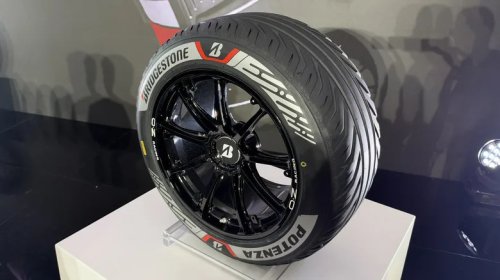
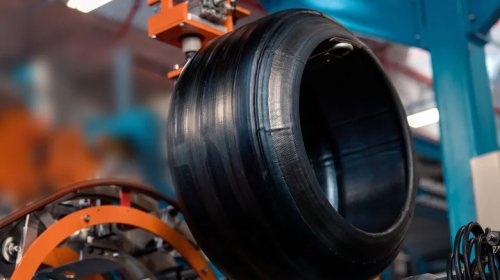
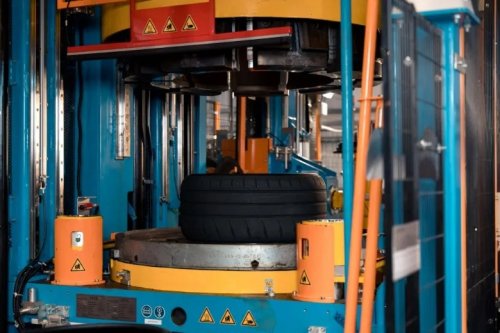

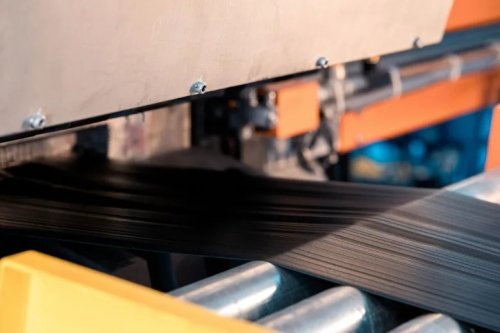


















Daniel Golson/JalopnikSitting in the gorgeous ballroom of a villa in Rome, I'm surrounded by auto industry executives, engineers and a cadre of journalists and influencers from around the world. Multiple groups of speakers have come up on stage to talk about what we're here to see, which is an absolutely huge day for the company hosting us. Large display screens blasted a promo video about the new product, and now the CEO has come up on stage to pull the covers off of a... tire?Yes, a tire. Specifically, Bridgestone's new tires for Formula E. The 95-year Japanese company is returning to FIA racing after a 16-year absence, becoming the sole tire supplier for the 2026/27 season of the Formula E World Championship. That's a big deal on its own, especially as Bridgestone has been involved since the beginning with the development of the new Gen4 race car that's debuting in the upcoming season, but the bit of news that made the biggest splash (pun intended) was the reveal of the Typhoon tire, the first Formula E tire designed for heavy rain.Hiroshi Imai, vice president of motorsport for Bridgestone, described its new partnership with Formula E as being a "proper showcase of technology, both performance and sustainability. We're confident that it's going to work." Bridgestone does happen to have 242 races and 175 victories under its belt when it comes to Formula 1, and the company seems to be taking its racing return just as seriously, as I learned when talking to people involved with the project at Bridgestone's Technical Center Europe where the race tires are produced.Full disclosure: Bridgestone flew me to Rome and put me up in a hotel so I could spend 36 hours learning all about its new Formula E tires.Partners from the startDaniel Golson/JalopnikThe new Gen4 Formula E car is a beast, with more advanced aerodynamics, a maximum of 815 horsepower and permanent all-wheel drive (the Gen3 car was only AWD sometimes, like during qualifying or when using Attack mode). It'll hit 62 mph in only 1.8 seconds, rivaling the quickest production cars in the world and half a second quicker than a Formula 1 car, and the Gen4 cars can hit a top speed of 208 mph. It's so fast that, when former racing driver and current Formula E development driver James Rossiter got into the Gen4 for the first time, "my consciousness was left behind when I left the pit lane, it felt like I was one step behind the car my first few laps," he told journalists during a round table. "I could have never imagined the step forward from Gen1 to Gen4 cars."Daniel Golson/JalopnikAll that performance meant Bridgestone had to start from scratch with the new tires, which are unsurprisingly called the Potenza Gen4. Development of the tire started before the Gen4 car even existed. The company says the almost-slick tire has "high grip to maximize performance" and "wide adaptability to diverse road and weather conditions worldwide," and R&D program manager Marco Adami talked about how much effort went into making sure the tires can warm up quickly and deliver a consistent amount of grip throughout the race, so drivers don't have to be constantly thinking about and managing that — unlike in F1, drivers can't do tire changes in Formula E. Rossiter said the tires can go well over 100 laps at maximum attack with zero degradation, lasting much longer than they need to in a given race.Bridgestone Motorsport launched new company branding and logos to go along with the Formula E partnership, and I must say it looks pretty awesome applied to the sidewall of the tires. All the team merch looks great, too, as did the matching livery on the race car on display. Me and a couple of the other journalists were telling people from Bridgestone that they need to offer these graphics on road tires; we'll see if they take our advice.With all the force of a great typhoonDaniel Golson/JalopnikThe real big deal is the Potenza Gen4 for Typhoon Tyre, as it's officially called. Formula E didn't see wet weather at a race until Paris in 2019, more than 50 races into the series' history. Races were sometimes delayed or canceled because of weather, but apparently now, because of both changes in the calendar and location of races as well as climate change, wet weather is much more common in the places that Formula E will be going.Imai pointed out In addition to testing the Typhoon tires in real-world bad conditions, Bridgestone took a Gen4 car to a track in Spain that has a built-in sprinkler system. They tested it from fully wet until the tires had completely dried to find out how it held up across the whole temperature range, and engineers compared the Typhoon's performance to the standard "all-weather" tires to see where the crossover point is, when the Typhoon would be necessary given the conditions. Wet conditions can vary extremely quickly, and it's hard to make a wet tire perform well throughout all of it.Rossiter gushed about driving a Gen4 car equipped with the Typhoon tires during wet weather testing, saying "I could drive almost flat out and brake 5 to 8 meters earlier at 200 mph and still make the apex," comparing it to the all-weather tires in the wet. "[It's] exciting and rewarding when you can drive in those conditions, outside of reality and exceeding expectations." The Typhoon tires are so good and the Gen4's performance so spectacular, in fact, that Rossiter thinks the Formula E car would handily beat a wet tire–equipped Formula 1 car in the rain.The circle of lifeBridgestoneAfter having a kind of strange but delicious lunch (the appetizer was a ball of tomato paste, at least I think that's what it was?), we were ushered onto a trio of coach buses and taken to Bridgestone's European Technical Center about an hour outside Rome. Bridgestone told us that it spends more money annually on R&D than any other tire company, to the tune of €800 million globally, with 7 R&D centers and 10 proving grounds around the world. This Italian facility already existed, with offices and a wind tunnel and engineering laboratories and multiple test tracks, but the Formula E factory is so new that even the asphalt seemed like Bridgestone had it paved just days before our arrival.BridgestoneTaking a walk through the factory, we got to see Formula E tires actually being made, with a small handful of workers using extraordinarily complex-looking, brightly colored machinery, and simpler tools like their own hands — at one point, workers handle strips of rubber like dough coming out of a fancy pasta maker. As you'd expect from a zero-emissions racing series, Bridgestone is doing a lot to make sure the Formula E rubber is as sustainable as it can be. 65% of the tires are made from recycled or renewable materials, like carbon black taken from end-of-life used tires. Typically the silica used in tires is made from sand, but Bridgestone is using rice husks, which helps make for a tougher polymer at the molecular level. At the end of these tires' life, they'll be recycled and turned back into new race car tires. That's the ciiiiircle of liiiiife!100% of the energy used in the production of the tires is renewable, and instead of transporting the tires by plane, like is usually done for racing series, Bridgestone is shipping the tires via ocean freight. That means it can't make any changes at the last minute, as the ships have to leave so far in advance, but it helps that it's also making Formula E tires at its factory in Japan, which can more easily ship to races in Asia, the Middle East and the Americas. Bridgestone will only produce exactly as many tires as are needed for the next race, to further cut down on waste.The first race is in two monthsBridgestoneAfter walking around the factory floor, we got to see Bridgestone's high-end "driver-in-the-loop" simulator at work. The front cockpit of a real car is mounted on top of complex platform, with the person in the "car" looking out the windshield at a massive wraparound screen showing a virtual test track. As the engineer "drives" around the track, the rig tilts on its axis as it rapidly moves around the room with a five-meter range of motion. We watched through big windows from in the control room, where a few engineers sat at computer monitors with video feeds from in the sim, as well as all sorts of fascinating telemetry readouts. It was one of the coolest behind-the-scenes things I've ever seen.BridgestoneThe Gen4 race car and its Bridgestone tires will make their debut at the first race of the season, the Jedda ePrix in Saudi Arabia, which is holding a double-header on December 18 and 19. Next up after that are races in Mexico City on January 16, Austin on February 6, and Miami on February 20. Those will be followed by 16 more races, with the last two being held in Tokyo on July 24 and 25, 2027.I've never been to a Formula E race, but I've really been itching to, especially now that the Gen4 car is out, so you might see me at one of those three North American tracks. Given how awesome Rossiter and the rest of the Bridgestone development team made it sound, maybe with the advent of the new Typhoon tire, Formula E will become a racing series where both drivers and spectators alike actually hope for bad weather.Want more like this? Join the Jalopnik newsletter to get the latest auto news sent straight to your inbox, and follow us or add us as a preferred search source on Google.