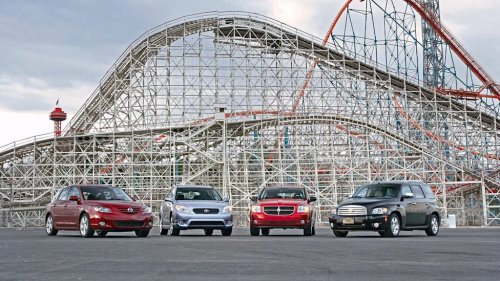
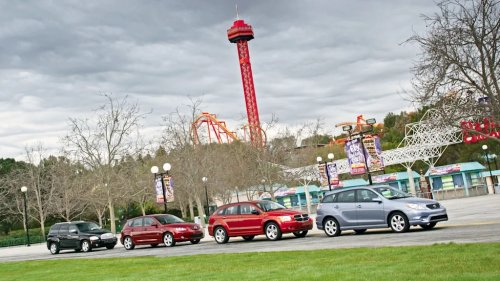
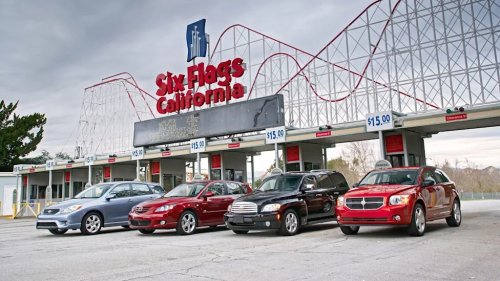
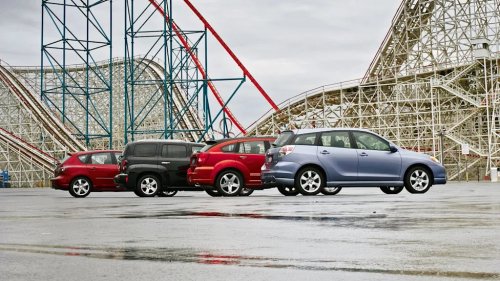
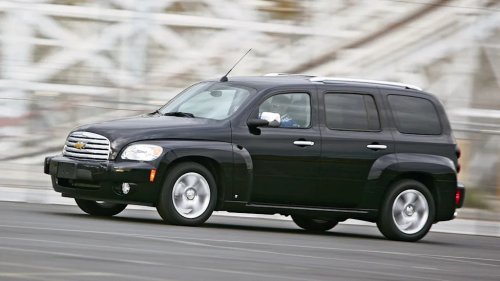
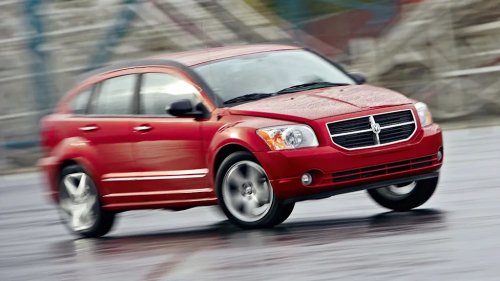
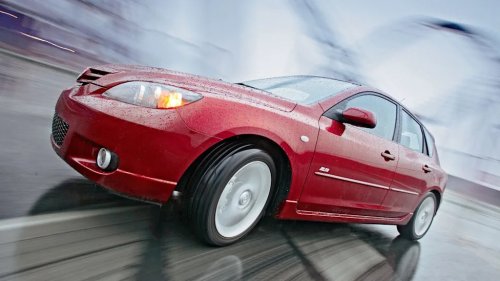
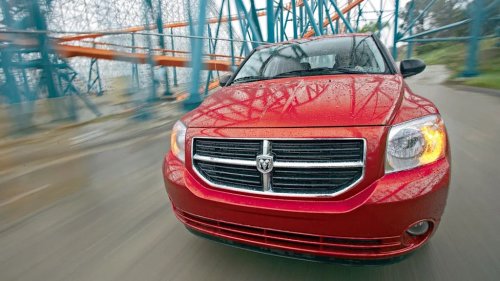
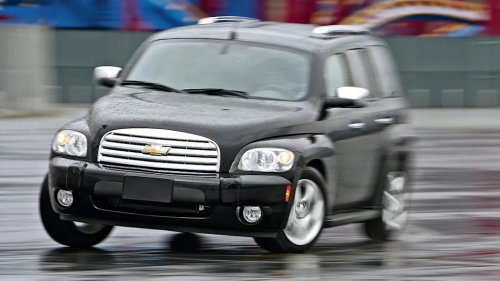
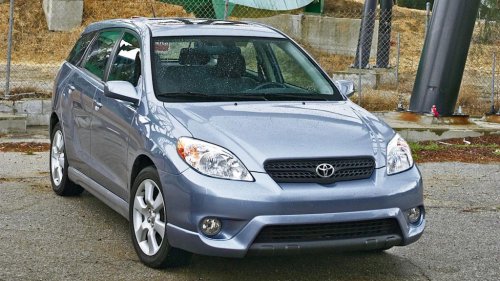
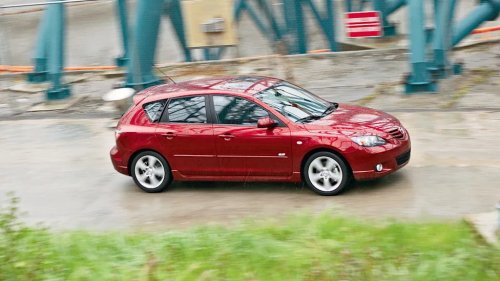
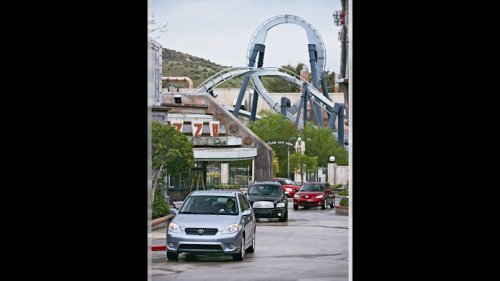
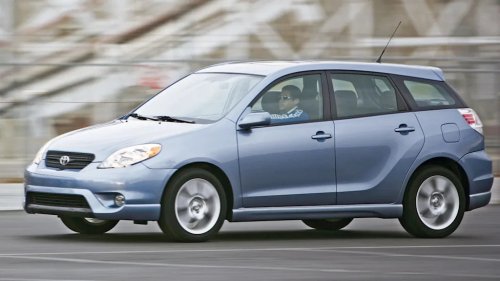
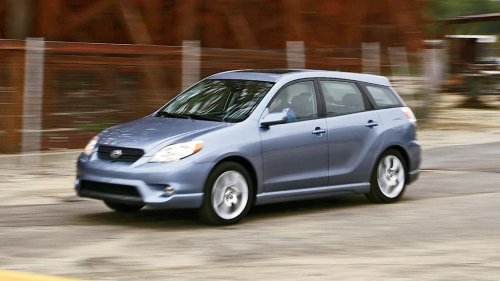
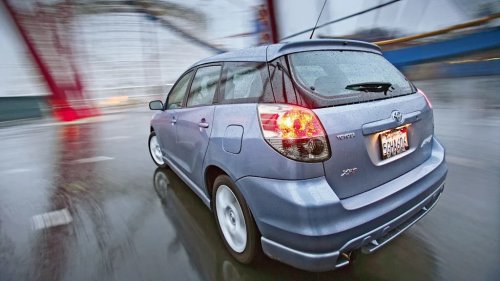

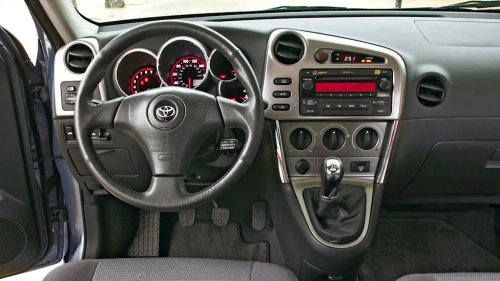
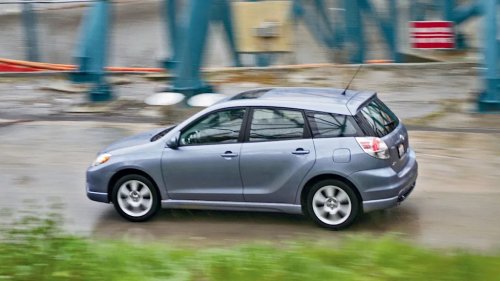
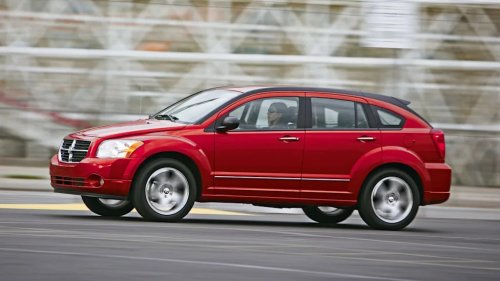
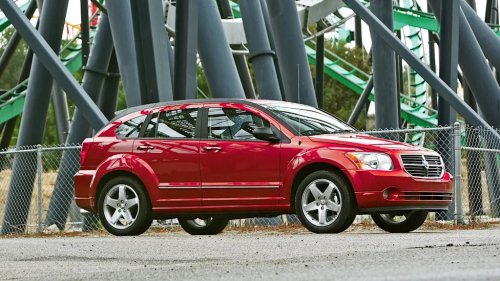
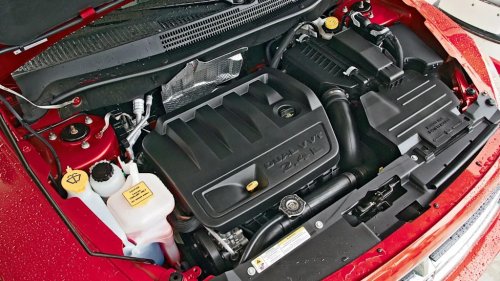
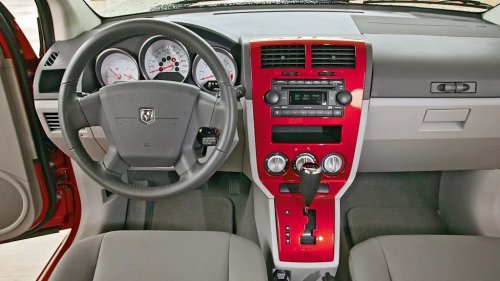
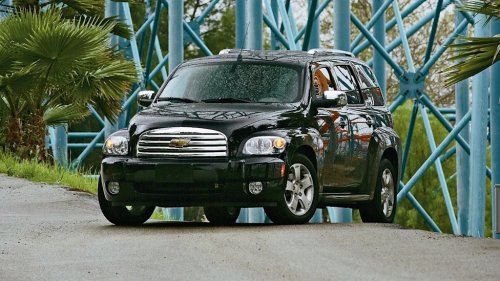
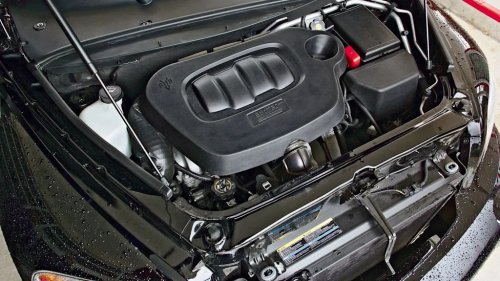
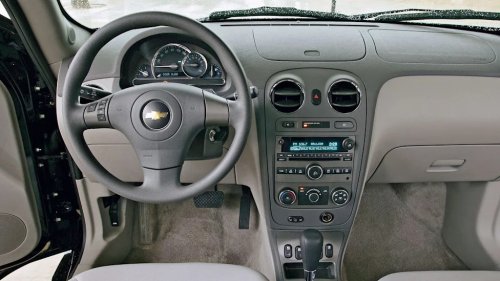
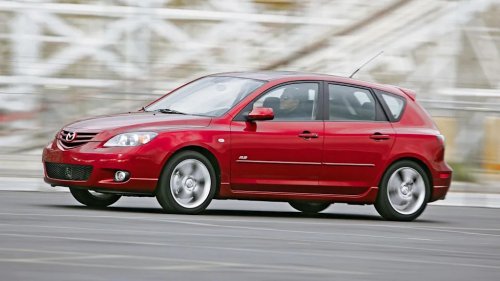
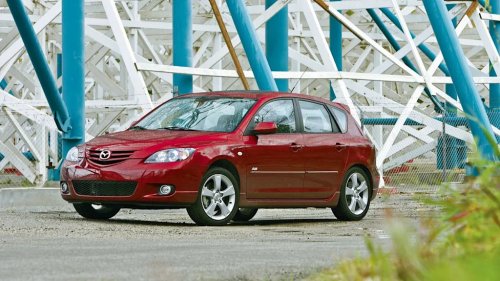
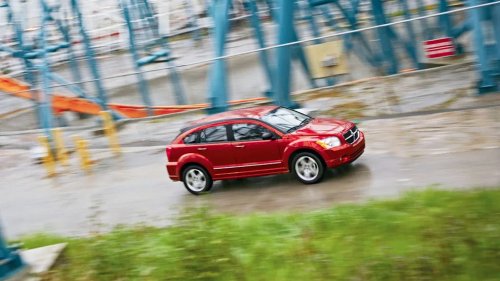



















Four 2000s Hatchbacks Tested Back-to-BackBrian Vance - MotorTrend[This story originally appeared in the May 2006 issue of MotorTrend with the headline "Rolling Coasters."] Just look at what's happened to the five-door hatchback. The once mundane two-box compact hauler has been tweaked into all manner of exterior form, the powertrains refined for greater pep and efficiency, sophisticated technologies introduced into even the least-expensive models, and lists of options enriched to near luxury-car levels. Style and affordability, comfort and utility, all in one package. What could be better?Better yet is that this continuous mutation of shape and content hasn't messed up the hatchback's basic chemistry: a compact chassis for nimble around-town duty; a tall, extended body with four passenger doors and a big rear hatch to ease the movement of people and things; and a small, economical engine with enough performance for the cut and thrust of city traffic. Our assembled five-doors were built to that winning formula, so it's not surprising they share many dimensions and physical traits beneath their stylish skins.Brian Vance - MotorTrendEach is a nice compact container ship that can ferry passengers comfortably when it's not hauling stuff and junk, but we'll return to the question of utility later. First, let's sift through their qualities as driving machines, not as mobile storage sheds.The Testing Lineup: Which Cars Did We Test?AdvertisementAdvertisement2006 Mazda3 S Touring2005 Toyota Matrix XRS2006 Chevrolet HHR 2LT2007 Dodge Caliber R/TAt the WheelBefore this ride leaves the staging area, however, we'll save you some letter writing. Due to the limitations of manufacturer press fleets, these four testers aren't perfectly matched. We have manual transmissions, an automatic, and a CVT; front and all-wheel drive; varying trim levels, base, and as-tested pricing. Before you draw your final conclusions, do your homework, spec out the cars the way you want them, and then compare.The most fun of the bunch, by a good margin, is the Mazda3 s Touring. Even though its 160-horsepower, 2.3-liter four was the least-powerful engine in this test, it ran the sprints about as quickly as the lighter and more powerful Matrix, and it plain spanked all comers in the slalom, figure eight, and skidpad tests, testament to its balanced chassis and superb handling. Its dynamic balance is underscored by equally excellent ergonomics.Brian Vance - MotorTrendThe thick-grip steering wheel adjusts for rake and reach (the only one among the group to do both), the five-speed manual shifter—as slick as an RX-8's—is precise and quick to find the next gear, the pedals are properly placed for heel-and-toeing, and the seating is supportive and comfortable. The steering precision and feel rivals many expensive sports cars, and the four-wheel disc brakes are strong and superbly tuned for aggressive motoring.AdvertisementAdvertisementThe Mazda3 may be the epitome of a well-tuned sport hatchback, but it's also a bit like that hyperactive little brother who won't stop plucking at your sleeve while chattering nonstop. Meaning there's lots of extraneous data flowing freely into the cockpit along with all the good information from the road and the engine and the wind that an informed driver uses to plot the best course. Some will find the insistent feedback annoying; others will revel in this intimate involvement with the machine.Brian Vance - MotorTrendThose who enjoy a more sedate pace and seek versatility over performance won't put the Mazda first, nor the Matrix—at least the performance-tuned 164-horsepower XRS model in our test. (A much milder 126-horsepower 1.8 is available in other Matrix models.) In all its forms, this Corolla-based wagon has Toyota goodness throughout, but the XRS's peaky 8200-rpm 1.8-liter engine transforms the Matrix into a semi-bad boy. The XRS is quick, but the engine's relatively weak torque and a horsepower curve that peaks way up at 7600 rpm (1100 rpm higher than the Mazda's) make the driver work harder for that quickness than in the Mazda. This isn't a wholly unpleasant task, as the six-speed manual transmission's shifter and the foot pedals are well placed for sporty driving, but it would've been better with a steering wheel that adjusts for reach and rake.The Matrix doesn't handle as well as the Mazda3; that's not to say the Matrix's steering and suspension are anything less than entirely competent, but in contrast to the Mazda's sport-tuned control systems, and in typical Toyota practice, the calibrations are conservatively tuned and weighted on the side of comfort. This means the Matrix is the more relaxed freeway cruiser, but at the expense of the precise inputs and detailed feedback that make the Mazda so much more rewarding to drive quickly.Chevrolet's retro-styled HHR provided one of the surprises of this roundup. Despite its slow-footed gait, the HHR is a pleasure to wheel around L.A.'s congested city streets. It's simply the easiest to get in, start, and drive, even if it's not the most thrilling. The suspension is comfortably compliant, and the steering is quick to direct the front wheels. The 172-horsepower, 2.4-liter Ecotec engine is sufficient to the task, though it growls like a big dog on the other end of a rope when pushed hard. Despite the commotion, the revs are always accompanied by a resolute flow of power through the optional four-speed automatic. Even if the HHR seldom leads the pack, it nevertheless has enough power to keep it in the thick of whatever mad dash is at hand.Brian Vance - MotorTrendThe tallest of the group, the HHR's at-the-edge handling is hampered by a good amount of body roll and weight transfer, and its 16-inch running gear, smaller than that worn by the other three, made it slightly less stable through the corners of our test track. Still, around town, when driven with patience and civility, it responds with a gentle mechanical sweetness reminiscent of an earlier, simpler age. Okay, there's a stink of nostalgia in the air here, but we'll cop to a feel-good reaction to the HHR's straight-ahead cockpit controls and down-home styling, homage to the 1949 Chevy Suburban. Its chrome-accented black livery drew plenty of interested stares around westside L.A., where even the latest exotics are often greeted with a yawn.AdvertisementAdvertisementNewest to the five-door family is the 2007 Dodge Caliber, successor to the Neon line of compact cars. Because it's so new, it was thrown into the mix at the last minute and with an unfair disadvantage—its weight. The only Caliber available to us was the top R/T model, and with its all-wheel-drive system and larger 18-inch wheels and tires, the compact crossover is as weighty (3368 pounds) as it looks. That's about 300 pounds more than a front-drive Caliber SXT, almost 200 pounds more than the HHR and 500 pounds heavier than the lightest of the group, the 2872-pound Matrix.That's a lot of inertia to overcome with a 2.4-liter, 172-horse four-cylinder engine, so it's little wonder the Caliber posted the slowest times to 60 mph and the slowest quarter-mile dash. That said, this is the mainstream performance version. The big wheels and tires did help it score better than the HHR in the slalom and figure-eight tests, but they also hurt the Caliber's ride quality around town. Of these four hatches, the Caliber was the noisiest, primarily from lots of road rumble and suspension-related clatter when the tarmac turned rough. To be fair, this tester was a "preproduction pilot" car, so it's possible that minor tuning remains and might even the game a bit.Brian Vance - MotorTrendThe 2.4-liter engine is the largest of three twin-cam fours developed for the Caliber in conjunction with Hyundai and Mitsubishi, and the only one offered in the R/T, but it still felt underpowered pulling around the heavier vehicle. A 148-horsepower 1.8 is standard on SE and SXT models; both also offer an optional 158-horsepower, 2.0-liter. The 300-horsepower SRT version will undoubtedly solve the power-to-weight issue, but that's a different game.The SE and SXT models get a standard five-speed manual or a new, optional, continuously variable transmission, which is standard on the R/T along with an Autostick mode that allows manual access to six programmed gear ratios. Several staffers noted the CVT was the best part of the Caliber, a real joy to use, and the shifting was indeed swift and crisp and felt as though it was getting every bit of power from the engine to the wheels.AdvertisementAdvertisementA quick summing up of the four's dynamic behaviors would list one that dominated (Mazda), one that met expectations (Toyota), another that surprised (HHR), and one that provisionally disappointed (Caliber). We'll look forward to testing a production-spec Caliber in the near future.By Another MeasureJust by looking, a good guess is the HHR has the most spacious interior, and it does: 63.1 cubic feet of luggage room with the rear seat removed. Not so obviously, the Matrix is next largest at 53.2 cubic feet with the rear seat folded flat, followed by the Caliber's 48 cubic feet with the rear seat folded, and then the Mazda3, with only 31.2 cubic feet when the rear seat is removed. Does the HHR's size alone make it the best workhorse of the bunch? Not so fast. That determination comes down to the details.Each vehicle's rear door easily swings upward on hydraulic struts to reveal an opening that ranges from 35 inches wide in the Caliber to 39 inches in the HHR, Matrix, and Mazda3; the opening heights are all around 30 inches. The rear seats in each vehicle split 60/40 and can be folded flat, and the Caliber's can be reclined. However, only in the Caliber was it impossible to flip down the seats from the rear. Instead of the easily reached buttons or levers in the top of the seatbacks of the other vehicles, the Dodge's mechanism consists of pull straps at the base of the seatback's pivot point and can be reached only through the side doors.Brian Vance - MotorTrendIn the Dodge, Toyota, and Chevy, the front passenger seat also can be folded flat to liberate about eight feet of uninterrupted luggage space. Each vehicle has tie hooks of varying degrees of usefulness positioned around the cargo hold, but we especially liked the Matrix setup, which also offers a rail system in the luggage floor with removable hooks. The HHR may have the advantage, though, with its many tie-down points and adjustable load floor, which can be raised about a foot to form a shelf and reveal more storage in a bin over the spare wheelwell. It also has two more storage bins just forward of the load floor.AdvertisementAdvertisementBy our reckoning, the Caliber had the fewest features to aid cargo hauling (only two tie-downs in back), and it also doesn't sport enough of the clever package bins and trays that were to be found throughout the other vehicles. It doesn't even offer a prop-rod or hook to hold open the rear luggage floor/spare wheel cover.Instead, the Caliber seemed geared strictly for human cargo—young, hip humans. The coolest touch, literally, was the Chill Zone beverage bin, located just above the conventional glovebox, that cools four 20-ounce bottles. Tailgaters will like the nine-speaker Bose sound system with MusicGate, a pair of speakers that swivels down from the opened liftgate to blast whomever might be nearby. Cool. Other neat touches are outlets between the front seats offering both 12V and 115V power, an auxiliary radio input jack, and a removable and rechargeable flashlight integrated into the rear of the headliner. The sliding center console/armrest that contains a neat flip-forward plastic tray for a cell-phone or MP3 player also seems a good idea, but when deployed it just gets in the way, directly between the driver's hand and the shift lever mounted low in the middle front console.Without wanting to appear like we're waffling, it really comes down to the stuff that supports your lifestyle. We once knew a chef who carried an entire kitchen of tools and a full-size espresso maker around in his VW Rabbit, so anything seems possible with these four small-on-the-outside but big-on-the-inside space machines. If passengers matter, the Toyota and Mazda provide the more comfortable cabins, but if lumber, ladders, or surfboards are more common companions, the HHR and Caliber are the better choices. If we had to pick the one that delivers the best combination of comfort and utility, it would be the Toyota. Our own taste for the sporty side of life as driving enthusiasts makes us choose as our winner the Mazda3. It carries a bit less stuff, but you'll really enjoy the trip to wherever you are taking it.Brian Vance - MotorTrend4th Place: 2007 Dodge Caliber R/TA well-packaged compact car that looks more rugged than it is. Muscular lines promise an equally stout platform, but it wimps out over rough roads.Brian Vance - MotorTrend3rd Place: 2006 Chevrolet HHR 2LTIt has a large, inviting interior, one of the friendliest faces on the road, and is easy to drive, but only if the pace is sedate.Brian Vance - MotorTrend2nd Place: 2005 Toyota Matrix XRSThe styling is a bit long in the tooth, but it's got the best combination of performance and utility, with lots of neat touches to make life easier.Brian Vance - MotorTrendAdvertisementAdvertisement1st Place: 2006 Mazda3 S TouringWe're willing to give up a few liters of interior space in return for this car's dynamic excellence. By far the sportiest and most fun to drive.Photo credit: Brian Vance - MotorTrendPhoto credit: Brian Vance - MotorTrendPhoto credit: Brian Vance - MotorTrendPhoto credit: Brian Vance - MotorTrendAdvertisementAdvertisementPhoto credit: Brian Vance - MotorTrendPhoto credit: Brian Vance - MotorTrendPhoto credit: Brian Vance - MotorTrendPhoto credit: Brian Vance - MotorTrendAdvertisementAdvertisementPhoto credit: Brian Vance - MotorTrendPhoto credit: Brian Vance - MotorTrendPhoto credit: Brian Vance - MotorTrendPhoto credit: Brian Vance - MotorTrendAdvertisementAdvertisementPhoto credit: Brian Vance - MotorTrendPhoto credit: Brian Vance - MotorTrendPhoto credit: Brian Vance - MotorTrendPhoto credit: Brian Vance - MotorTrendPhoto credit: Brian Vance - MotorTrendPhoto credit: Brian Vance - MotorTrendPhoto credit: Brian Vance - MotorTrendDodge Caliber SXT vs. Renault Scénic 2.0 Turbo: How Will It Play in Europe?The Caliber launches this spring as Europe's first mainstream Dodge, to be followed by the Nitro. It should thrive, as tall two-box compacts have been hot in Europe since Renault launched its Mégane Scénic in 1996. For Euroduty, the Caliber gets stiffer suspenders with 17- and 18-inch wheels only, a diesel engine (the 2.0-liter VW TDI, making 229 pound-feet), and a 2.4-liter five-speed manual R/T variant. All-wheel drive won't be offered, but right drive will be.Brian Vance - MotorTrendCompared with the segment pioneer from Renault, the Caliber's package seems less astute. It's over six inches longer, but 2.5 inches narrower and 3.4 inches lower, so it's harder to park and carries less. A high dash, close steering wheel, and bunker-slit visibility are uniquely American attributes, but the low, flat rear seats are no match for Renault's thrones. Calibers should, however, sell for at least $3000 less than similarly equipped Scénics.Our 2.0-liter turbocharged Scénic with five-speed stick packed 161 horsepower and 199 pound-feet, but didn't outperform the 2.0-liter Caliber by much, given their similar weight-to-power ratios and the flexibility of the Caliber's continuously variable tranny. Renault claims an 8.6-second 0-to-62-mph time. The Dodge also corners flatter and feels as though it grips the road harder. This and Caliber's can-do Yankee charm may help it compete against sportier rivals like the VW Golf wagon and Alfa Romeo 147. —Frank Markus