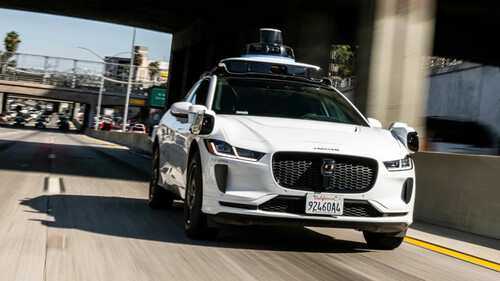
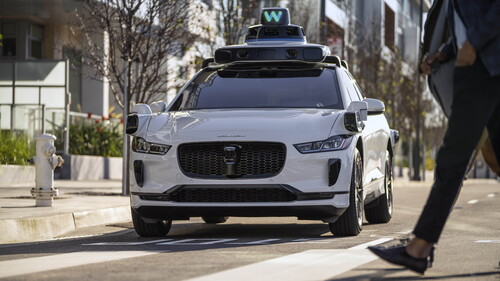
Waymo Robotaxis Crashed 68% Less Than Human Drivers in Three Major Cities, Study Finds— But One City Bucked the TrendBenzinga and Yahoo Finance LLC may earn commission or revenue on some items through the links below.Alphabet Inc.-backed Waymo robotaxis recorded 68% fewer police-reportable crashes per mile than human drivers across four U.S. markets, an independent study found, though Austin emerged as the only city where the autonomous fleet posted a higher rate.Waymo Outperforms Humans In Three CitiesThe Insurance Institute for Highway Safety analyzed about 50 million fully driverless Waymo miles logged from 2021 through 2024 in Phoenix, San Francisco, Los Angeles and Austin, comparing them with roughly 222 billion human-driven miles in the same places and years.AdvertisementAdvertisementDon't Miss:A single bad hire can set a startup back years. Here are the 5 hires founders most often misjudge — and whyStill Learning the Market? These 50 Must-Know Terms Can Help You Catch Up FastWaymo's crash rate came in 76% below human drivers in Phoenix, 71% lower in Los Angeles and 35% lower in San Francisco. Austin's rate was 4% higher, but lead researcher Eric Teoh said the smaller sample prevented a firm conclusion."What we're seeing is a nice pattern — fewer crashes overall, less egregious types of crashes, and less severe crashes," Teoh said in a press release.The study found 81% fewer injury crashes and 85% fewer single-vehicle crashes per mile. Waymo vehicles were also 91% less likely to rear-end another vehicle and 40% less likely to be rear-ended.AdvertisementAdvertisementWaymo welcomed the analysis. "More high-quality data is fundamental for building public trust in this technology and ultimately making roads safer for everyone," the company said in a statement shared with ABC News.Trending: Avoid the #1 Investing Mistake: How Your 'Safe' Holdings Could Be Costing You Big TimeCritics Say Crash Data Misses RisksStill, the results do not settle every safety question. San Jose State University professor Ahmed Banafa said crash data can miss unsafe behavior that does not end in a collision, pointing to recent San Francisco robotaxi gridlock."They have to be open about everything, the good and the bad and the ugly," Banafa said.AdvertisementAdvertisementIIHS raised similar reporting concerns. Researchers manually reviewed federal crash narratives to determine which incidents a typical driver would report to police, a process the institute said would become impractical as fleets grow. NHTSA requires automated-driving operators to report certain crashes, but IIHS said national mileage and incident data need greater consistency.See Also: Skip the Regrets: The Essential Retirement Tips Experts Wish Everyone Knew Earlier.Federal Investigations Keep Scrutiny On WaymoWaymo also remains under federal scrutiny. NHTSA and the National Transportation Safety Board are investigating a Waymo vehicle that struck a child near a California school and reports of robotaxis passing stopped school buses in Austin.Tesla Inc., another major player in the autonomous driving space, has also been advancing its robotaxi ambitions but has recently taken a more cautious approach to deployment. The company has scaled back aspects of its rollout timeline to prioritize safety improvements and system reliability, reflecting broader industry pressure to demonstrate robust safeguards before expanding fully driverless services.AdvertisementAdvertisementBenzinga edge rankings indicate that GOOG stock has a Momentum score in the 87th percentile and a Growth score in the 89th percentile.Image via ShutterstockRead Next: Think you're saving enough for your kids? You might be dangerously off — see whyBuilding Wealth Across More Than Just the MarketBuilding a resilient portfolio means thinking beyond a single asset or market trend. Economic cycles shift, sectors rise and fall, and no one investment performs well in every environment. That's why many investors look to diversify with platforms that provide access to real estate, fixed-income opportunities, precious metals, and even self-directed retirement accounts. By spreading exposure across multiple asset classes, it becomes easier to manage risk, capture steady returns, and create long-term wealth that isn't tied to the fortunes of just one company or industry.ArrivedBacked by Jeff Bezos, Arrived Homes makes real estate investing accessible with a low barrier to entry. Investors can buy fractional shares of single-family rentals and vacation homes starting with as little as $100. This allows everyday investors to diversify into real estate, collect rental income, and build long-term wealth without needing to manage properties directly.RealberryInstitutional-quality real estate has traditionally been difficult for individual investors to access. Realberry gives accredited investors direct access to private real estate opportunities backed by a team with 35 years of experience, $3.4 billion in assets under management, and $481 million in cumulative distributions paid to investors as of Q4 2025, according to the company. With a portfolio spanning 13 million square feet across seven U.S. states, Realberry focuses on acquiring, developing, and managing real estate with an emphasis on long-term value creation while its principals often invest alongside clients to help align interests.FarmTogetherFarmland has historically held its value through market volatility and delivered returns uncorrelated to stocks and bonds. For accredited investors, FarmTogether offers direct access to high-quality U.S. farmland starting at $15,000 — fully managed, with no landlord headaches.ImmersedImmersed is building technology for the future of work through spatial computing. Known for its AR/VR productivity platform that enables users to work across multiple virtual screens, the company has grown to more than 1.5 million users worldwide. Immersed is also developing Visor, a lightweight headset designed specifically for professional productivity, positioning the company at the intersection of remote work, extended reality (XR), and next-generation computing.FundrisePrivate real estate and private credit can add income and stability to a stock-heavy portfolio. Fundrise offers access to diversified private real estate and credit strategies through an easy-to-use platform, with professionally managed portfolios designed to generate passive income and long-term growth.Mode MobileMode Mobile is changing the way people interact with their phones by letting users earn money from the same apps and activities they already use every day. Instead of platforms keeping all the advertising revenue, Mode Mobile shares a portion back with users who engage with content, play games, and scroll on their devices. Named one of Deloitte's fastest-growing software companies in North America, the company has built a large beta user base and is scaling a model that turns everyday smartphone usage into a potential income stream. EquityMultiple For accredited investors looking beyond stocks and bonds, EquityMultiple provides access to vetted commercial real estate deals starting at $5,000, with only ~5% of opportunities passing their due diligence process.AdvertisementAdvertisement© 2026 Benzinga.com. Benzinga does not provide investment advice. All rights reserved.