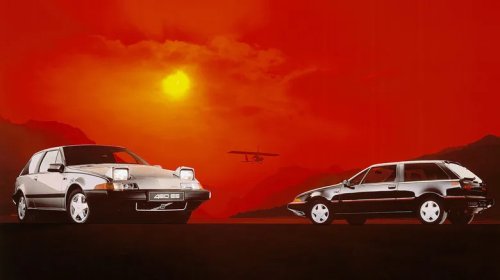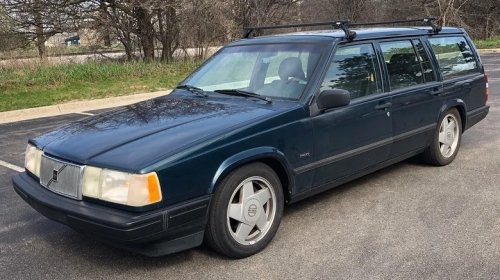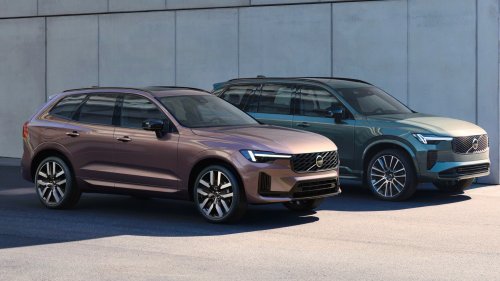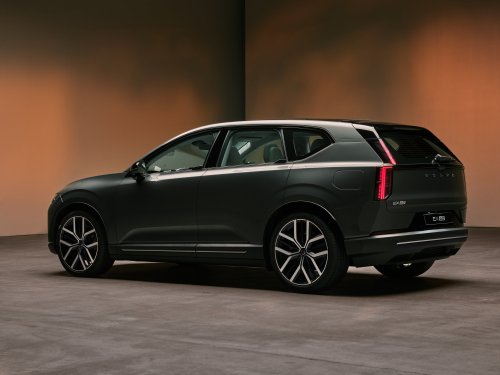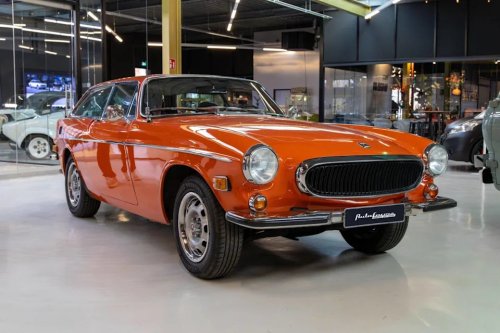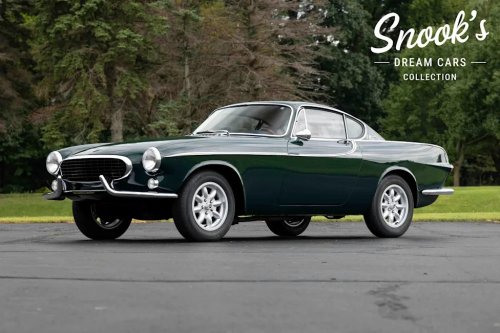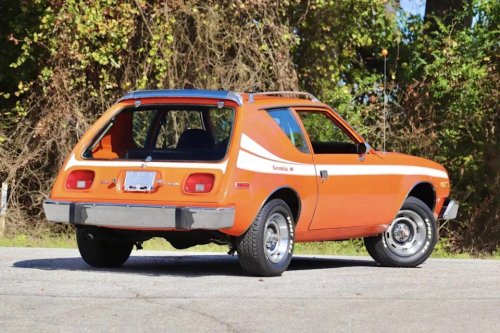
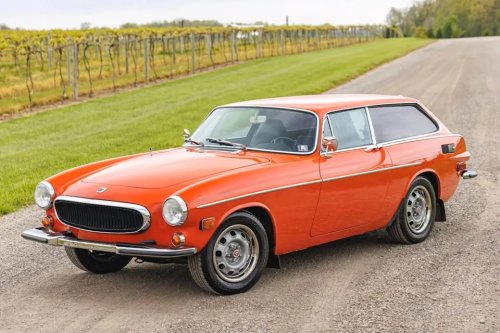
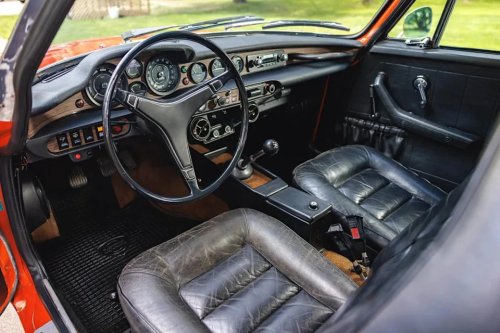
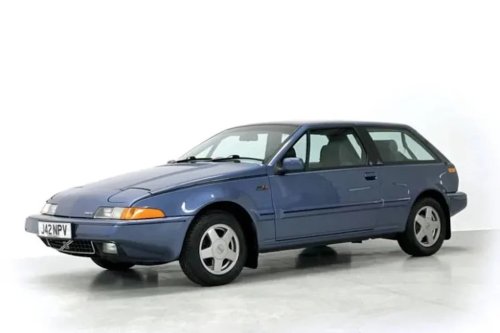
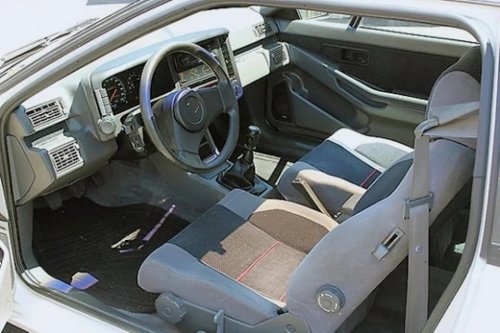
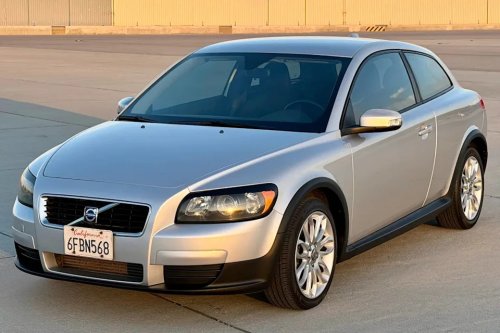
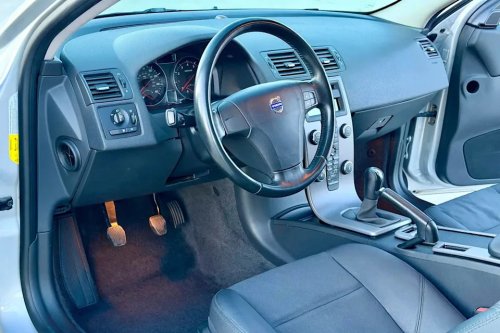
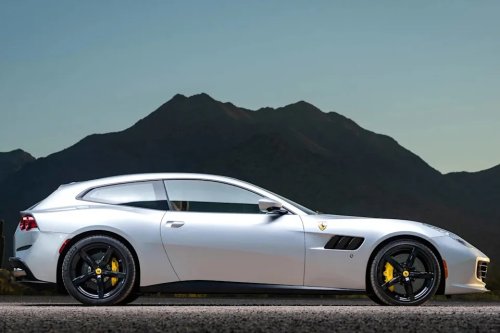


















Let me start by saying that accurately defining a shooting brake is as easy as nailing jello to a wall, so we'll decide what it is for this story from the off. The term originates in the late 19th century as a horse-drawn wagon, but the purpose of the shooting brake was always clear, and it's in the name: it transported hunters and their shooting gear. These high wagons would be used for breaking in new horses, leading to the French break de chasse, or shooting break; in fact, France calls a station wagon a break to this very day.This influenced how a shooting brake would become just another word for a station wagon, but it's technically inaccurate. It's now most commonly accepted to refer to a vehicle that combines the qualities of a sporty coupe and a wagon, so it's not just any ordinary wagon, nor a regular 2-door wagon version of a common shopping car; there has to be more flair and sporting intent than that.1977 AMC Gremlin XBring a TrailerThis rules out cars we may otherwise have called shooting brakes, like the Alfa Romeo 145, Ford Pinto Wagon (and related Mercury Bobcat Villager), British Reliant Scimitar GTE and, here in the U.S., the Ford Pinto Runabout, the AMC Gremlin (above left) and Pacer Wagon (above center), and Chevy Vega Kammback (above right) and its relation, the Pontiac Astre. It also rules our 4-door cars such as the Mercedes-Benz CLS Shooting Brake, even though Merc calls it a shooting brake. I told you it's complicated!Volvo 1800ES (1972-1973)This brings us to 1972, when Volvo's P1800 2-door sports car had been on the market for 12 years, and Volvo released a 2-door shooting brake variant called the 1800ES. Yes, technically the 1953 Volvo Duett was a 2-door wagon as well, but that was a rugged utility vehicle, so the 1800ES was Volvo's first genuine sporting shooting brake. It used the sleekly attractive P1800 sport car's front end, with a long-roof shooting brake rear end and an all-glass rear liftgate that would become a signature feature of Volvo's shooting brakes.1973 Volvo 1800ES 4-SpeedBring a TrailerJan Wilsgaard, who had a 40-year career as a designer from 1950 to 1990 at Volvo, penned the 1800ES. The car used a lower-compression version of the naturally aspirated 2.0L B20F 4-cylinder engine with 125 hp. For 1973, the last year of production, the only model left of the P1800 line was the 1800ES. Only a bit over 8,000 were made over two model years, so it remains quite rare today.1973 Volvo 1800ES 4-Speed in orange with black interiorBring a TrailerVolvo 480 (1986-1995)It would be another 13 years before Volvo revisited the shooting brake concept, and it developed an all-new front-wheel-drive platform to create a stylish new sports car to shake off Volvo's stuffy image and attract younger buyers. That car would be the Volvo 480, a long-roof 2-door with a frameless glass liftgate, just like the 1800ES, and built in a Dutch factory. It was a startlingly modern Volvo with pop-up headlights to comply with the required headlight height for the U.S. market and sharp, needle-nose styling. However, because of the weak dollar at the time and their inability to make the business plan work, the car was, ironically, never officially sold in the U.S., and the ones that pop up here on used sites are all special imports.1992 Volvo 480ESBring a TrailerVolvo had an alliance with the French at the time, and as part of its cooperation with Peugeot and Renault, it used the PRV (Peugeot-Renault-Volvo) V6 in some of its cars since 1974. So, to find a compact 4-cylinder powertrain to fit transversely into the FWD 480's flat nose, Volvo turned to Renault for the use of its F engine and JC5 manual gearbox (a 4-speed ZF auto was also offered). The long-lived, versatile, and solid iron-block F engine has been around since 1982 and has spanned quite an incredible career; it's still being built today.In the 480, the F engine came in F3N, which was either a naturally aspirated (94-101 hp) or turbocharged 1.7L (118-121 hp), and an F3R, which was a naturally aspirated 2.0L with 109 hp. With the turbo engine, the 480 could top 124 mph and reach 60 mph in around 8.6 seconds. Volvo sold 76,375 units over ten years.1989 Volvo 480 Turbo interiorBring a TrailerVolvo C30 (2006-2013)Yes, I know, the C30 is not supposed to be on this list, because most purists don't consider it a true shooting brake. It's essentially just a hatchback variant of the Volvo S40 sedan, which itself sits on a mainstream Ford Focus platform, but bear with me. It's here because it continues the line as the spiritual successor to the ES1800 and 480. To this end, it has the same long-roof shooting brake styling, as well as the now-signature frameless glass liftgate.2008 Volvo C30 T5 Version 1.0 6-Speed pre-faceliftBring a TrailerIt may be based on a mainstream car, but it was a genuinely sporty hot hatch in T5 format, which was the only model that ever made it over to the U.S. Courtesy of Volvo's famous turbocharged 5-cylinder modular engine, it produced 227-250 hp. Our Canadian neighbours also had access to a naturally aspirated 5-cylinder with 168 hp, while Europe got a massive range of powerplants, with gas and diesel engines going as low as 99 hp.It may not have been conceived as a sports car like its predecessors, but the accomplished Focus platform made it fun to drive, and it had genuine performance on tap, plus a practical luggage area with the rear seats folded, helping it appeal to a wider audience and making the numbers work, enabling Volvo to sell nearly 210,000 units worldwide. It went out of production in December 2012. Due to the limited local range, around 22,300 were sold in the U.S., which is still a healthy 10% of global sales. Its future rarity may yet turn it into a classic.2008 Volvo C30 T5 Version 1.0 6-Speed with black interiorBring a TrailerFinal ThoughtsThe market for 2-door shooting brakes has all but disappeared, but we can dream. The world has gone SUV-crazy and wants cars that can do everything. The 2-door market is probably more depressed now than it's ever been, and the only way brands such as Dodge can still justify a 2-door Charger is by basing it on the existing 4-door model with virtually no changes except for the door configuration. It's simply too costly to invest too much in the design and production of a car shape that will not be expected to sell in significant numbers. The last true 2-door shooting brakes were the Ferrari FF and GTC4Lusso (below), the latter ending production in 2020.2020 Ferrari GTC4LussoBring a TrailerVolvo has renewed its product push of late, as it's trying to keep regular cars and wagons alive amid the SUV glut and its own falling sales. Whether those will sell, we'll have to see. It's safe to say round four of the 2-door shooting brake lineage is, sadly, not in the cards.