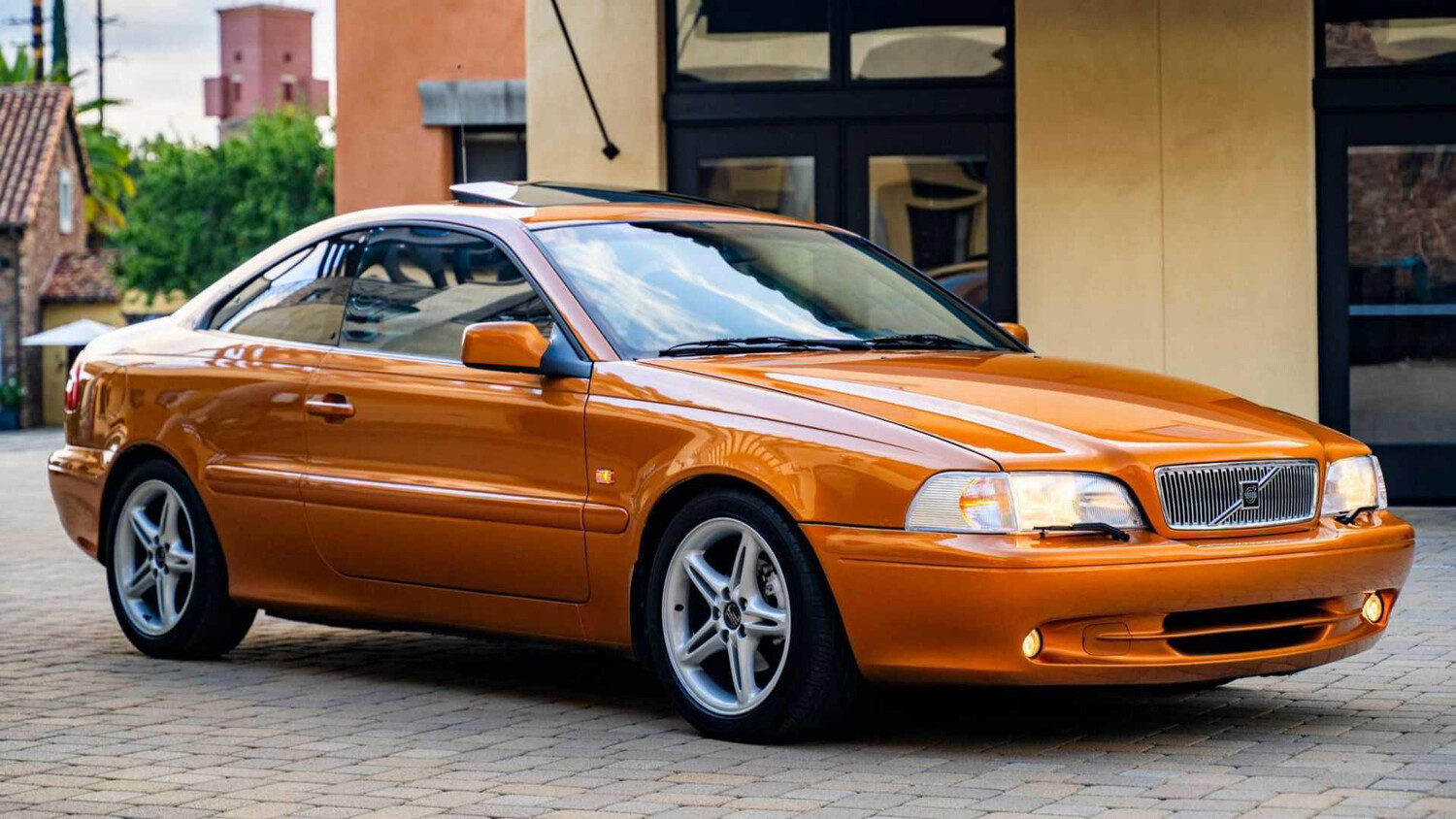
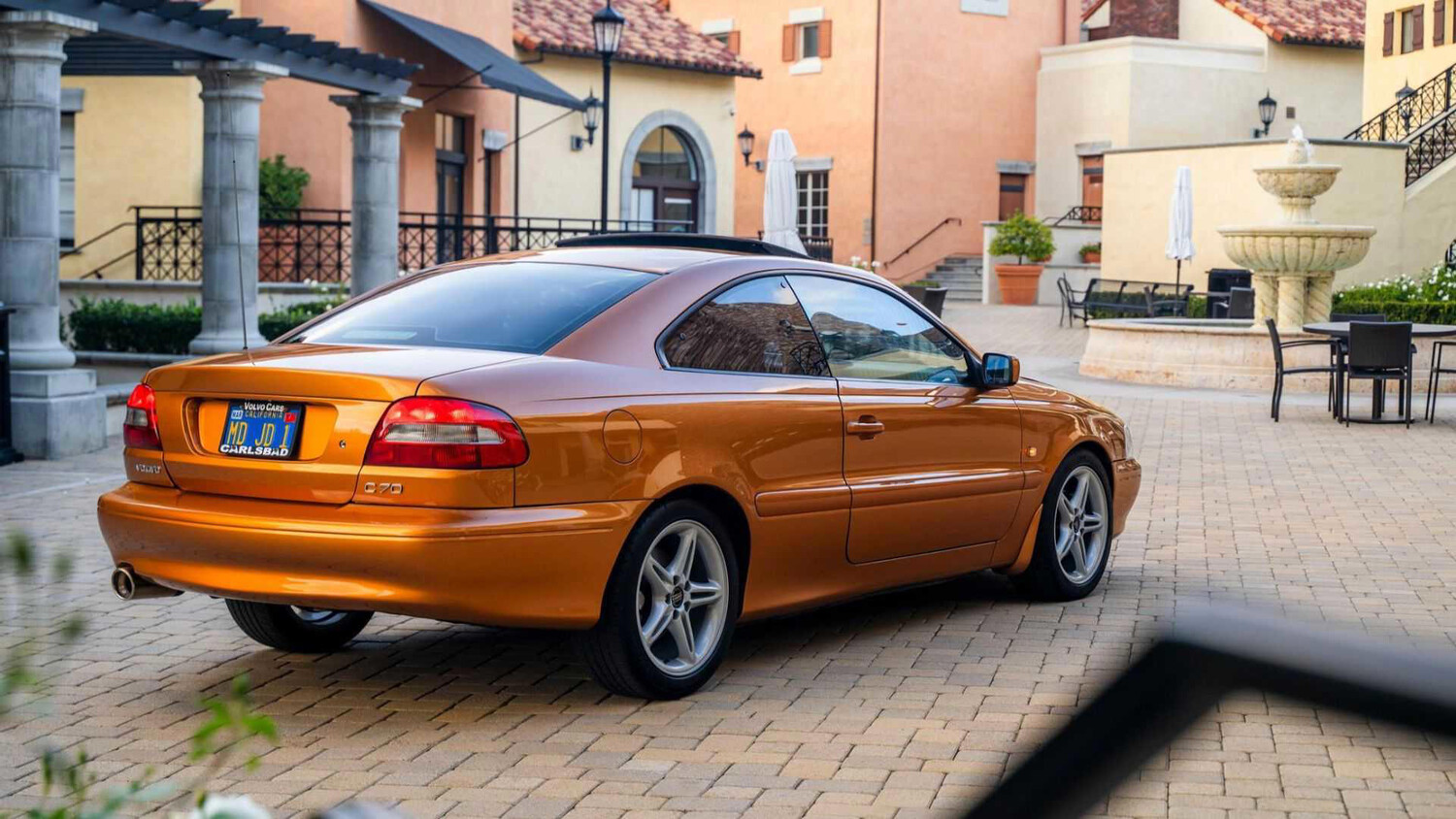
Volvo built its name on safety. In 1959 the PV544 and the Volvo Amazon became the first cars with three-point seat belts as standard, a world first. By the end of the 1970s, the company’s sales had passed 4 million cars. That reputation for sensible, solid machines is well earned, but it hides something. Many old Volvos are genuinely beautiful. Some borrowed their looks from Detroit, some came from Italian design studios, and a few went racing and won. Park one at a car show today and people walk over, usually with a story about a grandparent who drove one forever. These 12 are our picks for the Volvos that draw a crowd, from a 1940s six-cylinder sedan to a turbocharged 1990s coupe. The choices and verdicts are our opinion. However, the years, engines and production figures behind them come from Volvo’s own history and other references, so the facts hold up even when the taste is ours. 1. 1948 Volvo PV60 The PV60 is the Volvo that looks like it took a wrong turn out of Michigan. Its styling closely mirrored a 1939 Pontiac, and the front end was nearly identical to the American car. Even so, it measured about 10 centimeters shorter than the smallest Pontiac of the day. Volvo started development in 1939, but war got in the way. The PV60 finally debuted in September 1944, and production started in December 1946. Power came from a 3,670 cc inline-six rated at 90 horsepower, driving through a three-speed manual with a column shifter. Volvo built 3,506 of them through 1950, and about 500 of those became trucks or vans. That small production run is why a PV60 turns heads today. Most people have never seen a big six-cylinder Volvo with American-style curves, so it confuses the crowd in the best possible way. Also, the column shifter and big six give it a relaxed, old-school feel on the road. Our take: the PV60 is the perfect conversation starter at any show. It looks like a 1940s Detroit sedan until you spot the badge, and then everyone wants to hear how a Swedish company ended up building it. 2. 1953 Volvo PV444 The PV444 is the car that made Volvo a real carmaker. Volvo unveiled it in the autumn of 1944 and calls it the company’s first “true” small car. Series production began in 1947, and the car became an instant success. In fact, according to Volvo’s own company history, it was the first Volvo to win a share of the U.S. market in the 1950s. The first cars used a 1.4-liter B4B four-cylinder rated at 40 PS. Then, in October 1950, Volvo raised output to 44 PS, so a 1953 car carries that improved engine. Together with its PV544 successor, the PV444 shape stayed in production for about 18 years, and roughly 440,000 left the factories. Its rounded fastback shape draws a smile from anyone who grew up around Volvos, because for years it was simply what a Volvo looked like. After all, the same basic shape stayed on sale into the mid-1960s. Our take: the PV444 is a humble car with a big story, and that is exactly what makes a crowd form around it. If you want one, look for honest originality over shiny paint. 3. 1956 Volvo P1900 The P1900 is the Volvo sports car almost nobody has seen in person. Volvo built just 68 of these fiberglass roadsters in 1956 and 1957, plus four or five prototypes. The American company Glasspar built the first 19 bodies in California. Power came from a 1,414 cc four-cylinder rated at 70 horsepower. However, the car’s real problem was the chassis, which flexed too much for a fiberglass body. Gunnar Engellau, who became Volvo’s president in 1956, drove one and was unhappy. He reportedly said, “I thought it would fall apart!” As a result, he cancelled the rest of production. That failure is now the car’s charm. A P1900 at a show looks like a period American roadster with a Volvo badge, and that combination stops people cold. Volvo went on to get its sports car right with the P1800 a few years later. Our take: the P1900 is not the best-driving car on this list, and we would not pretend otherwise. Yet with only 68 built, and the first 19 bodies made in California, simply seeing one is an event, and that earns it a place among the most eye-catching Volvos ever made. 4. 1965 Volvo PV544 Sport 1.8 The PV544 took the PV444 shape and made it better. Volvo introduced it in 1958 with a four-speed manual gearbox and room for five. A year later, it gained three-point seat belts as standard. For 1962, Volvo replaced the old engine with the 1.8-liter B18, a sturdy four with five main bearings, and switched the electrical system from 6 volts to 12. The car also went global. Production started at a plant in Dartmouth, Nova Scotia, in 1963. Meanwhile, the PV544 earned its toughness credentials in Africa, where a second-hand example won the Safari Rally in 1965. That same year was the end of the road: the last cars left the line in October 1965. So a 1965 PV544 Sport 1.8 is the final, best-developed version of a car that had been in production since the 1940s. It pairs the rounded old body with the more modern B18 engine. Our take: this is the PV to buy if you want to drive it, not just park it. It looks like a museum piece, yet it runs with the stronger engine, and that combination makes people stop and ask questions at every fuel stop. 5. 1966 Volvo 122S The 122S carries one of the best naming stories in the car world. Volvo wanted to call its new sedan Amazon, after the warriors of Greek mythology. However, the German motorcycle maker Kreidler had already registered the name. As a result, Volvo could use Amazon only in Sweden, and export buyers knew the car as the 121 or 122. The 122S was the performance version from the start. Volvo introduced it in 1958 with a twin-carburetor engine rated at 85 bhp. Then the car made its U.S. debut at the 1959 New York International Auto Show. Designer Jan Wilsgaard found his inspiration for the styling in a Kaiser he spotted at the Gothenburg harbor. That American influence shows in the curves, but the details are pure Scandinavian restraint. By 1966, the Volvo Amazon range had been on sale for a decade and had matured into a well-sorted family car with a sporty edge. Our take: a 1966 122S is the classic Volvo most people picture, and it photographs beautifully in any color. If you find a two-door, grab it, because its profile turns heads even more than the four-door’s. Meanwhile, the twin-carburetor engine gives it enough pep to keep up with modern traffic. 6. 1967 Volvo Amazon 123GT The 123GT is the Volvo Amazon in its sharpest suit. Volvo built it for 1967 on the two-door Model 130. The recipe borrowed heavily from the P1800 sports car, including its high-compression B18B engine. It also added the M41 gearbox, a tachometer and fully reclining seats. In other words, the 123GT was a factory hot rod hiding in a family-car shell. It arrived late in the Amazon’s life, after the boxier 140 series had already appeared in 1966. Overall, the Amazon line ran from 1956 to 1970, and Volvo built 667,791 of them. About 60% went for export. That big production number makes a regular Amazon easy to find. A real 123GT is a different story, and enthusiasts know to look for its extra gauges and P1800 engine. Our take: the 123GT is the Amazon we would drive to a show, because it delivers the sports-car engine without any sports-car fuss. Check the paperwork carefully if you buy one, since a genuine GT is worth more than a lookalike. In short, this is the Volvo Amazon for drivers who want a little more of everything. 7. 1971 Volvo 142 GT The 140 series was a clean break from the curvy Volvo Amazon. Designer Jan Wilsgaard gave it boxier, more upright styling and a split grille. The two-door 142 arrived late in the 1967 model year, and Volvo built about 1,500 of them in that first year. Underneath, the 140 brought disc brakes at all four wheels. By 1971, the range had grown up. That year Volvo added the B20E, a 2.0-liter four with Bosch electronic fuel injection, rated at 124 PS. Meanwhile, the 140 family became a huge success, and Volvo built more than a million cars across the two-door, four-door and wagon versions. So why would a box stop traffic? Because clean, honest design ages well, and the two-door 142 has the best proportions of the family. The GT badge adds a dash of sport to a shape that already looks purposeful. Our take: a 142 GT is the thinking person’s classic. It is simple to keep running, and people who grew up in the 1970s light up when they see one. Look for a rust-free example, since the bodywork matters most. After that, the mechanical parts are the easy bit, because Volvo built so many of these cars. 8. 1972 Volvo 1800E The P1800 was Volvo’s first sports car, unveiled in 1960. Pelle Petterson styled it while working for Pietro Frua’s studio, although Volvo did not officially credit him until 2009. The car also became a TV star, thanks to Roger Moore driving one in “The Saint.” The 1800E arrived for 1970 as the most developed version. It used the B20E engine with Bosch D-Jetronic fuel injection, rated at 130 bhp. It reached a top speed of about 190 km/h and ran from 0 to 100 km/h in 9.5 seconds. Better still, it was the first 1800 with disc brakes at all four wheels. The year 1972 was the last for the coupe, and Volvo built 39,407 coupes in total. The P1800 also has the most famous durability story in the hobby. Irv Gordon drove his 1966 P1800S from 1966 until his death in 2018, and it passed 3.2 million miles. Our take: the 1800E is the P1800 to own, with injection and four-wheel discs under that gorgeous body. At a show, it pulls more people than nearly any other Volvo. In addition, it is a car we would drive to the show rather than trailer, which is half the fun. 9. 1978 Volvo 242 GT The 242 GT proved a Volvo brick could have attitude. Volvo built it from 1978 to 1980 on the two-door 240. U.S. cars came in Mystic Silver metallic with black and red racing stripes, a look that announces itself across a parking lot. The changes went beyond paint. The GT used a fuel-injected 2.3-liter four, the B21E, rated at 140 PS, with the B21F version in North America. It also got ventilated front disc brakes and springs about 30% firmer than a regular DL. Inside, buyers found a black headliner, black corduroy seats with red-orange stripes and a central tachometer. Fog lights in the grille and a front spoiler finished the job, and most cars came with a four-speed manual. That package makes the 242 GT a real enthusiast car from a company better known for wagons. In our view, it is one of the coolest Volvos of the 1970s, and the striped silver paint gets thumbs-up from strangers. If you want one, buy a car with its original seats and stripes, because those details make the GT special. Without them, it is just another 240, and that would miss the whole point. 10. 1981 Volvo 262C Bertone The 262C is the most glamorous Volvo of its era, and it was built in Italy. Bertone assembled the car in Turin, making the roof pillars, roof panel, windshield surround, cowl and upper door sections. Volvo’s own Jan Wilsgaard designed it, starting from the 264 sedan. The roof is the giveaway. It sits about 100 millimeters lower than the roof on the 260 sedan, which gives the coupe its low, formal profile. The trade-off was a cramped interior and small rear side windows. Power came from the PRV V6, a joint project between Peugeot, Renault and Volvo. From 1980, that V6 grew from 2,664 cc to 2,849 cc, so a 1981 car carries the bigger engine. Volvo’s heritage model list dates the 262C coupe from 1977 to 1981. Bertone built just 6,622 of them. Our take: the 262C is pure 1980s luxury with a Swedish accent, and it gets double takes because few people know Volvo ever built such a car. Given the choice, we would pick a 1981 car for its larger V6 and enjoy explaining that chopped roof all day long. 11. 1985 Volvo 240 Turbo Group A The 240 Turbo turned the family Volvo into a touring-car champion. Turbocharging arrived on the 240 for the 1981 model year. Then Volvo built 500 “Evolution” cars in 1983 to homologate the car for Group A racing under FIA rules. After inspection, most of those cars lost their Evolution kits and went to customers as road cars. The race cars were serious machines. They weighed 1,065 kg and made about 350 bhp. In 1985, Eggenberger Motorsport won the European Touring Car Championship with drivers Gianfranco Brancatelli and Thomas Lindström. Volvo’s Group A cars also won the Guia Race in Macau in 1985 and 1986. Later, the 240 Turbo won the 24 Hours of Zolder in 1987 and again in 1990. A boxy sedan beating sleeker rivals is a story people love, and a race-prepared 240 Turbo draws a crowd at any historic event. Our take: this is the Volvo that silenced every “flying brick” joke. Even a road-going 240 Turbo carries a bit of that racing glory, and it is a lot easier to find than a genuine Group A car. 12. 1998 Volvo C70 T5 coupe The C70 coupe brought real style back to Volvo in the 1990s. Volvo introduced it in 1996, and the coupe stayed in production through 2002. Ian Callum and Peter Horbury are credited with the exterior. Meanwhile, Tom Walkinshaw Racing helped with the basic design and the suspension tuning. The T5 version used a 2.3-liter turbocharged five-cylinder rated at 240 PS. Volvo built the C70 in Uddevalla, Sweden, on its own line, separate from the 70-series sedans and wagons. For its debut marketing, the coupe appeared in the 1997 film “The Saint.” That was a neat echo of the P1800’s link with the 1960s TV series. The coupe is the rarer of the first-generation C70s. Volvo built 26,036 coupes out of about 72,000 first-generation cars, and only 6,465 coupes were sold in the U.S. Our take: the C70 T5 coupe is a modern classic that has aged beautifully. Its long, smooth shape turns heads in a way few 1990s Volvos can match, and the turbo five makes it quick enough to enjoy. Better yet, it is comfortable enough to drive to the show and all the way home again.

 Liked by Olivia Brown, Benjamin Tremblay
 Liked by Olivia Brown, Benjamin Tremblay