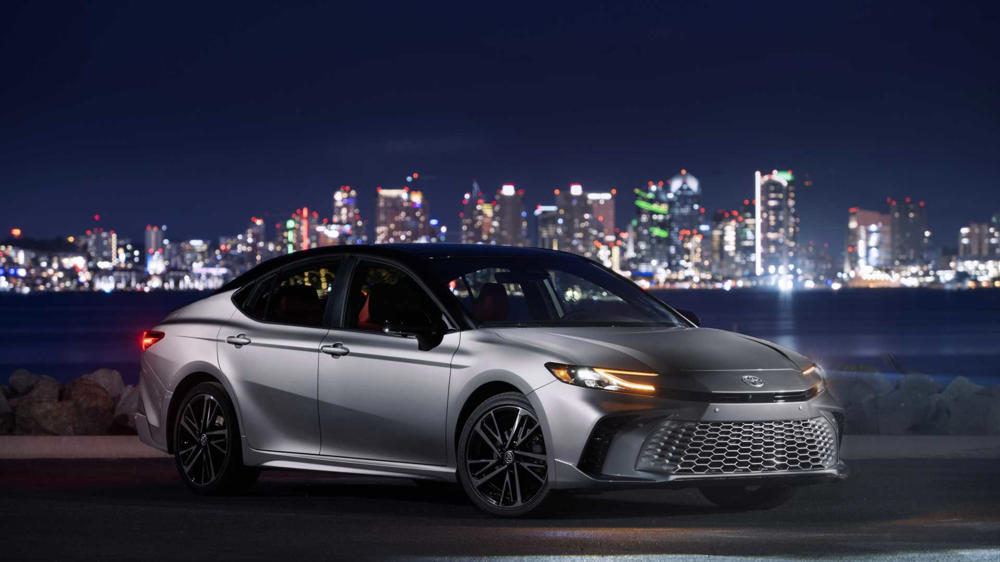
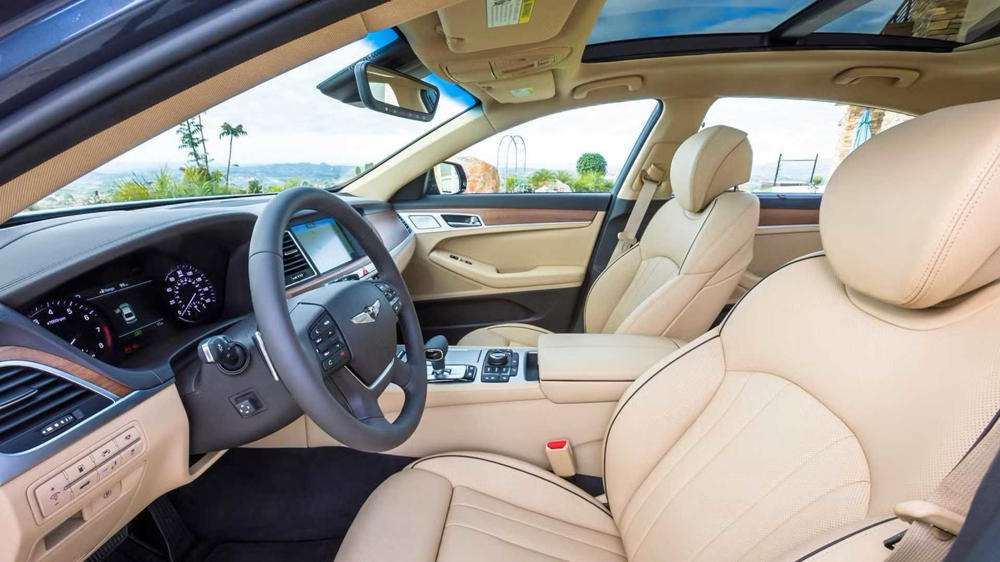
For decades, the Toyota Camry has stood as the gold standard among midsize sedans, prized as a durable, dependable, and stress-free daily driver. However, today's market realities mean a well-equipped new Toyota Camry comfortably pushes past the $35,000 to $40,000 mark, with base LE models starting around $30,000 before dealer delivery and options. For the price of that mass-market economy car, smart buyers can acquire an ultra-quiet, rear-wheel-drive executive V6 or V8 luxury sedan that has already cleared its steepest depreciation cliff, boasts superior interior materials and benchmark reliability, and does so all without paying the dreaded "German luxury" repair tax. The Modern Economy Car Trap Rising Prices And Shrinking Value In The Midsize Segment Mass-market sedans have climbed significantly in price while increasingly relying on cost-cutting measures, such as hard plastics in high-touch cabin areas, noisy four-cylinder powertrains, and digital features locked behind monthly subscription paywalls. As sticker prices cross into mid-level executive territory, the value proposition of a traditional economy sedan begins to fray. The Initial Depreciation Curve A brand-new Camry suffers its steepest financial hit during its first five years on the road, typically shedding 30 to 40 percent of its original purchase price in pure paper loss. In contrast, buying a pre-owned vehicle that has already absorbed that initial drop allows your dollars to go toward engineering quality, heavy cabin insulation, and premium hardware rather than factory-fresh asset decay. The 2018-2019 Genesis G80 The Smart Luxury Alternative Why Depreciation Is the Budget Luxury Buyer's Best Friend Original luxury MSRPs tend to melt away rapidly over the first five years, while the underlying structural integrity, acoustic glass, sophisticated multilink suspensions, and premium materials remain completely intact. For the patient used-car buyer, steep initial depreciation turns high-end engineering into an accessible bargain. Enter The 2018-2019 Genesis G80 The flagship sedan that shatters the new-Camry argument is the 2018 and 2019 Genesis G80. Powering the majority of the pre-owned examples is a naturally aspirated 3.8-liter Lambda II V6 delivering 311 horsepower and 293 pound-feet of torque, mated to standard rear-wheel drive or optional HTRAC all-wheel drive. For buyers seeking boosted midrange punch, the 3.3T Sport brought a 365-horsepower twin-turbo V6 to the lineup, while the range-topping 5.0 Ultimate derivative employed a 5.0-liter Tau V8, developing 420 horsepower and 383 pound-feet of torque. All engines are paired with a smooth-shifting eight-speed automatic transmission with steering-wheel-mounted paddle shifters. Genesis G80 Vs. New Camry: The Real-World Experience White 2018 Genesis G80 Sport front 3/4 shot parked in studio When comparing the mechanical setups of the 2018-2019 Genesis G80 to the newest Toyota Camry, the contrast in driving philosophy becomes immediate. Toyota shifted its latest-generation Camry strictly to a hybrid powertrain, pairing a 2.5-liter four-cylinder engine with electric motors via an electronic Continuously Variable Transmission (e-CVT) to produce a combined 225 horsepower (or 232 with optional AWD). While tuned for outstanding fuel economy, the Camry's powertrain drone under hard acceleration and rubber-band e-CVT delivery prioritizes low fuel costs over dynamic engagement. The 2018-2019 Genesis G80 takes a traditional executive-car approach, pairing naturally aspirated or turbocharged multi-cylinder engines with a Hyundai-developed torque-converter eight-speed automatic transmission. Ride Quality, Insulation, And Interior Craftsmanship Where the G80 overwhelmingly proves its value is in its fundamental chassis architecture. Built on a rear-wheel-drive platform with acoustic double-pane glass, double-wishbone front and multilink rear suspension, the G80 delivers high-speed highway serenity that a front-wheel-drive economy platform cannot match. By comparison, a new Camry relies on a lightweight, cost-optimized suspension layout that allows noticeably more road noise, tire hum, and pavement harshness to seep into the cabin. Standard Tech, Safety, And Cabin Comforts The G80 trumps a modern mid-trim Camry on standard equipment. Crucially, 2018 and 2019 G80 models came with standard Apple CarPlay and Android Auto integration, eliminating the legacy tech gap. Out of the box, the G80 features 12-way power-adjustable leather seats with heating and ventilation, real aluminum or real wood accents, a power rear sunshade, and an available concert-grade 14- or 17-speaker Lexicon audio system; amenities that remain high-cost options or completely unavailable on mid-spec economy sedans like the brand new Toyota Camry. Ownership Costs, Reliability, And Long-Term Value Bulletproof Mechanicals Without The European Maintenance Nightmare The centerpiece of the G80's long-term value is Hyundai/Genesis's naturally aspirated 3.8-liter Lambda II V6. Free from complex air suspension, this powertrain has proven exceptionally stout over high mileage, running on simple 7,500-mile synthetic oil change intervals and avoiding catastrophic repair bills common to aging Audi A6 or BMW 5 Series models. J.D. Power awarded the 2018 G80 series an overall consumer rating of 84 out of 100. The G80 earned a "Great" score of 85 out of 100 for Quality and Reliability, alongside solid marks for Driving Experience and Resale. Total Cost Of Ownership Realities Grounded in current market numbers, the financial case makes a brand-new Camry hard to defend. While a new Camry LE or SE carries base MSRPs of $29,700 and $32,200, respectively, clean private-sale and CPO examples of a 2018-2019 Genesis G80 trade between $14,000 and $18,000 depending on mileage and condition, right at half the price of the new economy sedan. According to Kelley Blue Book data, a 2018 to 2019 G80 has already flattened its primary depreciation curve, dropping at a predictable, minimal rate year over year. Even factoring in a slight fuel economy trade-off (the 3.8-liter V6 returns 18 mpg city and 26 mpg highway) and routine maintenance, saving roughly $15,000 upfront more than offsets running costs while insulating buyers from the brutal initial value drop of a new car. Lower mileage examples can demand between $20,000 and $25,000, which still represents around $10,000 to $15,000 in savings compared to the higher-trim XLE and XSE Camry. A new Toyota Camry remains a sensible, stress-free option in the mid-size sedan segment, but at modern transaction prices, it forces buyers to pay top dollar for basic transportation. Choosing a clean 2018 or 2019 Genesis G80 flips the script: for half the cash outlay of a new mid-spec economy sedan, buyers secure a whisper-quiet, 311-horsepower executive cruiser with benchmark reliability, modern infotainment connectivity, and minimal remaining depreciation. Before signing off on a $35,000 commuter car, taking the time to step into a well-maintained G80 proves that smart luxury is often the far better financial decision. Sources: Genesis, Toyota, Edmunds, J.D.Power, Kelley Blue Book

 Liked by Isabelle Bouchard, Thomas Green














 Liked by Isabelle Bouchard, Thomas Green