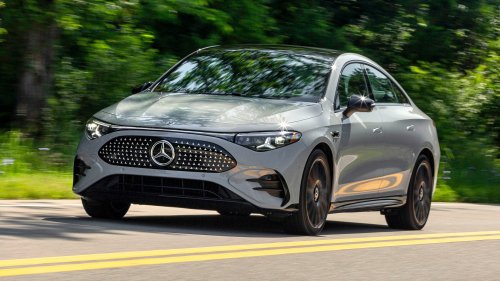
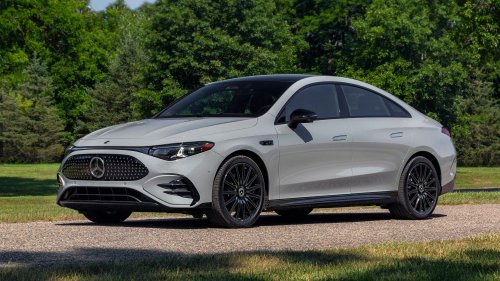
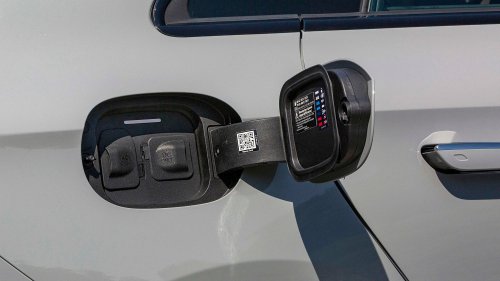
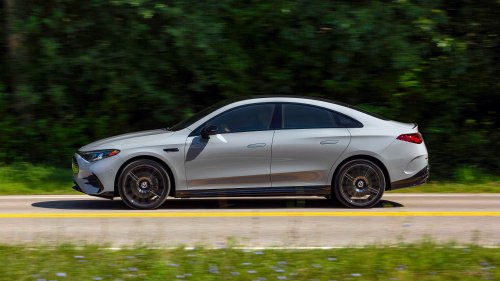
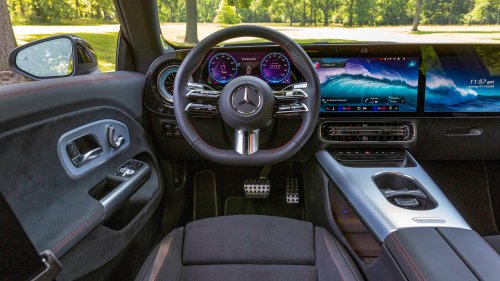
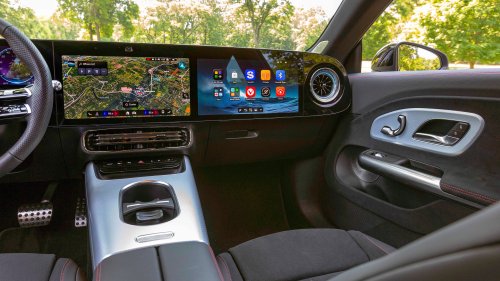
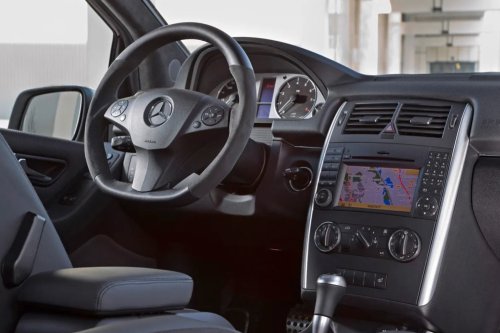
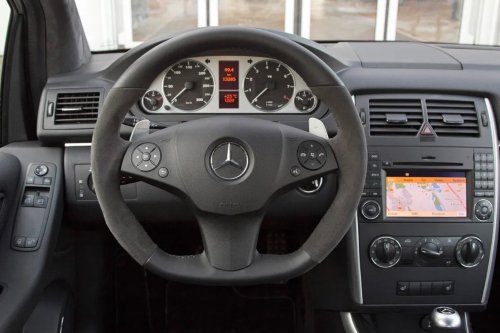
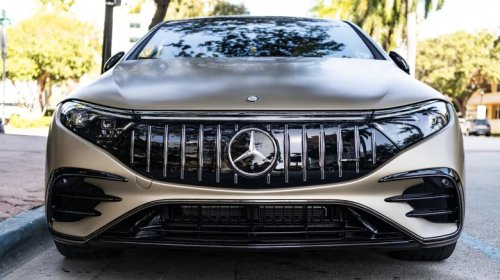
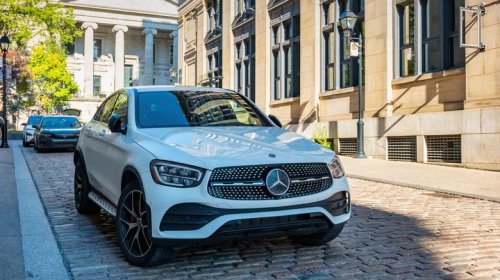
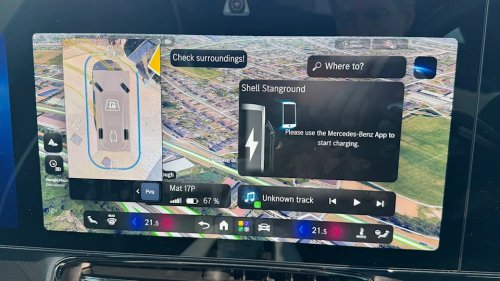
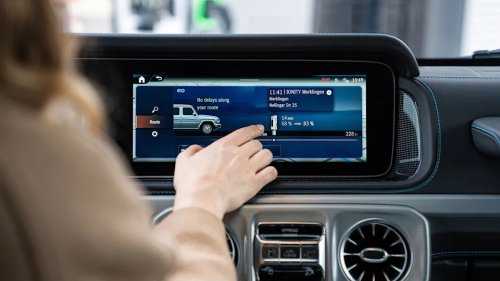
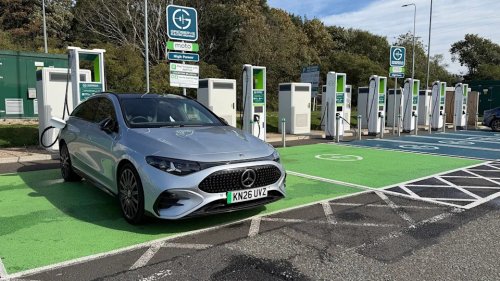
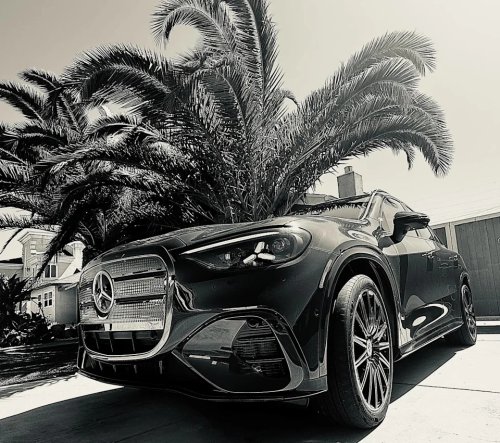
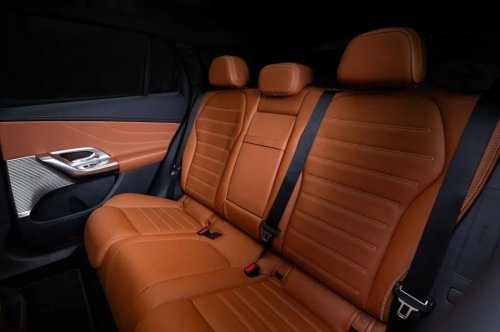
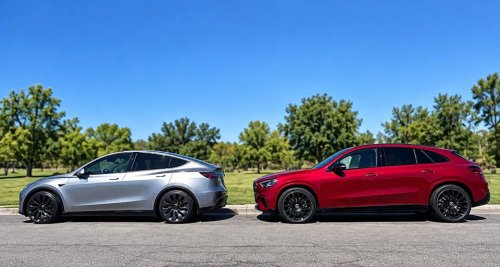
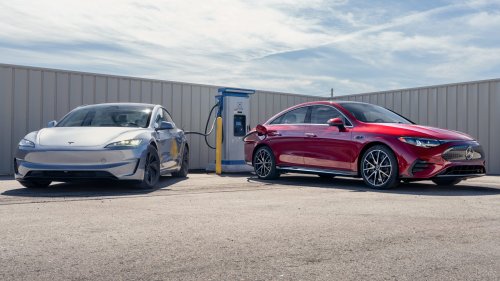
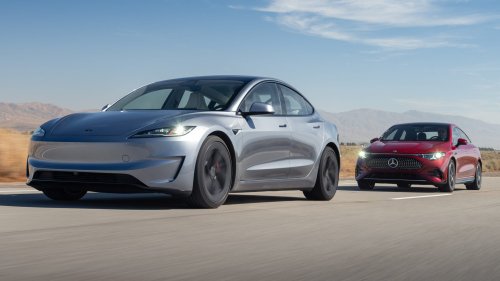
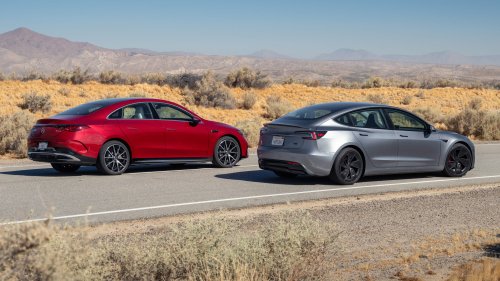
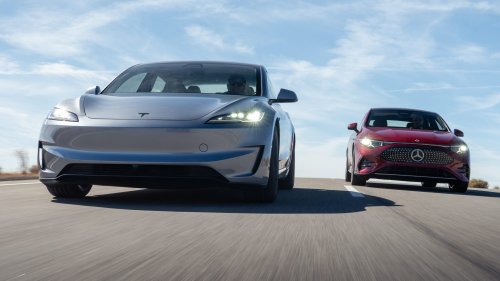
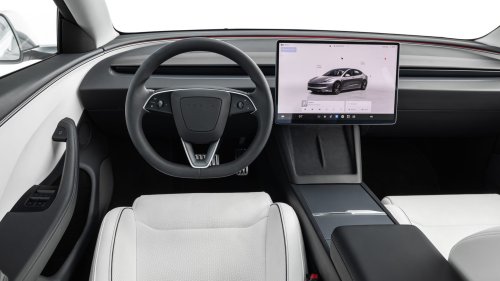
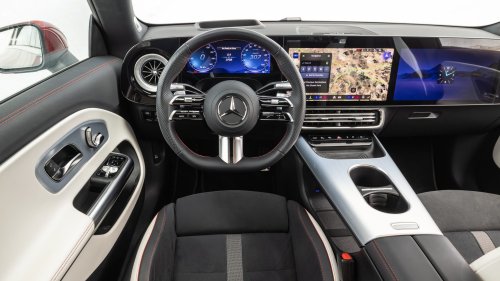
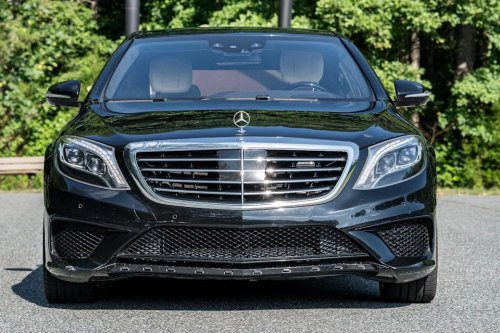
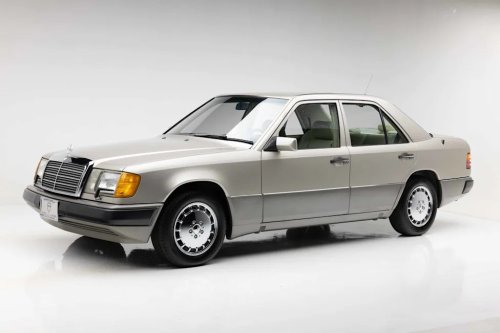
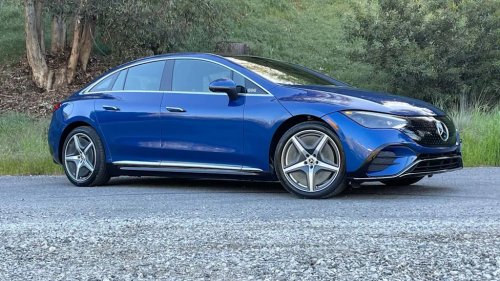
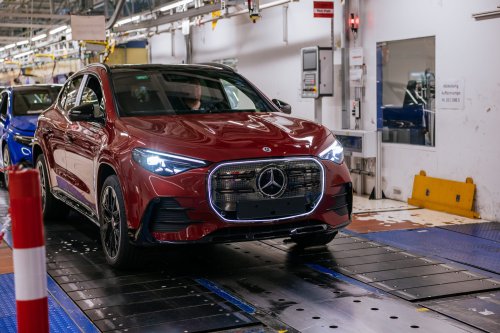
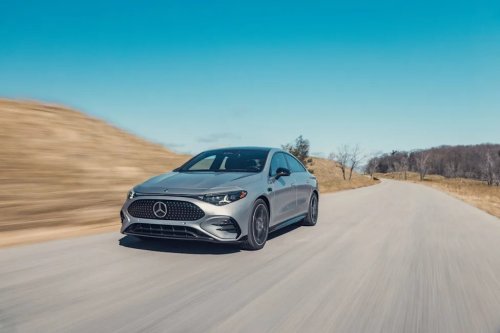
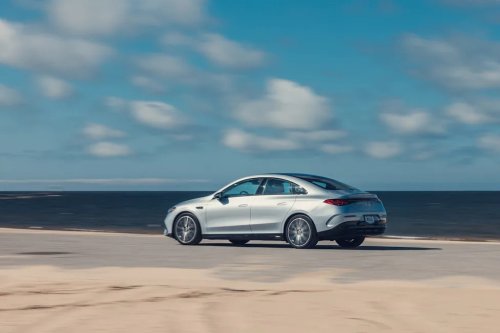
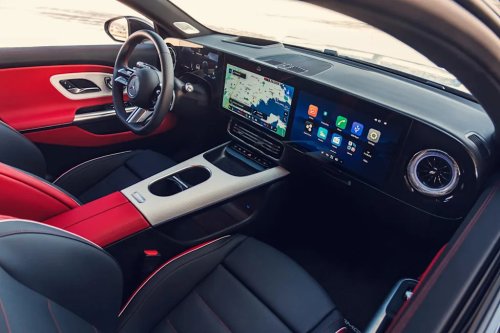
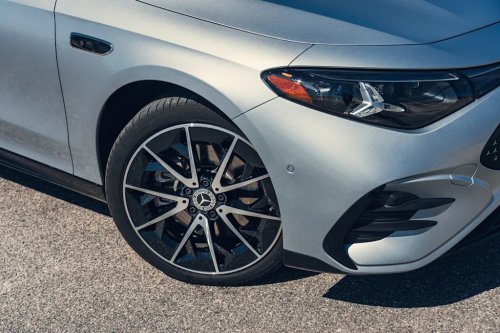
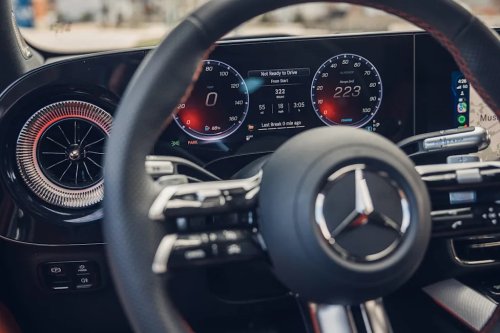
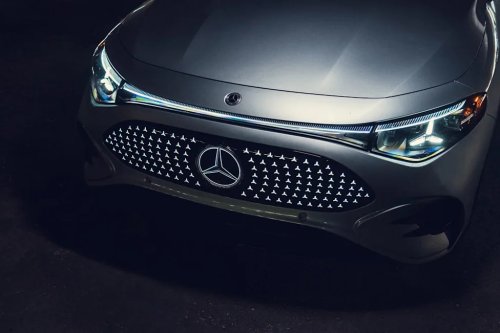
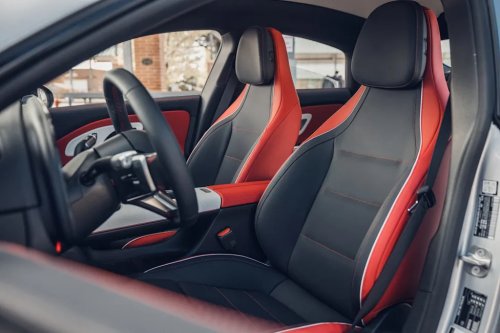
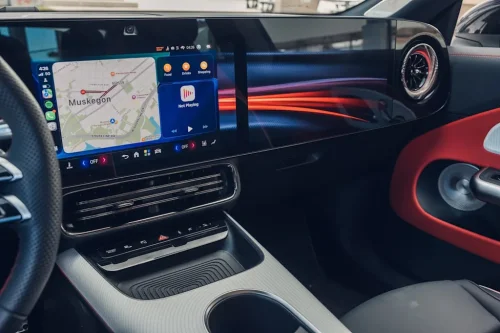
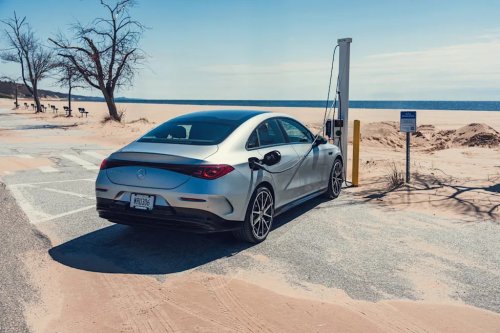
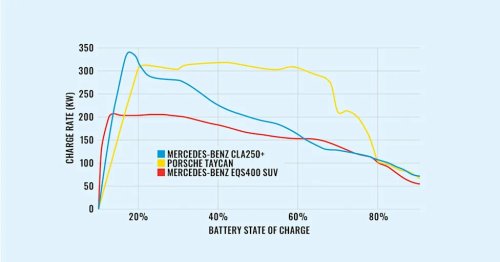
2026 Mercedes-Benz CLA250+ Test: Turning the TideMichael Simari - Car and DriverFrom the July/August 2026 issue of Car and Driver.Automakers rarely admit product missteps. But how else should we interpret a complete about-face in strategy? This all-new CLA is the first vehicle in Mercedes-Benz's second generation of EVs, and the execution couldn't be more different. Rather than build EVs on separate architectures, like Mercedes did with the EQS, EQE, and most other EQ-prefixed vehicles, the automaker houses both electric and internal-combustion powertrains in the new CLA, mimicking BMW's approach. Gone is the "EQ" naming convention too. The distinct, bloblike styling is out, as is an aversion to frunks—owner's manuals for the previous EQ vehicles admonished owners never to open the hood. When buying the new CLA, you simply choose between the gas and electric versions.Mercedes already had solid EV tech in place, and its EQ models have put up extremely competitive range figures in our real-world testing. Nevertheless, the new CLA doubles down with M-B's first 800-volt electrical architecture and revised battery chemistry that reduce charging times, permanent-magnet electric motors designed in-house that employ hairpin windings, and a two-speed gearbox at the rear axle—just like the Porsche Taycan—to improve both low-end responsiveness and high-speed efficiency.Michael Simari - Car and DriverThe most efficient version is the 268-hp, rear-drive CLA250+, which starts at $49,300 and has a single motor in back, while the CLA350 adds a front motor and another 81 horses. We tested the CLA250+, but unfortunately, Mercedes didn't send us the technological showpiece on 17-inch wheels, the variant with a whittled-down drag coefficient of a minuscule 0.21. That one earns a 374-mile EPA range estimate; opting for 18s knocks that down to 317. Our loaded example was on 19-inch wheels and Bridgestone Turanza 6 summer tires, which are expected to be such a low-volume option that this version doesn't get a separate range figure and instead shares one with the 18-inch setup. But even this worst-case CLA250+ went a very impressive 340 miles in our 75-mph highway range test. This puts it in the top 10 of the longest-range EVs we've tested. And it's the vehicle in that esteemed company with the smallest battery (85 kWh), but on 17s, it might've gone 400 miles. In addition to operating at 800 volts, the CLA improves charging speeds with tweaks to its battery chemistry, adding more silicon oxide to the graphite anodes in the nickel-manganese-cobalt pack [see "Charging Speed Ahead," below].Michael Simari - Car and DriverThe best EVs are both efficient and fast-charging, and the CLA nails that duality. To prove it, Mercedes used the CLA to one-up the 24-hour range record previously held by the Porsche Taycan. The Mercedes crew employed a very short-stop strategy, with 40 charges, all 10 minutes long, each time boosting the battery from a roughly 10 percent state of charge to 55 percent. For the less than half-hour between stops, drivers kept the CLA pinned to its 131-mph top speed, accumulating 2309 miles over 24 hours—181 miles more than the Porsche—for an average speed of 96 mph. Mercedes determined that doing all the charging in the zone where the pack charges most speedily made up for the extra stops, and the CLA incorporates this technique into its navigation routing logic. Enter a faraway destination, and many of the recommended stops are for short bursts of charging, regularly 20 minutes or less.AdvertisementAdvertisementThe CLA puts up strong numbers at the charging station but not so much at the test track, with a steady but low level of thrust that gets you to 60 mph in 5.8 seconds, which, among EVs, is very casual acceleration. The entry-level, rear-drive Tesla Model 3, which costs almost $10,000 less, beats the CLA to 60 mph by 0.4 second and pulls further ahead by the quarter-mile, 13.7 seconds to 14.5. You can feel the CLA's one-two shift when the accelerator is pinned to the floor, where it engages second gear at about 65 mph, but not under most other circumstances. Sport mode accentuates the shift by pulling power beforehand and then ramping it back in, while Comfort executes the gearchange far more smoothly.Michael Simari - Car and DriverRegenerative braking is controlled with paddles on the steering wheel or via the column shifter. There's a one-pedal option that brings the vehicle to a complete stop without the driver touching the brake pedal, as well as a setting to react to surrounding traffic. But we liked the no-regen option best, where even this least efficient CLA250+ feels incredibly slippery as it sails on after you've lifted off the accelerator. Plus, coasting is the most efficient way to slow down. And the brakes do a good job of blending in regen without ruining the pedal feel. Registering 69 decibels at 70 mph, the CLA's cabin is not particularly quiet—the Nissan Leaf shod with its largest tire option is slightly more hushed—but we imagine some of the thump and bump over the road would improve with one of the smaller wheel-and-tire options.Michael Simari - Car and DriverThe steering is light and makes this small but relatively heavy, 4550-pound car feel agile. Maximum cornering grip of 0.85 g around the skidpad is a modest result on summer tires, but this rubber is more skewed toward low rolling resistance, and there's some tail-out fun to be had at the limit. Body motions can get slightly excessive in certain circumstances, but the CLA's suspension deftly avoids harshness. Sport mode ups the steering effort slightly, but the damping is fixed. It's clear the adults were overseeing the ride and handling tuning.But they may have stepped away during the design-approval process. Does the car really need 142 illuminated three-pointed stars flanking the large one in the center of the front grille? If that's not sufficient brand peacocking, running lights in the front and rear display the same pattern. Available puddle lamps shine dozens more stars onto the ground as you enter or exit. Subtlety is not in the current Mercedes-Benz lexicon, although with longtime chief designer Gorden Wagener departing earlier this year, perhaps restraint will be in style again in Stuttgart.Michael Simari - Car and DriverThis latest CLA is slightly larger than before, with the wheelbase growing by 2.4 inches and the overall length by 1.3. Front-seat space is a little more generous, but the driver's workspace feels narrow to this six-foot-five operator. Splayed knees first contact hard spots on the center console and door grab-handle area. A high beltline and short glass that limits outward visibility further exacerbate this feeling. The rear seat has 1.1 inches more headroom but shrinks in every other dimension. It feels tight back there, with limited footroom and a sloping roofline that cuts into headroom, even with a standard glass roof.AdvertisementAdvertisementMercedes clearly has been peeking at Tesla's homework, from the start procedure—just get in, put your foot on the brake, and shift to drive the car—to the panoply of 10 cameras appended to the junior Benz. The CLA also incorporates five radar sensors and 12 ultrasonic sensors, and the company promises that all of these inputs will unlock a hands-free drive-assist feature in the near future.Michael Simari - Car and DriverThe German brand has followed the herd of automakers incorporating the Tesla-created NACS port, but the devil is in the execution details. The beauty of the NACS design is that it can handle both DC and AC charging in a very compact footprint. Mercedes discards that elegance by installing two different ports under a single, standard-size fuel door, employing NACS only for DC charging and a J1772 port for AC charging. Compared with this dual-port arrangement, the falling-out-of-fashion SAE-type port would be simpler.The CLA is the first Mercedes EV to have a front trunk, and the bonus three-cubic-foot stash area could easily swallow a carry-on-size suitcase. But the space is made less useful by dividers, bolted in to forgo needing a secondary release inside to meet the federal standard for preventing a small child from being trapped. We suspect most buyers will forgo safety and unbolt the dividers to free up the space early in their ownership.For front-row occupants, the Pinnacle Line package ($5850) brings a literal wall of screens: A 10.3-inch unit in front of the driver abuts a 14.0-inch center display, and an identical 14.0-inch unit sits in front of the passenger's seat. Mercifully, Mercedes reverted to physical knobs for some steering-wheel controls, such as those for volume and cruise control, rather than the fussy touch-sensitive buttons, although a few remain.Michael Simari - Car and DriverMercedes touts the latest MBUX infotainment's incorporation of AI from both Microsoft and Google. The Android-based system uses Google Maps for navigation, which looks fantastic on the big screen, and its responsiveness and organization are quite good. That said, a personal peeve is that the dimmer adjustment for the three large screens is still not in the "Light" submenu with all the other lighting controls. Instead, it's confusingly in "System." And the virtual assistant, which Mercedes claims is now so adept that it can even interpret subtleties of tone, still leaves quite a bit to be desired. It did successfully respond to our query for a local dinner recommendation, but a couple of simple follow-up questions caused it to become confused, responding nonsensically to something completely unrelated. As in other Mercedes-Benzes, you can play games or watch movies, and a selfie camera enables taking Zoom calls on the road (oh, joy).AdvertisementAdvertisementA small sedan is a tough sell these days, doubly so an electric one with a luxury-brand price. Unless gas prices continue to climb, the CLA's largest influence is likely to be the new approach and technology it spreads to the rest of the forthcoming Mercedes-Benz EVs.Michael Simari - Car and DriverCharging Speed AheadA benefit of the CLA's 800-volt electrical architecture and revised battery chemistry is much faster charging. Mercedes claims a 320-kW peak charge rate, but we saw a blip up to 329 kilowatts in our 10 to 90 percent fast-charge test. You can see why Mercedes used a short-stop strategy during its 24-hour record run, as above about a 60 percent state of charge, the CLA juices up no faster than the last EQS SUV we tested. But it takes just 12 minutes to boost the battery from 10 to 60 percent, adding more than 160 highway miles. Even with the second-half slowdown compared with the CLA's EQS stablemate, its overall average charge rate of 166 kilowatts puts it in the mix with the fastest-charging vehicles we've tested, comfortably above the EQS SUV's 139-kW average. But there are others, such as the Porsche Taycan with the optional 97-kWh battery, which averaged 213 kilowatts, that charge much faster still.Car and DriverCounterpointsThe new Mercedes-Benz CLA is definitely at its best as an EV. The electric powertrain is vastly smoother than the hybrid's, although the right pedal's response can be too touchy around town, unless you enjoy rocketing away from every stop sign. The team clearly learned more than a thing or two from the wild Vision EQXX concept car, because the CLA's efficiency is through the roof. This sedan is also comfortable and quiet, like a Mercedes-Benz should be. What's very un-Mercedes-like, however, is the interior. The plastics are hard and, unfortunately, comprise too many of the surfaces. The honkin' ultra-mega-deluxe-whatever screen cheapens the experience too. It's almost as if the interior-design team gave up working on the dashboard so they could get to happy hour. Something ringing up at $63K shouldn't feel so plasticky and low-rent. —Andrew KrokMercedes- Benz has released what is arguably its most sensible and organic EV yet. The CLA250+ skips sensationalistic and self-congratulatory branding. Instead, it says, "Hey, I'm a comfortable and stylish sedan that happens to have a battery-electric powertrain; there's nothing intimidating here." You can opt for a dual-motor CLA350, but unless you absolutely need all-wheel drive, don't. The rear-wheel-drive 250+ is a modernized take on the sensible-yet-special vibe that made cars like the W123 and W124 models so satisfying and influential. I'm still talking about them; that has to mean something. —Andrew WendlerAdvertisementAdvertisementFinally, Mercedes builds an EV that makes me feel like I'm driving a gas-powered car but with instant torque. There isn't one thing that bothered me about the way the CLA250+ drove, and you can't beat having more than 300 miles of range, especially when a stop at the fast-charger takes under half an hour. I prefer one-pedal driving, and the CLA's adjustable regenerative-braking setup is easy to access. Starting around $50K, the Benz is in line with many other EVs, so why not go with this luxe sedan? My only issue was not being able to find a comfortable position in the sporty seats, but that's because I'm getting old, and my back needs extra lumbar support. Oh, to be young again. —Becca Hackett➡️ Skip the lot. Let Car and Driver help you find your next car.Shop New Cars Shop Used CarsYou Might Also LikeGift Guide: Best Ride-On Electric Cars for KidsFuture Cars Worth Waiting For: 2025–2029


















 +25 others