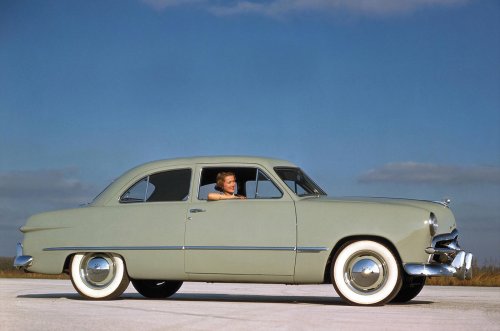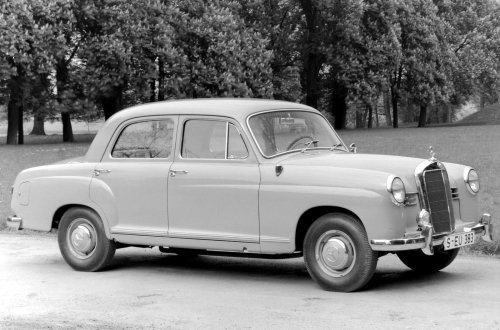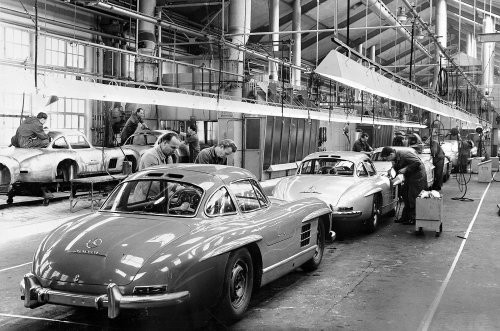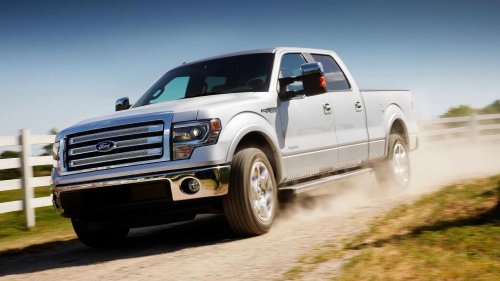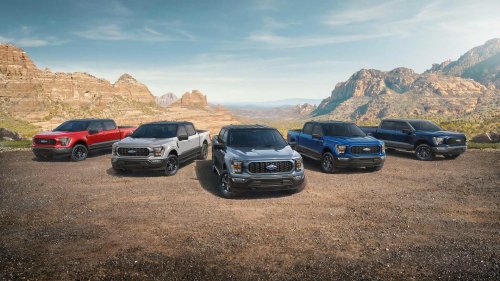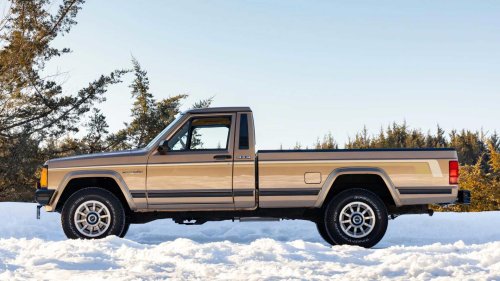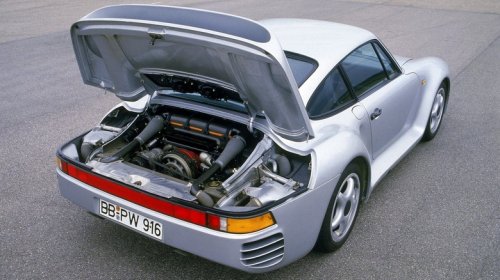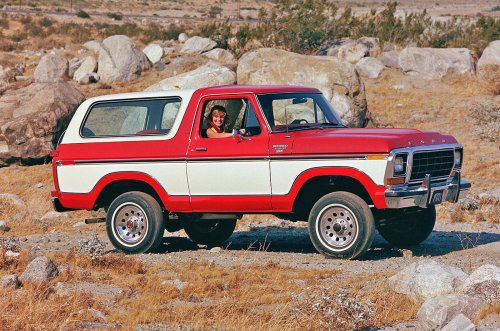
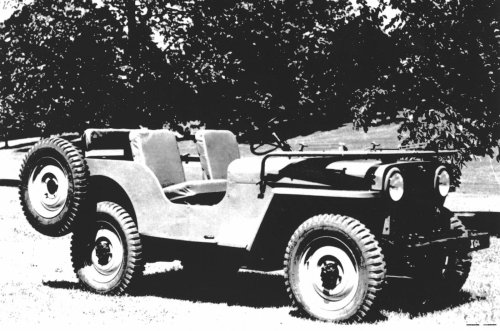
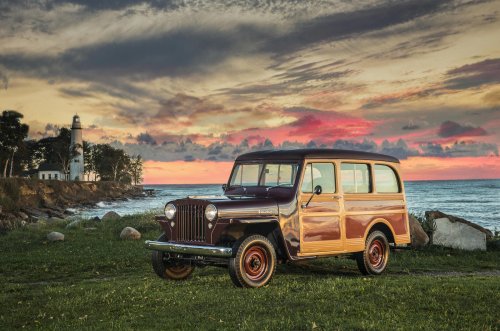
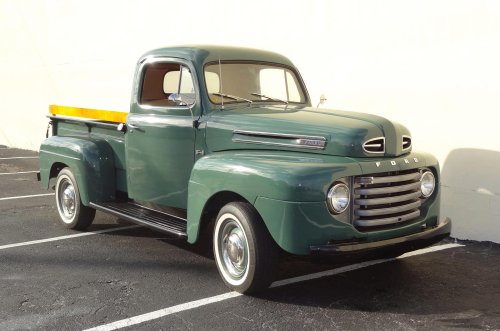
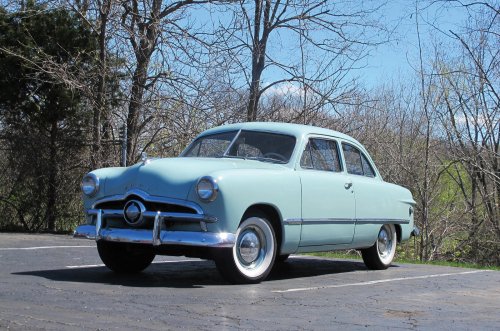
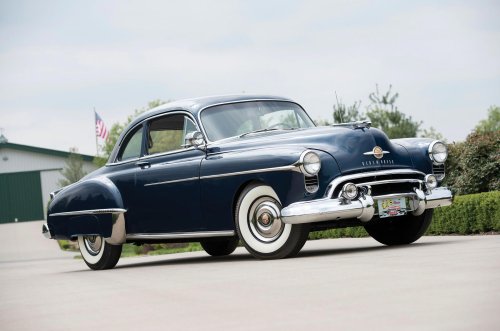






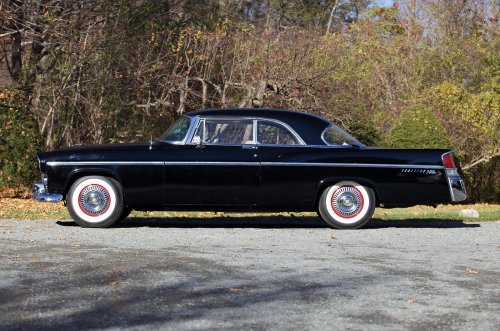
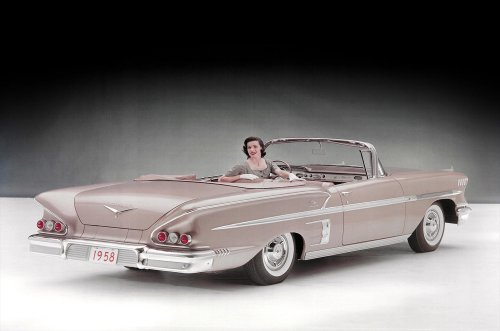
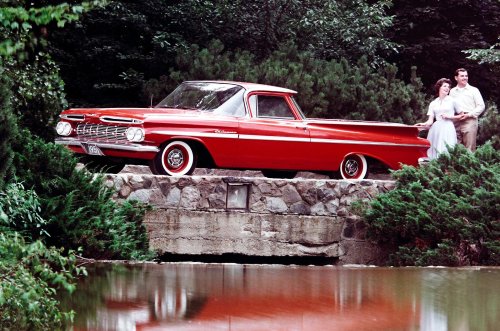
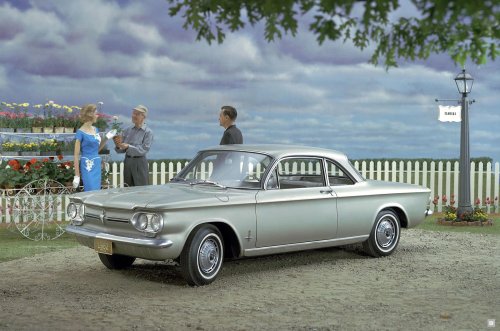
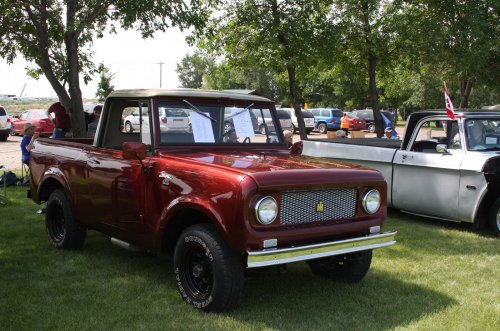
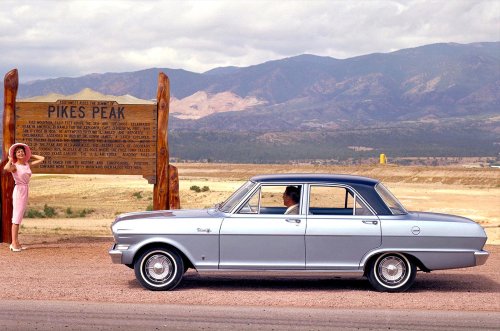
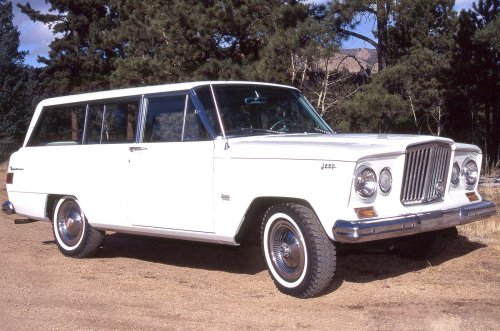
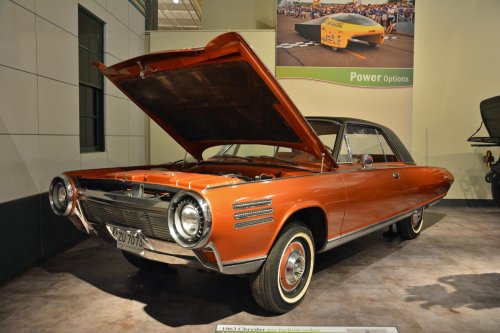
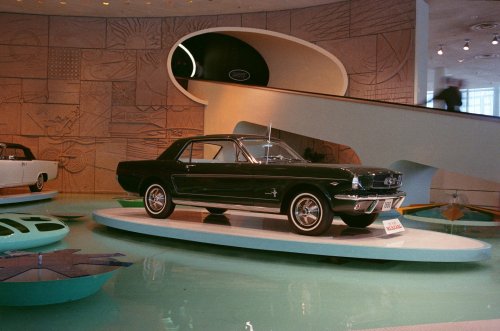
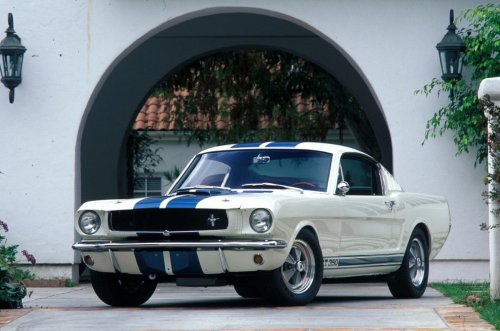
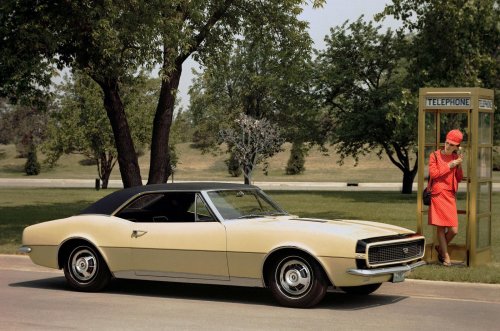
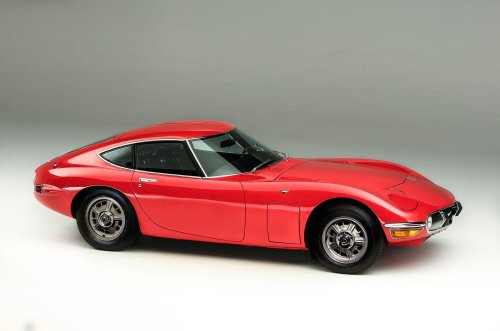
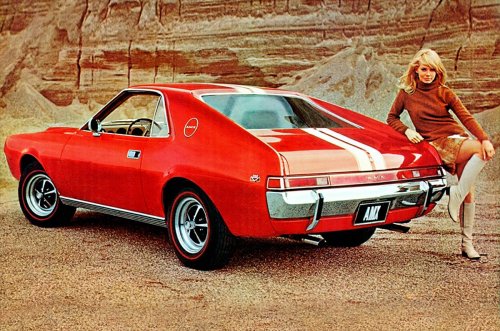
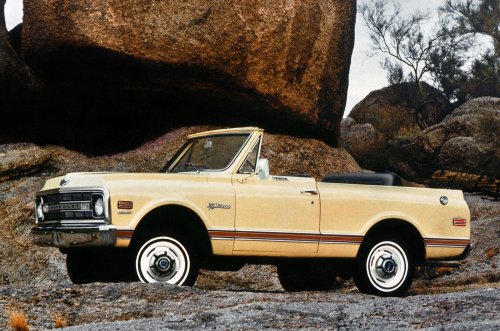
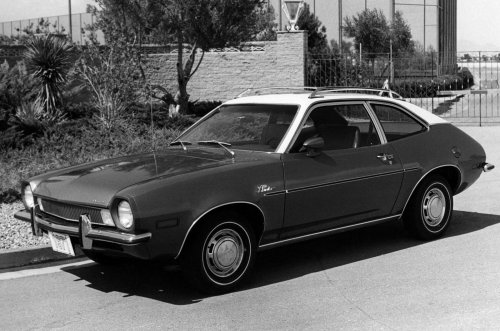
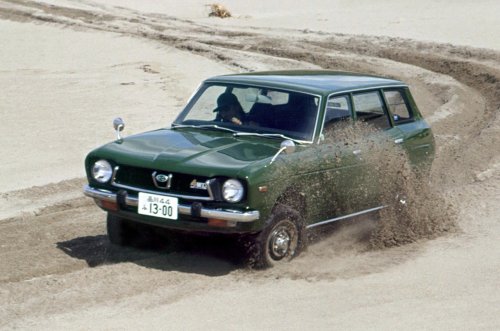
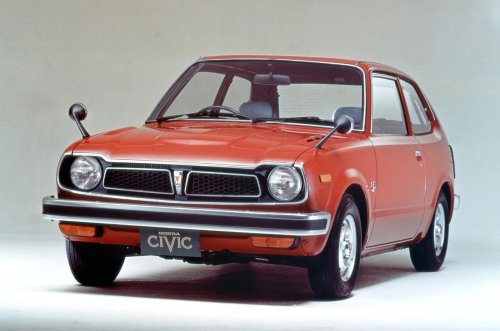
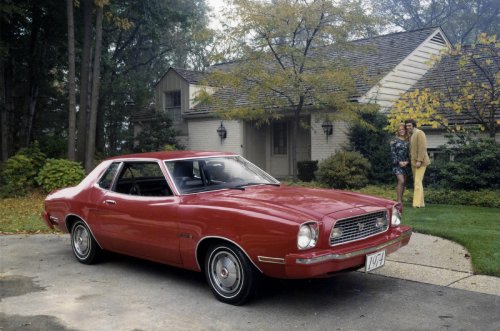
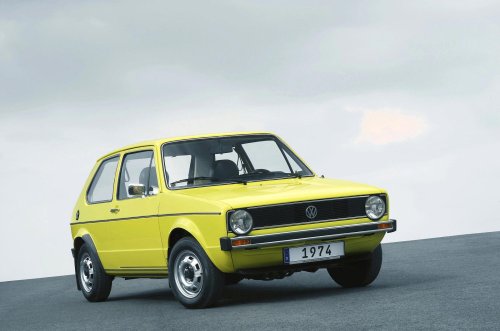
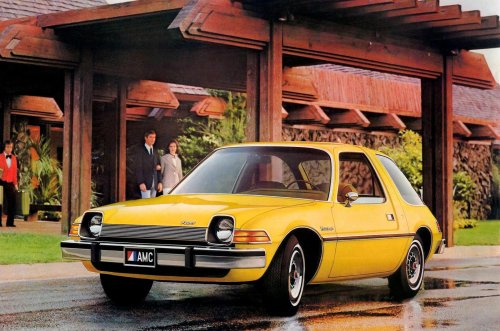
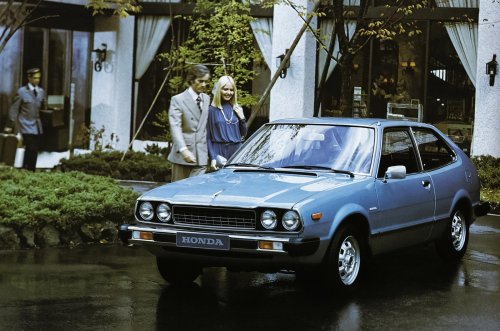
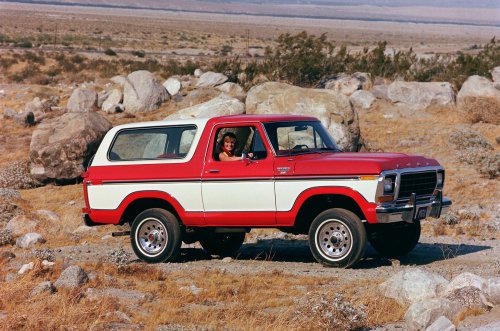
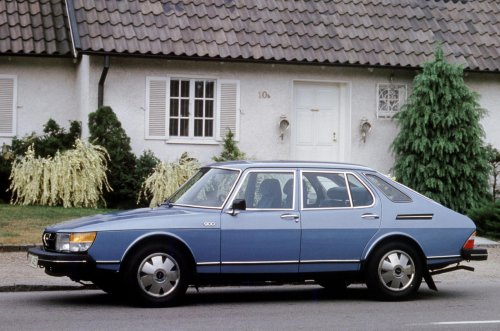
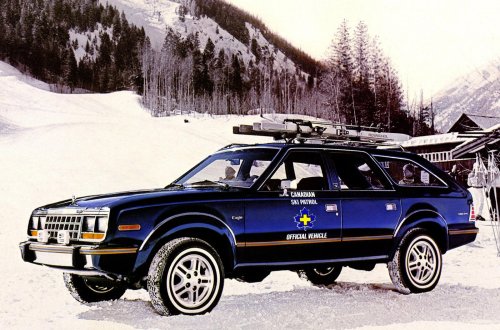
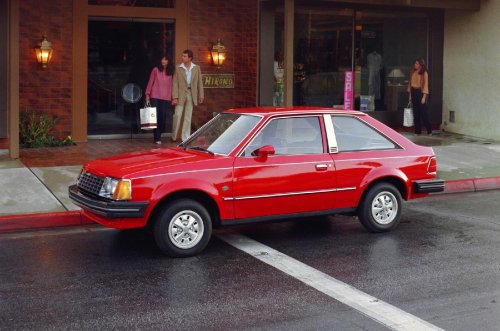
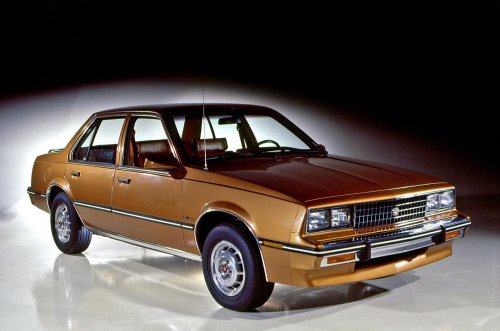
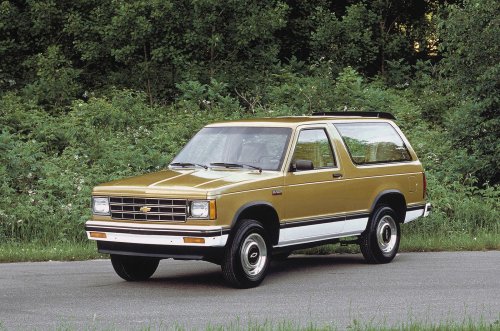
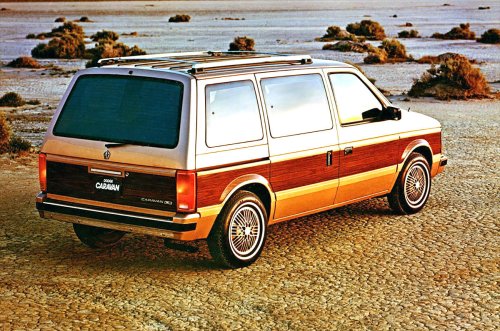
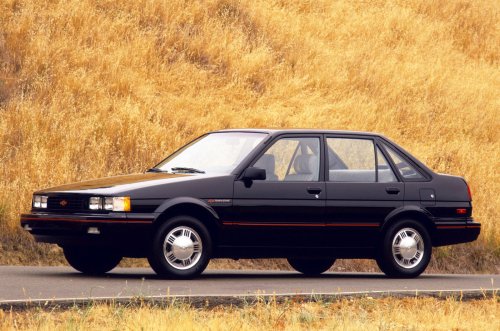
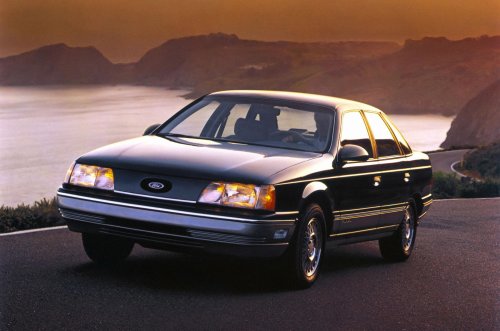
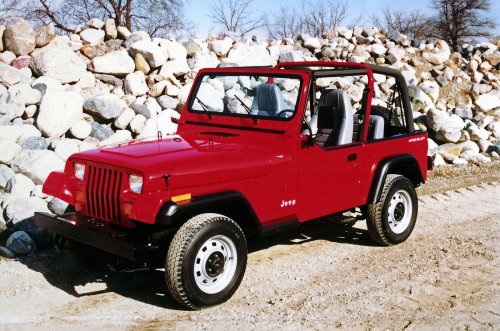
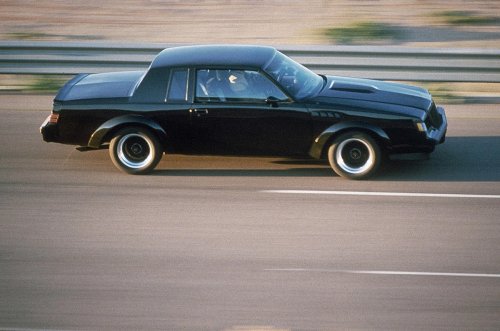
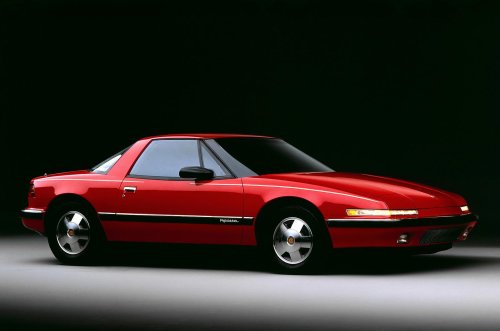
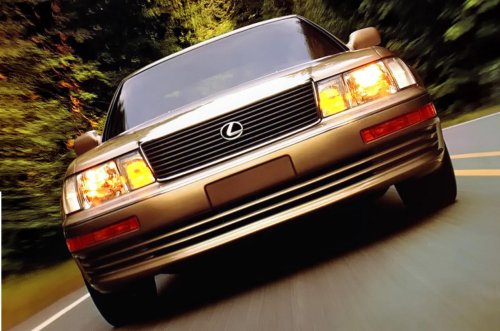
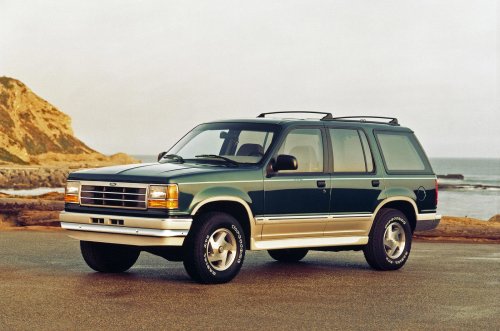
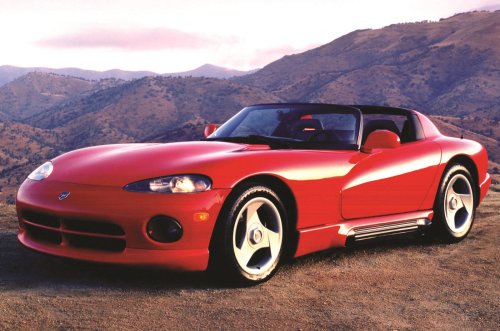
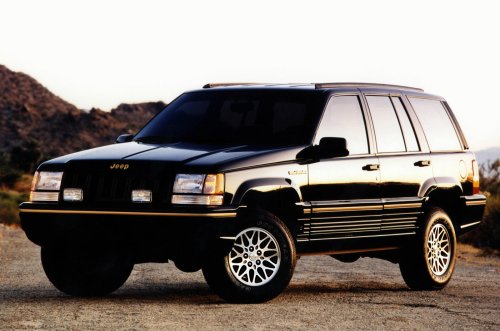
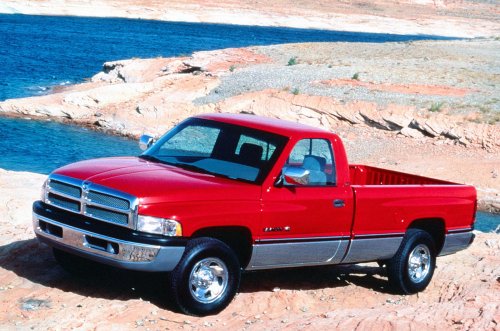
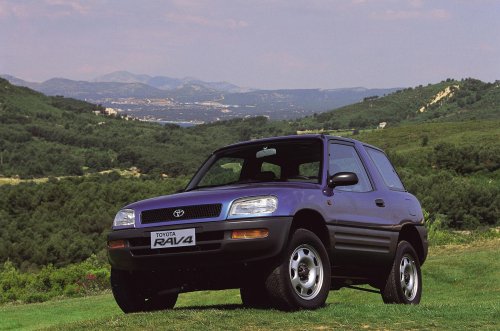
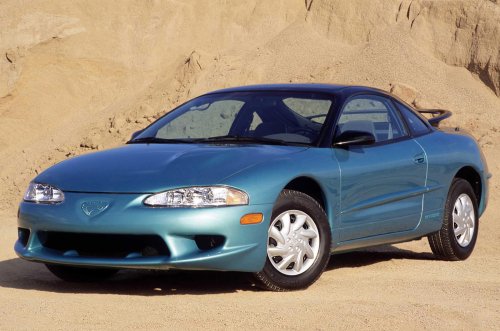
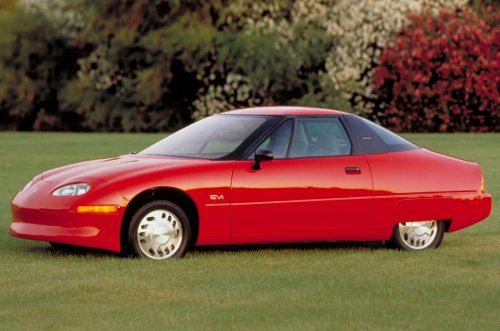
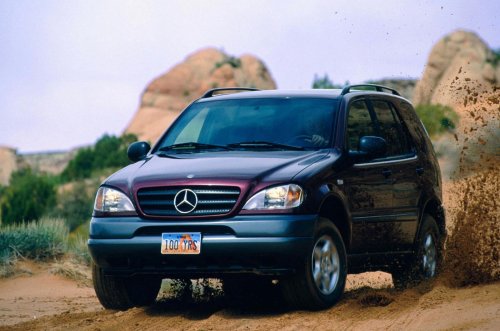
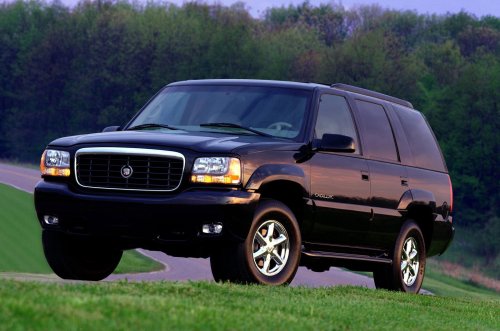
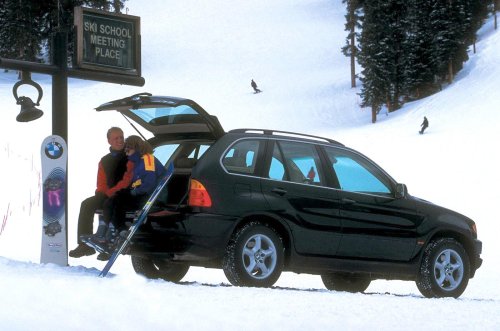
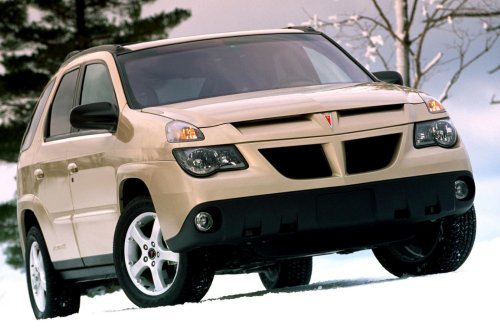



















Game changers.We’ve taken a look at automotive history since 1945 and chosen the car we reckon is the most important one launched in every year between then and the year 2000. Not all these cars are brilliant or huge sellers – some were instead notable for their shortcomings or commercial failure. But they all had something to say about the world they were created in, and many have resonance and meaning to this day.To ensure consistency, please note that the year mentioned is the year the car was first unveiled to the public. In some cases this was some time before the vehicle actually became available to drive away.We also note ‘honourable mentions’ – the runner-up car or cars for that year. You won’t agree with all our choices, but we hope you’ll enjoy finding out more about the cars nonetheless:1945 – Willys CJ-2AWillys knew farmers would appreciate the attributes that helped the MB survive European battlefields during World War Two so it released a civilian model named CJ-2A. Modifications like a fold-down tailgate and bigger headlights made it more usable but it remained unabashedly rugged and utilitarian. The company pointed out owners could use it as a run-about, a light tractor, a mobile power unit and a light truck.Pricing started at $1090 (about $15,500 in 2020). The CJ-2A spawned countless imitators, imposters and competitors around the globe plus a long lineage of off-roaders, including the CJ-7 and four generations of the Wrangler.Honorable mention: Lincoln Continental1946 – Willys Jeep Station WagonThe CJ-2A’s success encouraged Willys to continue exploiting the MB’s war-bred potential. Aptly named Station Wagon, its second Jeep-derived model catered to motorists seeking the ruggedness and versatility of a CJ-2A in a bigger, more car-like package capable of carrying an entire family and their gear. It stood out from other wagons because its body was made entirely of steel rather than wood.Priced at $2898 (about $38,000 in 2020), the Station Wagon laid the groundwork for the SUV as we know it today.1947 – Ford F-SeriesThe F-Series was the first new truck Ford released after WW2. Vastly more modern than its pre-war predecessor, it was also wider, longer and taller plus more comfortable to drive. Buyers had several variants (including the popular, entry-level F-1) and many body configurations to choose from.The American market was clearly ready for a fresh design. The 1948 model year was Ford’s truck division’s best since 1929. Few realized how long its success would last, though. A 14th generation model has recently been unveiled; the F-Series has been America’s best-selling vehicle since 1976.Honorable mention for 1947: Chevrolet Advance Design1948 – 1949 FordFord moved quickly to introduce its first truly new post-war models before rivals General Motors and Chrysler. Launched for the 1949 model year, the company’s overhauled range of cars offered an updated design with a streamlined silhouette and chrome accents, suspension improvements and a more contemporary interior. Engine options included a straight-six and a V8.Pricing started at $1472 (about $15,600 in 2020 money) for a six-seater sedan with a six-cylinder engine. Ford made 1,118,740 cars in 1949, a significant increase over its 1948-model-year total of about 250,000 units. Many say this car saved Ford, and also set the scene for Ford going on the stockmarket in 1956, the world’s largest Initial Public Offering (IPO) at the time.1949 – Oldsmobile 88Oldsmobile showed a surprising amount of foresight when it created the 88 by dropping the 135 HP Rocket V8 engine developed for the bigger, heavier 98 into the smaller 76 chassis. Initially offered in six variants, the 88 was surprisingly quick for its era and it quickly made a name for itself in racing.Oldsmobile captivated the public’s attention by breathing new meaning into the phrase “what wins on Sunday sells on Monday.” Its rivals soon fired back by packing more power into their range and the horsepower war that ensued ultimately created the muscle car.1950 – Nash RamblerWhile Detroit’s Big Three were thinking big, Nash believed American motorists were ready for a smaller, more efficient car that could nonetheless seat five. The Rambler was born from this design brief. It was initially offered only as a two-door convertible with a retractable canvas roof, a daring decision made to establish the model’s image before expanding the range. It paid off; Nash’s annual sales jumped 32% to 189,423 units, showing its bigger rivals that the market for fuel-efficient compact cars truly existed – increasingly the second car in the household.In a wider sense, the Rambler ushered in the compact segment. The Rambler triggered the arrival of the Chrysler Valiant, Chevrolet Corvair and Ford Falcon compacts from the Big Three by the decade’s end, the Falcon in turn spawning the Mustang.1951 – Nash HealeyAmerican automakers had renewed most of their range by the early 1950s but sports cars remained conspicuously absent. Nash identified this void and asked England’s Healey to help fill it. The Nash Healey arrived as a two-seater convertible made with aluminum parts to keep weight in check. Assembled in England, it received a 125 HP straight-six engine.The Nash Healey wasn’t America’s first post-war, series-produced sports car - that honor goes to the tiny Crosley Hotshot released in 1949 - but it opened the floodgates. 150 units were made in 1951 and priced at $5868 (about $58,000 in 2020).1952 – Willys AeroWillys returned to the passenger car segment when it released the Aero in 1952. It was a new model available in several variants ranging from basic to upmarket but disappointing annual sales reflected that there was nothing noteworthy about the car. Willys struggled to sell it while demand for more lucrative Jeep models was so high that it struggled to keep up. Production ended when Willys left the American car market for good in 1955, focusing purely on Jeeps instead.Executives learned two lessons that remain valid in 2020. Value alone doesn’t sell a car in America and the demand for off-roaders is not to be underestimated.Honourable mention for 1952: Lotus MkVI1953 – Chevrolet CorvetteChevrolet originally built the Corvette solely for the 1953 Motorama, a traveling GM auto show brimming with futuristic, head-turning concepts. The public loved it so much that executives decided to turn it into a production model that same year. While almost everyone liked how it looked, few appreciated the way it drove, partly because it used an anemic, 150 HP straight-six engine. The Corvette nearly flopped.Chevrolet priced the Corvette at $3498 (about $33,500 in 2020 money) and sold only 300 units. Sales began picking up in 1955 when the firm listened to engineer Zora Arkus-Duntov (1909-1996) and made a V8 available. The rest, as they say, is history. Around 1.6 million ‘Vettes have been produced to date. An eight-generation Corvette has just been unveiled, now with a mid-engined configuration for the first time.1954 – Cadillac EldoradoCadillac introduced the Eldorado nameplate in 1953 on an upmarket Series 62 Convertible and promoted it to a standalone model in 1954. It was still closely related to the Series 62 and the common parts between the two models allowed Cadillac to lower the Eldorado’s price to $5738 (about $55,000 in 2020).Sales soared to 2150 units, up from 531 the previous year. It’s this model that transformed the Eldorado nameplate into one of the most coveted American cars of all time.Honorable mention for 1954: Ford Thunderbird, Toyota Land Cruiser, Mercedes-Benz 300SL1955 – MG AMG introduced the A in 1955 to replace the venerable TF. It knew America would be one of the model’s bigger markets so it didn’t dramatically change the TF’s basic layout and refrained from adding features that increased weight. The A wore a much more streamlined body than its predecessor that turned heads everywhere it went but it still didn’t offer exterior door handles.Thousands of American motorists fell in love with nimble European drop-tops thanks to the MG A. Its success convinced many automakers to jump into the segment and kept MG alive and relatively well through the 1960s.Honorable mention for 1955: Volkswagen Karmann-Ghia, Citroën DS1956 – Chrysler 300BChrysler followed up on the 1955 300 by releasing an updated variant of the sedan named 300B in 1956. It was powered by a 340 HP Hemi V8, though buyers could pay more to unlock 355 HP thanks to a higher compression ratio. These figures were jaw-dropping. Chrysler advertised the 300B as the fastest and most powerful new car available in the United States. To prove its claim, it set a world passenger car speed record when the 300B averaged 133.9mph at Daytona Beach, Florida.Rivals took notice. Powerful sedans became increasingly common during the late 1950s.Honorable mention for 1956: Volvo Amazon (sold as the Volvo 122S in the US)1957 – Chevrolet ImpalaReleased in 1957 for the 1958 model year, the Chevrolet Impala was marketed as a more opulent evolution of the Bel Air. The two-door model was offered as a convertible and as a coupe and both body styles received a dapper-looking design accented by bright trim and model-specific styling cues.Pricing started at $2586 (about $23,600 in 2020) so the Impala remained within the reach of many. This accessible approach to luxury made it one of Chevrolet’s best-known nameplates for decades. The ’58 Impala saw General Motors at its most imperial; its cars made up an extraordinary 50% of the total US car market at the time. Times change, and the 10th generation model sold in 2020 will retire without a replacement after the 2020 model year.Honorable mentions for 1957: Fiat 500, Lotus Seven1958 – Chevrolet El CaminoChevrolet introduced the 1959 El Camino in 1958 as its answer to the Ford Ranchero. Marketed as being more than a car and more than a truck, its front end wore a design inspired by Chevrolet’s sedan range while its rear end featured an open cargo box that gave it a 1150 lb payload.Made until 1987, the El Camino outlived and outsold the Ford-badged pickup that inspired it. It competed in a class of one during the 1980s, though sister company GMC sold a badge-engineered version of it first called Sprint and later Caballero.Honourable mentions for 1958: Rover P51959 – Chevrolet CorvairWith the Corvair, Chevrolet wanted to design an entry-level model that offered a blend of value, performance and practicality not found anywhere else in the automotive industry. Whether it did is a point of debate; what’s certain is the firm created the most controversial car in American history.The Corvair’s reputation took a hit when activist Ralph Nader (born 1934) damned it for being dangerous at high speeds. Chevrolet nonetheless made 1.8 million units over two generations but it didn’t dare make another rear-engined car. (1962 model pictured)1960 – International-Harvester Scout 80International-Harvester had Jeep’s CJ-5 in mind when it designed the Scout 80. The Jeep had barely evolved since 1945 so International-Harvester saw an opportunity to offer a more modern farm-friendly, leisure-ready off-roader. The Scout 80 was originally available as a pickup with a hard or a soft top (pictured: 1963 model) and as a wagon offered exclusively with a steel hard top.Keen pricing started at $1771 (about $15,000 in 2020), which made it cheaper than the CJ-5 that Jeep charged $1980 (about $17,000 in 2020) for. It sold well and helped spawned a segment that blossomed in the 1960s.Honorable mention for 1960: Checker Marathon, Saab 961961 – Chevrolet Chevy IIChevrolet introduced the oddly-named Chevy II to give compact car buyers a more conventional alternative to the rear-engined Corvair. Aimed right at the Ford Falcon, it was rushed to production in 18 months because it needed to be as conventional as possible. Chevrolet offered a full range including two- and four-door sedans (pictured), two- and four-door wagons, a coupe and a convertible.While it wasn’t as sexy as the firm’s bigger, more expensive models, it proved Americans still wanted a basic form of transportation they could afford. High-horsepower muscle cars made headlines during the 1960s but run-of-the-mill models like the Chevy II – which later became the Nova – delivered volume.Honorable mentions for 1961: Jaguar E-Type (sold as the Jaguar XK-E in the US), MG Midget, Renault 4, Volvo P18001962 – Jeep WagoneerThe Jeep Wagoneer introduced in 1962 is the precursor of the SUV that roams the globe in 2020. It offered a combination of ruggedness and comfort found in none of its rivals. Buyers could order both an automatic transmission and four-wheel drive, for example.The Wagoneer was such a timeless truck that Jeep chose not to play by the rules. Instead of replacing the model in the 1970s, it kept updating it (and moving it upmarket) until 1991. It’s celebrated as one of the American auto industry’s icons.Honorable mentions for 1962: Ford Cortina, Lotus Elan, MGB, Triumph Spitfire1963 – Chrysler Turbine CarChrysler sensed American motorists were no longer impressed by fins and chrome so it developed a turbine-powered car and put 50 examples in the hands of normal motorists. The model arrived as a gorgeous coupe characterized by turbine-themed styling cues. Executives hoped the pilot program would allow them to gather data about the technology and channel it into a mass-produced model.Owners liked the smooth powertrain but complained about poor fuel economy and lackadaisical acceleration. Discouraged, Chrysler stopped developing what could have become the most advanced American car manufactured during the 1960s. Most of the Ghia-built coupes were destroyed.Honorable mentions for 1963: Rover P61964 – Ford MustangUnveiled in New York, the Ford Mustang became an instant hit; it was the must-have car of the year. Ford received 22,000 orders within 24 hours of the model’s introduction, which was nearly a quarter of the 100,000 cars it hoped to sell annually. Over 418,000 units had found a home by its first birthday.The Mustang delivered performance (when fitted with a V8) and style in an affordable package that appealed even to motorists who didn’t like cars. The Chevrolet Corvair, its main rival, was no match for it. In 2020, the Mustang still represents America’s accessible dream car. Over 10 million Mustangs have been sold to date.1965 – Ford Shelby MustangRacer-turned-tuner Carroll Shelby (1923-2012) identified the Ford Mustang’s potential early on. It was much smaller and lighter than muscle cars so it was a prime candidate for tuning. The original Shelby GT350 went racing with a revised suspension, tighter steering and a 306 HP V8. The tuner worked hand-in-hand with Ford to gradually turn up the power dial during the 1960s and the relationship continues in 2020. The Mustang GT500 unveiled at the 2020 Detroit auto show packs 760 HP.Honorable mentions for 1965: Rolls-Royce Silver Shadow, Renault 161966 – Chevrolet CamaroThe Camaro was Chevrolet’s answer to the immensely popular Mustang, which Ford ironically released to counter the Corvair. About 220,000 units were sold during the nameplate’s first year on the market, a statistic that encouraged product planners to fast-track convertible and higher-performance variants to the market.The Camaro has often lived in the Mustang’s shadow, and it nearly went extinct during the 1970s, but the nameplate continues to give its Ford-built rival a run for its money in 2020. Over 5 million Camaros have been sold to date.Honorable mention for 1966: BMW 02, Fiat 124, Jensen Interceptor, Toyota Corolla, Audi 801967 – Toyota 2000GTBest known for its starring role in the James Bond film You Only Live Twice, the Toyota 2000GT was the first seriously desirable sports car to ever come out of Japan (sorry Honda fans). With its 2.0-liter straight-six, the rear-wheel drive 2000GT was clearly inspired by the Jaguar E-Type coupe but it was almost a Datsun rather than a Toyota.The development work was undertaken by Yamaha which offered its design to Datsun, but the latter went its own way with the 240Z of 1969. Toyota adopted the design instead, but it built just 351 examples of the 2000GT between 1967 and 1970, and of those just 62 officially came to America. Their rarity has led to survivors becoming very valuable – one was sold at auction in 2018 for $665,000.Honorable mentions for 1967: NSU Ro80, Saab 99, Toyota 2000GT, Pontiac Firebird1968 – AMC AMXAMC created the AMX (which stood for American Motors Experimental) by chopping the Javelin’s wheelbase, removing the rear bench and dropping a 225 HP V8 in the engine bay. The firm also offered a 315 HP V8 as an optional upgrade for motorists seeking to cure their need for speed.The AMX didn’t generate volume, and AMC executives knew it wouldn’t, but it played a significant role in boosting the company’s image, especially after it set 106 world speed records on Goodyear’s Texas test track.Honorable mentions for 1968: Jaguar XJ, Ferrari 365 GTB/4 ‘Daytona’, Toyota Hilux, Audi 100, Ford Escort (Europe)1969 – Chevrolet K5 BlazerChevrolet’s late answer to the Jeep CJ-5, the International-Harvester Scout and the Ford Bronco was built on a shortened version of the frame that underpinned its pickups. This configuration made a big difference because it kept the production process simple and reigned in costs. The K5 Blazer also offered a much more spacious interior than the models it competed against.While Jeep continued fine-tuning the CJ, International-Harvester and Ford followed Chevrolet’s lead when they redesigned their off-roaders. The General Motors-owned firm defined an entire segment – which quickly included entries by Dodge and Plymouth – for decades by seeking economies of scale.Honorable mentions for 1969: Ford Capri (Europe), Renault 121970 – Ford PintoThe Pinto wasn’t a remarkable car by any means of measurement but it proved Ford finally took the threat posed by import brands like Volkswagen and Honda seriously. It arrived as a relatively small, reasonably fuel-efficient model built with utmost economy in mind. It also had an alarming tendency to catch fire when rear-ended due to a design flaw Ford spent millions of dollars fixing.It was envisioned as Ford’s savior but it became the firm’s problem child and it taught executives valuable lessons about how to design a modern-era car, let alone a compact one developed to achieve six-digit annual volume.Honorable mentions for 1970: Chevrolet Vega, Land Rover Range Rover, Citroën SM, Toyota Celica, Triumph Stag1971 – Subaru LeoneSubaru introduced the Leone in its home country of Japan in late 1971. Originally launched as a front-wheel drive coupe, it was later offered as a four-door sedan and, crucially, a four-wheel drive station wagon (pictured). American sales of the aforementioned long-roof started in 1974.Americans despised the 360 kei car but the welcomed the various Leone derivatives with open arms. It almost single-handedly helped Subaru gain a foothold in the United States, its biggest global market in 2020, and where it sold 680,135 cars in 2018.Honorable mention for 1971: Mercedes-Benz SL (R107)1972 – Honda CivicHonda took its American rivals by surprise when it released the Civic in 1973. Available as a two-door sedan or a two-door hatchback, the homely econobox was peppier and more spacious than its specification sheet suggested and it was built to last, unlike many economy cars of the era.It arrived at precisely the right time. Motorists flocked to more fuel-efficient models in the wake of the 1973 oil crisis and the Volkswagen Beetle – America’s go-to import – was seriously showing its age. The Civic became a sensational hit. Now in its 10th generation, it’s still one of America’s best-sellers. A remarkable 11 million Civics have been sold in America to date, out of well over 20 million in total.Honorable mentions for 1972: BMW 5 Series (E12), Chevrolet C/K (third generation), Renault 5, Volkswagen Passat1973 – Ford Mustang IIFord took enthusiasts by surprise with the Mustang II. Based on an evolution of the platform found under the Pinto, it was 13in shorter than its direct predecessor and 7in shorter than the 1964 original. The changes under the hood were equally drastic; the entry-level engine was a four-cylinder that mustered only 85 HP and the most powerful Mustang II offered a 109 HP V6. The V8 vanished.Purists yelled “say it ain’t so!” but the market responded favorably to these dramatic changes. Ford sold 338,136 units by the end of the 1974 model year compared to 193,129 examples of the big-bodied car during the previous model year.1974 – Volkswagen GolfThe shockwaves the original Volkswagen Golf sent across the global automotive industry were felt in the United States before the model disembarked in 1975 as the Rabbit. It was elegant, spacious, efficient, well-built and affordable; no other car in its segment combined these attributes as well as the Golf. Rivals who wrote off the Beetle as a relic during the early 1970s had a new Volkswagen to worry about.Volkswagen of American began making the Rabbit in Westmoreland, Pennsylvania, in 1978. The tooling was sent to South Africa where production of the original Golf continued until 2009. Over 20 million Golfs have been sold worldwide to date, and we’ll see an all-new eighth generation model unveiled shortly.Honorable mention for 1974: Jeep Cherokee1975 – AMC PacerAMC deserves credit for genuinely trying to design an American-flavored compact car. The Pacer was shorter than the firm’s other models but far wider than European and Japanese compacts so it offered a more spacious interior. This addressed one of the big complaints about the segment’s best-sellers. Motorists also appreciated the low belt line which gave them excellent visibility.Plans to release the Pacer with a General Motors-built Wankel engine spinning the front wheels were canned so it arrived with AMC’s ubiquitous straight-six and rear-wheel drive. It was nonetheless one of the most innovative American cars released during the 1970s.Honorable mentions for 1974: BMW 3 Series (E21), Cadillac Seville, Ferrari 308GTB, Jaguar XJ-S, Triumph TR71976 – Honda AccordAmerican motorists left the Honda brand when they outgrew their Civic. The company introduced the Accord in 1976 in a bid to retain buyers. It was originally offered only as a two-door hatchback but the range grew with the addition of a four-door sedan in 1979. The model became one of Honda’s greatest hits; it was so popular in the United States that executives decided to build it in Ohio starting in 1982.The Accord overtook the Ford Taurus as America’s best-selling car in 1989.Honorable mentions for 1976: Jeep CJ-7, Ford Fiesta, Aston Martin Lagonda, Lotus Esprit, Rover SD1, Porsche 9241977 – Ford BroncoThe original Ford Bronco was getting long in the tooth by the middle of the 1970s. Competitors made by International-Harvester, Chevrolet and Dodge were bigger and more modern so Ford alchemized the Bronco into a full-size off-roader built on pickup bones. Four-wheel drive, a manual transmission and a 156 HP V8 came standard though nearly 80% of buyers selected the optional automatic gearbox.The transformation was drastic but it was exactly what the nameplate needed. Annual sales soared from 13,600 units in 1976 to nearly 94,000 in 1979. Ford had breathed new life into the segment. Around 1.5 million were sold across five generations until it died in 1996. An all-new three-shape Bronco range was unveiled recently and will go on sale in the fall.Honorable mention for 1977: Matra Rancho1978 – Saab 900Saab bundled a decade’s worth of research in automotive safety into the 900 introduced in 1978. Developed to ultimately supersede the 99 it was closely related to, it was bigger, more practical, safer and correspondingly more expensive. It was still quirky, which helped it stand out from every other car on the road at the time. Base 900s came with a 115 HP engine but the turbocharged model put 135 HP under the driver’s right foot. It was a true performance car for the whole family.The original 900 remains Saab’s best-known model; it’s the nameplate that defined the Swedish brand.Honorable mentions for 1978: BMW M1, Honda Prelude, Mazda RX-7, Opel Monza & Senator, Toyota Supra1979 – AMC EagleInspired by Subaru’s success and bolstered by Jeep’s expertise, AMC created the Eagle by putting the Concord on stilts and fitting it with four-wheel drive. The end product offered the all-terrain capacity of an SUV while providing the comfort, space and drivability of a standard passenger car.The Eagle wasn’t the runaway success AMC hoped for, partly because it was marred by build quality issues and the company’s image had already started free-falling. The idea of rolling car and truck attributes into one nameplate was decades ahead of its time, though.Honorable mention for 1979: Mercedes-Benz G-Wagen, Volkswagen Jetta1980 – Ford EscortTired of taking black eyes from Honda and Toyota, Ford set aside $3 billion (nearly $12 billion in 2020 money) to develop an Escort suitable for both the European and American markets. It envisioned as a true world car, and one of Ford’s defining moments, though there were many market-specific differences inside and out. The Escort and its twin, the Mercury Lynx, suffered teething problems but they proved Ford understood how to remain competitive in the face of its Japanese and European rivals.Honorable mention for 1980: Audi Quattro1981 – Cadillac CimarronUnderpowered, cheaply built and overly austere, the Cadillac Cimarron couldn’t hold a candle to the BMW 3 Series it was developed to compete against. It didn’t take a seasoned car reviewer to tell it was little more than a dressed-up Chevrolet Cavalier. The Cimarron left an indelible mark on Cadillac’s history as it flopped. John Howell, the company’s product director from 2004 to 2010, famously kept a photo of the sedan captioned “lest we forget.”Honorable mentions for 1981: DMC DeLorean, BMW 5 Series (E28)1982 – Chevrolet S10 BlazerThe rising popularity of SUVs convinced Chevrolet to turn the S-10 – the first compact pickup it developed in-house – into a more family-friendly model. Much like the S-10 was a smaller alternative to the C/K pickups, the S-10 Blazer was positioned as a smaller sibling to the K5 Blazer. It was the first entry in a segment that blossomed during the 1980s and it helped position off-roaders as family cars in the minds of American car buyers.Motorists who lived in rural areas and/or who routinely tackled winter water appreciated its ground clearance and its available four-wheel drive system.Honorable mentions for 1981: Mercedes-Benz 190, Audi 100, BMW 3 Series (E30), Porsche 944, Volvo 7601983 – Dodge Caravan/Plymouth VoyagerWhile the Chrysler group didn’t invent the minivan, it perfected it by releasing the Dodge Caravan (pictured) and the Plymouth Voyager in 1983. Both models were identical except for minor model-specific trim pieces. They were front-wheel drive, a layout chosen partly because it allowed engineers to give the vans a fully flat loading floor.Buyers could use either van as a family car during the week and remove the rear seats to pick up sheets of plywood from the hardware store on the weekend. Chrysler’s vans took practicality to the next level and were considered the models to beat by American and Japanese carmakers. Minivans may be yesterday’s news today, but their ‘80s success gave Chrysler the financial firepower to acquire AMC and its coveted Jeep brand in 1987, making the company a powerful force in SUVs to this day.Honorable mentions in 1983: Ford Bronco II, Jeep Cherokee (XJ), Honda CRX1984 – Chevrolet NovaThough it contentiously wore a familiar nameplate, the Nova was a completely new type of car for Chevrolet. General Motors decided joining forces with Toyota was wiser than trying to beat it so it formed a joint-venture called New United Motor Manufacturing, Inc. (NUMMI). The Nova was closely related to the Corolla and both were made in the same Fremont, California, plant.Making a Chevrolet with Toyota guts marked a dramatic strategy shift for General Motors. In 2020, Tesla owns the Fremont factory and manufactures the three cars in its range in it. PICTURE: 1988 modelHonorable mention for 1984: Mercedes-Benz W124-class, Ferrari 288 GTO, Ferrari Testarossa, Renault Espace, Seat Ibiza, Toyota MR21985 – Ford TaurusThe original Taurus signaled a tectonic shift in the way Ford developed a car. Taking a cue from its Japanese rivals, Ford shaped the Taurus as an ultra-modern, front-wheel drive family car with a streamlined design characterized by the lack of a grille. An independent suspension came standard on the sedan variant and buyers could pay extra for an electronic instrument cluster.The Taurus was Ford’s most advanced car to date and it reflected the firm’s newfound commitment to quality. Buyers noticed; Ford sold about 236,000 units in 1986.Honorable mentions in 1985: Ferrari 328, Bentley Turbo R1986 – Jeep Wrangler (YJ)1986 was a significant year for Jeep. It finally stopped building the CJ after making 1.6 million units and replaced it with a new model named Wrangler. It looked a lot like the CJ, its proportions didn’t change, but nearly every part of it was new which made a huge difference considering how long its predecessor had been in production for. This evolutionary approach to design helped turn the Wrangler into one of the most emblematic American cars of all time over the course of four generations.In 2020, the Wrangler still shares numerous styling cues with the CJ-2A released in 1945, and it remains a true, no-nonsense off-roader with a separate frame and four-wheel drive.Honorable mentions for 1986: Porsche 9591987 – Buick GNXBuick wasn’t the brand enthusiasts associated with performance yet it released one of America’s best sports cars in 1987. The GNX was the ultimate evolution of the Regal-based Grand National. McLaren Performance Technologies helped Buick developed a 3.8-liter V6 turbocharged to 276 HP, though that output was wildly conservative. The GNX could effortlessly out-accelerate the Chevrolet Camaro.Buick charged nearly $30,000 for the GNX (close to $70,000 in 2020 money). The idea of spending Corvette money on a Buick didn’t deter collectors from snatching up the 500 available examples in record time.Honorable mentions for 1987: Ferrari F40, BMW 5 Series (E34)1988 – Buick ReattaThe Reatta was Buick’s attempt at returning to the luxury car segment. It arrived as a two-seater coupe, though the range grew to include a convertible in 1990, and it was packed with upmarket features like a primitive touchscreen-based infotainment system. All told, it embodied how Buick envisioned cars would evolve during the 1990s. It was one of the most forward-thinking American models of its era.21,000 units of the Reatta were built largely by hand during its four-year production run, which wasn’t bad considering it was always envisioned as a low-volume car.Honorable mentions for 1988: BMW Z1, Cizeta V16T, Ford Probe1989 – Lexus LSToyota allowed its brightest engineers and designers to tap into a bottomless pit of money to develop the first-generation Lexus LS. Nothing was left to chance; the sedan had to be better than Germany’s finest while costing less to build. Toyota went as far as developing a new type of carpet to save weight.The first LS made its debut in 1989 with a 241 HP V8. It allegedly forced Mercedes-Benz to make several last-minute changes to the 1992 W140 S-Class and pushed it to embark on a ferocious cost-cutting campaign.Honorable mentions: Isuzu Rodeo, Shelby Dakota1990 – Ford ExplorerThe original Ford Explorer played a tremendously important role in democratizing the SUV body style. Introduced in 1990 to replace the Bronco II, it countered the Chevrolet Blazer and the Jeep Cherokee (XJ) with usability, available four-wheel drive and an optional Eddie Bauer package that made it downright luxurious. Ford sold about 250,000 units in 1991, the Explorer’s first full year on the market.It outsold the Blazer and the Cherokee combined, though both models were much older. In the 1990s, the Explorer was a ubiquitous sight in driveways all over America. Nearly 8 million Explorers have been sold in America to date, and a new sixth-generation model has recently gone on sale.Honorable mentions in 1990: Acura NSX1991 – Dodge ViperDodge’s image sank to new lows during the 1980s and the Viper was envisioned as a way to salvage it. Chrysler president Bob Lutz (born 1932) asked Carroll Shelby (1923-2012) to help created a modern interpretation of the 1960s Cobra. It had to be simple, have two seats and use a mammoth engine.The V10-powered Viper arrived in 1991 as a raw, all-American sports car that competed in a class of one. Dodge made five generations of the car before ending production in 2017 but it never strayed far from the simple formula that shaped the original model.Honorable mentions in 1991: Bentley Continental R, Bugatti EB110, Mercedes-Benz 500E1992 – Jeep Grand Cherokee (ZJ)Jeep’s first new full-size model since the Wagoneer made its debut in 1962 was worth the wait. Designers noticed SUVs were becoming increasingly luxurious so the ZJ-generation Grand Wagoneer was almost Range Rover-like in fit and finished, though it cost much less. The more basic Grand Cherokee remained exceptionally capable off-road, comfortable and happy to tow for miles on end.Jeep’s rivals closely followed this template as they rushed to the SUV segment during the 1990s.Honorable mentions in 1992: McLaren F1, Ferrari 456, Jaguar XJ220, Mitsubishi Lancer Evo, Subaru Impreza Turbo1993 – Ram 1500Automakers often boast about raising the bar and the claim is frequently questionable. Dodge did it – and made it look easy – with the second-generation Ram. Its head-turning, semi-inspired design was revolutionary and the available 8.0-liter, 300 HP V10 was the most powerful engine offered in a pickup at the time.Offered in 1500, 2500 and 3500 variants, the Ram was the new benchmark in its segment.Honorable mention in 1993: Aston Martin DB71994 – Toyota RAV4In the late 1980s, Toyota challenged its engineering department to make a model capable of going far off the beaten path while remaining car-like in normal driving conditions. The original RAV4 introduced in 1994 ticked both boxes. It defined the modern crossover and inspired a legion of competitors all over the world.In its fifth generation as of 2020, the RAV4 remains one of the best-selling cars in America; 427,168 Rav4s found US homes in 2018, bringing the total to 3.8 million examples.Honorable mentions for 1994: Chevrolet Impala SS, Dodge Neon1995 – Eagle TalonLike its predecessor, the second-generation Eagle Talon was little more than a badge-engineered Mitsubishi Eclipse. It’s not a coincidence that it was also the last car unveiled by the unloved Chrysler-owned brand. It showed its parent company and other automakers the limits of badge-engineering and product overlapping. Eagle disappeared when Talon production ended in 1998.Honorable mentions in 1995: Alfa Romeo GTV & Spider (916), BMW Z31996 – General Motors EV1With the EV1, General Motors put electric technology back in the spotlight after a long hiatus. Shaped like a cross between a Saturn and a space ship, it was – and remains – the only General Motors-branded car released by the carmaker. Motorists in a small handful of American cities could lease one, though they were warned they could be asked to return the car at any moment.That’s exactly what happened. Citing a lack of demand, General Motors bought back the 1117 EV1s built and destroyed a majority of them. In 2006 GM’s then-CEO Rick Wagoner said that not pursuing the EV-1 project was his biggest regret.Honourable mentions in 1996: Ferrari 550M, Jaguar XK8, Lotus Elise, Mercedes-Benz SLK, General Motors EV-1, Porsche Boxster1997 – Mercedes-Benz M-ClassMercedes-Benz released two completely different cars in 1997. The A-Class took it into the city car segment but the model wasn’t offered in the United States. Americans instead discovered the M-Class, a V6-powered off-roader with mass-market ambitions that set it apart from the timeless G-Class. Odder still, Mercedes announced the model would sing Sweet Home, Alabama.Launched as the ML 320, the M-Class was the first American-made Mercedes-Benz. Production started in Vance, Alabama, in 1997. In 2020, the plant manufactures the GLE – which evolved from the M-Class – and the bigger GLS in addition to C-Class models for the local market.Honorable mentions in 1997: Alfa Romeo 156, Honda Civic Type R, Mercedes A-Class, Toyota Prius, Lincoln Navigator1998 – Cadillac EscaladeThe Lincoln Navigator’s popularity caught Cadillac by surprise. It rushed the original Escalade to the market for the 1999 model year by taking a body-on-frame GMC Yukon, putting its emblem all over it and expanding its list of standard equipment. It sounds like a repeat of the Cimarron disaster but the transformation worked amazingly well.The Escalade outsold the Navigator for the first time in 2002, the year after it entered its second generation with a more chiseled design and, finally, an identity of its own. 36,114 units found a home that year compared to 30,613 sales for the Lincoln.Honorable mentions in 1998: Audi TT, BMW 3 Series (E46), BMW M Coupé and Roadster, Jaguar S-Type, Lexus IS, Volkswagen New Beetle1999 - BMW X5As we've seen, BMW was not the first company to build a luxury SUV, but it was the first to make one that handled like a wagon rather than a XXL-sized off-roader. Even now many rivals can't match the BMW's poise, while the original X5 (codenamed E53 by BMW) also came with some brilliant engines and a permanent four-wheel drive transmission for year-round security.In short the X5 was just what you'd expect from BMW, so it was ergonomically brilliant and offered wagon-car practicality – which is why it was like driving a 5 Series Touring, but a fair bit further from the road. It was built at BMW’s plant in Spartanburg, South Carolina, which is now the company’s largest in the world, producing nearly 500,000 SUVs a year.Honourable mentions in 1999: Audi RS4, Ferrari 360, Honda Insight, Honda S2000, Pagani Zonda2000 – Pontiac AztekThe tragicomedy known as the Pontiac Aztek began when the model broke cover in the summer of 2000. Critics lambasted its awkward front-end design and the black plastic trim fitted to some trim levels made it even worse. The unfortunate part about the Aztek story is that, looks aside, it was a surprisingly versatile vehicle (Pontiac offered a tailgate-mounted tent as an accessory) that was ahead of the crossover curve.In hindsight, the Aztek isn’t remembered as a trailblazer. It’s often ridiculed as a big, awkwardly-shaped nail in Pontiac’s coffin. The jury is still out on whether that’s a fair legacy.Honorable mentions in 2000: ‘BMW’ Mini