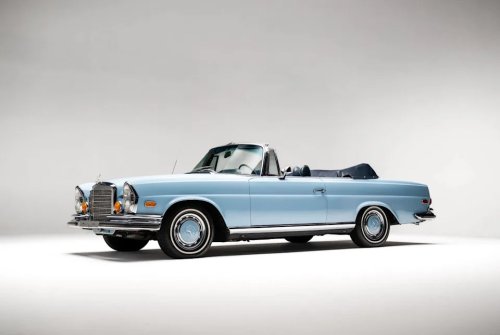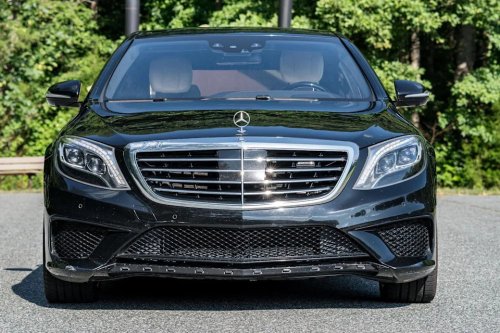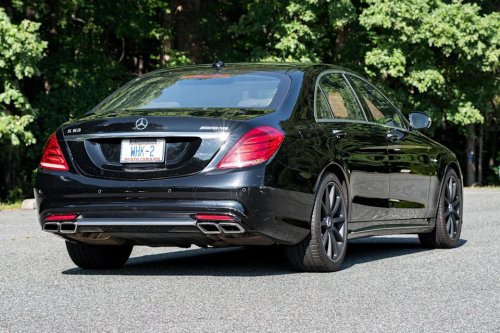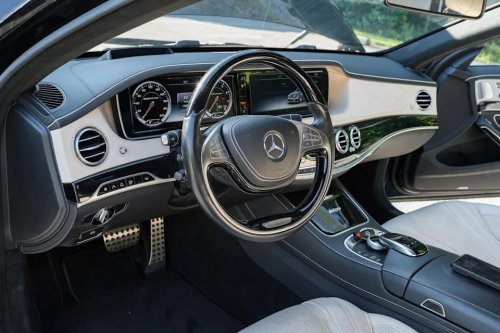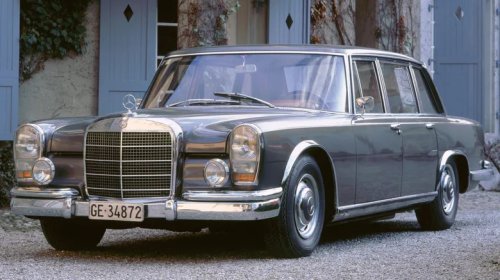
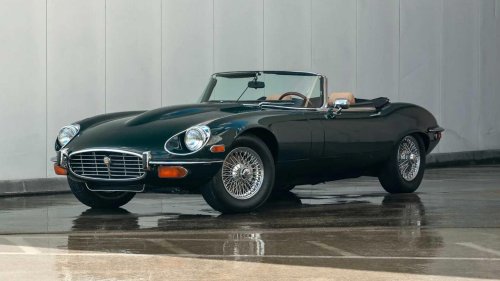
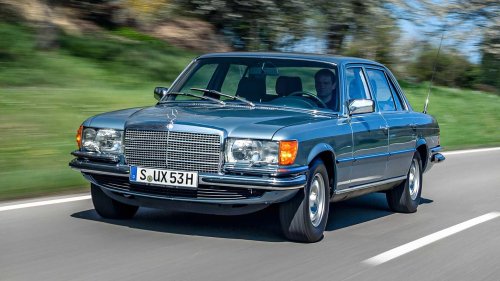
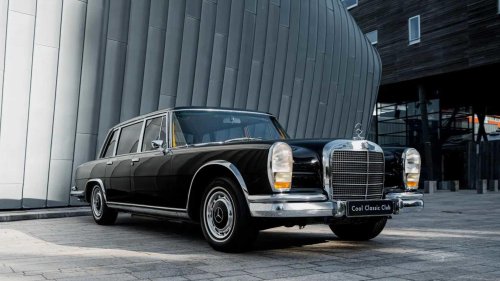
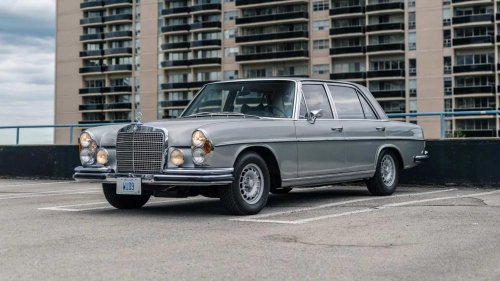
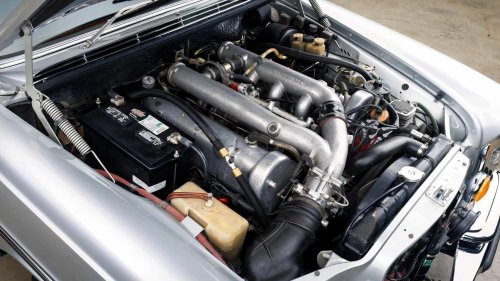
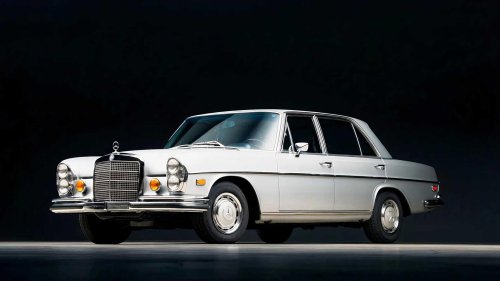
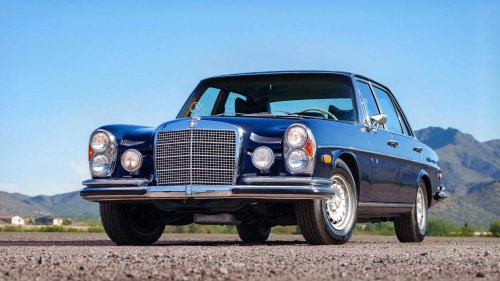
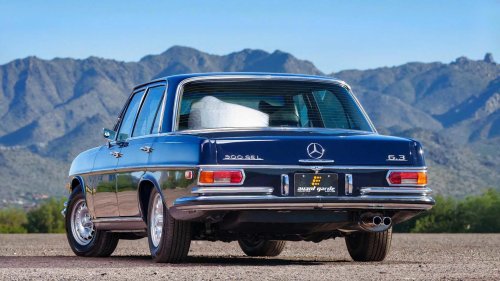


















The 1960s was a golden era for speed, but you had to choose between two segments. If you wanted to go fast, your options were clearly defined. You either bought a loud, unrefined American muscle car built for straight-line speed, or you spent a load of cash on a low-slung, temperamental European supercar. Given those two choices, the demographic was usually limited to younger men, so they needed something to appeal to the older gentleman.Mercedes-Benz didn't have a car in either of these categories at the time. The German automaker made cars for heads of state, captains of industry, and anyone who valued luxury above all else. Mercedes cars were engineered to be sophisticated rolling vaults that made their occupants feel safe. Speed was never the goal of most Mercedes luxury cars. But Mercedes wanted to play the performance game its way, which gave birth to a car that would completely rewrite the rules of performance. Luxury Sedans Had No Business Being Fast Bring a Trailer In the 60s, a luxury sedan had one job, and that was to isolate its wealthy occupants from the outside world. Once the occupants were inside, they needed to be completely comfortable, relaxed and shielded from the disturbances on the road. These cars were heavy, filled with thick carpets, extensive sound deadening, real wood trim, and plush leather seats. To achieve a smooth ride, they used soft, compliant suspensions that made the car float over surfaces. If you took a 60s luxury sedan into a sharp corner at high speed, the body roll would make you feel like you were steering an ocean liner through a storm.Engines in these cars were big but designed for smooth, effortless cruising, not high-rpm rush. They were geared to hum quietly on the highway, providing just enough power to move their immense weight with dignity. The idea of putting a powerful, race-bred engine into a car meant for a CEO’s daily commute was not just counterintuitive—it was considered a complete waste of engineering resources. The Performance World Was Dominated By Exotic Sports Cars Bring a Trailer If you loved fast cars that have good handling, you want the exotic cars from the UK and Italy. Brands like Ferrari, Maserati, Lamborghini, and Jaguar all had cars in this segment to satisfy your need for speed. Ferrari was riding high on its racing heritage, producing breathtaking machines like the 365 GT 2+2. Maserati offered grand tourers like the Ghibli, which blended art and speed. Lamborghini was shocking the world with the mid-engined Miura, and Jaguar’s E-Type was widely considered the most beautiful car on the planet.These shared a specific blueprint: they were low to the ground, aerodynamically sculpted, lightweight, and had powerful high-maintenance engines. They were designed for the wealthy enthusiast who didn't mind sacrificing comfort, practicality, and reliability for the thrill of hitting 150 mph. It was clear that sports cars were meant to be fast, and luxury sedans were meant to be comfortable. But Erich Waxenberger had a different idea. One Mercedes Engineer Had A Different Idea Mercedes-Benz Erich Waxenberger was a test and development engineer for Daimler-Benz at the time. He was also a man who loved speed. He looked at the company’s conservative lineup and saw something that had potential. As all curious minds work, he wanted to know what would happen if they put their biggest engine in a smaller and nimbler chassis, and he went to work. This wasn't a project commissioned by the Mercedes board, this was the kind of project that would get shutdown almost immediately. Mercedes was still cautious about performance cars; memories of the tragic 1955 Le Mans disaster.This was when a Mercedes-Benz 300 SLR driven by Pierre Levegh crashed into the grandstands. The driver and 83 spectators were killed, with another 120 people injured. It is still the deadliest accident in motorsport history and Mercedes had since withdrawn from factory racing. But late at night, Waxenberger and a small team of like-minded mechanics embarked on their hot-rod experiment anyway. This was a massive gamble and if it failed, it could mean the end of his career. Mercedes Already Had The Parts To Build This Car Bring a Trailer This small team already had everything they needed to build this ambitious performance car. They didn't need to build a car from scratch since Mercedes-Benz already had all the necessary parts, they just happened to belong to two completely different vehicles. At the time, the flagship of the Mercedes lineup was the ultra-exclusive 600 Grosser(Grand Mercedes)—a massive, stately limousine used by dictators, popes, and movie stars.It had a big V8 under the hood and Waxenberger's plan was simple but brutal: take this gigantic V8 from the limousine and drop it into a much smaller full-size luxury sedan. Now, on paper, this shouldn't have worked, but with a bit of fabrication, some creative rerouting of components, and some engineering wizardry, they managed to wedge a massive V8 into an engine bay meant for an inline six. The final product was a wolf in one of the finest sheep's clothing. The Mercedes 300SEL 6.3 That Shocked The Automotive World Bring a Trailer Waxenberger and his team had shoved the massive, hand-built 6.3-liter M100 V8 masterpiece from the 600 Grosser limousine into the engine bay of the W109 Mercedes 300SEL. When the car was ready, it was shown to Rudolf Uhlenhaut, the legendary head of Mercedes-Benz passenger car development. Legend has it that upon hearing the roar of the V8 and experiencing the car’s brutal acceleration, he immediately approved it for production.When the Mercedes-Benz 300SEL 6.3 debuted at the Geneva Motor Show in March 1968, the automotive world was left completely stunned. From the outside, it looked almost identical to the standard W109 sedan. Aside from slightly wider tires, twin exhaust pipes, and a modest "6.3" badge on the trunk lid, there was nothing to suggest that this car was a tire-shredding monster. The 6.3-liter M100 V8 made 250 horsepower and a mountain of torque at 369 lb-ft available at just 2,800 rpm in an era when most European cars made less than 150 hp. Engineering That Made The 300SEL 6.3 Feel Effortless Bring a TrailerWhat made the 300SEL 6.3 truly revolutionary wasn't just the straight-line speed; it was the sophisticated engineering that allowed the car to deliver that power without sacrificing the legendary Mercedes ride quality. To handle the immense weight and power of the V8, Mercedes equipped the car with an advanced, electronically controlled air suspension system. This system kept the car perfectly level, whether it was cruising at maximum speed on the Autobahn or carving through a mountain pass, almost eliminating the boat-like body roll typical of 1960s sedans.Additionally, the car featured:Four-wheel ventilated disc brakes: A rarity at the time, providing immense stopping power for this 3,900-pound missile. A limited-slip differential: To ensure the massive torque was evenly distributed to the rear wheels without sending the car into an immediate spin. Power steering and automatic transmission: Allowing the driver to control this missile with minimal effort. The result was a vehicle that felt easy to drive. It didn't fight the driver; it simply bent physics to its will. A Four-Door Sedan That Could Outrun Exotics Bring a Trailer When automotive journalists got their hands on the 300SEL 6.3 in 1968, the performance figures they recorded sent shockwaves through the industry. The heavy, leather-lined sedan could sprint from 0 to 60 mph in just 6.3 seconds and could cross the standing quarter-mile in 14.2 seconds with a top speed of 137 mph.To put those numbers into perspective, look at how it compared to the reigning exotic supercars of the era:The Mercedes sedan wasn't just competitive; it was embarrassing dedicated sports cars. Period road tests from legendary magazines like Road and Track expressed absolute disbelief. Journalists noted that they could comfortably cruise at 130 mph on the Autobahn while listening to the radio, enjoying the air conditioning, and watching Ferrari drivers in their loud, cramped cockpits. It was the ultimate sleeper. This Car Gave Us The "Rote Sau" (Red Pig) The 300SEL 6.3 had so much more performance in it that it couldn't be contained on public roads. They had to take it to the racetrack and that move created a legend. In the late 1960s, a tiny, independent tuning firm founded by two former Mercedes engineers—Hans Werner Aufrecht and Erhard Melcher—decided to turn a crashed 300SEL 6.3 into a dedicated endurance racer. That firm was AMG.They bored the engine out to 6.8 liters, and it now made over 420 hp, painted the massive sedan bright red, and stripped out just enough luxury features to pass tech inspection. The car was affectionately, and somewhat mockingly, nicknamed the "Rote Sau" (Red Pig) due to its immense size and weight compared to the nimble lightweight sports cars it competed against. In 1971, this monolith shocked the world by finishing 2nd overall and 1st in its class at the grueling 24 Hours of Spa. It was a stunning achievement that put AMG on the map and cemented a permanent relationship with Mercedes-Benz. Why The 300SEL 6.3 Still Matters More Than Fifty Years Later Bring a Trailer Production of the 300SEL 6.3 ended in 1972, with only 6,526 units ever built. Today, it is recognized as one of the most important and collectible vehicles in Mercedes-Benz history. Because many were driven into the ground or suffered from deferred high maintenance costs of their complex air suspension and mechanical fuel injection systems, clean, surviving examples are rare, often fetching almost six figures at auctions.But the true value of the 300SEL 6.3 cannot be measured merely in auction prices or production numbers. It matters because it was a huge engineering leap that challenged the limits of what a passenger car could do. It proved that comfort and high speed could exist in one package. It Invented The Modern Super Sedan Bring a Trailer Every time you see a modern Mercedes-AMG E63, a BMW M5, or an Audi RS6 Avant tearing down the highway, you are looking at the direct influence of Erich Waxenberger’s late-night experiment. Even Mercedes-Benz's current S63 AMGs are descendants of this experiment. Before 1968, the "super sedan" did not exist.The 300SEL 6.3 created the entire blueprint that manufacturers are still following more than fifty years later: take a discreet, highly comfortable luxury four-door, stuff it with an absolute powerhouse of an engine, and upgrade the chassis to handle the power. It remains an automotive icon—a testament to what happens when brilliant engineers are allowed to break the rules and build something truly extraordinary.Sources: Mercedes-Benz, Mercedes-AMG, Road & Track, Classic.com.