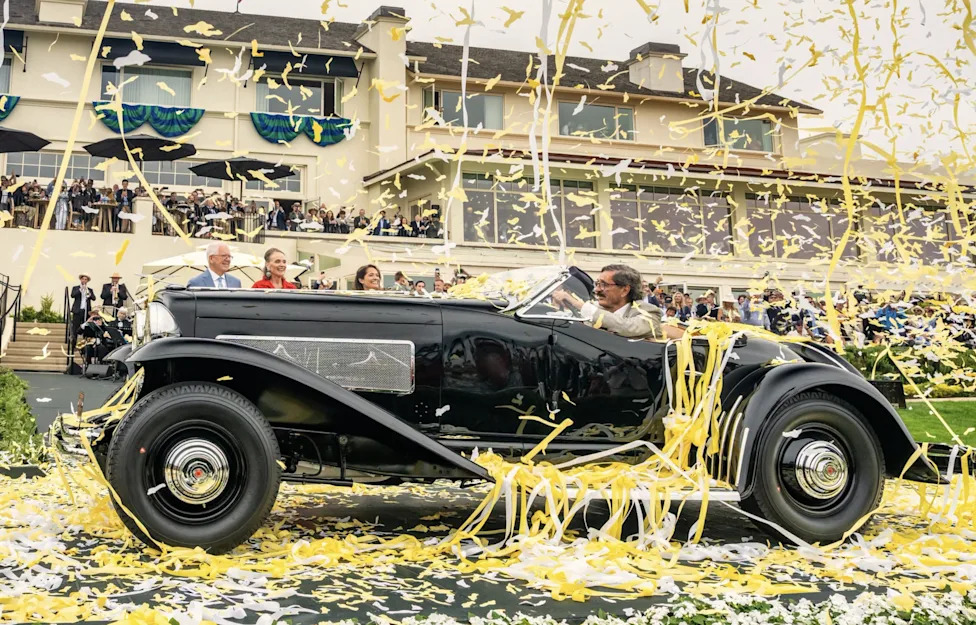
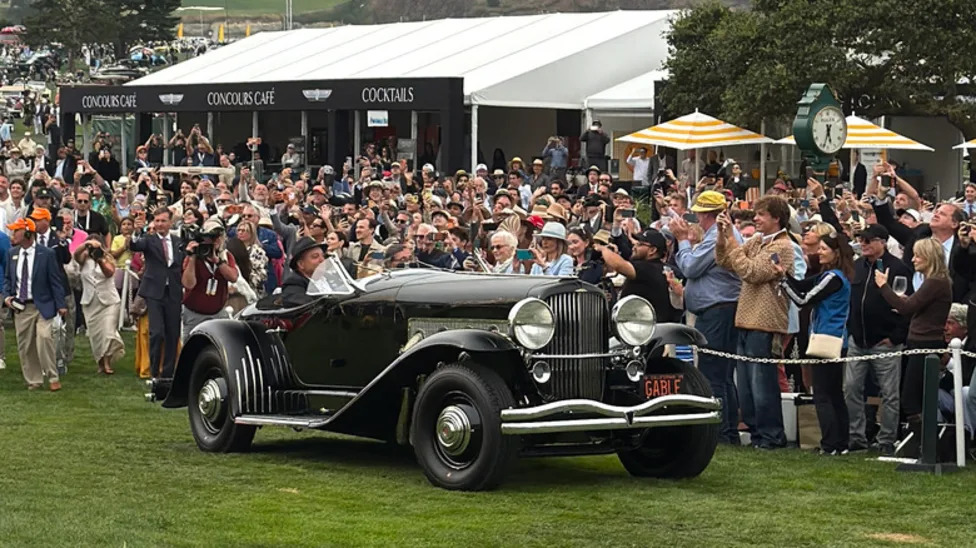
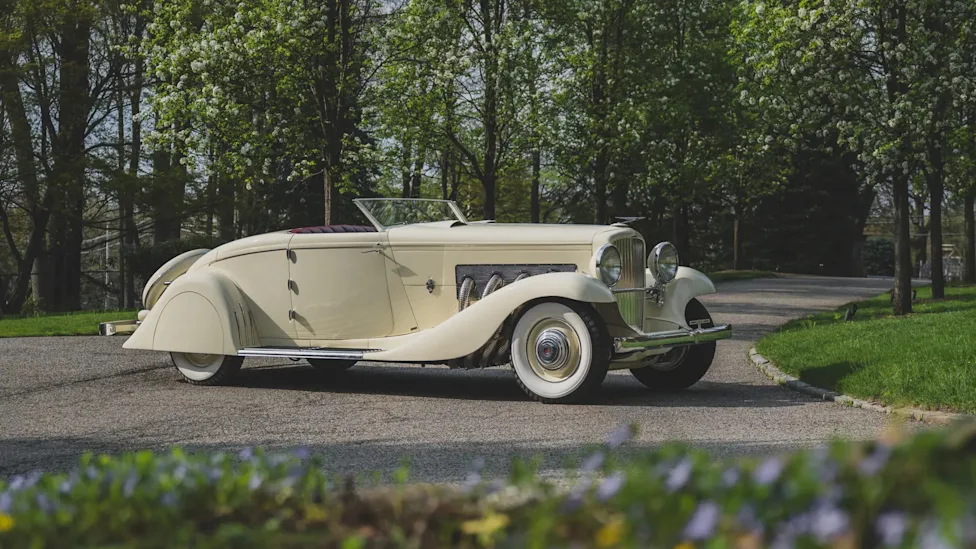
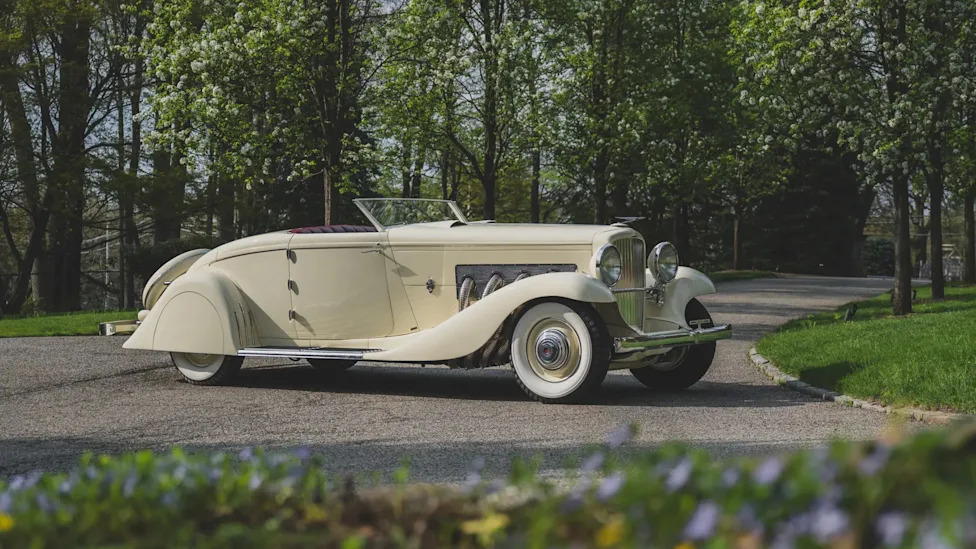
The Gable Duesenberg Didn't Sell in 2012. This Year It Made $9.08 Million — and the Gap Is the Real StoryFourteen years ago, a cream-over-red 1935 Duesenberg Model JN convertible coupe — the car Clark Gable sketched himself and drove with Carole Lombard along the California coast — went to the block at a Pebble Beach sale and came home unsold. This August, the same automobile, consigned by the same longtime owners, sold for $9,080,000 at RM Sotheby's Monterey auction, comfortably clearing a $5.75 million to $8 million estimate. We flagged the car's return to the market back in July. The headline number is worth noting. But the figure that actually matters to serious collectors isn't $9.08 million. It's the fourteen years between a no-sale and a record price, and what closed that gap.A Result, FinallyLot 122 at RM Sotheby's flagship Monterey sale was chassis 2585, engine J-560, one of just four Rollston-bodied JN convertible coupes Duesenberg ever built and the first delivered, to Gable, in 1935. It came from the collection of Sam and Emily Mann, who bought the car in 2005 and commissioned a ground-up restoration returning it to its as-delivered specification. The Manns tested the market once before, offering the Duesenberg at Gooding's Pebble Beach sale in 2012. It didn't sell. They took it home, kept showing it, kept driving it, and this month finally let it go for thirteen percent above the high estimate, in a week that produced some of the strongest pre-war results the market has seen in years.Why 2012 Wasn't the NightA no-sale at the seven-figure level rarely indicts the car. It indicts the room. By 2012, the Duesenberg had already been restored to Pebble Beach standard and had won the Gwenn Graham Trophy for Most Elegant Convertible at the 2007 concours. The provenance, Gable's own sketches, the Bohman & Schwartz coachwork, the Lombard romance, was already fully documented. What wasn't yet in place was a buyer pool willing to pay seven figures for a pre-war convertible in a market still finding its footing several years removed from the 2008 downturn. Reserve auctions are unforgiving that way: the story can be complete and the check can still go unwritten, because the story and the buyer have to arrive in the same room on the same night.What Fourteen More Years of Stewardship BoughtThe Manns didn't simply store the car and wait for sentiment to catch up. Best of Show at the Amelia Island and Meadowbrook concours followed in 2008. The Duesenberg joined the record-setting gathering of Model Js at the ACD Club's 2010 National Reunion, was included in the High Museum's Art of the Automobile exhibition in Atlanta, and returned to Pebble Beach in 2018, the same year the Manns were named Collectors of the Year at the Concours d'Elegance of America. Sam Mann, an industrial designer by training, also went looking for the car's original numbered crankshaft, stamped 560, after learning a New Mexico dealer had swapped in an engine from sister chassis J-521 sometime around 1950. He found it. It now travels with the car, uncrated and ready for whichever owner decides to finish the job.AdvertisementAdvertisementNone of that changed what the Duesenberg fundamentally is. It changed how completely its file could be closed. "The car drives as it looks, light for such a large car," Mann has said of it, a fitting description of an automobile whose value was never really about horsepower. Every additional concours trophy, every additional year of continuous, recorded ownership, is a small deposit against the one thing pre-war buyers fear most: a gap in the story that a future owner can't fill. Originality and documentation behave like compounding interest in this market. They don't do much in any single year. Over fourteen years, they add up to the difference between an unsold lot and a record.The Coachwork Behind the LegendIt's worth remembering what made the underlying car worth this level of attention in the first place. By 1935, Duesenberg was two years from collapse, and the Model J's twin-cam, 420-cubic-inch straight-eight, genuine race-derived engineering at a time when most American luxury makes still ran flathead sixes, represented the last serious flowering of the company's ambition. Gable didn't simply order one. He had Rollston ship the chassis to Bohman & Schwartz in Pasadena, then sat with staff designer W. Everett Miller and sketched the changes himself: a hoodline stretched back over the cowl, ventilators borrowed from biplane design, a windshield raked a few extra degrees, a body-color radiator shell to visually lengthen the car. Only three other JN convertible coupes were built. None carries this one's combination of celebrity authorship, unbroken ownership history, and coachbuilder-to-client documentation.What Serious Buyers Should Take From ThisIt would be a mistake to read one Duesenberg's result as proof that pre-war Full Classics are suddenly booming across the board. They aren't, uniformly. What this sale actually demonstrates is narrower and more useful: the market is drawing a sharper line between cars whose stories are fully documented and closed, and cars that merely look the part in a catalog. The same principle showed up elsewhere at Monterey this year, at a completely different price point and in a completely different category, when a 1963 Corvette Grand Sport with an unbroken competition record and no structural damage in its history made $18.7 million. Rarity got both cars into the conversation. An airtight, continuously maintained record is what actually moved the number.The Gable Duesenberg didn't get more original between 2012 and this August. It got better documented, better exhibited, and more completely accounted for, one concours trophy and one recovered crankshaft at a time. For buyers evaluating the next seven-figure classic to cross the block, that's the actual lesson: the premium isn't for the best story. It's for the story with no missing pages.AdvertisementAdvertisementJoin our Newsletter, follow our Instagram page, and follow us on Facebook.










 +53 others