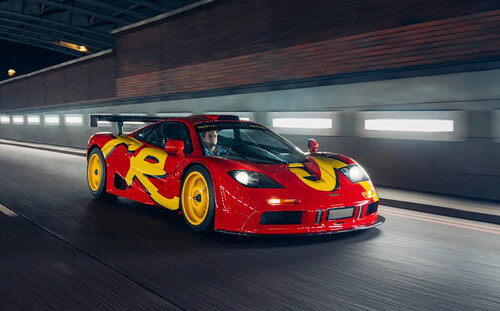
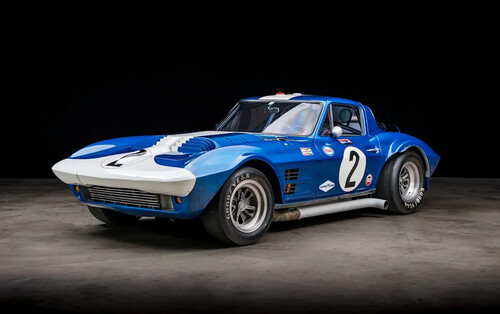
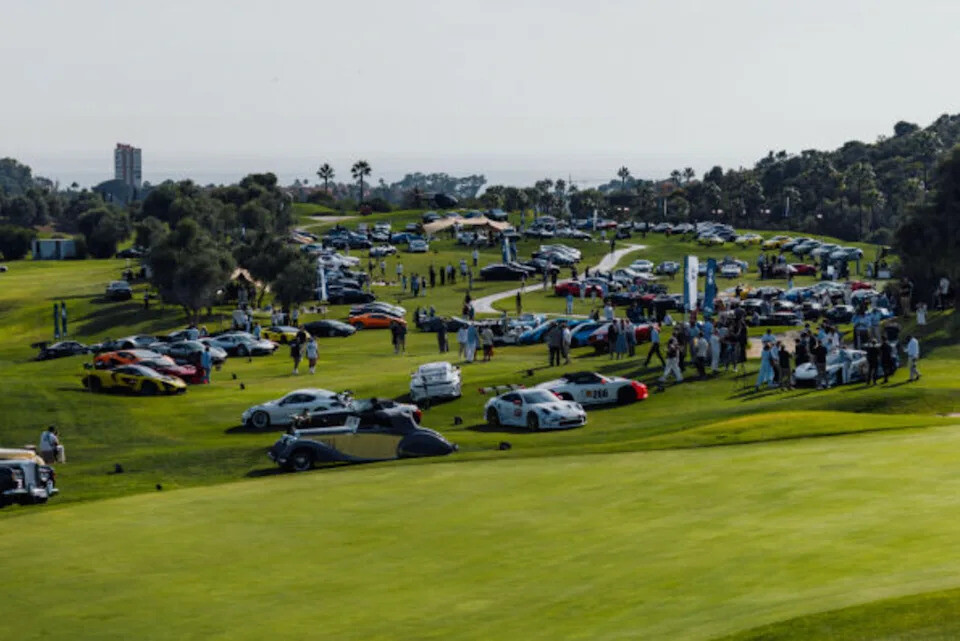
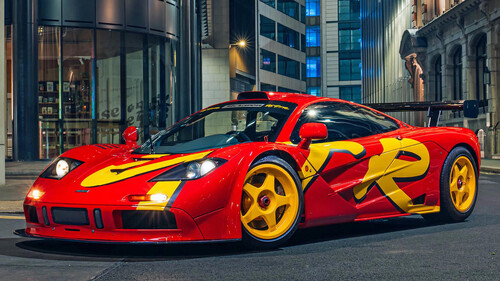
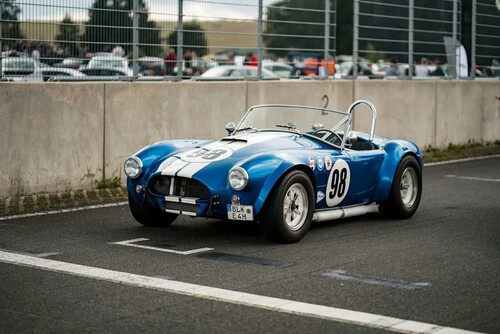
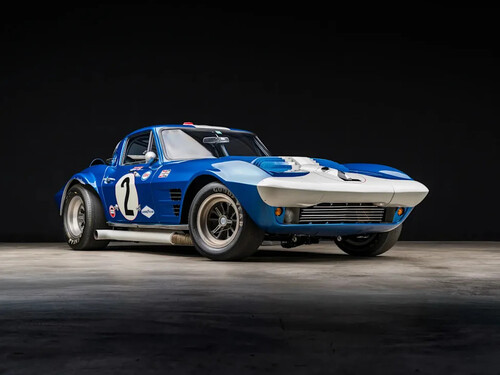
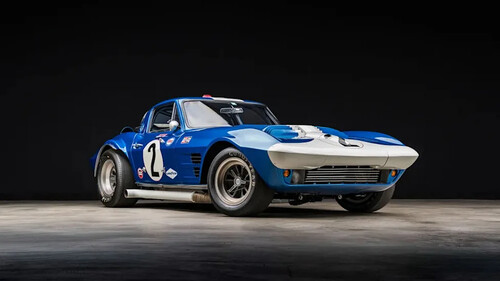
Clark Gable's Duesenberg Just Won Pebble Beach — And It Wasn't Even the Weekend's Biggest StoryTwo stories broke out of Pebble Beach this weekend, and if you only watched the 18th fairway, you missed the one that actually moved the market. Yes, a 91-year-old Duesenberg once owned by a movie star took home the trophy everyone photographs. But a few hundred yards away, inside auction tents packed with paddle-wielding bidders, the collector car business quietly posted a number nobody predicted.On Sunday, judges at the 75th Pebble Beach Concours d'Elegance awarded Best of Show to a 1935 Duesenberg SSJ Special Speedster, one of only two ever built. Clark Gable ordered his; his friend and fellow leading man Gary Cooper ordered the other. Cincinnati collector Harry Yeaggy brought Gable's car home following a recent restoration that returned it to its original black lacquer finish and light saddle leather interior. The win carries real weight in Pebble Beach's own math: Duesenberg has now taken Best of Show eight times, more than any other American marque in the concours' 75-year history. Yeaggy isn't new to the stage, either - he won in 2007 with the Duesenberg SJ Mormon Meteor Speedster - and he only recently learned that this car's second owner once lived a few doors down from the very lawn where it was judged.Congratulations to Harry Yeaggy and the team behind this 1935 Duesenberg SSJ Special Speedster on being named Best of Show at the 75th Pebble Beach Concours d'Elegance. A well-deserved honor for an incredible automobile. A round of applause to everyone involved. pic.twitter.com/UdcXudG4Gz— Barrett-Jackson (@Barrett_Jackson) August 17, 2026Two hundred eighteen cars made this year's field, pulled from 14 countries and 30 U.S. states, and the event's charitable total crossed $50 million for its history, funding more than 130 nonprofits across Monterey County. The 75th-anniversary edition also brought new metal to the lawn, including Aston Martin's pair of one-off DB12 S models built around the brand's 1951 Le Mans history. That's the polished, blazer-and-badge version of Car Week. By the time Honda rolled more than 20 championship-winning race cars into town for its own program, it was obvious 2026 wasn't going to be a quiet year on the peninsula, and the auction tents down the road were where the real fireworks happened.The Real Number of the WeekendAcross Gooding Christie's, RM Sotheby's, Mecum and the rest of the Monterey auction houses, collector car sales hit $747.9 million through Saturday, a 73% jump over the $432.8 million posted at the same point in 2025, and enough to blow past the old all-time record of $471 million set in 2022 by nearly 60%. Volume barely moved: 844 of 1,124 lots found buyers, a 75% sell-through rate that's essentially flat with last year's 76%. The real story isn't how many cars sold. It's what they sold for - the average sale price jumped 64% in a single year, from $529,034 to $866,107.AdvertisementAdvertisementDuesenberg's moment wasn't confined to the show lawn, either. A 1935 Duesenberg Model JN convertible coupe by Rollston and Bohman & Schwartz brought $9.08 million at RM Sotheby's, a reminder that the marque's following runs well past one Best of Show trophy.That gap between flat volume and exploding average price tells you what actually happened this week: genuinely exceptional cars got bid into another stratosphere, while ordinary examples, solid, honest 1950s and 60s classics without a movie-star provenance or a factory racing resume, often changed hands for less than their condition would normally justify. If you own a nice but unremarkable classic, this was not your week. If you own the only other example of something, it very much was.A Ford-Powered Underdog Just Became the Most Expensive American Car Ever SoldThe header sale of the entire week wasn't a Ferrari, a Duesenberg, or anything from the concours field - it was a 1964 Shelby Cobra Daytona Coupe, chassis CSX2300, which sold at Gooding Christie's for $42,905,000, a new record for any American car at auction. The Daytona exists because Shelby's open Cobra roadster, brutally effective in a straight line, was getting strangled by wind resistance at Le Mans speeds. A young designer named Peter Brock proposed wrapping the chassis in an aerodynamic roof and tail; Shelby's own team was skeptical enough that Brock reportedly needed driver Ken Miles' backing just to get 90 days and a green light to build it. The resulting coupe ran 25 mph faster than the roadster it replaced and immediately went wheel to wheel with Ferrari's 250 GTO at Daytona and Le Mans in 1964, then helped Shelby clinch the FIA GT manufacturers' championship in 1965, still the only time an American car has done it.CSX2300 itself raced the 1964 Tour de France, then bounced through Daytona, Sebring, the Nurburgring and Reims in 1965 before a Japanese buyer took it home and reportedly street-drove it around Tokyo. Carroll Shelby bought the car back personally in 1975, kept it until 1998, and restored it to 1965 specification along the way, a history that had already drawn plenty of attention on the Pebble Beach show field before this year's sale. The last time a Daytona Coupe changed hands at auction was 2009, when a sister car sold for $7,685,000. Seventeen years and one drawn-out bidding war later, this one sold for more than five and a half times that per-car benchmark, landing in Ferrari 250 GTO money, which is the real headline for anyone tracking where American race cars sit relative to Europe's blue-chip metal.Ferrari Still Owns the Leaderboard, Even When It's Not TryingSeven of the ten highest sales of the week wore a prancing horse badge, and one of them wasn't even a normal transaction. RM Sotheby's ran a charity sale for a 2026 Ferrari Luce Tailor Made electric sedan, a car most enthusiasts already have strong opinions about, and it brought $40 million, more than 60 times the car's sticker price. Charity lots for brand-new vehicles typically sell for somewhere around 13 times MSRP; a handful of new EVs have pushed past 24 times. A multiple this size says less about the Luce's styling and more about what a tax-deductible eight-figure donation attached to a factory-fresh Ferrari does to a room full of collectors with foundations to fund.AdvertisementAdvertisementTraditional Ferrari metal did plenty of work too. A 2023 Daytona SP3 brought $17,825,000, a 2003 Enzo added $12.1 million to a model that already had one very public record-breaking year, and a 1985 288 GTO sold for $11,555,000, a car whose recent history includes an entirely different kind of record on a very different platform.New Records for a McLaren and a Corvette Nobody Wanted in 2009Elsewhere on the leaderboard, a 1996 McLaren F1 GTR nicknamed the Pop Art F1, previously part of Pink Floyd drummer Nick Mason's collection, sold for $34,655,000 at RM Sotheby's, a new auction record for the model.In a coincidence sharp enough that Corvette and Ferrari owners will spend the next year arguing about it, a 1963 Chevrolet Corvette Grand Sport, one of only five ever built, sold at RM Sotheby's for $18,705,000, blasting past its $13 million high estimate to become the most expensive Corvette ever sold at auction. Across town at Gooding Christie's, a 1963 Ferrari 250 P Spider sold for the exact same $18,705,000. The Corvette's own history makes the number sting a little more: the same chassis failed to sell at just $4.9 million back in 2009. In raw dollar terms, that's not appreciation, that's a different market entirely.What This Actually Means If You're Not Bidding in Eight FiguresNone of this changes what a $30,000 driver-quality classic is worth at your local cars-and-coffee, but it does say something about where insurance and valuation are headed. Agreed-value policies on cars like these get renegotiated every time a comparable sells at a new number, and price guides will spend the next few months catching up to bids that outran pre-sale estimates by 30% to 50% in a single week. For sellers sitting on genuinely rare, documented cars, the kind with racing history, celebrity ownership, or an only-five-built line in the catalog description, this week was proof buyers will still stretch dramatically for the right story. For everyone else holding a good-but-not-great example of a common model, the message is less exciting: condition and originality still matter, but rarity and provenance are what separate a six-figure sale from an eight-figure one right now.AdvertisementAdvertisementBack on the 18th fairway, none of that mattered much to Harry Yeaggy, who spent Sunday afternoon enjoying a win nineteen years after his first one. But the two events sharing the same peninsula this week made for a useful split-screen: one crowned the car judges decided was the most beautiful and significant on the lawn, and the other crowned whatever the market decided was worth the most money. This year, those two answers weren't close to being the same car.