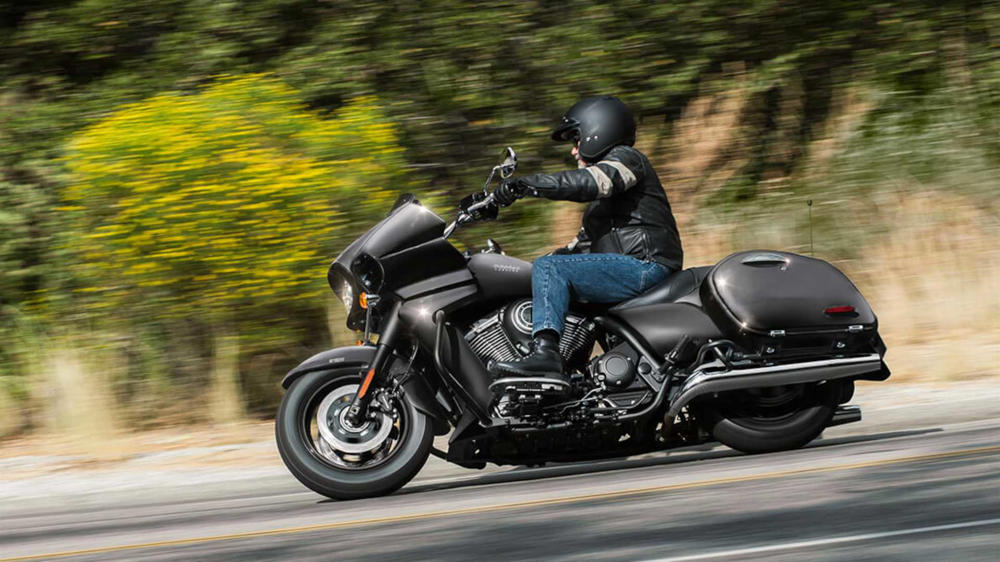
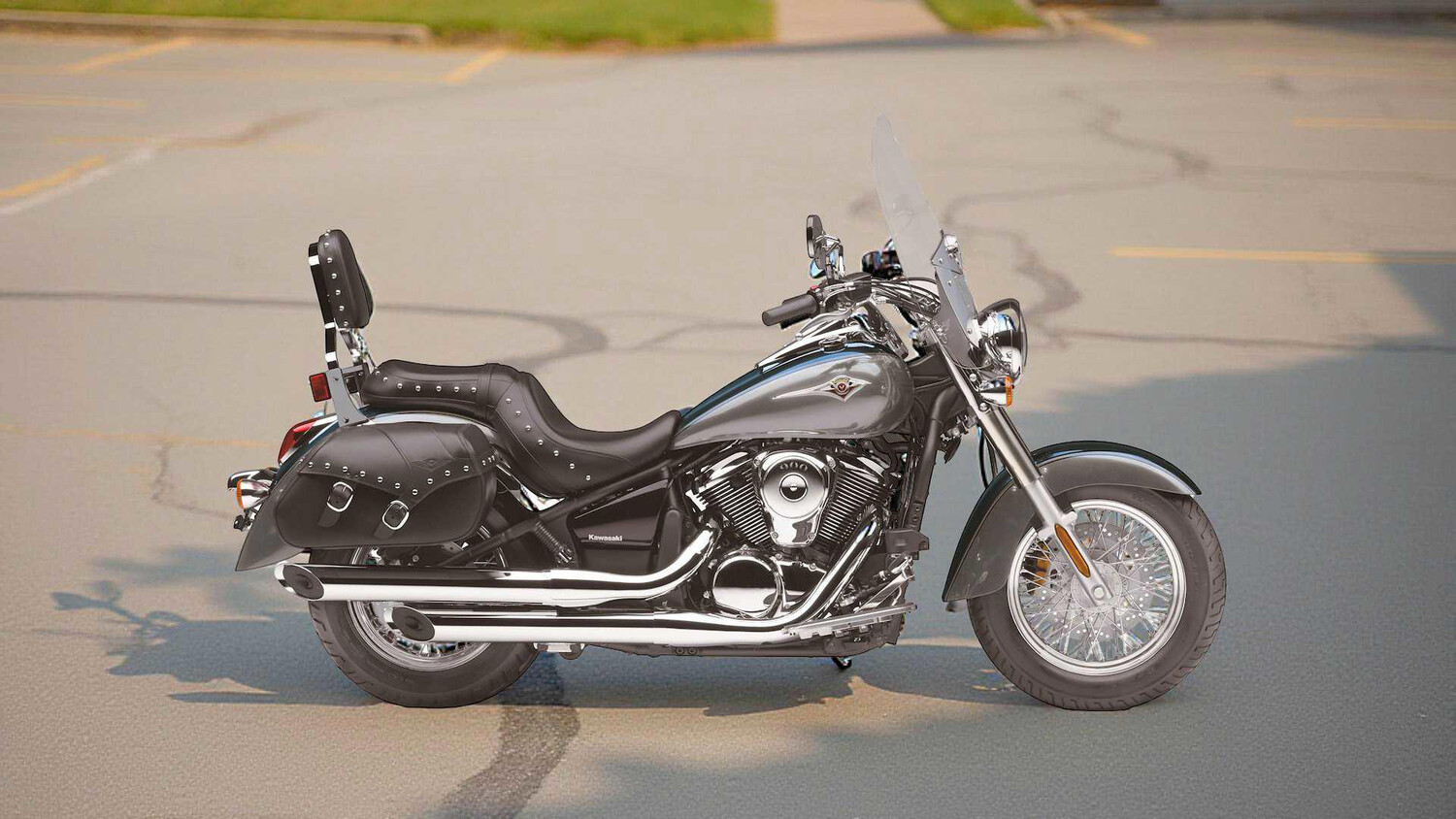
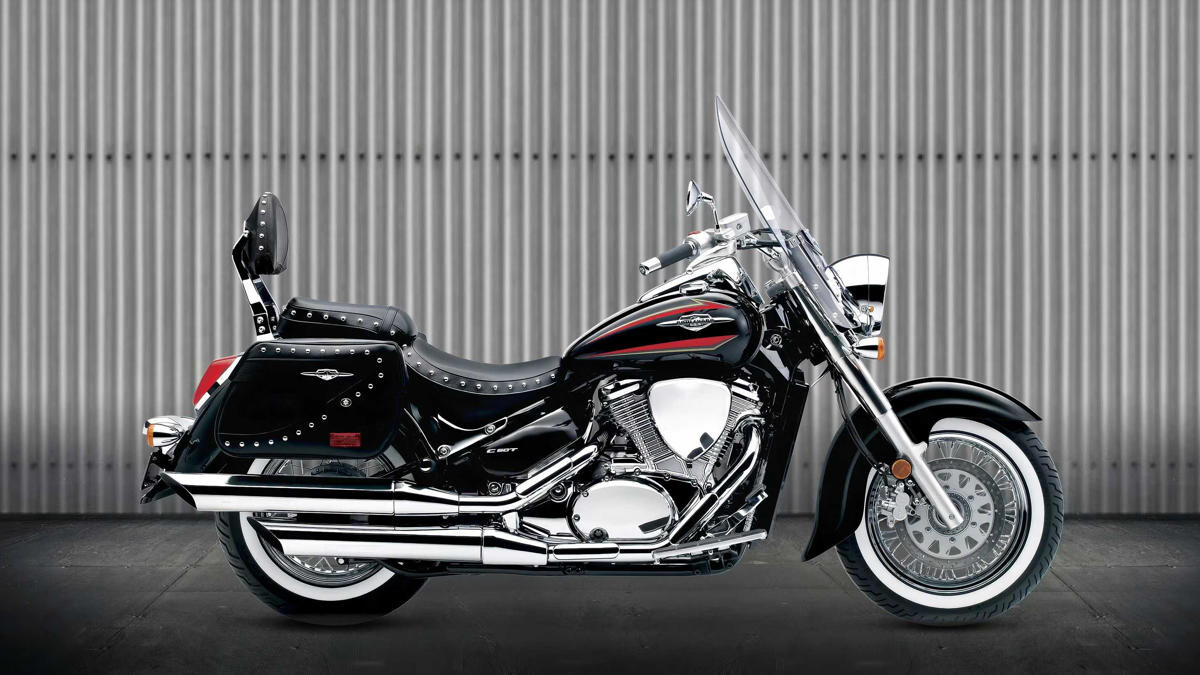
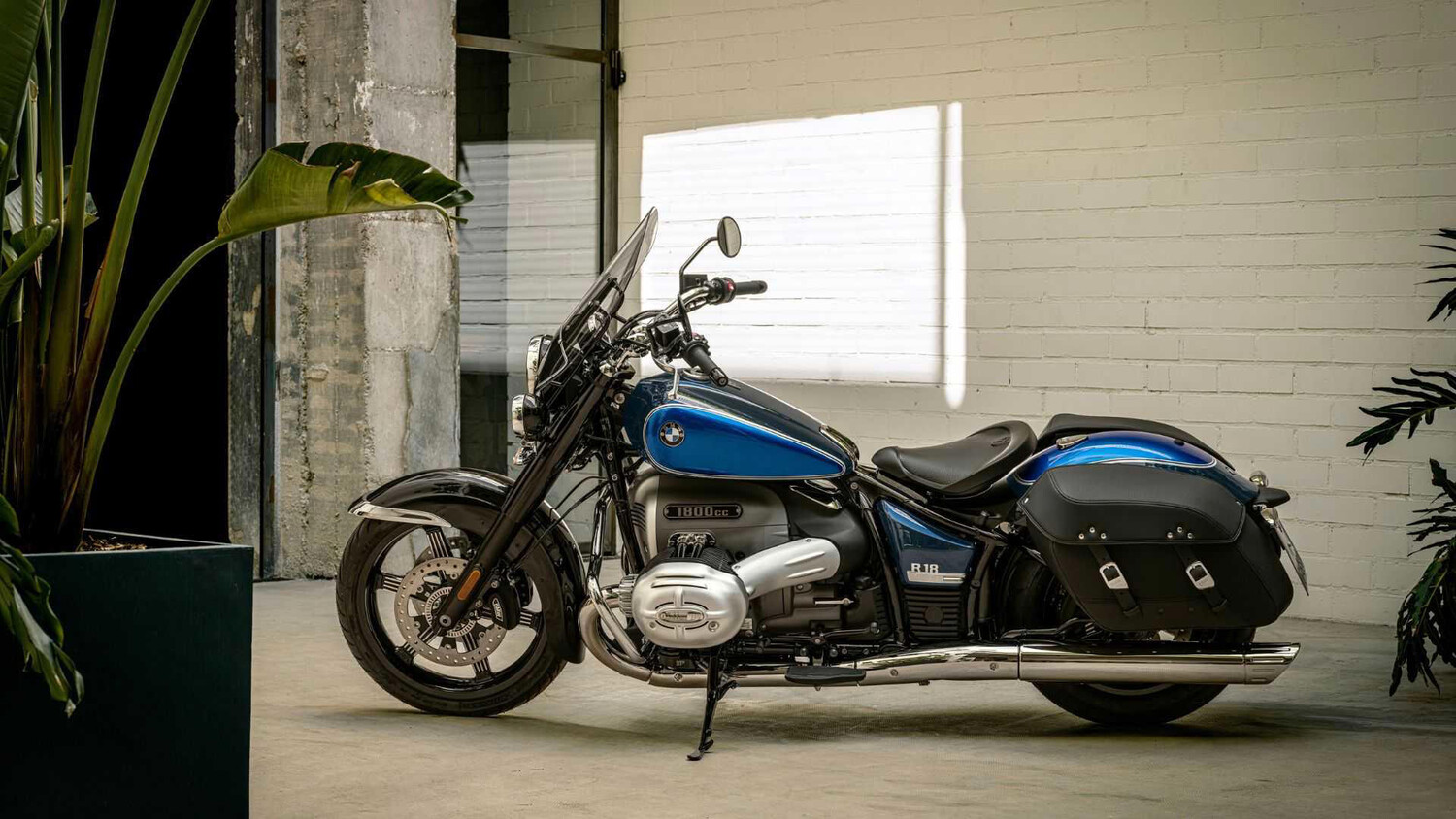
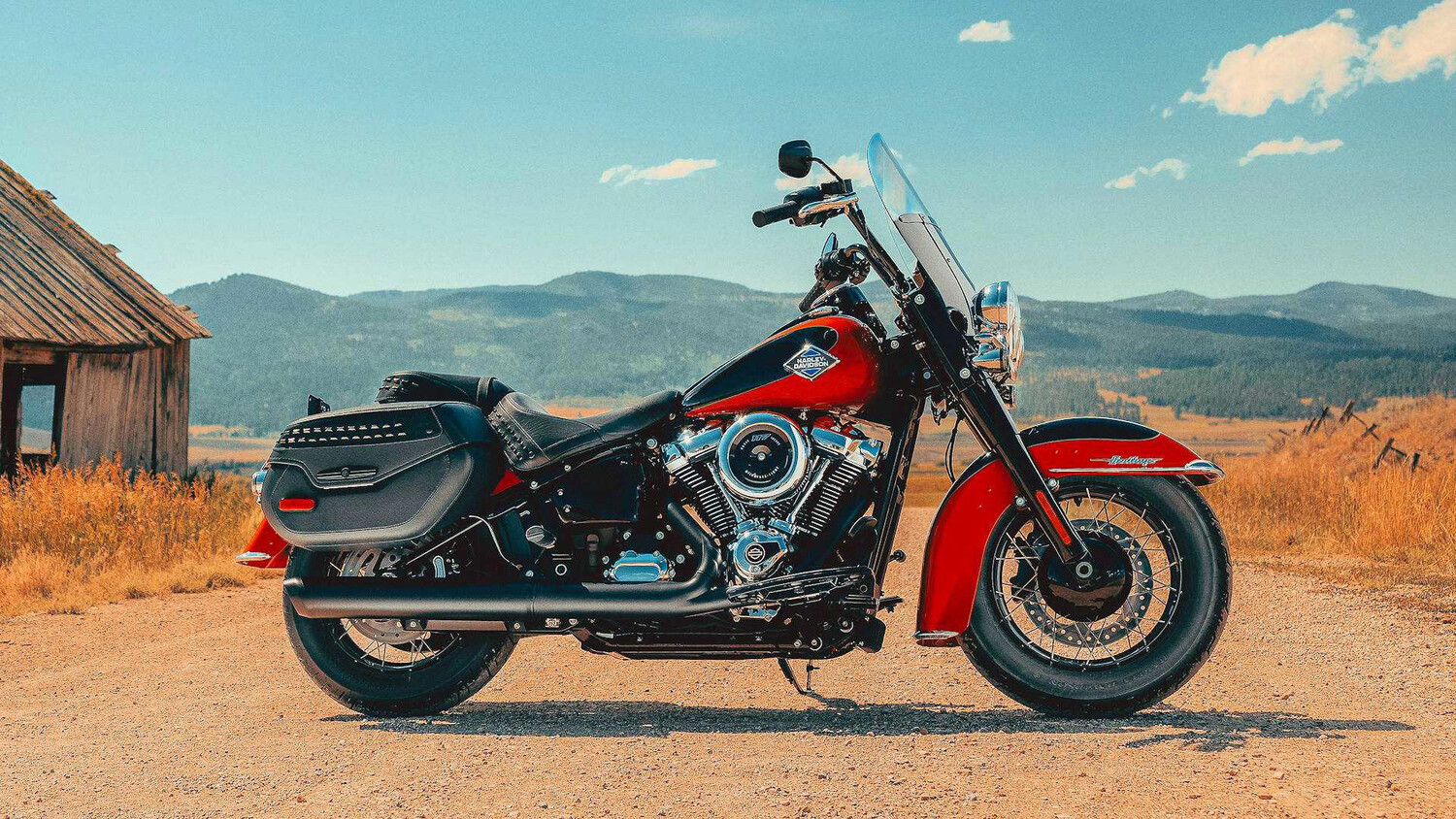
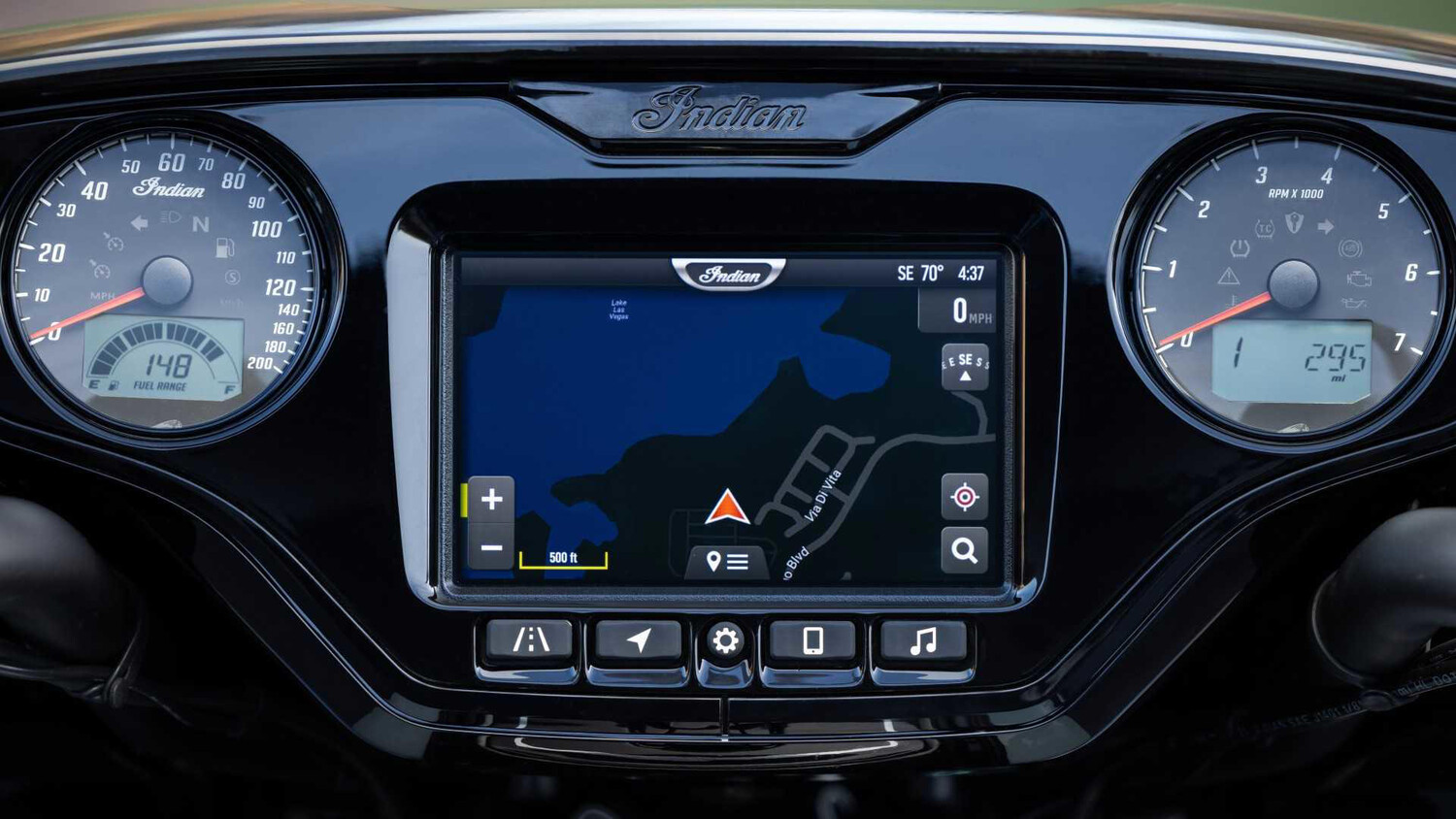
Japanese manufacturers have a well-documented habit of keeping aging machines in their lineups long past their prime — and the touring segment is no exception. While the conversation usually centers on sports bikes and cruisers, the touring category has its own quietly forgotten icon: a bike that has soldiered on essentially unchanged for well over a decade, still asking a premium price in a market full of far more modern alternatives. If you haven't been paying attention, you'd be forgiven for thinking Kawasaki quietly killed it off. They didn't. The Kawasaki Vulcan 1700 Continues To Live On Starting MSRP: $19,999 2024 Kawasaki Vulcan 1700 Vaquero cruising on the road As mentioned, there were a few touring bikes we had to think about that met the ‘Forgotten Iconic Japanese Touring Bike’ criterion. The first was the Yamaha FJR1300. This is a highly capable sports touring machine, with some impeccable technology, including features such as electronic suspension — impressive on a bike that debuted roughly 12 years ago. Another highlight was its mighty inline-four engine with over 140 ponies. But we had to discount it because it’s finally been discontinued for MY25. Next was the Suzuki Boulevard C50T. This is a V-twin cruiser with several touring-specific upgrades, such as saddlebags, a large windscreen, floorboards, and thick saddles for both occupants. However, two things work against it here. First, it isn’t a full-fledged touring bike (it’s not even a proper bagger), and second, Suzuki no longer sells it with saddlebags — an integral element for touring. That leaves us with the Kawasaki Vulcan 1700. There are two bikes under the Vulcan 1700 moniker, both of which qualify as full-fledged touring machines. They have remained unchanged since 2011 and cost well over $15,000. For that money, you can get many modern-day machines instead, which is why the Vulcan 1700 duo is the perfect pick as ‘The Forgotten Iconic Japanese Touring Bike That's Still On Sale in 2025.’ Kawasaki Vulcan 1700 Rivals BMW R 18 Transcontinental BMW R 18 B Harley-Davidson Street Glide Harley-Davidson Road Glide Indian Challenger Powered By A Huge V-twin Engine Peak Torque: 107.6 LB-FT When the Vulcan 1700 duo debuted, it was squarely aimed at American touring bikes, and Kawasaki leaned into that brief as hard as it could. One look at the engine tells you exactly that. This is a 52-degree V-twin with a near-square 102 mm x 104 mm bore and stroke for a displacement of 1,700cc — the largest in Kawasaki’s current lineup. Add liquid cooling, 42 mm throttle bodies, and fuel injection, and the result is a peak torque figure of 107.6 pound-feet. Kawasaki Vulcan 1700 Engine Specifications Capacity 1,700cc Layout 52-degree V-twin Power ~82 HP Torque 107.6 LB-FT @ 2,750 RPM Transmission Six-speed (belt-driven) Kawasaki being Kawasaki doesn’t publish official power figures, but independent testing points to roughly 82 horsepower. These numbers aren’t headline-grabbing, but the 1700 will effortlessly hold highway speeds all day long. Crucially, that torque peaks at just 2,750 RPM — even lower than the Harley-Davidson Street Glide — so there’s never any shortage of grunt when you need it. Power reaches the rear wheel through a carbon-reinforced belt drive and a six-speed transmission. Simple Underpinnings Ensure Stable Riding Dynamics Chassis: Steel Double-Cradle Like the engine, the chassis is straightforward but capable. A double-cradle steel frame forms the backbone, paired with a double-sided swingarm. Suspension duties are handled by 45 mm Showa telescopic forks up front and air-assisted dual shock absorbers at the rear — only the latter offering any adjustability. A pair of 16-inch alloy wheels round out the rolling gear, wearing a 130-section tire at the front and a 170-section tire at the rear. Braking comes courtesy of dual 300 mm front discs and a single 300 mm rear disc — a setup that feels modest for a machine tipping the scales at over 840 pounds. The limited electronics package doesn’t help matters: dual-channel ABS and a combined braking system are the extent of it. There is no traction control, no ride modes, and no slipper clutch. Kawasaki Vulcan 1700 Dimensions Seat height 28.7 inches Ground clearance 5.7 inches (Vaquero)/ 5.3 inches (Voyager) Weight 844.5 pounds (Vaquero)/ 895.2 pounds (Voyager) Tank capacity 5.3 gallons Wheelbase 65.6 inches Comfort Is Top Notch On The Kawasaki Vulcan 1700 Studio shot of Kawasaki Vulcan 1700 Voyager instrument cluster Last but not least, the Vulcan 1700 duo places a heavy emphasis on comfort — as any proper touring bike should. The Vaquero gets a large one-piece seat, long floorboards, and a curvy swept-up handlebar. A short tinted windscreen integrated into the fairing helps deflect wind away from the rider at speed. As capable as that setup is, the Voyager raises the bar further. It features a thicker saddle for both rider and pillion, and its top box doubles as a backrest for the passenger. Other notable differences on the Voyager include a taller, transparent windscreen for maximum wind protection and additional headlights for improved visibility after dark. The cockpit is broadly similar across both Vulcans, though: a semi-digital instrument cluster flanked by analog dials. Smartphone connectivity is absent, and there is no CarPlay or Android Auto support. That means if you want to enjoy music through the 40-watt speakers, FM radio is your only option. Kawasaki Vulcan 1700 Features 40-watt speakers Semi-digital instrument cluster SiriusX FM Hard saddlebags (10 gallons each) Cruise control ABS Sources: Kawasaki

 Liked by Claire Pelletier, Caleb Rogers
 Liked by Claire Pelletier, Caleb Rogers